Reviewed · TOURS
The Magnificient Elqui Valley Grand Tour
The Elqui Valley Grand Tour packs Chilean pisco, Indigenous culture, Gabriela Mistral, old churches, vineyard country, and strange new age touches into one long day. You move from La Serena into a dry mountain valley where fruit farms, historic towns, and sharply shaped peaks make the scenery change at every turn.
I like the wide cultural mix here. You are not simply taken from one viewpoint to another: the day includes Diaguita villages, a pisco museum, a Nobel poet’s schoolhouse, a solar restaurant, and craft markets. I also like the way the guides explain the valley. Cristóbal, singled out in the feedback for his detailed stories and clear explanations, seems to be a major part of the experience.
The main drawback is the pace. Ten hours and many stops make this a full, active day, with several short visits of 10 to 25 minutes. The tour is not designed for people with mobility impairments, and the limited pickup area means you must stay near the Avenue of the Sea or La Serena’s historic center.
In This Review
- Key points before you book
- Why the Elqui Valley makes a good day trip
- Leaving La Serena for the valley
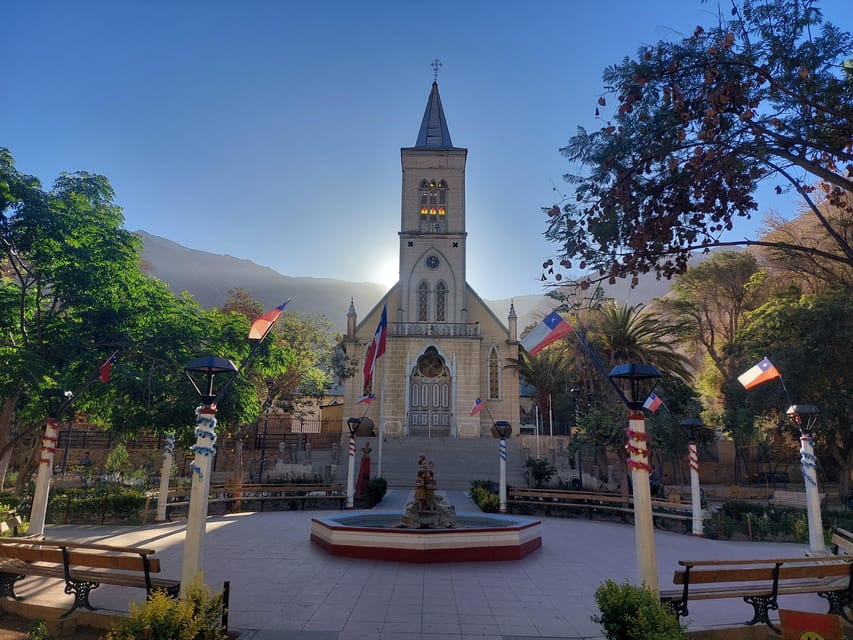
- Paihuano and Vicuña: first taste of Elqui culture
- Gabriela Mistral’s school and the Puclaro Dam
- Capel pisco, papayas, and the old road through El Molle
- El Tambo and the solar restaurant
- Diaguitas: the longest cultural stop
- Food, Altovalsol, and the Cerro Polla Alta viewpoint
- Pisco Elqui and the final road to La Serena
- What the $195 price includes
- Who will enjoy this tour most
- Should you book the Elqui Valley Grand Tour?
- FAQ
- How long does the Elqui Valley Grand Tour last?
- Where does the tour begin and end?
- Is hotel pickup included?
- What languages are available?
- What food and drinks are included?
- Which places does the tour visit?
- What should I bring?
- Can I cancel the booking?
Key points before you book
- A full-day route from La Serena: Expect 10 hours in air-conditioned transport, with pickup and drop-off at eligible accommodations.
- Cristóbal’s storytelling: The guide explains the valley’s history and culture in depth, in English or Spanish.
- Pisco and Chilean food: Tastings include pisco, wine, papaya products, and regional dishes, with lunch and drinks included.
- Gabriela Mistral’s home ground: Visit the Casa Escuela Gabriela Mistral and towns connected with the Nobel Prize-winning poet.
- Indigenous villages and crafts: El Molle, El Tambo, and Diaguitas add local culture, markets, and traditional design.
- Many brief stops: The route covers a lot, but you will not have long, unhurried visits at every place.
Why the Elqui Valley makes a good day trip
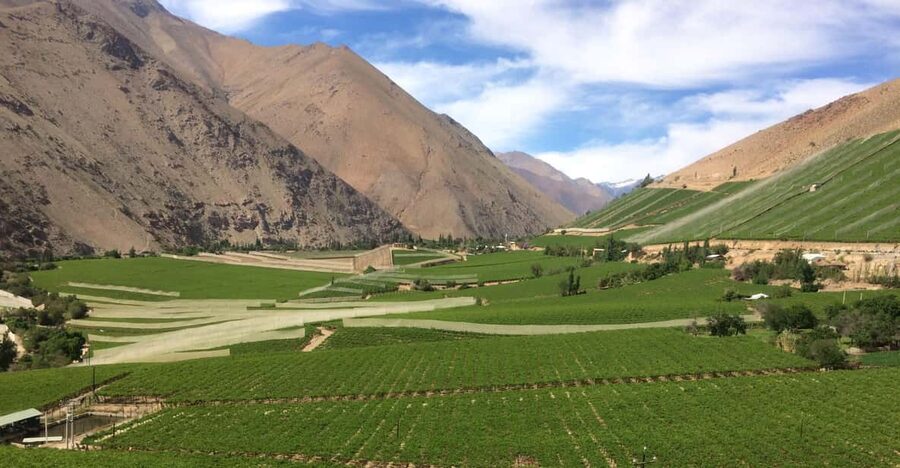
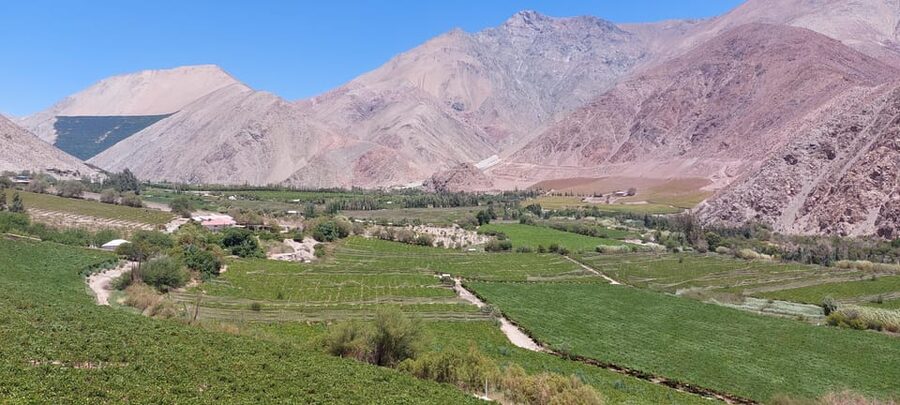
The Elqui Valley is one of Chile’s best places to see how geography shapes daily life. Dry, mineral-colored mountains surround irrigated farms, vineyards, tropical fruit trees, and semi-arid vegetation. The contrast is the point: the valley looks spare from a distance, but water turns its floor into productive farmland.
This is also a cultural meeting place. The route connects pre-Columbian and Diaguita traditions with Inca influence, Spanish hacienda life, church architecture, Chilean wine, and the development of pisco. Gabriela Mistral’s poetry adds another layer, linking the valley to one of Chile’s best-known writers.
I would choose this tour if you want context, not just scenery. A short stop at a viewpoint is more meaningful when the guide has already explained the crops, villages, religious buildings, and drinks that developed in the valley. Cristóbal received especially strong praise for bringing these connections to life through detailed explanations.
The trip also touches the Elqui Valley’s modern mystical side. New age communities, magnetism, pyramidal mountains, and astronomical observatories are part of the region’s identity, although this particular route focuses more on villages, food, pisco, poetry, and scenery than on a dedicated observatory visit.
Other Chile days people book alongside this one:
- Santiago: Cajon del Maipo/Embalse del Yeso Tour with Picnic
★ 4.3 · 3,789 reviews - Santiago: Vina Del Mar, Valparaiso, Casablanca & Reñaca Tour
★ 4.2 · 2,838 reviews - Small-Group Cajón del Maipo Full-Day Tour and Picnic
★ 4.5 · 2,277 reviews
Leaving La Serena for the valley
Pickup is included from your accommodation, but only in the Avenue of the Sea area and La Serena’s historic town. You need to provide your address in advance, and the exact pickup time is sent the day before. I would treat this as an important planning detail, not a minor footnote.
The air-conditioned vehicle matters in this part of Chile. You spend much of the day moving between stops, and the dry climate can make the sun feel strong. Bring water, as requested by the operator, and use the driving time to watch the scenery change from the coast toward the mountains.
The itinerary has many stops, so the day is not one long drive. Still, the schedule is active. Some stops last only 10 or 15 minutes, which is enough for an introduction, a few photographs, or a short walk, but not enough for a slow museum visit.
Paihuano and Vicuña: first taste of Elqui culture
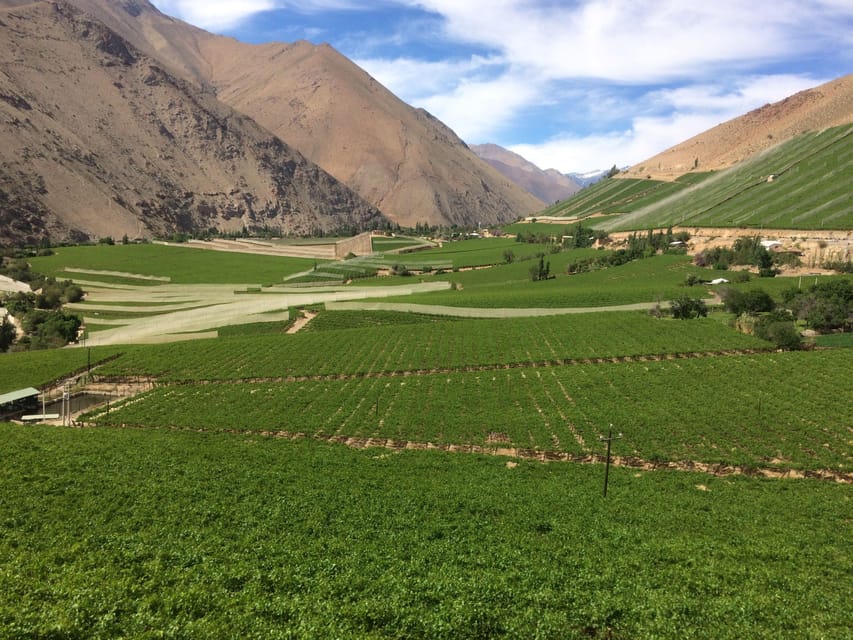
Paihuano is one of the first major introductions to the valley. You get a guided visit, views along the route, and a short stop of about 10 minutes. This is a quick orientation rather than a long town exploration.
Vicuña receives another short guided visit, also listed at about 10 minutes. The town is central to the valley’s cultural identity and is associated with Gabriela Mistral. The stop gives you a sense of the historic urban setting before the tour moves into more specific sites.
The short timing is worth noting. If you enjoy taking your time in plazas, browsing local stores, or reading every display, you may wish for longer here. If you prefer a broad introduction to the region in one day, the quick rhythm keeps the route moving.
Gabriela Mistral’s school and the Puclaro Dam
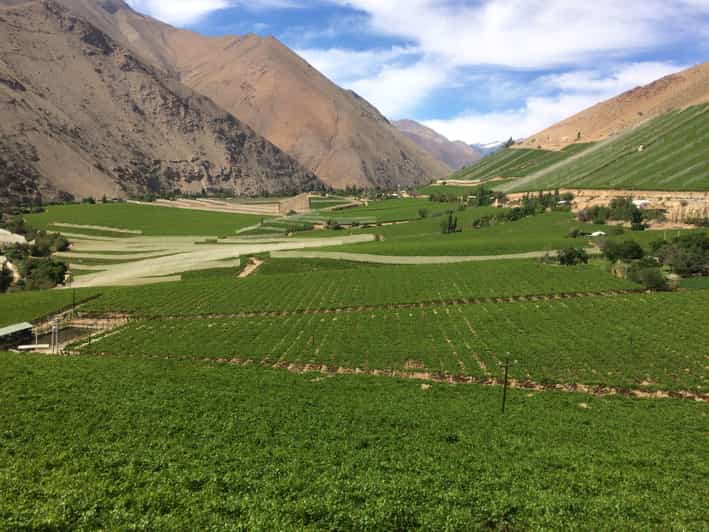
The Casa Escuela Gabriela Mistral gives the tour its strongest literary connection. You receive a guided visit lasting about 15 minutes, along with views during the drive. The site connects the poet’s early life and education with the valley that later shaped her work.
I find this kind of stop more useful than a general literary reference. You are not only told that Mistral came from the Elqui area. You are taken to a place tied to her early life, which gives the valley’s poetry a physical setting.
The Puclaro Dam follows as a photo stop and scenic viewpoint. The visit lasts about 15 minutes. Dams can sound less exciting than old towns or pisco tastings, but here the stop helps explain the valley’s farming economy. Irrigation is what allows vineyards, papayas, and other crops to grow in such a dry region.
Bring your camera, but do not expect a long walk or extended time at the water. This is a quick stop to take in the scale of the valley and its mountain walls.
Same long country, a very different day out:
- Santiago: Cajon del Maipo & Embalse El Yeso Trip with Picnic
★ 4.5 · 1,859 reviews - Tourist bus around Santiago for a day
★ 4.5 · 1,857 reviews - Viña Del Mar-Valparaiso -Casablanca -Reñaca-Oceanic Rock-Concon
★ 4.5 · 1,564 reviews - Santiago: Valparaiso, Viña del Mar, & Casablanca Valley Tour
★ 4.8 · 1,491 reviews
Capel pisco, papayas, and the old road through El Molle
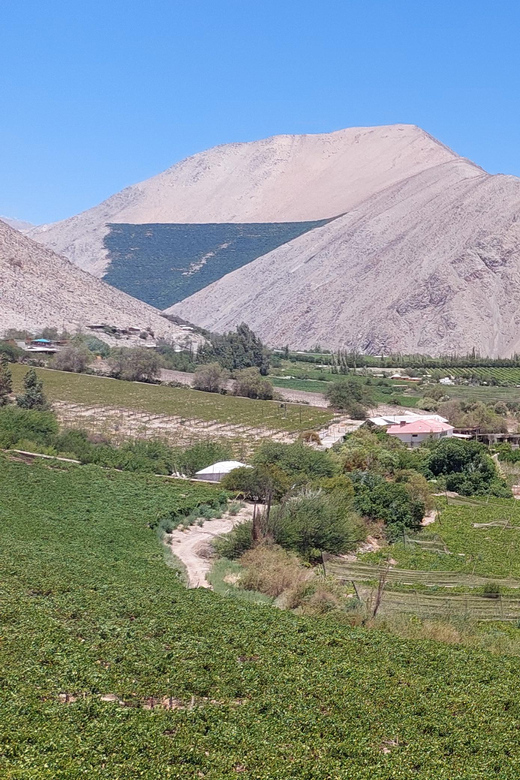
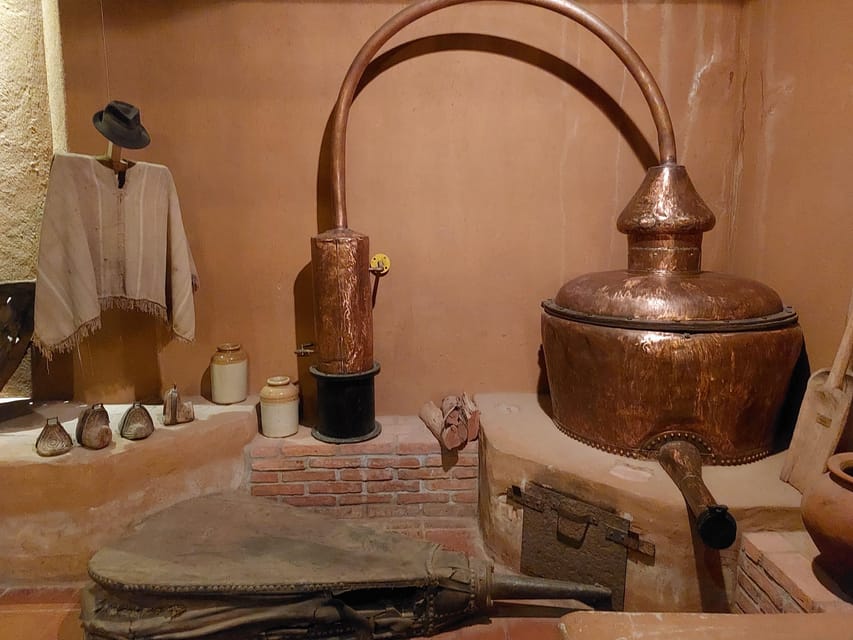
The Centro Turístico Capel is one of the day’s central attractions. You stop for photographs, a guided visit, and an introduction to the Capel pisco distillery and museum. Since pisco is one of Chile’s signature drinks, this stop gives useful background to something you will also taste during the day.
The tour description connects the valley to both Chilean wine and pisco production. That distinction matters. Vineyards are not only pretty scenery here. They are part of the local economy and the source of products with a long place in Chilean culture.
El Molle offers a longer break of about 20 minutes. You can take photographs, walk a little, and hear about the village. It is presented as one of the area’s Indigenous settlements, so this stop helps broaden the day beyond Spanish colonial and modern Chilean stories.
Later, you visit a papaya salesroom or Vineyard Felarnia for about 25 minutes. This is one of the more hands-on food stops, with wine tasting, food tasting, and shopping. The combination is practical: you can try local products and buy something to take away, rather than simply hearing a guide describe valley agriculture.
El Tambo and the solar restaurant
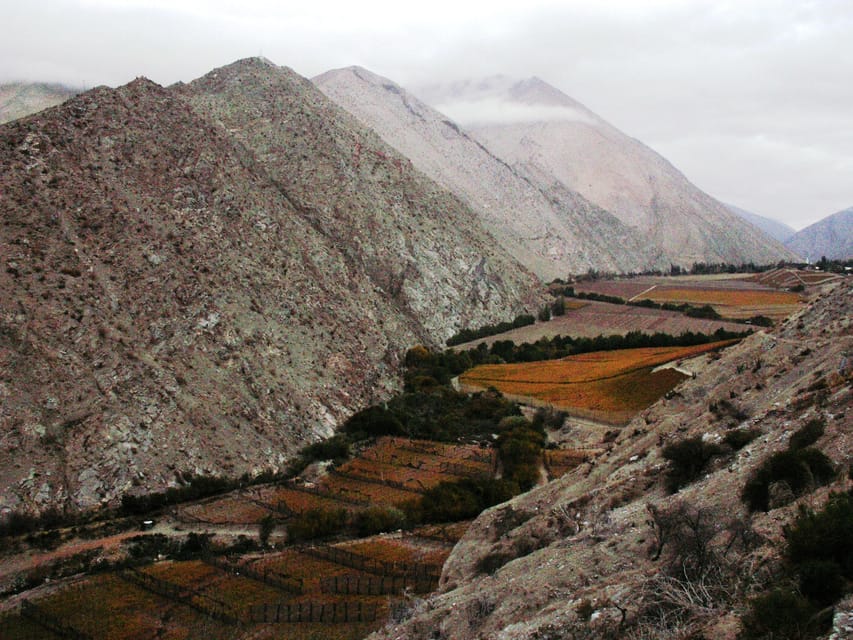
El Tambo is another short village stop, with time for photographs, a guided walk, and views from the road. The visit lasts about 15 minutes. Like El Molle, it works best as part of the larger pattern of villages rather than as a stand-alone destination.
You see how the route moves between small settlements, open mountain views, and cultivated patches of land. The valley is not presented as a single postcard scene. Its character comes from the contrast between dry slopes, historic buildings, village streets, and planted fields.
The Restaurant Solar Entre Cordilleras is one of the tour’s more unusual food experiences. You have about 40 minutes for a break, free time, sightseeing, and an arts and crafts market. Solar cooking is a distinctive local idea, and it gives the lunch portion more character than a standard stop at a roadside restaurant.
The included lunch menu has a starter, main course, dessert, and several plate and drink choices. The itinerary also includes regional food, aperitif, cocktails, wine, and dessert at another food-focused stop. Since the exact meal arrangement can depend on the day’s operation, I would view the package as a full food program rather than assume every listed item is served at one single table.
Diaguitas: the longest cultural stop
Diaguitas receives about 80 minutes, making it the longest stop on the route. You have time for a guided visit, a walk, free time, shopping, and crafts. The village is particularly important for the tour’s Indigenous focus and for the area’s recognizable pottery and design traditions.
This is where the day slows down enough for you to look around. You can browse local objects, learn about Diaguita culture, and spend time outside the vehicle. The tour also mentions new age objects and cultural treasures, so the shopping here may appeal to you if you like handmade goods, symbolic items, and regional art.
I would save some energy for this stop. After several short visits, 80 minutes feels substantial. It is also one of the best places to make your own choices, since the schedule allows free time rather than only a guide-led circuit.
Food, Altovalsol, and the Cerro Polla Alta viewpoint
A later stop along Avenida Francisco de Aguirre includes food tasting, regional food, lunch-related service, wine, dessert, and drinks. It also allows free time and a short walk. The listed time is about 15 minutes, so this is likely a compact tasting or meal-related visit rather than another long town tour.
Altovalsol follows with about 25 minutes for photographs, a guided visit, a walk, and scenic driving. The stop adds another village setting to the day and gives you time to stretch your legs.
At Mirador Cerro Polla Alta, you have another 25-minute photo and viewpoint stop. The tour emphasizes the valley’s pyramidal mountains and vineyard scenery, and this is the kind of place where those features come together. You can walk a little, take pictures, and see the dry mountain forms that help give Elqui its unusual appearance.
You should expect sun and open exposure at viewpoints. Water is essential, and comfortable walking shoes make sense even though the tour is not presented as a hiking excursion.
Pisco Elqui and the final road to La Serena
Pisco Elqui is one of the day’s headline destinations. The stop lasts about 40 minutes and includes a guided visit, free time, shopping, a walk, and an arts and crafts market. The town’s name alone signals its connection to Chilean pisco, but the value here is seeing the place as a living town rather than only visiting a distillery.
This is a good point in the day for shopping. You have enough time to look at crafts and regional products without the very short timing of the earlier village stops. If you want souvenirs connected to pisco, poetry, local art, or the valley’s spiritual side, this is one of the better opportunities.
The route then includes a stop by Río Marquesa for about 40 minutes. You receive a guided visit and can walk while taking in the surrounding scenery. It gives the day a quieter finish before the return to La Serena.
The schedule is ambitious. You see a great deal, but you should not expect every town to receive the same attention. Pisco Elqui and Diaguitas offer the most room for free time, while Vicuña, Paihuano, El Tambo, and several viewpoints are much shorter visits.
What the $195 price includes
At $195 per person, this is not a bargain-priced transfer with a few photo stops. The price includes air-conditioned transportation, accommodation pickup and drop-off within the stated La Serena areas, an English- or Spanish-speaking guide, entrance tickets, tastings, and a lunch menu with starter, main course, dessert, and several food and drink choices.
That bundle improves the value if you would otherwise need to arrange separate transport, pay for a distillery visit, buy lunch, and organize visits to several villages. The route covers a wide area in one day, which is difficult to do efficiently without a vehicle.
The price makes less sense if you want only a quiet valley drive or one specific destination. You are paying for interpretation and variety. I would especially consider it worthwhile if you have limited time in the La Serena area and want the valley’s cultural, culinary, and scenic sides in one outing.
The small number of published ratings is worth keeping in mind. The available feedback is very positive, with Cristóbal’s thorough explanations receiving particular attention. That is useful evidence about the guiding, but it is not enough to predict every group’s exact experience or guide assignment.
Who will enjoy this tour most
I would recommend this trip to you if you enjoy a full schedule, local food, historic towns, cultural interpretation, and frequent changes of scenery. It suits first-time visitors who want a broad understanding of the Elqui Valley without renting a car or piecing together several separate visits.
It is also a good match if you care about Gabriela Mistral, Chilean pisco, Diaguita culture, crafts, and the connection between farming and the dry climate. The bilingual format makes it accessible to English- and Spanish-speaking visitors.
I would hesitate if you want long museum visits, a relaxed lunch, or extended time at each village. The tour is not suitable for people with mobility impairments, and the operator also lists it as unsuitable for people over 95. The number of walks and vehicle changes makes that limitation important.
The free cancellation policy allows a full refund when you cancel at least 24 hours ahead. You can also reserve and pay later, which helps if your La Serena plans are still shifting.
Should you book the Elqui Valley Grand Tour?
Book it if you want the big picture of Elqui Valley culture in one well-filled day. The mix of pisco, Gabriela Mistral, Indigenous villages, solar cooking, vineyards, markets, and mountain viewpoints gives you far more than a basic sightseeing loop.
I would book with the expectation of a busy schedule, not a leisurely country outing. Bring water, confirm that your accommodation falls within the pickup zone, and leave room in your day for a 10-hour trip. If Cristóbal is guiding your departure, his careful storytelling may add real value, but the tour’s strongest feature is the range of places and ideas it brings together.
FAQ
How long does the Elqui Valley Grand Tour last?
The tour lasts 10 hours. Starting times vary, so you need to check availability for the date you want.
Where does the tour begin and end?
Pickup and drop-off are in La Serena. Accommodation pickup is available only in the Avenue of the Sea area and La Serena’s historic town.
Is hotel pickup included?
Yes. Pickup and drop-off from eligible accommodations are included. You must provide your accommodation address, and the pickup time is sent to you the day before the tour.
What languages are available?
The live guide service is available in English and Spanish.
What food and drinks are included?
The tour includes tastings and a lunch menu with a starter, main course, dessert, and several plate and drink options. The route also includes wine, pisco, regional food, papaya products, and other tastings.
Which places does the tour visit?
Stops include Paihuano, Vicuña, Casa Escuela Gabriela Mistral, Puclaro Dam, Centro Turístico Capel, El Molle, El Tambo, Diaguitas, Altovalsol, Mirador Cerro Polla Alta, Pisco Elqui, and Río Marquesa, along with food, craft, and tasting stops.
What should I bring?
Bring water. Comfortable footwear is also a sensible choice because the tour includes walks and free time at several stops.
Can I cancel the booking?
You can cancel up to 24 hours in advance for a full refund. Reserve now and pay later is also available.
Just added around Chile
- Walking City Tour with Funicular, Cable Car and Tasting★ 4.3 · 6 reviews
- Volcanic Refuges: Excursion to Underground Civilization★ 4.7 · 8 reviews
- Viña del Mar and Valparaiso: guided day tour★ 4.2 · 8 reviews
- Ascent to Villarrica volcano 2,847masl, from Pucón★ 4.8 · 36 reviews
- Viña del Mar and Reñaca 4-Hour Pacific Coast Tour★ 4.7 · 14 reviews
- VIÑA DEL MAR AND VALPARAISO TOUR★ 4.8 · 20 reviews
- Viña del Mar: Guided city tour★ 4.9 · 10 reviews
- Valparaíso y Viña del Mar full day★ 4.6 · 3 reviews
Tours, compared.

Cajon del Maipo/Embalse del Yeso Tour with Picnic
Read our review →
Vina Del Mar, Valparaiso, Casablanca & Reñaca Tour
Read our review →
Small-Group Cajón del Maipo Full-Day Tour and Picnic
Read our review →
Valparaiso, Viña del Mar, & Casablanca Valley Tour
Read our review →
Viña del Mar, Valparaiso & Casablanca Valley Tour
Read our review →