
Reviewed · SANTIAGO BIKE TOURS
Bike Tour in San Pedro de Atacama – Devil’s Throat
The best part of this San Pedro de Atacama bike tour is the way it turns a famous desert setting into an active outing. From the center of town, you ride into Catarpe Valley, pause at San Isidro Chapel, then head through the narrow passage of Devil’s Throat, also called Quebrada de Chulacao. The route lets you set the rhythm, so it can be a calm half-day ride or a more demanding adventure.
I like two things right away: the flexible pace, which matters at altitude, and the close look at the clay valleys and rock formations that you miss from a vehicle. Guides such as Juli, Julia, and Andrej are praised for adjusting the route and speed, explaining the area’s geography, history, plants, and animals, and taking photos along the way.
The main drawback is that this is still a real bike ride, not a sightseeing transfer. Some terrain is challenging, and one rider wished they had been in better shape. You also pay the Catarpe Valley entry fee separately, CLP5,000 per person.
In This Review
- Key points to know before you book
- Why ride the Atacama instead of simply looking at it?
- Catarpe Valley gives the ride its first big change of scenery
- San Isidro Chapel adds a human detail
- Devil’s Throat is the most active section
- The guides make the difference
- Four hours is enough, but not weightless
- What the $85 price includes
- What to wear and how to prepare
- Who will enjoy this ride most?
- Should you book the Devil’s Throat bike tour?
- FAQ
- Where does the bike tour start?
- Where does the tour end?
- How long does the tour last?
- What places does the route include?
- Is the Catarpe Valley entry fee included?
- Are bicycles and safety equipment provided?
- Can I choose the cycling pace?
- How many people can join the tour?
- What happens if the weather is poor?
Key points to know before you book
- Devil’s Throat is the main payoff: You ride through Quebrada de Chulacao rather than simply viewing it from a road.
- The pace is yours: The guide can make the outing quiet and steady or turn it into a more active adventure.
- The route has variety: Expect Catarpe Valley, clay formations, San Isidro Chapel, and changing light across the Atacama Desert.
- Guides work closely with each rider: Juli, Julia, and Andrej are noted for matching speed, explaining the area, and helping riders feel safe.
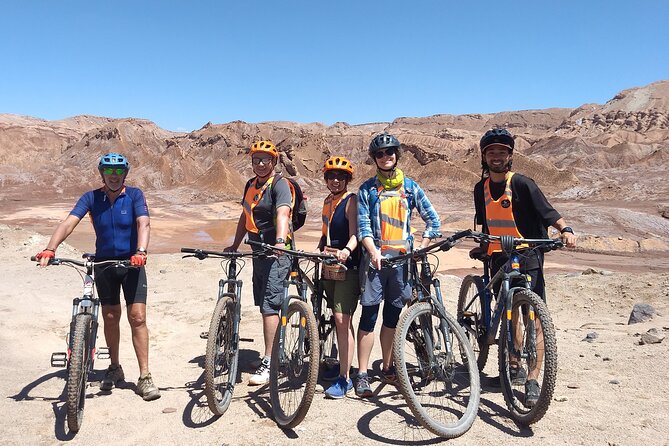
- The group is small: A maximum of 12 people makes personal attention more likely than on a large bus excursion.
- Budget for the extra fee: Bicycles and safety equipment are included, but Catarpe Valley costs CLP5,000 per person.
Why ride the Atacama instead of simply looking at it?
San Pedro de Atacama offers many ways to see the desert, but a bicycle changes the scale of the place. You move slowly enough to notice the shapes in the clay, the cuts in the valley walls, and the way sunlight shifts across the stone. You also earn the views with your own legs, which gives the outing a satisfying sense of place.
The tour begins at Caracoles and Toconao in central San Pedro. You do not need to arrange a separate transfer to the trailhead. After meeting the guide, you quickly leave town and enter the Atacama Desert.
That quick change is part of the appeal. San Pedro is compact and lively, while Catarpe Valley feels open and exposed. The route provides a direct contrast between town and desert without spending much of the four-hour outing in a vehicle.
I would choose this ride if you want more than a photo stop. It gives you time to feel the ground change under the tires and to ask questions as the route unfolds. The tour is also a useful choice if you have only one free morning or afternoon, since it ends back at the starting point.
More santiago bike tours in San Pedro de Atacama:
- From San Pedro de Atacama: Moon Valley E-Bike Tour
★ 5.0 · 10 reviews - San Pedro de Atacama: Volcano Downhill Bike Tour
★ 4.8 · 5 reviews - Santiago: Markets Bike Tour
★ 4.8 · 107 reviews
Catarpe Valley gives the ride its first big change of scenery
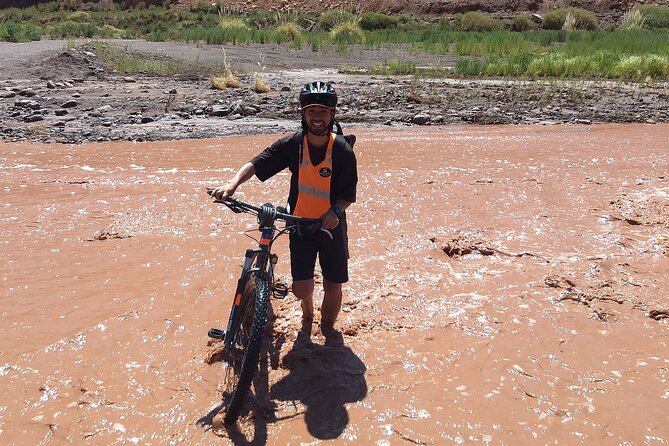
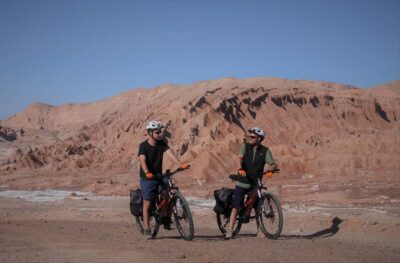
The main stop is Valle de Catarpe, or Catarpe Valley. This is where the route takes on its desert character, with clay valleys and varied rock formations shaping the ride. The scenery is not a single grand viewpoint. It changes as you pedal, with new folds, colors, and light appearing around the bends.
That makes a bicycle especially useful here. A vehicle can carry you between viewpoints, but a bike lets you stop when something catches your eye. Your guide can also explain the area’s geography and point out details connected to the Atacama’s plants, animals, and history.
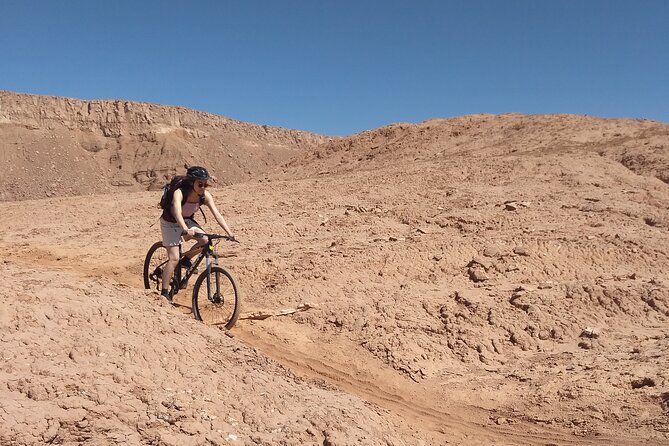
The surface and terrain can be challenging in places. The exact effort will depend on your pace and cycling experience, but the ride is not presented as a flat, effortless spin. A guide can adapt to your level, and the route can be handled at a quiet rhythm, yet you should be ready for active riding.
The high setting around San Pedro is another consideration. One rider specifically appreciated a guide who stayed with their pace because the altitude made cycling harder. You do not need to race. The ability to slow down is one of the tour’s most useful features.
San Isidro Chapel adds a human detail
After crossing Catarpe Valley, you reach San Isidro Chapel. This stop breaks up the ride and gives the outing a point of cultural interest alongside its desert scenery.
The chapel matters because it brings human history into a place that can otherwise seem empty. You are not only cycling among rock and clay. You are also seeing how people have used and marked this dry region.
The break is well placed. Four hours on a bike can feel long if the route has no pause, while a stop at the chapel gives you time to catch your breath and take in the setting. The guide can add context about the area’s past, as well as the natural features around you.
Do not expect a full museum visit or a long formal tour of the chapel. The information describes it as a stop and break within the route. Its value is in the pause, the setting, and the connection between the desert and local history.
Devil’s Throat is the most active section
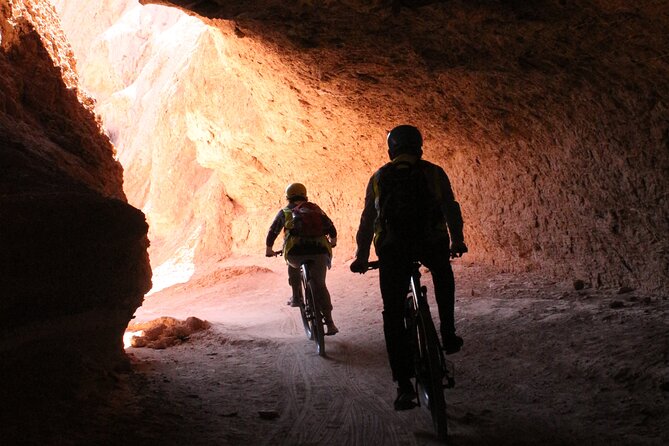
From San Isidro Chapel, the route descends into Garganta del Diablo, known in English as Devil’s Throat, within Quebrada de Chulacao. This is the part that gives the tour its name and its strongest sense of adventure.
Riding through the passage puts you close to the rock walls and clay forms. You are not viewing the Atacama from a distant platform. You are moving through it, with the route narrowing and the terrain becoming part of the experience.
The descent is exciting, but it also deserves respect. The ride has been described as including challenging terrain, and the guide’s role becomes especially important here. The strongest feedback about Juli, Julia, and Andrej centers on care, safety, and a willingness to match the rider’s ability.
If you prefer a gentle outing, say so at the start. The tour is designed around your rhythm, and the guide can keep the ride quiet and manageable. If you want more of a test, the same route can feel adventurous without becoming a race.
The best approach is to treat Devil’s Throat as a shared ride rather than a personal challenge. Let the guide set a safe line through the terrain, keep your own pace, and leave time to enjoy the rock formations. The point is not to finish first.
A few more San Pedro de Atacama trips to weigh up
- From San Pedro de Atacama: Laguna Cejar E-biking Adventure
★ 5.0 · 10 reviews - Santiago: Highlights, Parks and Politics Bike Tour
★ 4.6 · 75 reviews - Santiago Center Cultural Bike Tour
★ 5.0 · 51 reviews - Private Full-Day Bike Tour of Santiago Cultural 5-6 hrs
★ 5.0 · 49 reviews
The guides make the difference
The named guides associated with this experience are Juli, Julia, and Andrej. Their individual style may vary, but the consistent strength is personal attention.
Andrej is praised for teaching efficient cycling technique, explaining the area, and showing patience and empathy. That is useful if you are not used to riding in desert conditions or at San Pedro’s altitude. He also offered suggestions for other activities in town, which can help you plan the rest of your stay.
Juli is described as flexible with both the route and the rider’s ability. She can keep the ride moving at the right distance and speed, explain the history and natural features of the Atacama, and take photos. One practical story says she lent a rider shorts after they arrived in jeans, a good reminder that small acts of care can matter on an active tour.
Julia receives similar praise for sharing information about geography and keeping the level of difficulty suitable. Her attention to safety helped one rider enjoy the route without feeling pressured.
These details matter more than a polished speech. A bike guide needs to watch the group, read the terrain, and notice when someone needs a slower pace or a break. The feedback here points to guides who do that well.
Four hours is enough, but not weightless
The tour lasts about four hours and ends where it starts. That timing gives you a proper ride rather than a short spin around town, while still leaving the rest of your day open.
You should expect the time to pass through several stages: meeting in town, entering Catarpe Valley, riding toward San Isidro Chapel, taking a break, and descending through Devil’s Throat before returning. The exact rhythm is not fixed, since the guide adapts to the group.
A four-hour ride can feel different depending on your experience. Strong cyclists may find the distance comfortable, while occasional riders may notice the altitude and uneven sections. The guide’s pace control helps, but it does not remove the physical work.
I would avoid booking this immediately before another demanding excursion if you know that cycling tires you out. On the other hand, the route can suit a first active outing in San Pedro because you can set the pace and finish at the original meeting point.
What the $85 price includes
At $85 per person, the tour is not the cheapest way to see the area, but the value depends on how much you want from the visit. You are paying for roughly four hours of guided riding, a bicycle, safety equipment, route leadership, and interpretation of the desert’s geography and culture.
The small maximum of 12 people improves that value. A guide can pay closer attention to speed, terrain, and comfort when the group is limited. In low season, the group may be even smaller. One rider had a one-on-one outing with Andrej, though you should not assume that will happen on your date.
The Catarpe Valley admission fee is extra: CLP5,000 per person. Breakfast is also not included. Since the tour meets in town, you need to handle your own food before the ride.
For me, the price makes the most sense if you value an active, guide-led experience and want to see Devil’s Throat from inside the route. If you only want a quick view of Catarpe Valley, a less active option might feel better suited to your budget and energy.
What to wear and how to prepare
The supplied details do not specify a clothing list, but one useful lesson comes from the ride itself: jeans were uncomfortable enough that a guide lent a rider shorts. Choose clothing that lets you pedal freely and handle a warm, active outing.
You receive the bicycle and safety equipment, so you do not need to arrange those items separately. Breakfast is not included, so plan that yourself before meeting at Caracoles and Toconao.
Most people can participate, according to the tour information, and service animals are allowed. Still, the route includes challenging terrain and altitude. Be honest about your cycling level at the start. The whole design of the outing depends on the guide setting a pace that lets you enjoy the ride rather than struggle through it.
Good weather is required. If conditions force a cancellation, you are offered another date or a full refund. You can also cancel for a full refund up to 24 hours before the start time. Changes or cancellations inside that 24-hour window are not accepted.
Who will enjoy this ride most?
This is a strong choice for you if you want to:
- See Catarpe Valley at a slower, more personal speed.
- Ride through Devil’s Throat rather than view it from a distance.
- Combine desert scenery with a stop connected to local history.
- Ask questions about geography, plants, animals, and culture.
- Choose your own pace instead of joining a fixed-speed cycling group.
- Add an active half-day to a San Pedro visit.
It is less suitable if you want a completely passive sightseeing experience, dislike uneven terrain, or are looking for a very short ride. You can keep the pace calm, but you still need to pedal for about four hours and manage sections described as challenging.
Families and mixed-ability groups may appreciate the small group and flexible rhythm, though the supplied information does not set a minimum age or give a detailed fitness standard. If that matters for your party, ask before booking.
Should you book the Devil’s Throat bike tour?
I would book this tour if you want an active way to understand the desert around San Pedro de Atacama. The strongest reasons are the route through Catarpe Valley, the descent into Devil’s Throat, and the guides’ clear habit of adjusting the ride to the person in front of them.
The practical decision is simple. Bring the CLP5,000 valley fee, wear comfortable riding clothes, allow for altitude and rougher sections, and tell the guide what pace suits you. If you do that, the $85 cost buys more than transport to a viewpoint. It gives you time, movement, context, and a close look at one of the area’s most striking routes.
FAQ
Where does the bike tour start?
It starts in central San Pedro de Atacama at the corner of Caracoles and Toconao.
Where does the tour end?
The activity ends back at the same meeting point where it began.
How long does the tour last?
The tour lasts approximately four hours.
What places does the route include?
The route crosses Catarpe Valley, reaches San Isidro Chapel for a break, and descends through Devil’s Throat, also called Quebrada de Chulacao.
Is the Catarpe Valley entry fee included?
No. The Catarpe Valley ticket costs CLP5,000 per person and is paid separately.
Are bicycles and safety equipment provided?
Yes. A bicycle and safety equipment are included in the tour price.
Can I choose the cycling pace?
Yes. The pace is decided with you, and the tour can be kept quiet or made more adventurous.
How many people can join the tour?
The maximum group size is 12 people.
What happens if the weather is poor?
The experience requires good weather. If it is canceled because of poor weather, you are offered a different date or a full refund.
Just added around San Pedro de Atacama
- Atacama Desert and Magic Bus Visit★ 4.8 · 15 reviews
- Vallecito★ 4.7 · 13 reviews
- San Pedro de Atacama: Valle de la luna★ 3.0 · 3 reviews
- Valle de la Luna: A Moon-Like Escape in Atacama★ 5.0 · 3 reviews
- Valley of the moon★ 5.0 · 50 reviews
- San Pedro de Atacama: Half day Valle de la Luna, Afternoon Tour★ 4.5 · 52 reviews
- Piedras Rojas and Altiplanic Tour★ 4.5 · 38 reviews
- Uyuni Salt Flats 4-days tour from Atacama> private room available★ 4.5 · 44 reviews
Santiago Bike Tours, compared.

Private Full-Day Bike Tour of Santiago Cultural 5-6 hrs
Read our review →
Private San Cristobal Hill & Metropolitan Park Santiago Bike Tour
Read our review →
Browse the lists this tour appears in