
Reviewed · CITY TOURS
Private Santiago City Tour with Cable Car
Santiago comes into focus from the top of Cerro San Cristóbal, where a cable car carries you above the city toward broad views of the Andes. The ride, followed by a descent on the old funicular, gives this city tour a memorable centerpiece instead of a string of quick photo stops.
I like the range here: you move from the political heart around La Moneda and Plaza de Armas to the artsy streets of Bellavista, then into polished eastern districts. I also like having a private vehicle, since your guide can combine short walks with easy pick-ups rather than leaving you to navigate Santiago’s spread-out sights alone.
The main caution is value. At $135 per person, this makes the most sense when you want a private introduction, hotel transport, and a guide who can explain Chilean politics and history. If you mainly want to see buildings from the outside, you can cover several central stops on your own for much less.
In This Review
- Key points to know before booking
- Why this five-hour route works for a first look at Santiago
- La Moneda and the public square where Chile’s politics unfold
- Plaza de Armas and Santiago’s colonial center
- Cerro Santa Lucía, Santiago’s founding hill
- Bellavista and Patio Bellavista for arts, food, and shopping
- Cerro San Cristóbal brings the city together
- Vitacura and Santiago’s polished eastern side
- Parque Bicentenario offers a quiet final stop
- Guides, private service, and mobility considerations
- Is $135 per person a fair price?
- Who should book this Santiago tour?
- Final decision
- FAQ
- How long does the Santiago city tour last?
- Is the cable car ticket included?
- Does the tour include the funicular ride?
- Is hotel pick-up and drop-off included?
- Is this a private tour?
- Is lunch included?
- Can people with mobility issues participate?
- What happens if bad weather cancels the tour?
Key points to know before booking
- The cable car and funicular create the tour’s best moment: You ride up Cerro San Cristóbal by teleférico and return by historic funicular, with city and Andes views along the way.
- You see two very different Santiagos: The route links the old center with Bellavista, Vitacura, and modern northeastern districts.
- A private guide shapes the experience: Only your group participates, making it easier to ask questions, adjust walking time, or request help.
- The tour balances rides and short walks: Most stops last 20 to 45 minutes, so you get a broad orientation without spending the whole day on foot.
- Hotel pick-up and drop-off add real value: Air-conditioned minivan transport is included, and the service has also handled port and airport transfers in individual cases.
- Guide quality matters: Leo, Jaime, Marko, Julio, Edison, and Maria have been singled out for clear explanations, organization, and considerate service.
Why this five-hour route works for a first look at Santiago
Santiago is large enough that a first visit can feel scattered. The historic center, San Cristóbal Hill, Bellavista, and the eastern business districts each have a different mood, and walking between them is not practical in a half-day.
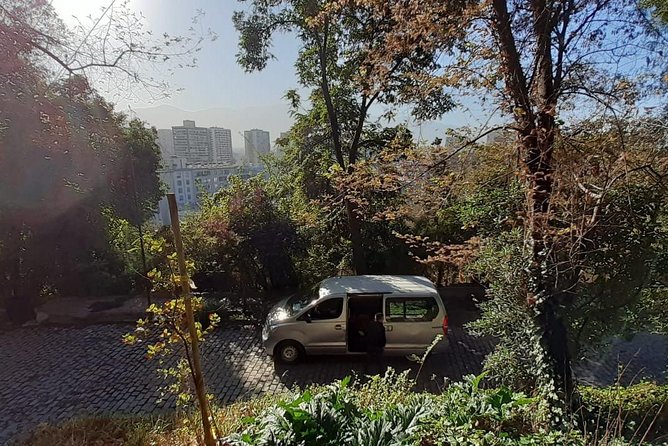
This tour solves that problem with a driver and modern air-conditioned minivan. You get out at the main sights, walk with your guide, and return to the vehicle for the next section. That arrangement is especially useful in Santiago, where traffic and distance can eat up time if you try to connect everything by foot.
The experience is private, so the pace belongs to your group. You can ask about Chilean politics at La Moneda, pause for photos at the hilltop, or spend more time listening to the story of a neighborhood. Past service has included both a driver and a guide, which helps when one person stays with you while the vehicle moves to a convenient pick-up point.
The schedule is listed at about five hours. Some past outings finished closer to four hours, while others used the full half-day. I would treat the stated duration as an approximate window, not a promise of a full day. This is an orientation tour, not an exhaustive visit to every museum or historic building.
A few more Santiago trips to weigh up
- Private Santiago City Half Day Tour
★ 4.0 · 414 reviews - Private Transfer from Santiago Airport to Santiago
★ 4.0 · 330 reviews - Private Tour: Viña del Mar and Valparaíso Tour with Wine Tasting in Casablanca Valley
★ 4.5 · 188 reviews
La Moneda and the public square where Chile’s politics unfold
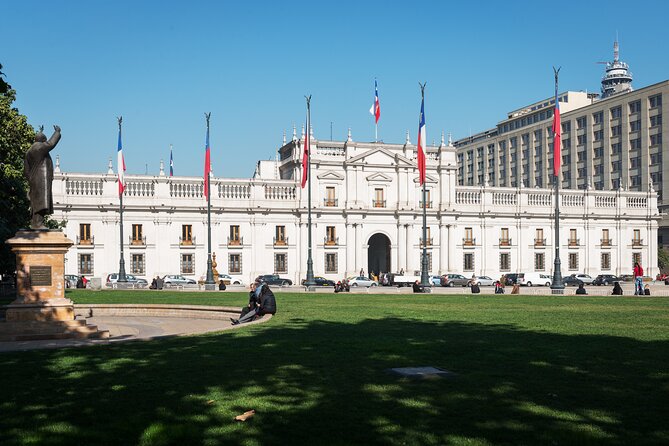
The route begins at the Plaza de la Ciudadanía, the broad public space in front of Palacio La Moneda. This is more than an attractive government building. The square is tied to political gatherings, protests, public celebrations, and the daily life of Chile’s democracy.
Your guide can give the palace a useful setting in Chilean history and explain how government operates around this part of town. The neoclassical facade, gardens, and open space make a good first stop because they introduce both the country’s institutions and Santiago’s grand civic design.
The Centro Cultural Palacio La Moneda is inside the palace complex. It presents exhibitions, art installations, and multimedia displays connected with Chilean history, art, and culture. The tour allows about 30 minutes here, with admission listed as free.
Do not expect a long museum visit in this slot. The value is the setting and the explanation. If a temporary exhibition interests you, your limited time may feel short, but the stop gives you more context than simply taking a photograph outside.
The Palace of the Courts of Justice is another central landmark on the route. It houses Chile’s Supreme Court, the Santiago Court of Appeals, and military courts serving the Army, Air Force, and Police. You will mainly appreciate the imposing architecture from outside, along with a short explanation of Chile’s legal system.
Plaza de Armas and Santiago’s colonial center
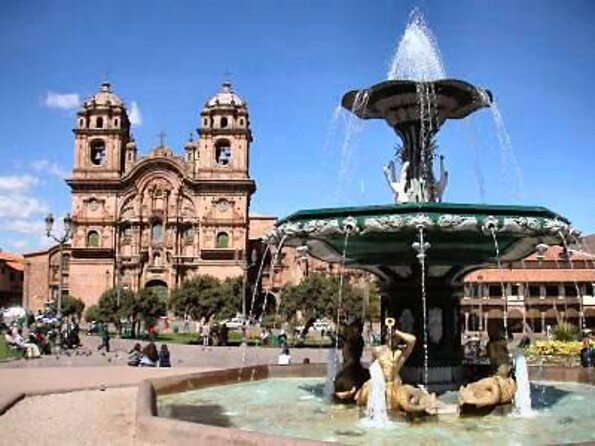
Plaza de Armas is the city’s central public square and one of the clearest places to see old Santiago meet present-day city life. The square is framed by major civic and religious buildings, including the Metropolitan Cathedral and the Municipality of Santiago.
Plan on about 45 minutes here. That is enough time to look at the buildings, take photos, and hear how the square has served as a political and social center. Your guide may also help you read the city beyond the facades, explaining how the center connects with Chile’s government, public life, and national story.
I like this stop because it gives you a physical anchor. After seeing several districts from a vehicle, you can stand in one place and understand where Santiago’s historic core is. The limitation is that a busy central square can feel more like an urban crossroads than a quiet monument. The appeal comes from observing the city in use.
If you are particularly interested in churches, public buildings, or local history, tell your guide early. Since this is a private outing, your questions can shape the time better than they could on a fixed group excursion.
Cerro Santa Lucía, Santiago’s founding hill
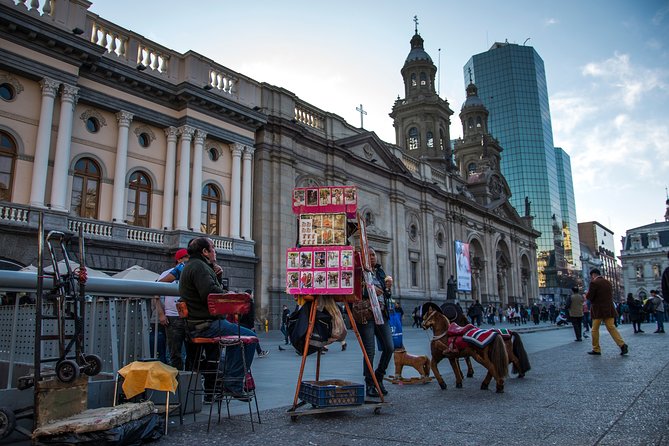
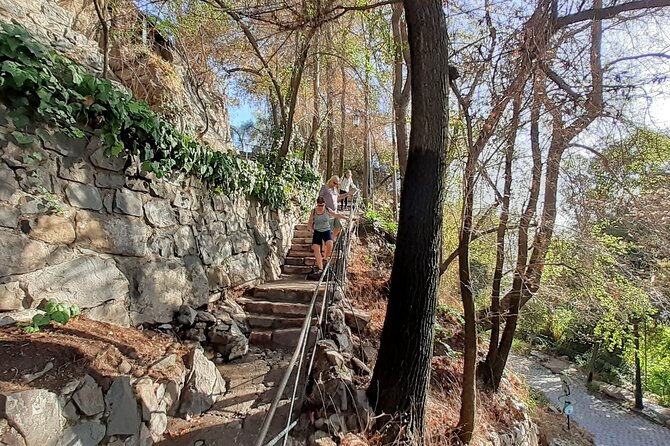
Cerro Santa Lucía offers a very different central-city experience. Pathways, stairs, gardens, and decorative structures climb a small hill surrounded by the city. It is associated with the founding of Santiago and gives you a quick retreat from the streets below.
The planned stop lasts about 45 minutes. That should allow a short climb and some city views, but it is not enough for a leisurely exploration of every path. Stairs may be tiring for some people, and the route is not simply a flat park stroll.
I like the contrast between Santa Lucía and San Cristóbal. Santa Lucía is a compact historic park in the center, while San Cristóbal is the larger scenic ride later in the day. Seeing both helps you understand how Santiago uses its hills as public spaces.
The itinerary also includes a stop at the country’s most modern performing arts cultural center. The supplied details do not name the center or give a fixed visit time, so you should regard it as a short exterior or drive-by orientation unless your guide confirms otherwise.
Same long country, a very different day out:
- Santiago: Cajon del Maipo/Embalse del Yeso Tour with Picnic
★ 4.3 · 3,789 reviews - Santiago: Vina Del Mar, Valparaiso, Casablanca & Reñaca Tour
★ 4.2 · 2,838 reviews - Small-Group Cajón del Maipo Full-Day Tour and Picnic
★ 4.5 · 2,277 reviews - Santiago: Cajon del Maipo & Embalse El Yeso Trip with Picnic
★ 4.5 · 1,859 reviews
Bellavista and Patio Bellavista for arts, food, and shopping
Bellavista sits at the foot of San Cristóbal Hill and has an arts-focused character. The area is associated with theaters, jazz clubs, salsa venues, live music, restaurants, and bars. The tour gives you about 30 minutes in the neighborhood, followed by another 30 minutes at Patio Bellavista.
Patio Bellavista is a pedestrian-style boulevard where food, tourism, crafts, and cultural activity come together. Shops sell Chilean items made with copper, alpaca, wood, and lapis lazuli. This is a convenient place to see local craft materials in one setting, though it is also a commercial stop.
The distinction matters. Bellavista is the neighborhood, with its clubs and performance spaces. Patio Bellavista is the more organized dining and shopping area. You will get a quick taste of both, but not enough time for a full meal, a performance, and serious shopping.
Lunch is not included. The tour description does not set out a dedicated lunch stop, and the time allocation suggests that you should ask your guide about the best way to handle food. If you need lunch during the outing, plan to pay separately and confirm how much time is available.
One past outing included a jewelry-shop visit that was not part of the intended program. The operator later said it had instructed guides to stop doing this. I would still make your preference clear at the start: you want the listed sights, not a sales stop.
Cerro San Cristóbal brings the city together
The strongest part of the tour is Cerro San Cristóbal. The hill rises inside Metropolitan Park and gives you the broadest view of Santiago on this route. A cable car takes you upward, and on a clear day you may see the Andes beyond the city.
The included teleférico ticket is important. You are not merely driving to a lookout. The ride itself adds a sense of movement and gives you changing views as the city falls away below.
At the summit, you will find the Virgin Mary statue, gardens, and several lookout points. Allow about an hour for the hilltop and the descent. This is the place to take your best photographs, but visibility depends on weather and air conditions. The Andes are not guaranteed to appear clearly.
The return by historic funicular is a nice counterpoint to the modern cable car. It carries you down the wooded hillside in an old-fashioned way and completes the hill visit without repeating the same route.
You should ask your guide about the order of the rides on the day. The stated plan is cable car up and funicular down, but operating conditions can affect transport attractions. The tour requires good weather, and poor conditions can lead to a new date or a full refund.
Vitacura and Santiago’s polished eastern side
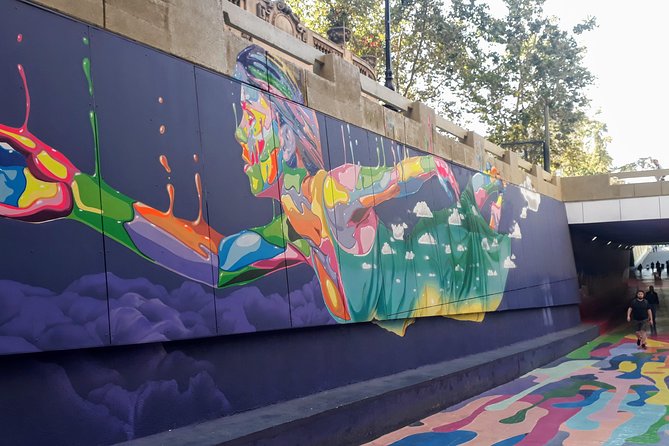
After the historic center and hill districts, the route shifts east. Vitacura is an upscale area with high-end boutiques, gourmet restaurants, art galleries, polished residences, parks, and modern infrastructure. It shows the prosperous, business-oriented side of Santiago.
The tour also passes through a modern northeastern neighborhood. The details do not assign a separate duration to every eastern district, so expect these sections to work mainly as a driving orientation with selected stops rather than a long walking visit.
This part of the route is useful because Santiago is not only churches, plazas, and old government buildings. The eastern districts show the city’s newer development and give you a better sense of how daily life changes across the capital.
The tradeoff is that upscale districts can feel less distinctive if you want traditional culture at every stop. I see their inclusion as context rather than a major attraction. You are learning how the city is organized, not visiting a single landmark with a long history.
Parque Bicentenario offers a quiet final stop
Parque Bicentenario covers more than 30 hectares and includes gardens, ponds, and recreational areas. With about 20 minutes here, you will get a short walk and a break from buildings and traffic.
The park’s clean, modern design fits the eastern part of the route. It also gives you a chance to compare Santiago’s public spaces: Santa Lucía is compact and historic, San Cristóbal is wooded and panoramic, while Bicentenario is broad, planned, and contemporary.
Twenty minutes is enough to stretch your legs and take a few photographs. It is not enough to explore the whole park. If you prefer museums or markets to open green space, this may be the least essential stop, but many people appreciate the pause near the end of a busy route.
Guides, private service, and mobility considerations
The guide can make or break a city orientation, and this experience has several strong examples. Leo has been praised for explaining the city clearly and allowing time to explore and take pictures. Jaime has been described as well informed about Santiago and Chile while keeping political opinions in check.
Marko and driver Juan provided especially considerate service for a father with mobility issues. Marko stayed with the pair during walks, offering information and assistance, while Juan handled the vehicle and arranged practical pick-ups. That suggests useful flexibility, though the tour still includes hills, steps, and walking through public spaces.
Julio and Edison have also been praised for organization, friendly service, and broad knowledge of the city. Maria was described as engaging, though one outing found her unwell. Guides can vary, so the experience depends partly on who is assigned that day.
Most people can participate, and service animals are allowed. Near public transportation is noted, but hotel pick-up and drop-off are included, which means you do not need to reach a central meeting point. If you have limited mobility, tell the operator before departure and ask how much walking and how many stairs are expected at Santa Lucía and San Cristóbal.
Is $135 per person a fair price?
The $135 price is not a bargain if you compare it with using public transport and visiting central sights independently. La Moneda, Plaza de Armas, and several outdoor areas do not charge admission, and an independent visitor could see some of them at low cost.
The calculation changes for a private group. The price includes a professional guide, hotel pick-up and drop-off, a private modern minivan, and the cable car ticket. You are paying for transport between far-flung districts, explanations about politics and history, and the ability to ask for help or adjust the pace.
For a couple, family, or small group arriving for a short stay, that can be sensible. It is also useful if you are in Santiago between a cruise port and an airport. One past outing began with pick-up at San Antonio port and ended at the airport, though you should confirm any special transfer arrangement before booking.
The price is harder to justify if you are a confident independent visitor who wants only a few central sights. In that case, the tour’s main benefit is not admission savings. It is the time saved and the human explanation that connects the city’s parts.
Who should book this Santiago tour?
I would choose this outing for a first visit, especially if you have only one day or half a day to get oriented. It gives you the political center, historic square, two major hills, Bellavista, and the modern east in one carefully connected route.
It also suits families and private groups who value control over the pace. The mix of vehicle time, short walks, gardens, city views, and cable car travel keeps the day varied. People who want to ask about Chile’s political past and current challenges will get more from it than people seeking a purely scenic drive.
I would hesitate if your priority is a slow museum day, a long lunch, or serious shopping. The schedule moves quickly, several stops are brief, and lunch costs extra. Also, clarify that you do not want an unplanned jewelry stop.
Book at least a day ahead if your plans are firm, since the cancellation rule allows a full refund only when you cancel at least 24 hours before the start time. The tour is often booked well ahead, with an average booking lead time of 103 days, so popular dates may require more planning.
Final decision
Book this private Santiago tour if you want an efficient first look at a wide city and value a guide who can explain what you are seeing. The cable car, funicular, and Andes views give it a strong central experience, while the private vehicle makes the spread-out itinerary practical.
Skip it if you are happy to explore the central sights independently and would rather spend $135 on food, museums, or a longer single attraction. For everyone else, especially families, cruise passengers, and visitors with limited time, this is a useful and flexible introduction to Santiago.
FAQ
How long does the Santiago city tour last?
The tour lasts approximately five hours. Some past outings have ended closer to four hours, so you should allow flexibility around the stated duration.
Is the cable car ticket included?
Yes. The cable car ticket is included in the tour price, as is the cable car ride up Cerro San Cristóbal.
Does the tour include the funicular ride?
Yes. The planned route takes you up Cerro San Cristóbal by cable car and down by the historic funicular.
Is hotel pick-up and drop-off included?
Yes. Hotel pick-up and drop-off are included. A past service arrangement also handled pick-up at San Antonio port and drop-off at an airport, but you should confirm special transfer plans when booking.
Is this a private tour?
Yes. Only your group participates in the activity. The tour includes a professional guide and transport in a modern air-conditioned minivan.
Is lunch included?
No. Lunch is not included in the price.
Can people with mobility issues participate?
Most people can participate, and service animals are allowed. The route includes walking, stairs, parks, and hills, particularly at Cerro Santa Lucía and Cerro San Cristóbal. Contact the operator before booking to discuss your needs.
What happens if bad weather cancels the tour?
The experience requires good weather. If poor weather causes a cancellation, you will be offered another date or a full refund. You can also cancel for a full refund up to 24 hours before the start time. Cancellations or changes made within 24 hours are not refunded or accepted.
Just added around Santiago
- Walking City Tour with Funicular, Cable Car and Tasting★ 4.3 · 6 reviews
- VIÑA DEL MAR AND VALPARAISO TOUR★ 4.8 · 20 reviews
- Valparaiso & Casablanca : Wine, Gastronomy and Living Culture★ 5.0 · 37 reviews
- Coast and Color: Discover Viña and Valparaíso in a Day★ 5.0 · 58 reviews
- Private Cruise Transfer : Santiago → Valparaiso or San Antonio★ 4.5 · 51 reviews
- Valle nevado Sunset★ 5.0 · 40 reviews
- Snow Tour Farellones Fullday Andes Panoramic★ 5.0 · 47 reviews
- “Tour Tradicional” Viña Cousiño Macul Oficial portugués★ 5.0 · 35 reviews
City Tours, compared.
Full day tour to Valparaiso and Viña del Mar city
Read our review →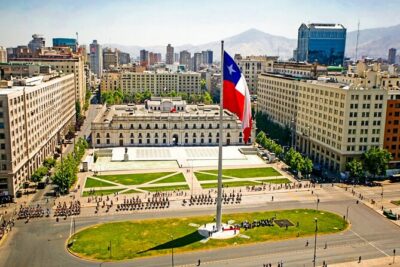
Valparaiso 4-Hour City Tour by Van and Funicular
Read our review →
The Essentials City Tour & Optional Concha y Toro
Read our review →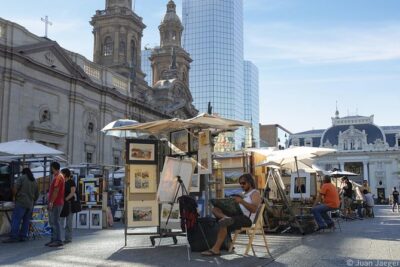
Browse the lists this tour appears in