
Reviewed · CITY TOURS
Santiago: Electric Scooter City Tour with Lunch
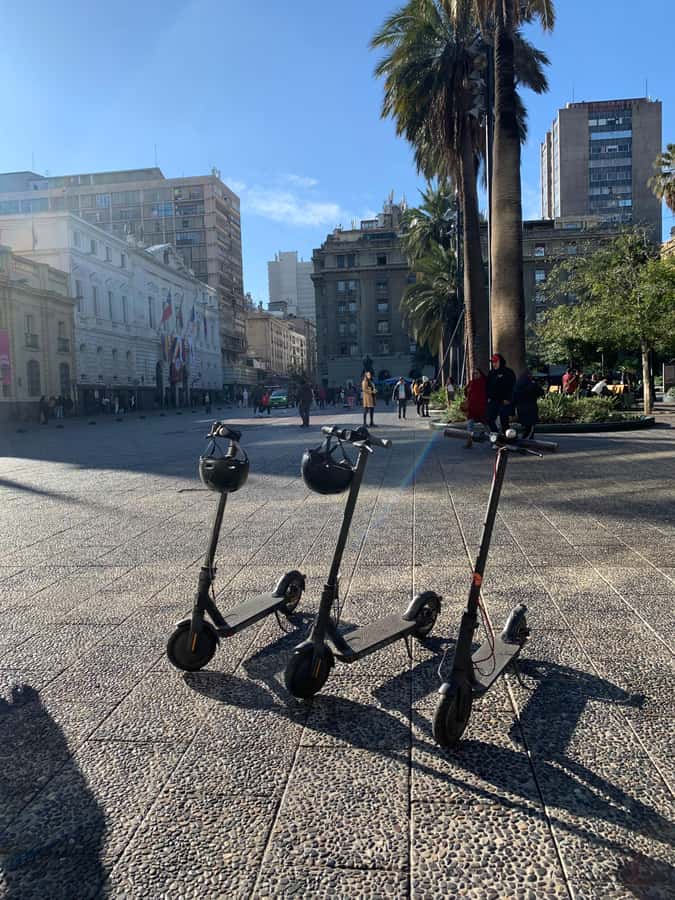
Santiago’s civic center is spread across broad avenues, grand squares, markets, and government buildings. An electric scooter lets you cover this busy core quickly while still stopping to hear the stories behind La Moneda, Plaza de Armas, the former Congress, and the Supreme Court.
I like two things here: the route mixes major sights with everyday food stops, and the small group, limited to eight, gives guide Daniel Bustos room to help riders. The included empanadas make the $95 price easier to understand, especially if you want an orientation tour on your first day.
The main consideration is that scooter riding requires balance and confidence. The tour is not suitable for wheelchair users or people with mobility impairments, and first-time riders should be ready for city streets, changing weather, and a fairly active 150 minutes.
In This Review
- Key points at a glance
- Why an electric scooter works well in Santiago
- Starting on the Alameda at Av. Ejército Libertador
- La Moneda and Chile’s modern political story
- Plaza de Armas and the cathedral
- From the fish market to San Camilo
- Bandera, Congress, and the Supreme Court
- La Bolsa and the city’s financial quarter
- Returning through Paseo Bulnes
- Empanadas at the end of the ride
- Is $95 a fair price?
- Who should book this Santiago tour?
- Practical details before you book
- Should you book it?
- FAQ
- Where does the Santiago electric scooter tour begin?
- How long does the tour last?
- What language is the tour offered in?
- How many people can join the group?
- Who guides the tour?
- Is lunch included?
- Is ceviche included?
- Are scooters and helmets provided?
- Are attraction entrance fees included?
- What should I bring?
Key points at a glance
- A quick route through Santiago’s political heart: Ride the Alameda to La Moneda, then continue through the city’s main civic and institutional districts.
- Small groups capped at eight: Daniel can give more attention to beginners than a large bus or walking tour allows.
- Food is part of the experience: End with freshly made empanadas at a local bakery, with optional fresh ceviche available at the fish market.
- Three language choices: Tours are offered in Spanish, English, and Portuguese.
- A useful first-day introduction: The route links parks, squares, markets, museums, libraries, theaters, and government buildings.
- Bring sun protection: Comfortable shoes, water, a hat, and sunscreen matter on this mostly outdoor outing.
Why an electric scooter works well in Santiago
Santiago’s center is easy to explore on foot in pieces, but the sights are spread across several districts. The scooter helps you move from the Alameda to Plaza de Armas, then on to the market and court buildings without spending the whole tour walking between stops.
That extra range gives the outing a useful shape. You are not just looking at one square and returning to the starting point. You pass through popular, educational, commercial, and political parts of the city, so you get a broader first impression of central Santiago.
The tour lasts 150 minutes, including riding, stops, commentary, and lunch. That is long enough for a solid city orientation, but short enough to fit into a day of sightseeing. I would especially consider it for your first full day, when learning the layout of Santiago can help you plan later visits.
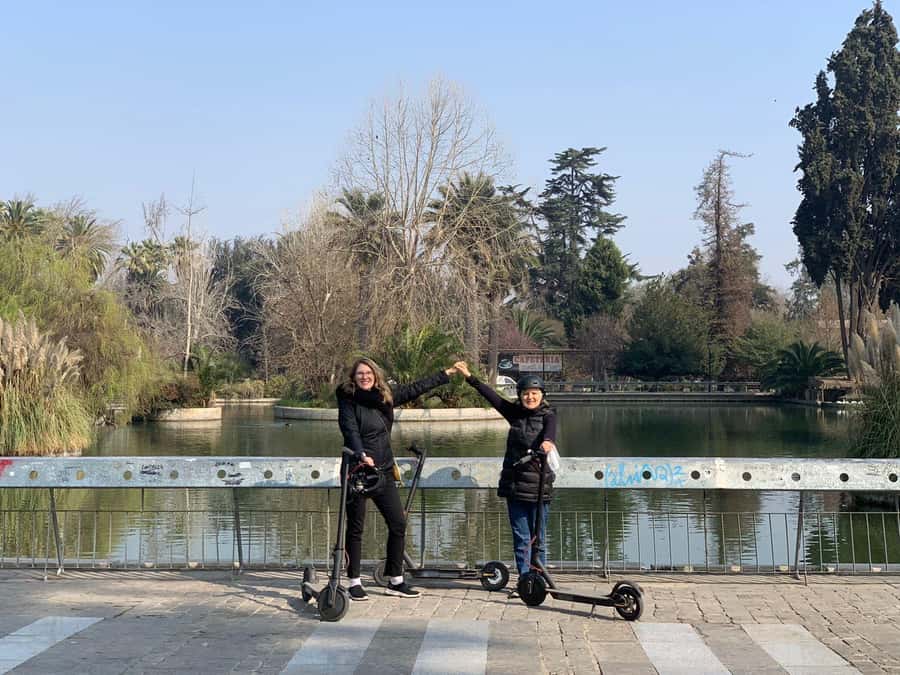
The group size is limited to eight people. That is a practical advantage for a scooter activity because the guide can watch the group more closely and help anyone who has not ridden an electric scooter before. Daniel has also guided groups that included several people over 50 and beginners, so you do not need to arrive as an experienced rider.
Still, do not treat this as a passive sightseeing ride. You need to be comfortable standing, steering, braking, and following instructions. The supplied information gives a minimum participant age of 9, while children under 8 are listed as unsuitable. Comfortable clothing and shoes are essential.
A few more Santiago trips to weigh up
- Santiago: E- Mountain Bike Rental to ride in a bike park
★ 4.8 · 8 reviews
Starting on the Alameda at Av. Ejército Libertador
The meeting point is at Av. Ejército Libertador 6, on the corner with Alameda Libertador Bernardo O’Higgins in Santiago Centro. This is the place to arrive for the scooter fitting, safety equipment, and meeting with Daniel Bustos, the owner of Scoo Tours Chile.
Allow enough time to find the exact corner. The meeting instructions identify the location clearly, but city-center intersections can be confusing if you are rushing. Have the map link available on your phone and arrive ready to ride rather than carrying a large bag or wearing restrictive clothing.
The tour begins with a short scooter ride of about five minutes. That opening section helps you get used to the scooter before the route reaches its major landmarks. Helmets and safety equipment are included.
Santiago’s weather can change during the day, and much of this experience takes place outdoors. Pack water, sunscreen, and a hat. Smoking, alcohol, drugs, and eating or drinking during the riding portion are not allowed.
La Moneda and Chile’s modern political story
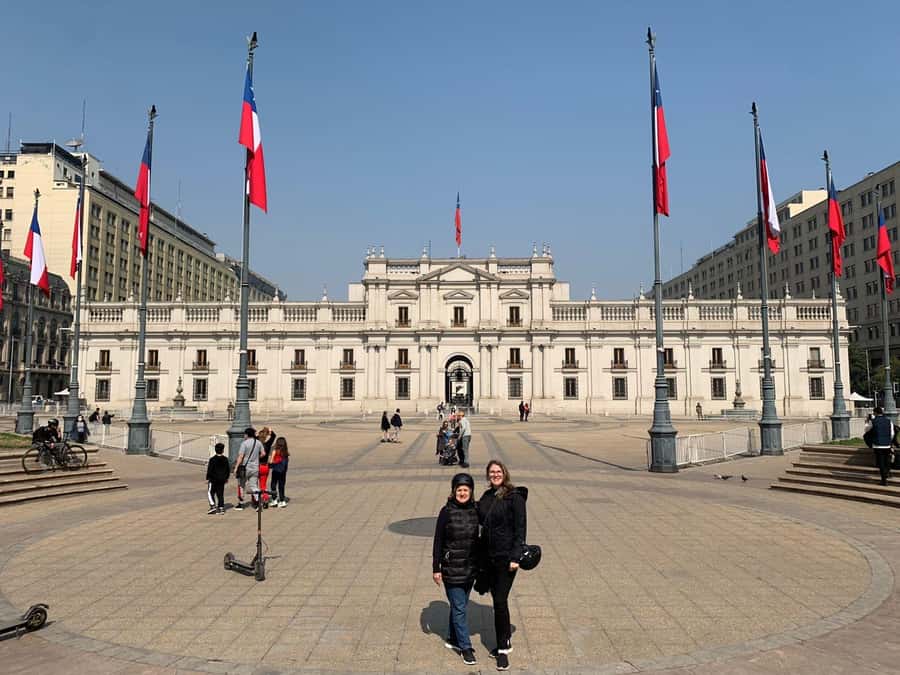
The first major landmark is Palacio de La Moneda, Chile’s presidential palace and the seat of the President of the Republic. You ride along the Alameda, Santiago’s main avenue, to reach it.
La Moneda is more than a grand government building. It is one of the clearest places in the city to discuss Chile’s political past and present, including the role of the presidency and the importance of the surrounding civic district. Your guide’s explanation is the useful part here, since the exterior alone cannot tell you how the building fits into Chilean public life.
The route allows about ten minutes of scooter riding toward La Moneda, followed by another short ride before Plaza de Armas. Exact stop lengths can vary, so you should expect a moving city tour rather than long indoor visits.
No entrance fees are included, and the experience does not promise interior access to La Moneda. You will see the palace as part of the guided route and learn about its role from outside.
Plaza de Armas and the cathedral
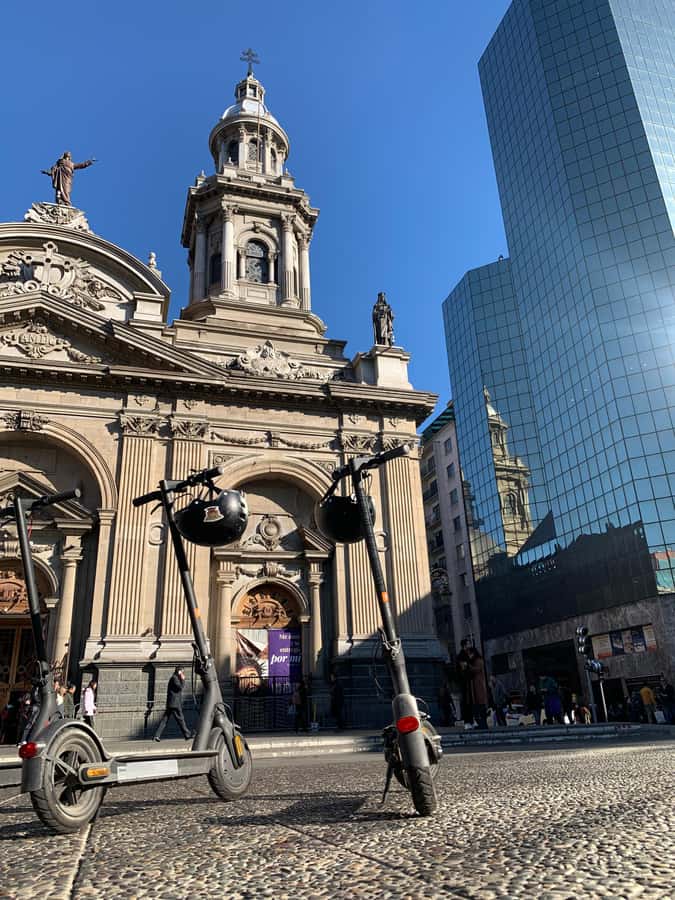
From La Moneda, the tour continues toward Plaza de Armas, Santiago’s central historic square. This is one of the most important stops because it brings together the city’s religious, civic, and daily public life in one place.
The Santiago Metropolitan Cathedral faces the square and gives the stop a strong architectural focus. You can expect time to take in the cathedral and hear about the surrounding civic district, although this is not presented as a dedicated cathedral tour.
Plaza de Armas is also a good place to notice the contrast between Santiago’s formal buildings and its active urban life. The tour is designed to cover culture, politics, and local habits, not only famous facades. Daniel speaks Spanish, English, and Portuguese, so you can choose the language that suits you best.
For photography, this is one of the more rewarding parts of the route. Keep your belongings secure and stay attentive to the group, since the city center is an active public area. The tour data does not promise free time for independent shopping or extended wandering, so think of this as a guided introduction rather than an unstructured plaza visit.
Same long country, a very different day out:
- Santiago: Cajon del Maipo/Embalse del Yeso Tour with Picnic
★ 4.3 · 3,789 reviews - Santiago: Vina Del Mar, Valparaiso, Casablanca & Reñaca Tour
★ 4.2 · 2,838 reviews - Small-Group Cajón del Maipo Full-Day Tour and Picnic
★ 4.5 · 2,277 reviews - Santiago: Cajon del Maipo & Embalse El Yeso Trip with Picnic
★ 4.5 · 1,859 reviews
From the fish market to San Camilo
The itinerary continues to Santiago Central Market, followed by San Camilo. These stops shift the focus from national institutions to food, commerce, and ordinary city life.
The market adds a welcome change of pace after the government buildings and cathedral. You can expect an introduction to local gastronomy and the role of markets in the city. One optional food experience available along this part of the route is fresh ceviche at the fish market. Ceviche is not part of the included lunch, so treat it as an extra choice rather than something covered by the $95 fee.
San Camilo continues the food and neighborhood side of the tour. The supplied details do not specify a particular attraction inside San Camilo, so your experience here will depend on the guide’s route and the time available. That is not a flaw, but it does mean you should book this for a broad city overview rather than a specialist market tour.
I like this section because it keeps the tour from becoming a parade of official buildings. Santiago makes more sense when you see its institutions alongside places where people shop, eat, and move through the city.
Bandera, Congress, and the Supreme Court
The ride then reaches Bandera, an important central street, before continuing to the former National Congress and the Palace of the Courts of Justice. This section focuses on Chile’s political and institutional history.
The former National Congress offers a chance to discuss how Chile’s legislative institutions have changed and how the civic center is organized. The Palace of the Courts of Justice adds the judicial branch to the story, following the presidential and legislative landmarks earlier in the route.
These stops are primarily exterior sightseeing points. Entrance fees to museums or attractions are not included, and no interior visits are promised. If you want detailed architectural access or a long museum session, you would need to plan that separately.
The practical value is that the guide connects buildings that can otherwise look like isolated monuments. You begin to see Santiago’s center as a working political district, not just a collection of old structures.
La Bolsa and the city’s financial quarter
Next comes La Bolsa, a neighborhood known for historic buildings and financial heritage. This is a short but worthwhile change from the government district.
La Bolsa helps show another side of Santiago’s development. The route moves from the presidential palace and courts into an area shaped by commerce, banking, and business. That gives you a more complete picture of the city’s public center in a short time.
The scooter is particularly useful here because the ride links several nearby districts without the stop-and-start pace of a long walking route. At the same time, the tour’s speed means you should not expect a detailed architectural study of every building. Listen for the guide’s main points and note places you may want to revisit on foot.
Returning through Paseo Bulnes
The route finishes along Paseo Bulnes before returning to the original meeting point area. This closing stretch keeps the focus on Santiago’s broad avenues, public spaces, and civic design.
Paseo Bulnes is a fitting final section because it brings together the tour’s themes of politics, urban planning, and public life. Along the full route, you also pass or view urban parks, squares, museums, libraries, and theaters, depending on the exact path and timing.
The itinerary lists a series of short riding sections, mostly five or ten minutes. That tells you what kind of outing this is: frequent movement, regular landmarks, and short explanations rather than one long ride. You should be ready to get on and off the scooter and pay attention at several points.
Empanadas at the end of the ride
The included meal is a typical Chilean lunch of freshly made empanadas at a local bakery, described as part of a market setting. This is a simple but smart way to end the tour.
Food gives the history lesson a local anchor. After hearing about Santiago’s institutions and neighborhoods, you get to taste a familiar Chilean staple rather than ending with a generic snack. The empanadas are included in the price, while optional ceviche at the fish market is separate.
Do not expect a full restaurant meal with several courses. The information provided specifically identifies empanadas, so this is best viewed as a generous local tasting or light lunch. If you need a large meal, plan another stop later.
The food stop also adds value for people who want more than sightseeing. Daniel can point you toward local flavors and places that may be useful for the rest of your stay. That combination of orientation and food is one of the tour’s strongest features.
Is $95 a fair price?
At $95 per person, this is not the cheapest way to see central Santiago. You are paying for a private vehicle experience, safety equipment, a live guide, a small group capped at eight, and the included empanada lunch.
The price makes the most sense if you value time and convenience. In 150 minutes, you cover La Moneda, Plaza de Armas, the cathedral, Central Market, San Camilo, Bandera, the former Congress, the Supreme Court, La Bolsa, and Paseo Bulnes. Reaching all those areas independently would take more planning and walking.
It is also good value for a first-day introduction if you use the tour to decide where to return later. You can mark the market, cathedral, civic buildings, or financial quarter for a slower visit.
The value is weaker if you already know Santiago well, dislike scooters, or want long visits inside museums and public buildings. Entrance fees are not included, and the tour is about seeing a lot from the outside while hearing the city’s story.
The five-star rating from six verified bookings gives the experience a strong early record, though the sample is small. The most consistent praise centers on Daniel’s care, useful explanations, comfortable scooters, and the food stops. One especially useful point is that the tour can take longer than expected, so leave some space in your schedule afterward.
Who should book this Santiago tour?
I would recommend it to first-time visitors who want to get their bearings quickly. It suits couples, families with older children, and small groups who prefer active sightseeing to a bus or a long walking tour.
It is also a good match for people curious about Chilean politics and city life. The route gives you a compact introduction to the presidency, legislature, courts, finance, markets, religion, public squares, and local food.
Beginners can join, provided they are physically comfortable on a scooter. Daniel has experience helping older riders and people who have never used an electric scooter, but the activity still requires balance and attention.
I would skip it if you use a wheelchair, have a mobility impairment, or want a slow, fully seated tour. It is also a poor fit if you want to spend substantial time inside attractions, since admission is not included and the itinerary keeps moving.
Practical details before you book
The tour is offered in Spanish, English, and Portuguese. Check availability for the start time you need, and remember that hotel pickup and drop-off are not included.
Wear comfortable shoes and clothing suitable for scooter riding. Bring water, sunscreen, and a hat, and prepare for changing weather. Smoking, food and drinks during the tour, alcohol, and drugs are not allowed.
Free cancellation is available up to 24 hours before the experience for a full refund. You can also reserve now and pay later, which helps if your Santiago schedule is still changing.
Should you book it?
Book this tour if you want a fast, food-focused introduction to central Santiago and like the idea of covering more ground than you could comfortably walk in two and a half hours. Daniel’s personal help with scooter beginners, the small group, and the included empanadas make it more useful than a simple point-to-point ride.
Think twice if you need step-free access, dislike active sightseeing, or want museum interiors and long historical talks. For everyone else, this is a practical first-day choice: you see the city’s political core, sample Chilean food, and finish with a clearer sense of where Santiago’s main districts fit together.
FAQ
Where does the Santiago electric scooter tour begin?
It begins at Av. Ejército Libertador 6 in Santiago Centro, at the corner of Av. Ejército Libertador and Alameda Libertador Bernardo O’Higgins.
How long does the tour last?
The experience lasts 150 minutes, or two and a half hours.
What language is the tour offered in?
The live tour guide can lead the experience in Spanish, English, or Portuguese.
How many people can join the group?
The group is limited to eight participants.
Who guides the tour?
The guide and owner identified for the experience is Daniel Bustos of Scoo Tours Chile.
Is lunch included?
Yes. The tour includes freshly made Chilean empanadas at a typical local bakery or market setting.
Is ceviche included?
No. Fresh ceviche at the fish market is an optional extra and is not part of the included empanada lunch.
Are scooters and helmets provided?
Yes. The guided scooter tour, scooter, helmet, and safety equipment are included.
Are attraction entrance fees included?
No. Entrance fees to museums or other attractions are not included.
What should I bring?
Bring comfortable shoes, suitable clothing, water, sunscreen, and a hat. Be prepared for changing weather conditions.
Just added around Santiago
- Walking City Tour with Funicular, Cable Car and Tasting★ 4.3 · 6 reviews
- VIÑA DEL MAR AND VALPARAISO TOUR★ 4.8 · 20 reviews
- Valparaiso & Casablanca : Wine, Gastronomy and Living Culture★ 5.0 · 37 reviews
- Coast and Color: Discover Viña and Valparaíso in a Day★ 5.0 · 58 reviews
- Private Cruise Transfer : Santiago → Valparaiso or San Antonio★ 4.5 · 51 reviews
- Valle nevado Sunset★ 5.0 · 40 reviews
- Snow Tour Farellones Fullday Andes Panoramic★ 5.0 · 47 reviews
- “Tour Tradicional” Viña Cousiño Macul Oficial portugués★ 5.0 · 35 reviews
City Tours, compared.

Full day tour to Valparaiso and Viña del Mar city
Read our review →

Valparaiso 4-Hour City Tour by Van and Funicular
Read our review →
The Essentials City Tour & Optional Concha y Toro
Read our review →
Browse the lists this tour appears in