
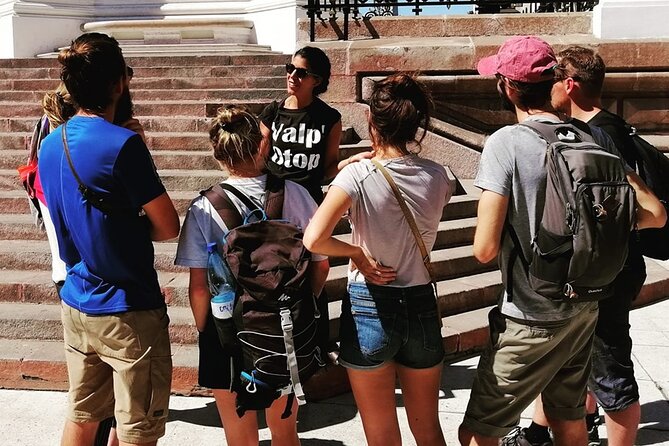
Reviewed · VALPARAISO TOURS
The Tour of Valparaiso in French on foot and in a small group
Valparaíso reveals itself best on foot, one steep hill and painted alley at a time. This small-group tour links the port, the 1902 El Peral funicular, Cerro Alegre, and Cerro Concepción while adding subjects many city walks skip: the Pinochet dictatorship, Mapuche history, and Chilean food.
I like the mix of street art and serious history, and I like that French-speaking Chilean guides have worked in the city since 2016. The guide’s friendly, professional approach covers culture, economics, and daily life, not just postcard views. The main drawback is the pace: three and a half hours of walking on Valparaíso’s hills will require comfortable shoes and some stamina.
In This Review
- Key Points at a Glance
- Why This Valparaíso Walk Feels Different
- Starting at Plaza Sotomayor and Muelle Prat
- Riding El Peral, Valparaíso’s 1902 Funicular
- Paseo Yugoeslavo and the UNESCO Hills
- Street Art on Cerro Alegre
- Cerro Concepción, Port Memories, and Dictatorship
- Bay Views from Paseo Gervasoni
- Paseo Atkinson and Two Large Murals
- The Lutheran Church and German Valparaíso
- Ending on Paseo Dimalow with Chilean Food Advice
- What $17.49 Buys You
- Who Should Book This Walk
- Should You Book It?
- FAQ
- How long does the Valparaíso tour last?
- What time does the tour start?
- Where does the tour begin?
- Where does the tour finish?
- Is the funicular ticket included?
- Is the tour conducted in French?
- How many people can join the tour?
- Can I cancel for a full refund?
Key Points at a Glance

- Ride a 1902 funicular: El Peral gives you a quick, memorable taste of Valparaíso’s old hill transport.
- See Cerro Alegre and Cerro Concepción on foot: Expect colorful lanes, murals, viewpoints, and stories from the port’s trading era.
- Go beyond surface history: The tour discusses the dictatorship, Mapuche people, German influence, and Valparaíso’s changing economy.
- Keep the group small: A maximum of 18 people makes questions and conversation more practical than on a large coach tour.
- Finish with food and day-trip ideas: Get suggestions for Chilean dishes, restaurants, Caleta Portales, Viña del Mar, and Concón.
- Pay a modest price: At $17.49 per person, the value is strongest if you want orientation, context, and a French-speaking guide in one outing.
Why This Valparaíso Walk Feels Different
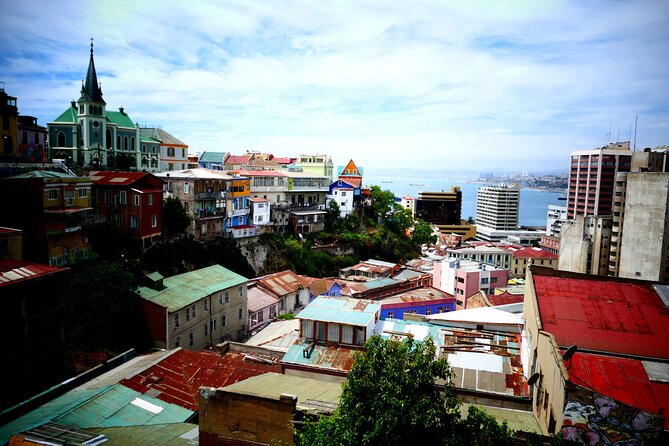
Many city tours give you a quick look at Valparaíso’s colored houses, murals, and bay views. This one tries to explain why the city looks and feels the way it does.
You start with the port and the Chilean Navy, then move uphill into the historic hills. Along the way, the guide connects architecture with immigration, shipping, art, politics, and food. That gives you a fuller picture of Valparaíso than a route built only around photographs.
The French-language format is central to the experience. The guides are Chilean and French-speaking, and they have been leading tours in the city since 2016. If you are more comfortable asking questions and discussing difficult subjects in French, that matters. The tour is not simply a French translation of a standard sightseeing route. Its themes include local culture, the Mapuche people, the dictatorship, and the practical details of eating and exploring in Chile.
The group limit is 18 people. That is not an intimate private walk, but it is still small enough to hear the guide and ask questions without fighting for attention. The tour lasts about three hours and 30 minutes, beginning at 3 p.m. and ending at the top of the Reina Victoria lift on Paseo Dimalow.
Other Valparaiso days people book alongside this one:
- From Santiago: Valparaiso and Viña del Mar Day Tour
★ 4.3 · 643 reviews - Valparaiso: Street Art, Funiculars and Port City Tour
★ 4.8 · 214 reviews - 2 Hour Walking Tour in Valparaiso
★ 5.0 · 109 reviews
Starting at Plaza Sotomayor and Muelle Prat
The meeting point is Plaza Sotomayor, one of the city’s clearest starting places. The square is dedicated to the Armada de Chile, the national navy, so it provides an immediate introduction to Valparaíso as a port city rather than just an art destination.
The first 15 minutes are used to explain the route and offer a short introduction to Chilean history. This is useful because later subjects, especially politics and port development, make more sense once you have a basic national framework.
From there, the group walks to Muelle Prat. You see part of the working port and hear about the city’s role as a major maritime center. The port is not treated as background scenery. It is the reason Valparaíso grew, attracted foreign merchants and adventurers, and developed the mix of cultures that shaped its hills.
Allow about another 15 minutes here. These opening stops are fairly short, so you will not spend long examining one building or monument. Their purpose is to give you bearings and explain the city’s connection to the sea.
Riding El Peral, Valparaíso’s 1902 Funicular

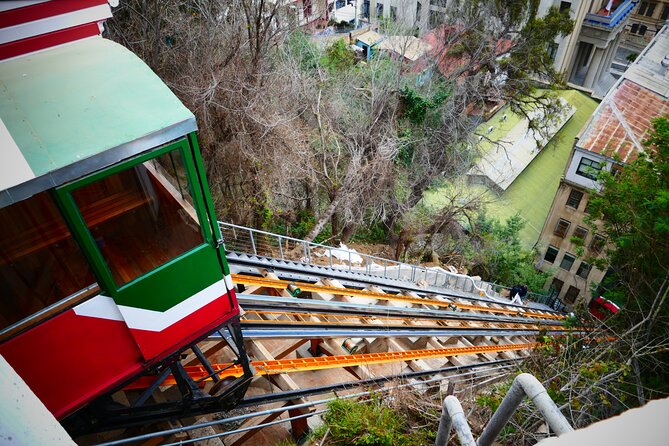
The next stop is Ascensor El Peral, a funicular dating from 1902. It was steam-powered until the 1970s and is one of roughly 30 funiculars built during Valparaíso’s major period of growth.
The ride itself takes only about 10 minutes as part of the tour, but it adds something a flat walking tour cannot. Valparaíso’s hills are not a minor detail. They shape how people move, where neighborhoods developed, and why the city’s famous ascensores became such important pieces of urban life.
The ticket is included. That keeps the stop simple and avoids leaving you to work out the fare or route while the group waits.
You should still expect some uphill and downhill walking around the funicular. The ride does not remove the physical demands of the afternoon. It gives your legs a short break and offers a practical look at one of the city’s old transport systems.
Paseo Yugoeslavo and the UNESCO Hills
At Paseo Yugoeslavo, formerly Paseo Americano, you begin exploring Cerro Alegre and Cerro Concepción. The walk looks across the bay and introduces the architecture for which these hills have UNESCO recognition.
One important stop is the Palacio Baburizza, now the city’s fine arts museum. The tour does not list an interior visit, so treat this as an exterior and historical stop rather than a museum tour. The building helps explain the wealth and international connections that once shaped these neighborhoods.
This portion is brief, about 10 minutes, but it sets up the longer walks that follow. You begin to see how Valparaíso combines grand old buildings with worn surfaces, painted walls, narrow passages, and open views.
That contrast is part of the city’s character. The tour does not present the hills as a polished historic district. Instead, it shows an urban area where art, age, daily life, and neglect exist close together. If you want only pristine architecture, this may feel rough around the edges. If you want to understand the city as it is, that honesty is useful.
Same long country, a very different day out:
- Valpo in 1 day: Authentic + Famous! Semi-private walking tour & public transport
★ 5.0 · 84 reviews - Famous Valparaíso! Premium Walking Tour with a Native Guide
★ 5.0 · 80 reviews - Walking Tour Valparaiso, History & Art – Private Optional
★ 4.5 · 59 reviews - Fr VALPO: WILD PENGUINS, SEALION, SANDBOARD, PARAGLIDING & PICNIC
★ 5.0 · 57 reviews
Street Art on Cerro Alegre
Cerro Alegre is the main street-art section of the afternoon, with about 30 minutes spent walking through its colorful lanes. The guide introduces urban artists from Valparaíso, including artists who have gained international attention.
This is more useful than simply being shown a wall and told that it is photogenic. You get a sense of how art became part of the city’s public identity and how murals fit into older streets and buildings. The paintings are not confined to a single gallery district. They appear along routes people use to move through the hills.
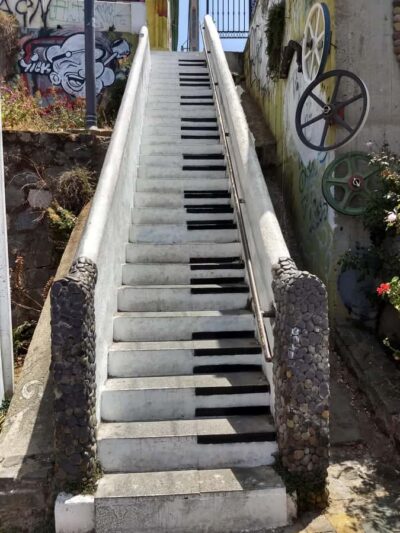
Bring your camera, but do not let it turn the stop into a scavenger hunt. Look at how the artwork changes the feel of a staircase, passage, or building frontage. The guide’s comments give context to work you might otherwise pass without understanding.
The amount of time is enough for a good introduction, not a complete survey of Valparaíso’s street art. The city has much more to see, and the tour ends with suggestions for places you can explore on your own. That makes this stop a useful starting point rather than a final word on the subject.
Cerro Concepción, Port Memories, and Dictatorship
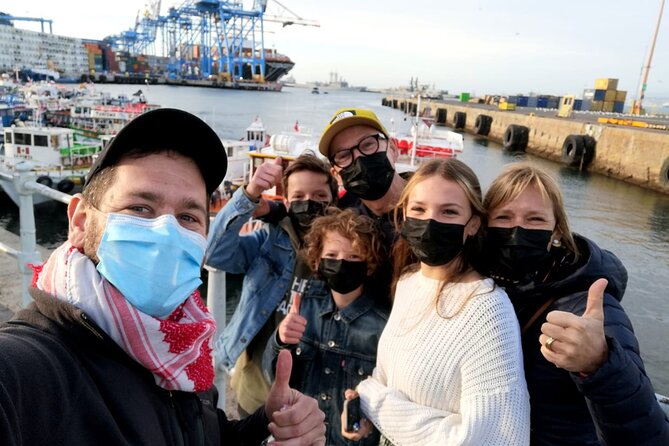
Cerro Concepción continues the street-art theme, but the focus shifts toward the city’s past. The guide describes the port atmosphere of the late 19th century, when adventurers, merchants, whalers, and gold seekers passed through Valparaíso.
This section helps you imagine the city before modern tourism became a major part of its identity. Valparaíso was a meeting point for people moving goods, chasing opportunity, and heading farther into the Pacific world. The stories give the steep streets a human purpose.
The tour also addresses Chile’s dictatorship under Augusto Pinochet. This is one of its strongest features because the subject is treated as part of the city’s recent history, not pushed aside in favor of lighter sightseeing. You should expect discussion of the violence and lasting effect of the dictatorship on Chileans and the country’s public life.
About 30 minutes are allocated here. That is enough time for an introduction and questions, though anyone wanting a detailed political history will need a separate museum or reading program. The value is in connecting national events with the places and people around you.
Bay Views from Paseo Gervasoni
Paseo Gervasoni offers one of the broadest views of Valparaíso Bay. The stop lasts about 10 minutes, but the guide also uses it to point out places you might visit later.
Suggestions include Caleta Portales, an artisanal fishing port, as well as Viña del Mar and Concón. These tips are practical because Valparaíso is often visited as part of a wider stay in the region. A good view is pleasant, but knowing where to go next makes the afternoon more useful.
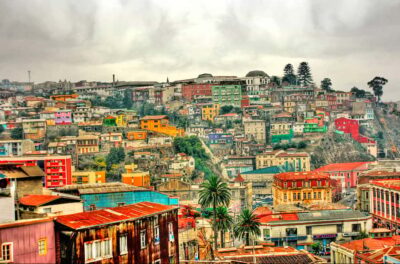
The view also helps you understand the city’s layout. From the hills, the port, bay, neighboring hills, and coastal towns fit into one picture. You can see why Valparaíso developed vertically and why getting from one area to another takes more effort than a map might suggest.
Weather and visibility will affect this stop. The tour promises the viewpoint and information, not perfect conditions. Keep your expectations focused on orientation and city views rather than a guaranteed clear panorama.
Paseo Atkinson and Two Large Murals
At Paseo Atkinson, the tour continues through Valparaíso’s history and points out two of Chile’s largest murals. The stop lasts around 10 minutes.
This is a compact but worthwhile addition to the art focus. The earlier walk on Cerro Alegre gives you painted lanes and smaller urban details. Paseo Atkinson adds a sense of scale, showing how large public works can become part of the hill’s identity.
The timing is also sensible. By this point, you have had several viewpoint stops, so a short pause keeps the route moving. You are not asked to spend too long at every overlook.
If murals are your main reason for booking, you should see this tour as an introduction. The guide names artists and explains the city’s art culture, but the route is also carrying a lot of history and geography. You are getting a broad look rather than a specialist art walk.
The Lutheran Church and German Valparaíso
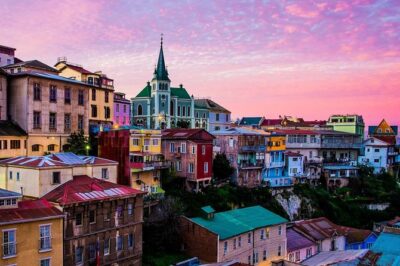
The small square in front of Iglesia Luterana de La Santa Cruz de Valparaíso provides another viewpoint over the hills. It also offers a chance to discuss the German presence in the city and the church’s place in local history.
This stop lasts only about five minutes, so do not expect a long architectural visit or an interior tour. Its value comes from the wider story. Valparaíso’s development involved people from different parts of the world, and German influence is one piece of that history.
The guide can also point toward the hills and the house connected with the poet Pablo Neruda. The stop includes information about other parts of the city that you might choose to visit later.
I like this kind of stop because it prevents the tour from treating Valparaíso as one uniform neighborhood. The hills have different identities, buildings, communities, and stories. Even a short viewpoint can help you decide where to spend another morning.
Ending on Paseo Dimalow with Chilean Food Advice
The walk ends at Paseo Dimalow, at the top of the Reina Victoria lift. This is a practical finish because you are left in the hill area rather than returned to the original port square.
The final 10 minutes focus on restaurant suggestions and dishes to try in Valparaíso and Chile. The advice includes both more gourmet choices and popular local food, so it is not limited to one style of dining.
That closing conversation may be one of the most useful parts of the tour. Food names can be difficult to sort out when you are unfamiliar with Chilean cooking, and a guide can help you choose what to look for during the rest of your stay. The tour does not include a meal, tasting, or restaurant reservation, so plan to use the recommendations independently.
The ending location also gives you flexibility. You can continue walking around the hills, find a meal nearby, or use the Reina Victoria lift. The information provided does not specify how close particular restaurants are, so ask the guide for current, specific directions before separating.
What $17.49 Buys You
At $17.49 per person, this is a low-cost way to organize a first look at Valparaíso. The price includes the guided walk and the El Peral funicular ticket. It does not include food, museum admission, or other personal expenses.
The value is not in the number of included attractions. Most stops are public viewpoints, streets, squares, or exterior landmarks. The value is in having a French-speaking guide connect them into a coherent story.
For the price, I would consider this especially useful early in a Valparaíso stay. You receive neighborhood orientation, background on the port, suggestions for later outings, and practical food advice in one afternoon. If you already know the city well or want a private specialist guide, the fixed route and group size may feel less personal.
Confirmation arrives at booking, and mobile tickets make the meeting process straightforward. The starting point is Sotomayor at 3 p.m., with the finish at Paseo Dimalow. Free cancellation is available up to 24 hours before the start time, and changes made inside that window are not accepted.
The activity requires a minimum number of participants. If that number is not reached and the tour is canceled, you are offered another date or experience, or a full refund.
Who Should Book This Walk
I would choose this tour if you want Valparaíso explained in French rather than simply photographed. It suits visitors who enjoy public art but also want difficult political subjects, migration, economics, and local culture included.
It is also a good match if you have one afternoon and want a structured introduction before exploring on your own. The final suggestions for Caleta Portales, Viña del Mar, Concón, other hills, and local dishes can help you plan the next days.
You should think twice if long walks on steep streets are a problem. The route uses hills, lanes, viewpoints, and a funicular, but the funicular is only one part of the movement. The tour is accessible to most people according to the activity details, and service animals are allowed, yet no promise is made that every surface or incline will be easy.
The tour can take up to 18 people. That is small enough for a more personal feel than a large sightseeing group, but it is not the same as having a private guide.
Should You Book It?
Book this walk if you want a well-priced, French-language introduction that treats Valparaíso as a living port city, not just an outdoor art gallery. The strongest reasons are the mix of murals, funicular history, bay viewpoints, dictatorship-era context, Mapuche history, and useful advice for food and nearby places.
Skip it if you want extensive museum time, a meal included, or a specialist tour devoted only to street art. For most first-time visitors who can manage the hills, $17.49 buys a sensible three-and-a-half-hour orientation with a friendly, professional guide and plenty of ideas for the rest of your Chilean stay.
FAQ
How long does the Valparaíso tour last?
The tour lasts approximately three hours and 30 minutes.
What time does the tour start?
The tour starts at 3 p.m.
Where does the tour begin?
The meeting point is Sotomayor in Valparaíso, Chile.
Where does the tour finish?
The tour ends at the top of the Reina Victoria lift, at the end of Paseo Dimalow.
Is the funicular ticket included?
Yes. The ticket for Ascensor El Peral is included in the tour.
Is the tour conducted in French?
Yes. The tour is led by Chilean, French-speaking guides.
How many people can join the tour?
The maximum group size is 18 people.
Can I cancel for a full refund?
Yes. You can cancel up to 24 hours before the experience start time for a full refund. Cancellations or changes made less than 24 hours before the start time are not accepted for a refund.
Just added around Valparaiso
- Viña del Mar and Valparaiso: guided day tour★ 4.2 · 8 reviews
- Viña del Mar and Reñaca 4-Hour Pacific Coast Tour★ 4.7 · 14 reviews
- Viña del Mar: Guided city tour★ 4.9 · 10 reviews
- Valparaíso y Viña del Mar full day★ 4.6 · 3 reviews
- Private: Viña del Mar and Valparaiso Day Tour★ 5.0 · 5 reviews
- Valparaíso, Viña del Mar and Casablanca Full Day Experience★ 4.7 · 14 reviews
- Valparaiso 4-Hour City Tour by Van and Funicular★ 4.9 · 45 reviews
- Valparaíso Viña del Mar y Reñaca★ 4.6 · 22 reviews
Valparaiso Tours, compared.
Famous Valparaíso! Premium Walking Tour with a Native Guide
Read our review →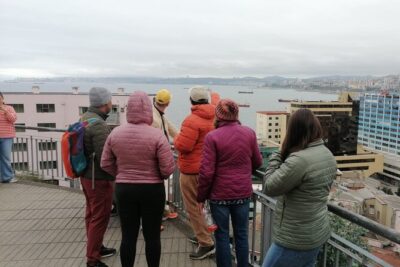
Walking Tour Valparaiso, History & Art – Private Optional
Read our review →
Fr VALPO: WILD PENGUINS, SEALION, SANDBOARD, PARAGLIDING & PICNIC
Read our review →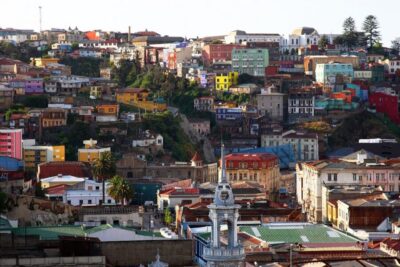
Valparaiso 4-Hour City Tour by Van and Funicular
Read our review →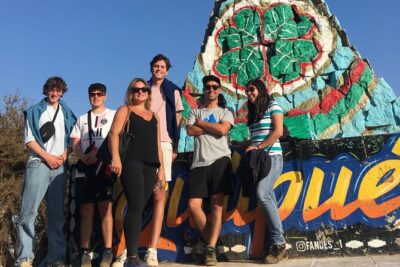
Browse the lists this tour appears in