
Reviewed · HISTORICAL TOURS
Discover Santiago, where modernity merges with history
Santiago makes a strong first impression by putting colonial churches, presidential power, modern towers, and lively neighborhoods within one city tour. In four hours, you’ll move from Bicentenario Park and the Costanera Center to Santa Lucia Hill, Plaza de Armas, and La Moneda.
I like the small-group format and the chance to shape the day around your interests. Guides such as Carlos, Rodrigo, Daniel, Juan, and Mauricio have been praised for clear explanations and warm service. I also like the hotel pickup, which saves time in a sprawling capital.
The main drawback is the pace. You pass several important sights rather than exploring them on foot, and Santa Lucia Hill requires a climb. Street closures, events, or maintenance can also change the route.
In This Review
- Key points at a glance
- What this four-hour Santiago tour is really for
- Bicentenario Park and Santiago’s modern face
- Bellavista, Forestal Park, and the arts districts
- San Francisco Church and the National Library
- The climb at Santa Lucia Hill
- Lastarria and the former National Congress
- Plaza de Armas and the Metropolitan Cathedral
- Ahumada, the Stock Exchange, and daily city life
- La Moneda and Plaza de la Constitución
- Guides who make the format work
- Is $60 a fair price?
- Practical details before you book
- Who should book this Santiago city tour?
- Should you book it?
- FAQ
- How long does the Santiago city tour last?
- What languages are available?
- Is hotel pickup included?
- Is lunch included?
- Do I have to climb Santa Lucia Hill?
- Is the tour wheelchair accessible?
- Can I cancel for a full refund?
Key points at a glance
- Santa Lucia Hill gives you a city view with real historical weight, but the climb is on foot and the site can close for maintenance.
- La Moneda and Plaza de Armas anchor the tour, bringing Chilean politics, religion, and colonial-era Santiago into focus.
- You see both sides of modern Santiago, from Bicentenario Park and the Costanera Center to older streets and churches.
- The small-group setup can feel almost private, especially for families or groups of three.
- Guides speak English, Spanish, or Portuguese, and several named guides have been praised for adapting to personal interests.
- At $60 per person, the value rests in convenience, local explanation, transport, and the number of major sights covered in four hours.
What this four-hour Santiago tour is really for
This is a get your bearings fast tour. It does not give you a long visit inside every landmark. Instead, it connects the parts of Santiago that can feel scattered when you explore alone.
That matters because Santiago stretches across a broad urban area, and its districts have different personalities. You’ll see the financial center, arts districts, old civic buildings, pedestrian shopping streets, parks, and hilltop views in one morning or afternoon.
The air-conditioned minivan handles the longer jumps. Short stops let you walk, take photographs, and hear the story behind a place before moving on. You should think of the experience as a guided introduction, not a series of extended museum visits.
The small-group promise is important here. With fewer people, your guide can answer questions and make small adjustments. Rodrigo, for example, helped one group fit in a visit to the Teleférico and assisted with last-minute arrangements before a cruise. That kind of flexibility can be more useful than a fixed script, though extra stops depend on time and availability.
A few more Santiago trips to weigh up
- Santiago: Guided Walking Tour of the Historical Old Town
★ 4.8 · 459 reviews - Essence of Santiago : History, Flavors and Panoramic Views
★ 5.0 · 45 reviews - Santiago: Private tour, historic center, high altitude viewpoint, cable car
★ 4.9 · 27 reviews
Bicentenario Park and Santiago’s modern face
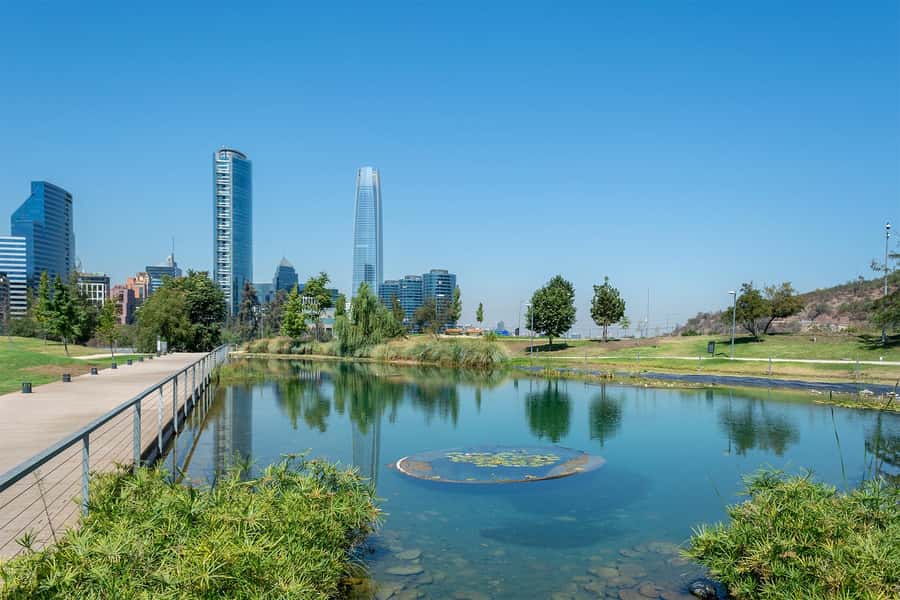
The tour begins at Bicentenario Park, with a 20-minute stop. The park marks two centuries of Chilean independence and includes local plant life, animals, and broad views toward the city.
This is a smart opening stop. You get space, fresh air, and an easy visual introduction to Santiago before entering the denser central districts. The park also helps show how modern Santiago uses public spaces for leisure and city views.
You should not expect a long nature walk. Twenty minutes is enough for a look around and photographs, but not enough to explore every corner. Wear shoes that are comfortable for the later hill climb and central-city walking.
The minivan then passes the Costanera Center, home to the tallest building in South America. The tower rises from Santiago’s financial district, often called Sanhattan. It is a quick visual reminder that Chile’s capital is not only about old plazas and churches.
You do not stop at the tower, so this part works best as a passing orientation. If you want shopping or a close look at the building, you’ll need separate time.
Bellavista, Forestal Park, and the arts districts
The route continues through Bellavista, one of Santiago’s best-known cultural and nightlife areas. You’ll pass La Chascona, the former home of poet Pablo Neruda, which now functions as a museum.
This is useful even without a museum visit because Bellavista gives you a sense of Santiago’s creative side. The tour does not include entry to La Chascona, so note it as a place to return to if Neruda’s life and work interest you.
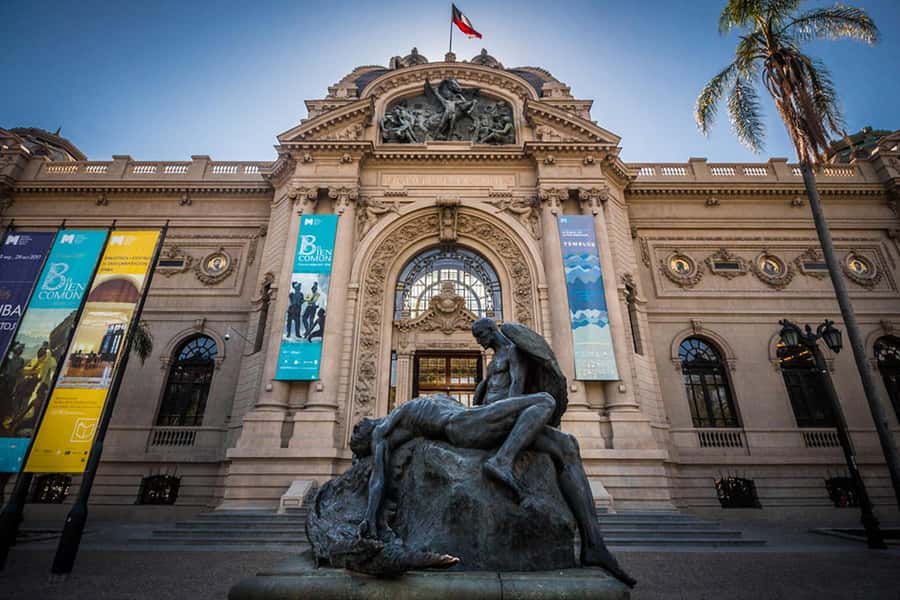
Forestal Park comes next by minivan. This French-style park is home to Latin America’s first fine art museum. Again, you pass rather than make a full museum visit.
I see a pattern here: the tour points out future stops for independent exploration. That makes it especially useful on your first day in Santiago. You can mark Bellavista, the fine art museum, and Lastarria for later, then use the rest of your trip with a better sense of direction.
San Francisco Church and the National Library
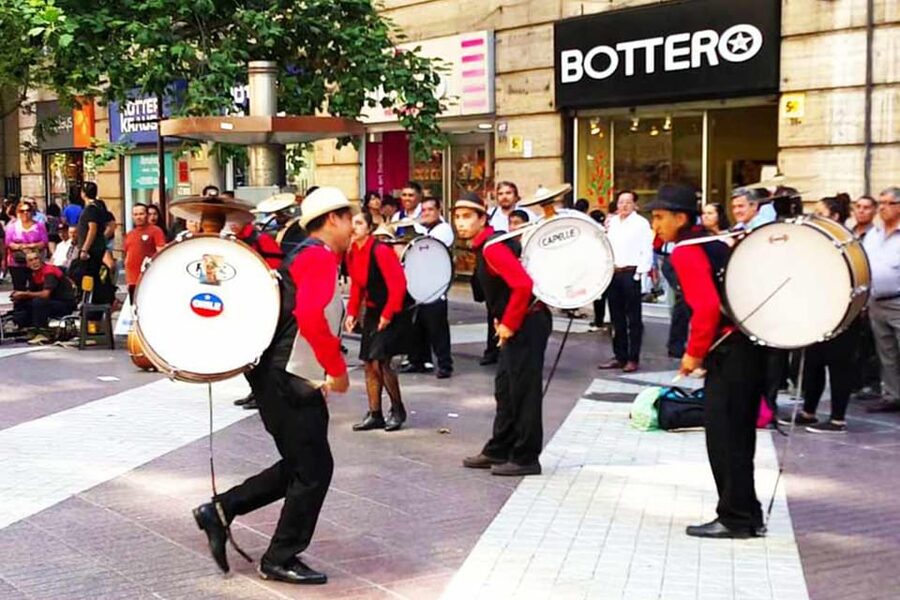
The tour passes San Francisco Church, described as Santiago’s oldest building. Its survival through centuries of earthquakes gives you a direct connection to the city’s past and to the difficult conditions that have shaped its architecture.
The church is a passing sight on this route, not a full interior visit. If you want to study its details or attend a service, leave time on another day.
You’ll also pass the National Library, Chile’s main center for books and national literary records. This stop broadens the tour beyond famous photo points. Santiago’s story is held not only in government buildings and churches, but also in its writers, archives, and public institutions.
Your guide can connect these sights to the city’s cultural life. The exact amount of explanation will depend on traffic and the group’s questions, but the local guide is one of the main reasons to choose this tour over a self-guided drive.
Same long country, a very different day out:
- Santiago: Cajon del Maipo/Embalse del Yeso Tour with Picnic
★ 4.3 · 3,789 reviews - Santiago: Vina Del Mar, Valparaiso, Casablanca & Reñaca Tour
★ 4.2 · 2,838 reviews - Small-Group Cajón del Maipo Full-Day Tour and Picnic
★ 4.5 · 2,277 reviews - Santiago: Cajon del Maipo & Embalse El Yeso Trip with Picnic
★ 4.5 · 1,859 reviews
The climb at Santa Lucia Hill
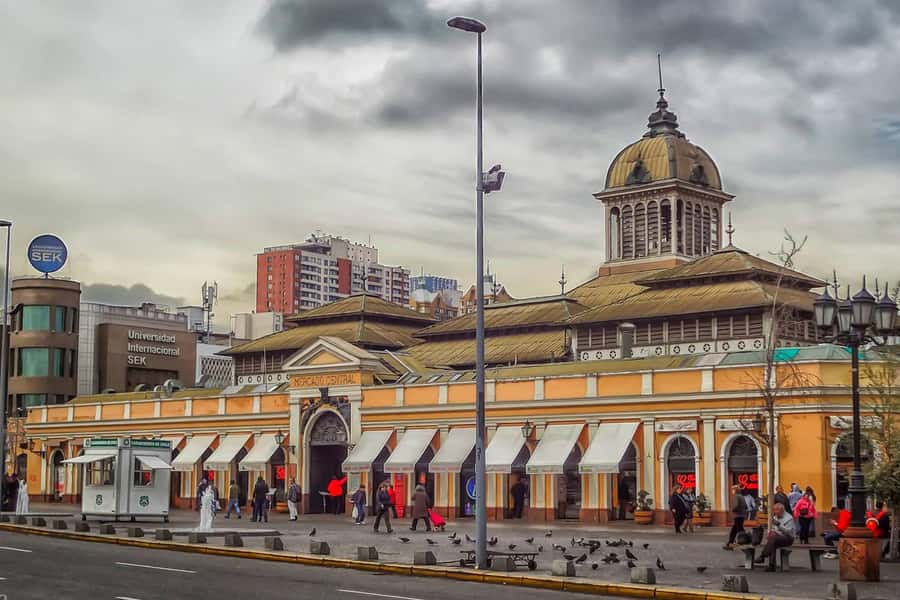
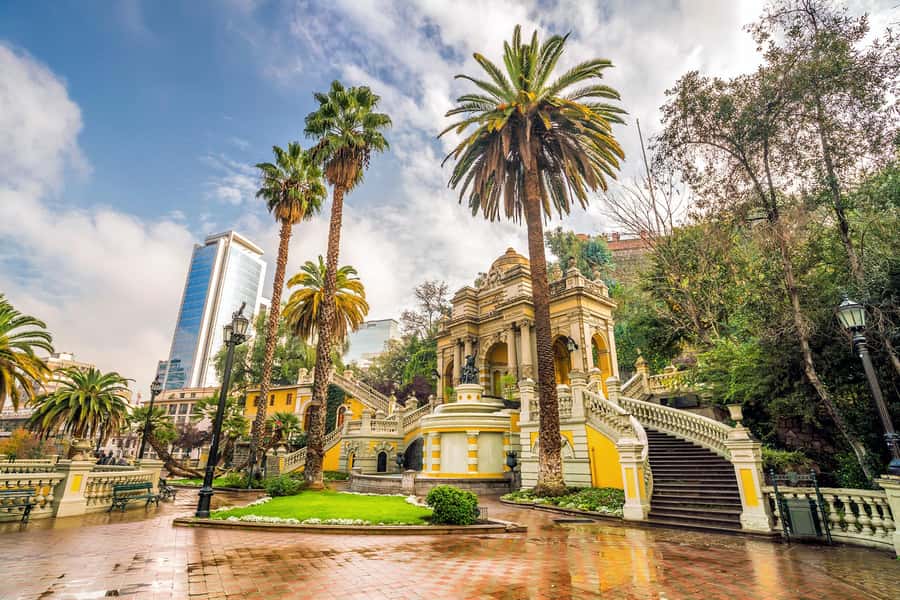
Santa Lucia Hill is the tour’s most active stop, lasting about 30 minutes. You’ll climb on foot for views across Santiago and hear about the hill’s role in the city’s development.
The climb is not a major hike, but it is still a climb. If you have mobility concerns, ask about the current access conditions before booking. The tour is listed as wheelchair accessible, yet the hill itself requires walking and may be closed for maintenance on some days.
This stop earns its place because a city view makes the route easier to understand. From above, Santiago’s mix of dense streets, newer towers, and distant mountains comes together in one frame. The view can vary with weather and air quality, so keep expectations sensible.
Thirty minutes is enough for a short ascent, an explanation, and photographs. It is not enough for a slow visit to every path and terrace. Bring water, especially in warm weather, and keep your phone or camera ready.
Lastarria and the former National Congress
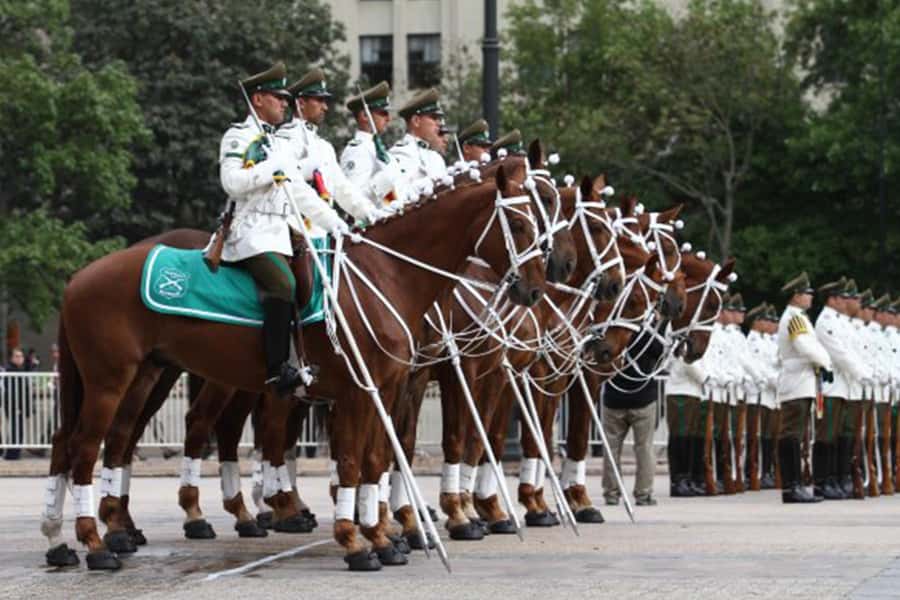
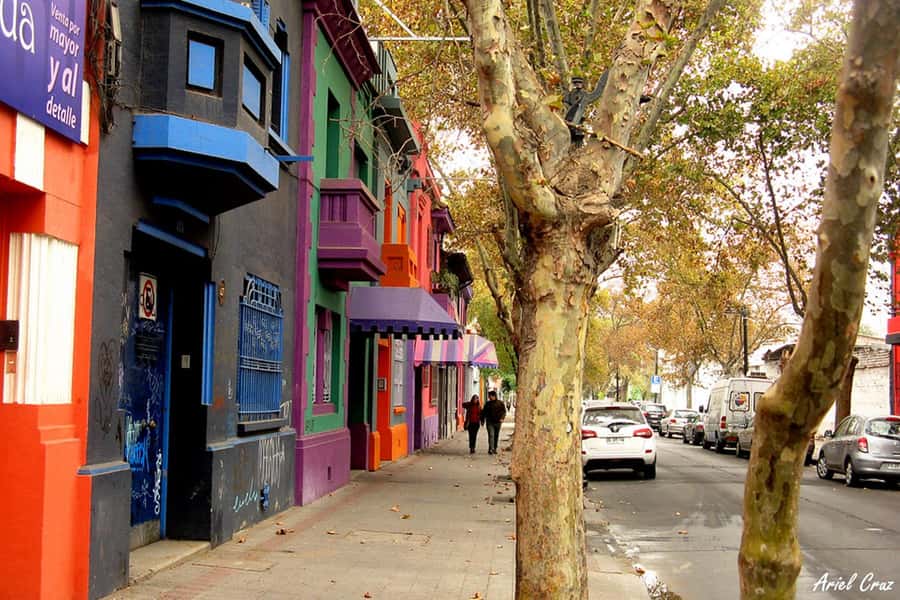
After Santa Lucia Hill, the minivan passes Lastarria, often called Santiago’s museum district. The neighborhood is also known for restaurants and evening entertainment.
This is another place where the tour works as a preview. You’ll see why Lastarria is worth returning to when you have more time, but you will not have a meal or a full neighborhood walk during this four-hour route.
The former National Congress receives a short five-minute stop. The building is attractive and important because Chile’s Congress later moved to Valparaíso. This brief pause is mainly for photographs and a quick explanation.
The stop may feel too short if architecture or Chilean government interests you. Still, it places Santiago’s political story in a wider frame. The capital remains the center of presidential government, while the legislative branch operates elsewhere.
Plaza de Armas and the Metropolitan Cathedral
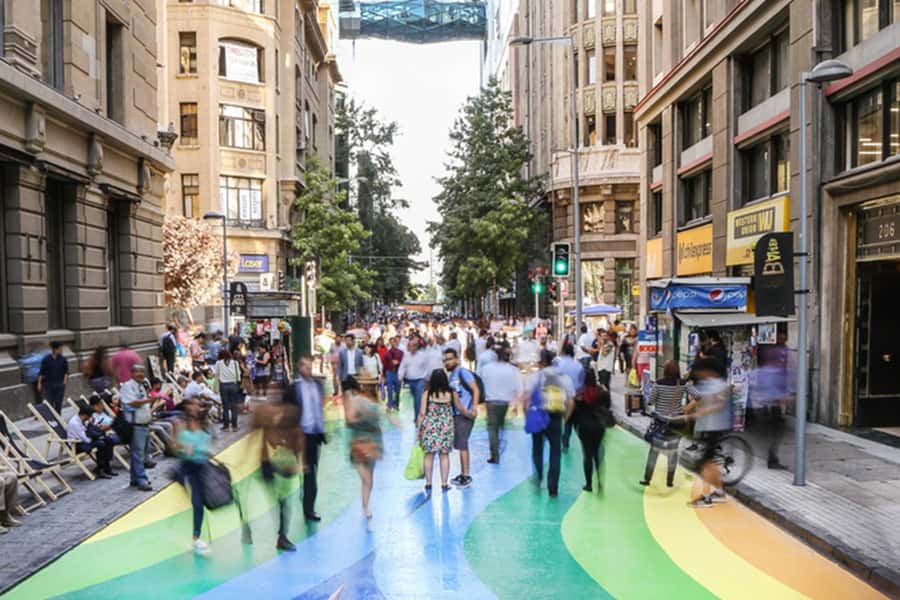
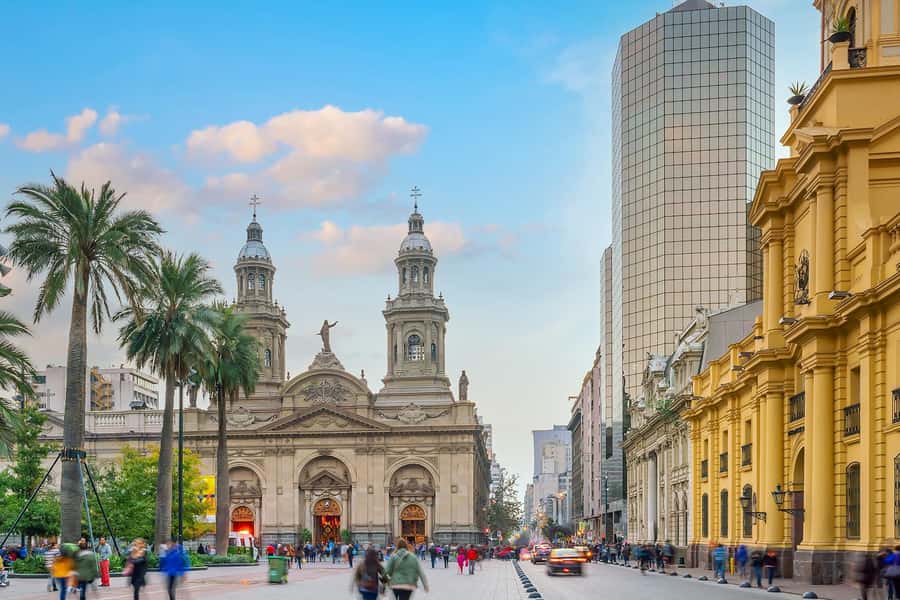
The central portion of the tour focuses on Plaza de Armas and the Metropolitan Cathedral. You’ll have about 20 minutes at the square and 15 minutes at the cathedral.
Plaza de Armas is Santiago’s historic center. Colonial-era buildings and major civic landmarks gather around it, making this the clearest place to understand the city’s original public core. You can walk, take photographs, and watch ordinary city life unfold around the formal architecture.
The Metropolitan Cathedral is Chile’s main Catholic cathedral. Its interior and facade bring a grand religious presence to the square. Fifteen minutes gives you a useful visit, but not a quiet, detailed study if the cathedral is crowded or services are taking place.
This is one of the most valuable sections for first-time visitors. Instead of seeing the cathedral and square as isolated points on a map, your guide explains how they fit into Santiago’s political and religious center.
Ahumada, the Stock Exchange, and daily city life
The route then turns toward the Santiago Stock Exchange, with a short five-minute stop. This is the heart of the country’s financial sector, a useful counterpoint to the older buildings around Plaza de Armas.
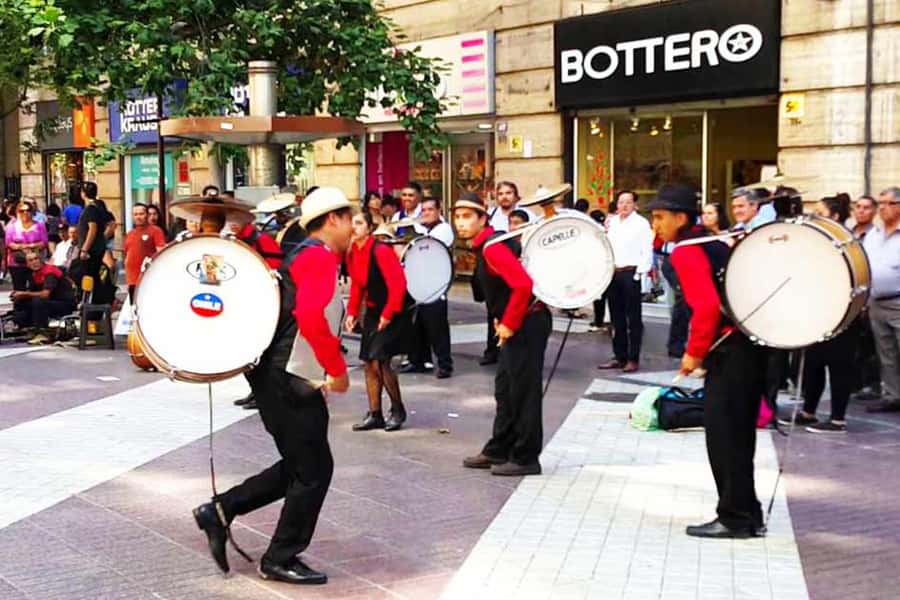
You’ll also walk along Paseo Ahumada for about 15 minutes. This pedestrian street is Santiago’s main shopping and commercial corridor. Here, the tour shifts from grand monuments to the daily rhythm of the capital.
That change is valuable. You get a sense of how people use the city, not just how it appears in photographs. Fifteen minutes is brief, so you should treat it as a taste of the area rather than a shopping session.
If you want to buy anything, ask your guide how much time is available. The group needs to keep moving, and the schedule includes several fixed stops.
La Moneda and Plaza de la Constitución
The final major section centers on La Moneda, Chile’s presidential palace, and Plaza de la Constitución. You’ll have about 15 minutes at La Moneda and another 15 minutes at the plaza.
La Moneda is one of the most important places on the route. It was the site of the 1973 coup that began Chile’s military dictatorship, so the building carries political meaning far beyond its formal facade. A good guide can explain the event in clear terms and help you place it within the country’s recent past.
Plaza de la Constitución offers a chance to see the ceremonial changing of the guard at La Moneda. The schedule and public events can affect what you see, so treat the ceremony as an opportunity rather than a guarantee.
This section gives the tour emotional and political depth. You are not only looking at a government palace. You are standing at a place tied to a major turning point in Chilean life.
The tour returns you to your original pickup point. That makes it convenient before a cruise, on a first day in the city, or during a short Santiago stay.
Guides who make the format work
The guide matters more than the vehicle or the number of stops. Names connected with this experience include Carlos, Rodrigo, Cristian, Julio, Juan, Mauricio, and Daniel.
Carlos has been singled out for adjusting the discussion to a couple’s interest in football. That is a useful sign for you: mention your interests early, since a good guide can make the city feel less like a list of monuments.
Rodrigo has shown practical flexibility by arranging a Teleférico visit and helping with cruise-related needs. Juan has guided a family of three in a group that felt private, allowing them to take more time around the city.
Cristian, Julio, Mauricio, and Daniel have also received praise for their clear explanations, local knowledge, friendly manner, and attention to questions. Daniel’s interest in photography could be especially helpful if you want better viewpoints and picture stops.
Guides speak English, Spanish, and Portuguese. When booking, state your preferred language and your interests. The route is fixed enough to cover the main sights, but the quality of the experience improves when the guide knows what matters to you.
Is $60 a fair price?
At $60 per person, this is not the cheapest way to see Santiago. You are paying for a local guide, hotel pickup and drop-off, an air-conditioned minivan, and a four-hour route that links distant districts.
The value is strongest if you have limited time or prefer not to manage transport. A taxi or ride-hailing trip between every area would take planning, while a self-guided visit would require more map work and local context.
The value is weaker if you prefer long museum visits, slow meals, or independent wandering. Several landmarks are drive-by sights, and lunch is not included. You also need to pay for any activity that is not part of the stated route, such as a possible Teleférico visit.
For families, cruise passengers, and first-time visitors, the price can make sense. You cover a lot of ground and finish with time left for another activity. For a repeat visitor who already knows central Santiago, a focused neighborhood walk may give you more depth.
Practical details before you book
Hotel pickup and drop-off are included for most centrally located Santiago hotels and Airbnb addresses. Give the supplier your exact location so they can confirm pickup and timing. If your accommodation is outside the service area, you’ll be given the closest meeting point.
The activity lasts four hours, but starting times depend on availability. The tour needs a minimum number of passengers. If that number is not reached, the provider offers a different date, another tour, or a full refund.
You can cancel up to 24 hours before departure for a full refund, and you can reserve now while paying later. The tour is wheelchair accessible, but Santa Lucia Hill remains the key point to check because of its footpath and possible maintenance closures.
Street closures, public events, and changing access can alter the itinerary. Keep your schedule slightly open, especially if you have a flight or cruise departure later that day.
Who should book this Santiago city tour?
I would choose this tour if you have one day in Santiago, a short stop before or after a cruise, or a first morning when you want city context before exploring alone.
It also suits families and couples who prefer a small group to a large coach. The experience can feel nearly private when numbers are low, and the guides have shown they can respond to personal interests.
You should look elsewhere if your main goal is a long visit inside La Chascona, the fine art museum, San Francisco Church, or the National Library. Those places are mainly viewed from the vehicle, and the four-hour schedule leaves little room for extended stops.
Should you book it?
Book this tour if you want a well-organized first look at Santiago, especially with hotel transport and a local guide who can explain both the old center and the modern city.
The best reasons are the efficient route, the small-group setting, and the chance to ask questions in your preferred language. The main tradeoff is clear: you see many places, but only a few receive extended attention.
For $60, I think it is a sensible choice for first-time visitors with limited time. Use it to learn the city’s layout, note the places you want to revisit, and save your remaining afternoon for a museum, neighborhood meal, or separate hilltop activity.
FAQ
How long does the Santiago city tour last?
The tour lasts four hours.
What languages are available?
Live guides are available in English, Spanish, and Portuguese.
Is hotel pickup included?
Yes. Pickup and drop-off are included from most centrally located Santiago hotels and Airbnb locations. If your address is outside the service area, the supplier provides the nearest meeting point.
Is lunch included?
No. Lunch is not included.
Do I have to climb Santa Lucia Hill?
The Santa Lucia Hill stop involves climbing on foot. The hill may also be closed on some days for maintenance.
Is the tour wheelchair accessible?
Yes, the activity is listed as wheelchair accessible. Because Santa Lucia Hill requires a walk and climb, confirm how that stop can be handled for your needs.
Can I cancel for a full refund?
Yes. You can cancel up to 24 hours in advance for a full refund.
Just added around Santiago
- Walking City Tour with Funicular, Cable Car and Tasting★ 4.3 · 6 reviews
- VIÑA DEL MAR AND VALPARAISO TOUR★ 4.8 · 20 reviews
- Coast and Color: Discover Viña and Valparaíso in a Day★ 5.0 · 58 reviews
- Valparaiso & Casablanca : Wine, Gastronomy and Living Culture★ 5.0 · 37 reviews
- Private Cruise Transfer : Santiago → Valparaiso or San Antonio★ 4.5 · 51 reviews
- Valle nevado Sunset★ 5.0 · 40 reviews
- Snow Tour Farellones Fullday Andes Panoramic★ 5.0 · 47 reviews
- “Tour Tradicional” Viña Cousiño Macul Oficial portugués★ 5.0 · 35 reviews
Historical Tours, compared.
Walking Tour Valparaiso, History & Art – Private Optional
Read our review →
Essence of Santiago : History, Flavors and Panoramic Views
Read our review →
Private tour, historic center, high altitude viewpoint, cable car
Read our review →
Private tour: where the history of the Moai was born
Read our review →
Easter Island: Private Full Day History Of The Moai
Read our review →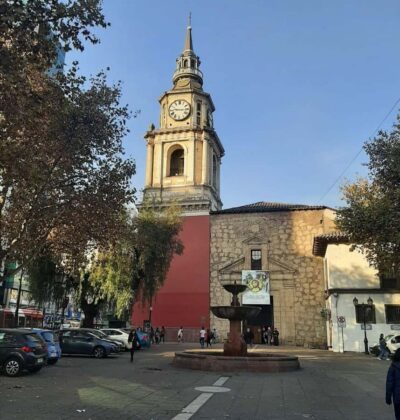
Browse the lists this tour appears in