
Reviewed · HISTORICAL TOURS
Punta Arenas: Fort Bulnes Historical Tour
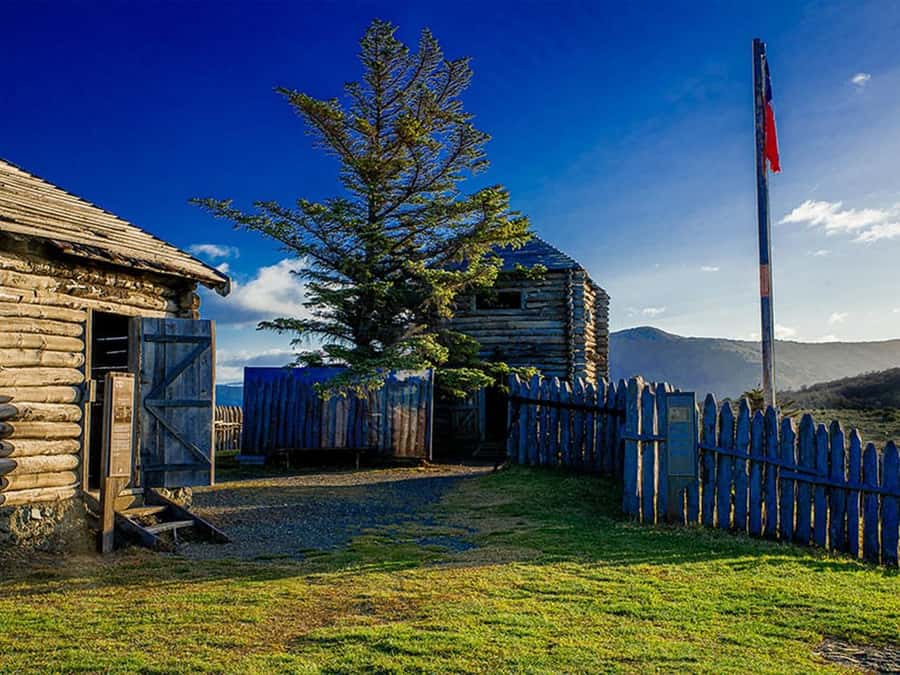
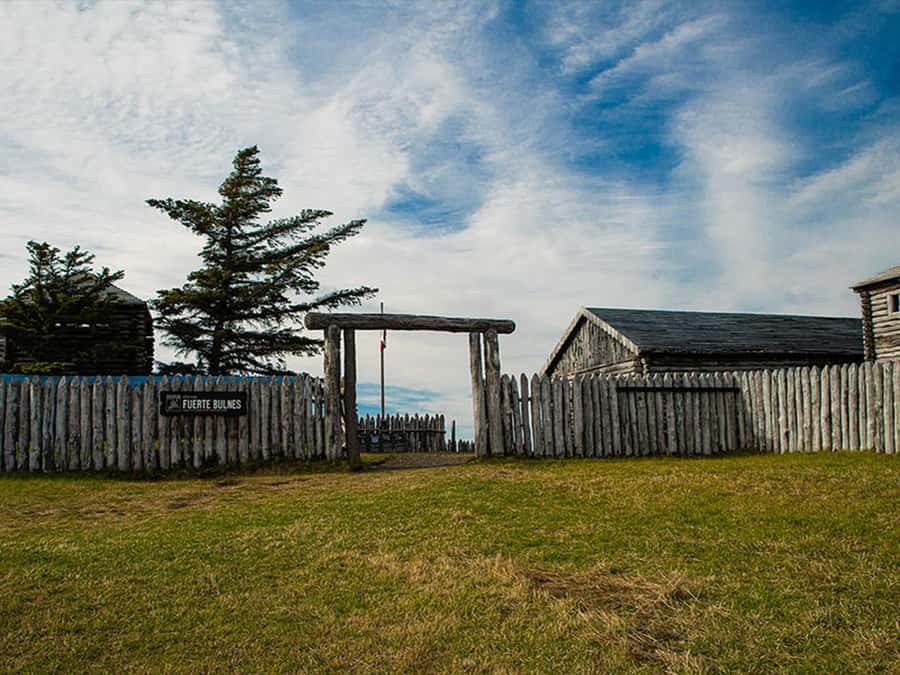
Fort Bulnes gives you a clear look at how Chile tried to secure the Strait of Magellan in 1843. The wooden fort, rebuilt on its original site, feels less like a grand monument and more like a hard-edged outpost at the end of the world.
I like the wide Strait views and the chance to walk through several reconstructed buildings rather than only seeing the fort from outside. I also like the stop at the geographical middle of Chile, a wonderfully odd photo opportunity that puts the country’s huge north-to-south reach into perspective.
The main catch is time. One guide had to choose between the fort buildings and the boundary lookout walk, so you may not fit every corner into the visit. Pickup can also require care, especially if you are coming from Punta Arenas port rather than a hotel.
In This Review
- Key points to know before you go
- Why Fort Bulnes matters in Punta Arenas history
- The 45-minute ride south from Punta Arenas
- Hito de la Mitad de Chile: a strange and useful photo stop
- Estrecho Park and the view over the Strait
- Inside the reconstructed Fort Bulnes
- The interpretive center adds the missing context
- What the $46 price really covers
- Who will enjoy this half-day outing
- Booking, cancellation, and pickup tips
- Should you book Fort Bulnes?
- FAQ
- How long does the Fort Bulnes tour take?
- How far is Fort Bulnes from Punta Arenas?
- Is transportation included?
- Are entrance tickets included in the price?
- What languages are available?
- What should I bring?
Key points to know before you go
- Fort Bulnes dates to 1843: Learn why Manuel Bulnes established this outpost to secure Chile’s position in the Strait of Magellan.
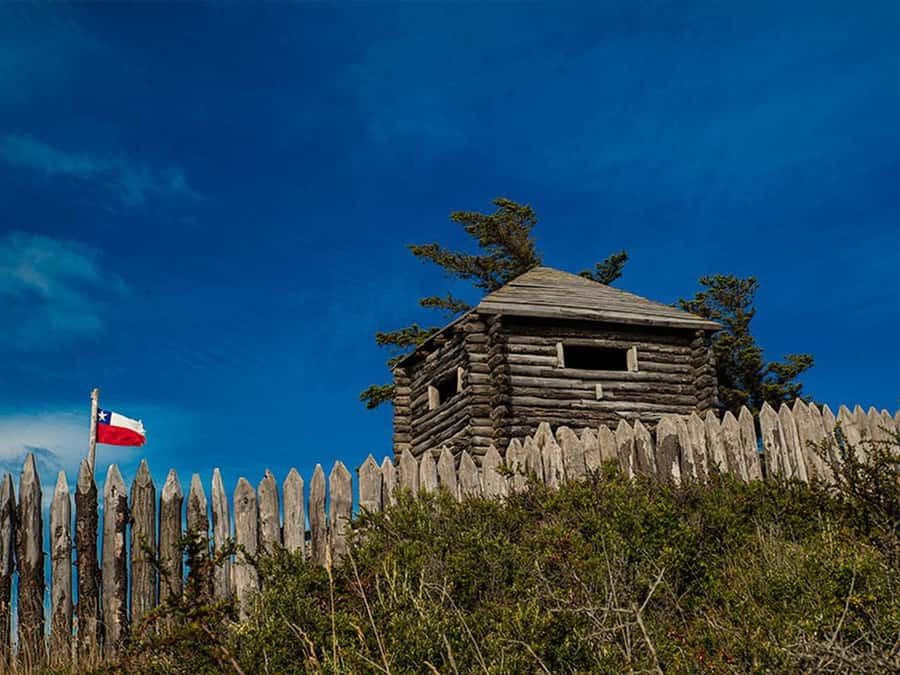
- The reconstructed fort is spread across several buildings: See the O’Higgins lighthouse, church, post office, jail, and stables.
- The Strait viewpoint is a major payoff: The fort’s setting gives you broad views across one of the world’s most important sea routes.
- Chile’s midpoint makes an unusual photo stop: Hito de la Mitad de Chile marks a geographic point measured from Chile’s northern limit to the South Pole.
- Small groups keep the outing manageable: The van carries no more than 10 participants, with English and Spanish guiding.
- Entrance tickets are extra: The $46 price covers transport and the driver-guide, but not admission to the sites.
Why Fort Bulnes matters in Punta Arenas history
Punta Arenas grew in a place where geography mattered as much as politics. The Strait of Magellan offered a vital route between the Atlantic and Pacific before the Panama Canal changed world shipping. Chile wanted a firm presence here, and Fort Bulnes was part of that effort.
The fort was founded in 1843 under President Manuel Bulnes, with the vision of Bernardo O’Higgins helping shape the idea that Chile should control and develop the strait. That context gives the visit its purpose. You are not simply touring old wooden buildings. You are looking at an early attempt to claim a remote, strategic corner of the country.
The fort’s story also has a practical feel. A site this far south had to serve as a military post, settlement, and symbol of government authority. The reconstructed structures help you picture daily routines in a place shaped by wind, distance, and limited supplies.
I find this more rewarding when you arrive with a basic question in mind: how did Chile maintain a foothold so far from its main population centers? The guide’s commentary helps connect the buildings to that larger issue. Cristofer has been praised for making the trip lively and entertaining, while Romina has led departures with detailed explanations of the fort and the surrounding area.
A few more Punta Arenas trips to weigh up
- Santiago: Guided Walking Tour of the Historical Old Town
★ 4.8 · 459 reviews - Walking Tour Valparaiso, History & Art – Private Optional
★ 4.5 · 59 reviews - Essence of Santiago : History, Flavors and Panoramic Views
★ 5.0 · 45 reviews
The 45-minute ride south from Punta Arenas
Your outing begins with pickup at your accommodation in Punta Arenas. The drive to the Fort Bulnes area takes about 45 minutes by van, and the driver-guide uses the journey to explain the region’s past and importance.
That ride matters because Fort Bulnes is about 55 km south of the city. You are not squeezing the fort into a quick urban sightseeing loop. The trip takes you out to a remote site where the setting is part of the experience.
The van is limited to 10 people, which is a useful size for a half-day excursion. You should have a better chance of hearing the guide than you would in a large coach, and the small group makes it easier to move through the fort together. The tradeoff is that pickup can take longer if several people are collected at different accommodations.
If you are arriving by cruise ship, confirm the pickup details carefully before setting out. One visitor found that the port staff did not know the operator and that the group started late after additional pickups. The included transportation is convenient, but the information supplied here specifically promises accommodation pickup, not a clearly defined cruise-port meeting point.
The tour lasts 270 minutes, or four and a half hours. That gives you a useful half-day outside Punta Arenas, but it is not an unlimited visit. Keep your schedule loose enough to allow for pickup and group movement.
Hito de la Mitad de Chile: a strange and useful photo stop
The first listed stop is Hito de la Mitad de Chile, the geographic midpoint of Chile. It is measured along the country’s enormous reach from its northern boundary to the South Pole.
This is not a typical historic sight, but it is one of the more memorable details of the outing. Chile is famously long, and the marker gives you a physical way to think about that distance. Take the photo, but also pause for a moment and consider what the sign represents. The country stretches from the Atacama region to the far south, and you are standing at the halfway point of that span.
The stop is described as mandatory, so you should expect it to be part of the group’s planned route rather than an optional extra. It works well for anyone who enjoys geographic curiosities and unusual travel photographs.
Do not expect a long guided visit here. It is a photo stop, not a full museum or cultural program. Its value comes from the idea and the setting, not from a lengthy list of things to do.
Estrecho Park and the view over the Strait

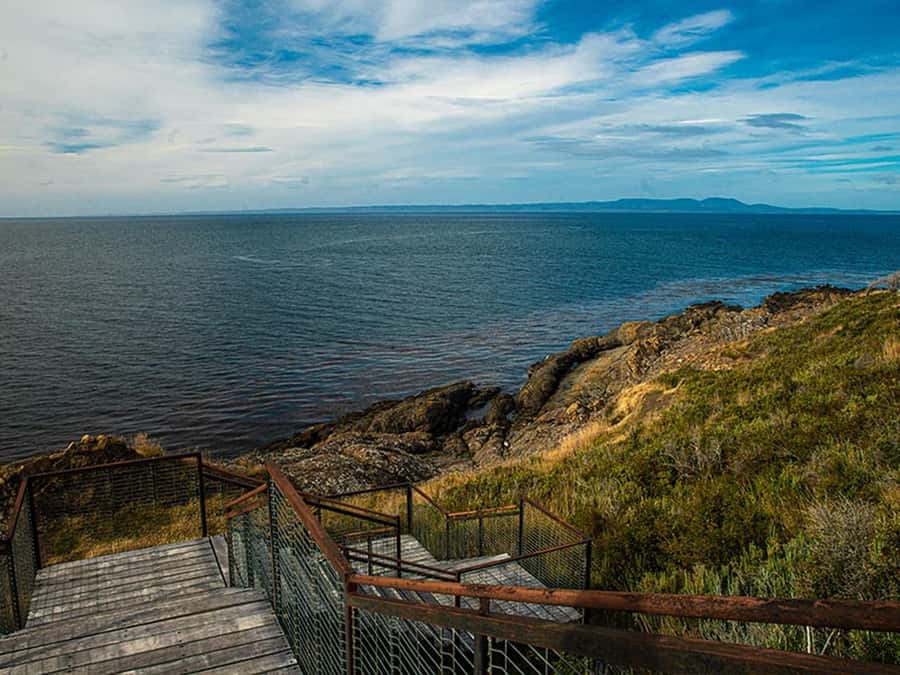
The tour then visits Estrecho Park before continuing through the Fort Bulnes area. The park provides a broader setting for understanding the site, and the Strait viewpoint is one of the strongest parts of the outing.
The view helps explain why this location mattered. From above the water, you can see the route that made the strait so important to explorers, governments, and ships moving between oceans. The position also makes the fort feel less like an isolated collection of buildings and more like a watchpoint tied to a major passage.
Bring warm clothing even in summer. Punta Arenas can feel cold and exposed, and the open viewpoint gives wind plenty of room to find you. The supplied advice also recommends carrying cash, along with your passport or ID card. Those are sensible items for a day outside the city, particularly since entrance tickets are not included.
The viewpoint may be the place where you want the most time, but group tours have to balance scenery with the fort visit. If you care most about photography, tell the guide early. The schedule may not allow for a long independent walk.
Same long country, a very different day out:
- Punta Arenas: Walk with Penguins on Magdalena & Marta Island
★ 4.6 · 611 reviews - Punta Arenas: Full-Day Whales, Penguins, and Glaciers Tour
★ 4.9 · 325 reviews - Punta Arenas: Full Day Tierra del Fuego & King Penguins
★ 4.3 · 179 reviews - Navigation Magdalena Island and Marta
★ 4.0 · 164 reviews
Inside the reconstructed Fort Bulnes
Fort Bulnes is the core of the excursion. The reconstruction follows the 1843 settlement and lets you examine the buildings that supported life at the post.
You can expect to see:
- The O’Higgins lighthouse
- The church
- The post office
- The jail
- The stables
- Other fort structures connected with daily life
The range of buildings is important. A lighthouse shows the need for navigation and visibility. A church points to the community side of the settlement. A post office reflects communication across a remote region, while the jail and stables bring the routine and discipline of the outpost into view.
I prefer this kind of visit to a single preserved wall because it gives you several ways to picture the settlement. You can ask how the fort operated, who used each building, and how the post connected to the wider Chilean project in the strait.
Keep in mind that this is a reconstructed fort, not an untouched 1843 compound. That does not make it worthless. Reconstruction can help you understand the shape and purpose of the original site, but you should see it as an interpretation of the past rather than a perfectly preserved time capsule.
Time management matters here. One departure did not leave enough time for both a full look at the fort buildings and the boundary lookout walk. If the choice comes up, decide what matters most to you. Choose the buildings if you want the clearest sense of daily life. Choose the lookout if panoramic views and open space are your priority.
The interpretive center adds the missing context
The Centro de Visitantes, or interpretive center, covers the human and natural story of the Strait of Magellan. This is an important part of the outing because the fort alone can leave you with names and structures but not enough background.
The exhibits help link the human settlement to the natural setting. You can use the center to place the fort within the larger story of the strait, including its importance as a passage and the conditions that shaped life in the region.
I would not rush through this stop. Read the displays that explain the area’s people, geography, and strategic value, then use the information to make sense of what you see outside. The center is especially useful if you are new to the history of southern Chile.
The experience depends in part on the guide’s presentation. English and Spanish are offered, and the bilingual setup can affect the pace. One visitor did not realize the tour would be bilingual and felt the outing leaned more toward transportation with basic commentary. If you need detailed English explanation, confirm how the guiding will be handled when you book.
That point is not a reason to reject the tour, but it is a real consideration. The strongest departures appear to be the ones where the guide makes the story engaging. Cristofer and Romina are two names associated with especially well-received guiding, though you cannot assume a particular guide for your date.
What the $46 price really covers
At $46 per person, the tour is priced as a transport-and-guiding package rather than an all-inclusive admission ticket. You receive pickup from your accommodation, the driver-guide, and return transportation to Punta Arenas.
That makes the cost reasonable if you want to avoid arranging a vehicle for the 55 km trip south. The value is also better for solo visitors or couples who would otherwise pay for a private transfer. A small group of up to 10 is another advantage over a large bus.
The price is less attractive if you mainly want a quick look at the fort and already have reliable transport. Since entrance tickets are not included, add that cost before deciding. The supplied information does not give the admission price, so check it at the time of booking.
You are paying for a four-and-a-half-hour outing, but the true value lies in the combination of transport, interpretation, and several connected stops. If the guide gives strong historical commentary, the trip becomes much more than a ride to a viewpoint. If the tour is mostly driving with brief explanations, the value drops. That is why clear expectations about bilingual guiding and pickup are important.
Who will enjoy this half-day outing
I would choose this tour if you want a straightforward introduction to Fort Bulnes without renting a car or arranging several separate stops. It suits people who enjoy political history, remote outposts, geography, and wide views more than people looking for an active hike.
The small group is a good fit for solo visitors, couples, and families who prefer a quieter van. The four-and-a-half-hour length also works well if you have limited time in Punta Arenas and want to keep part of the day free.
You should bring:
- A passport or ID card
- Warm clothing
- Cash
- Comfortable shoes for walking around the fort and viewpoint
The experience may be less satisfying if you expect a long, highly detailed museum tour or a fully private itinerary. The group follows a set route, and the guide may need to keep moving so everyone returns on time.
You should also be comfortable with a bilingual format unless you confirm that your departure will be conducted in your preferred language. The available languages are English and Spanish, but the exact balance can vary by group.
Booking, cancellation, and pickup tips
You can cancel up to 24 hours in advance for a full refund. That flexibility helps in Patagonia, where plans can shift, but it does not solve last-minute confusion at the port or during hotel collection.
Confirmation arrives within 48 hours of purchase. Check the confirmation for the pickup point, then contact the provider if it is not clear. If you are staying at a hotel, have the reception desk confirm the meeting spot. If you are at the port, do not assume the general port staff will know the company or its van.
The tour is offered at different starting times depending on availability. Since the route takes 270 minutes and may include several pickups, avoid booking a tight connection immediately afterward.
Should you book Fort Bulnes?
Book it if you want an easy half-day trip from Punta Arenas that combines a reconstructed 1843 fort, an interpretive center, Strait views, and an unusual geographic marker. I especially like the way the outing links national history to a real place, then adds the lighthouse, church, post office, jail, and stables to make the story concrete.
Think twice if you need a fully private schedule, a long walk at every stop, or a single-language tour with no possible delay from pickups. Confirm the meeting point, ask how English and Spanish will be handled, and remember that entrance tickets cost extra.
For most visitors with limited time in Punta Arenas, this is a useful and well-focused choice. Go for the setting and the context, not just the photo at the fort. Bring warm clothes, allow extra time, and decide in advance if the buildings or the lookout matter more to you.
FAQ
How long does the Fort Bulnes tour take?
The tour lasts 270 minutes, or four and a half hours.
How far is Fort Bulnes from Punta Arenas?
Fort Bulnes is located about 55 km south of Punta Arenas. The van ride is listed as taking about 45 minutes.
Is transportation included?
Yes. The tour includes transportation from your accommodation in Punta Arenas and return transportation.
Are entrance tickets included in the price?
No. Entrance tickets are not included in the $46 per-person price.
What languages are available?
The tour offers live guiding in English and Spanish. The tour may be bilingual, so confirm the language arrangement if this is important to you.
What should I bring?
Bring your passport or ID card, warm clothing, and cash.
Just added around Punta Arenas
- Private Patagonian Forest Hike in Punta Arenas: 4 Hour★ 4.5 · 28 reviews
- Mountain Bike Adventure in Punta Arenas★ 5.0 · 42 reviews
- Punta Arenas: Torres del Paine & Grey Glacier Full-Day Boat★ 4.8 · 6 reviews
- Punta Arenas: Fuerte Bulnes Shore Tour for Cruisers★ 4.6 · 6 reviews
- Punta Arenas: Magallanes National Reserve and City Tour★ 5.0 · 3 reviews
- Punta Arenas: Austral Dolphin & Wildlife Watching Boat Tour★ 5.0 · 4 reviews
- Punta Arenas: City Tour★ 4.6 · 18 reviews
- Magdalena Island: Walk with the penguins★ 4.6 · 17 reviews
Historical Tours, compared.
Walking Tour Valparaiso, History & Art – Private Optional
Read our review →
Essence of Santiago : History, Flavors and Panoramic Views
Read our review →
Private tour, historic center, high altitude viewpoint, cable car
Read our review →
Private tour: where the history of the Moai was born
Read our review →
Discover Santiago, where modernity merges with history
Read our review →
Easter Island: Private Full Day History Of The Moai
Read our review →
Browse the lists this tour appears in