
Reviewed · MOON VALLEY TOURS
From San Pedro de Atacama: Moon Valley Sunset Tour
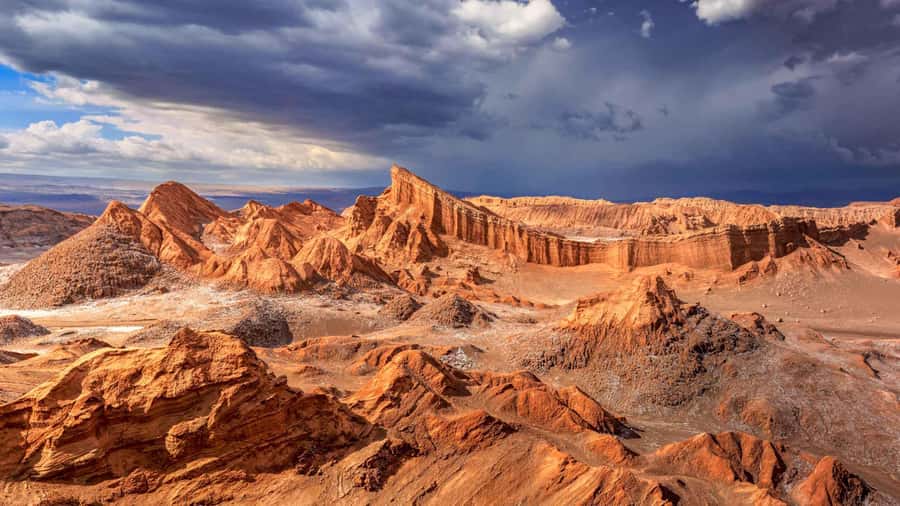
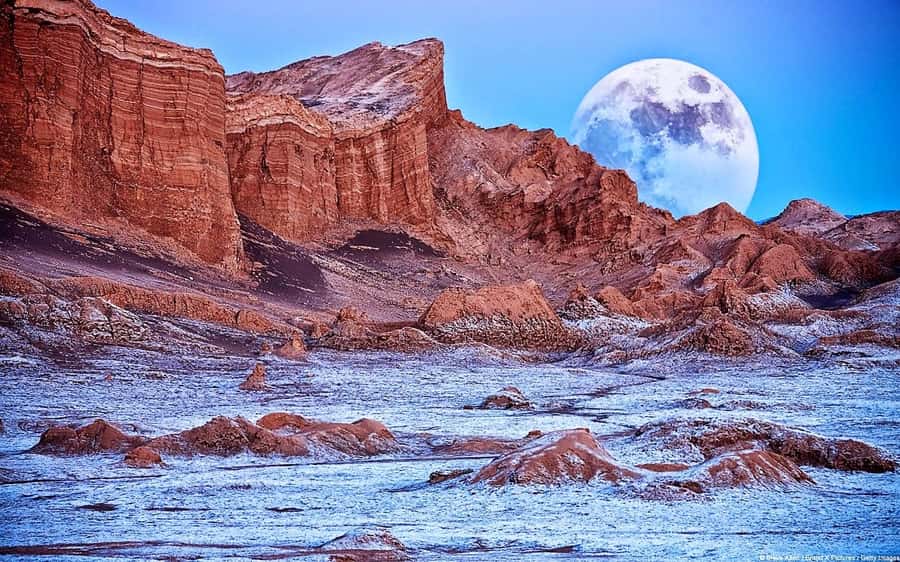
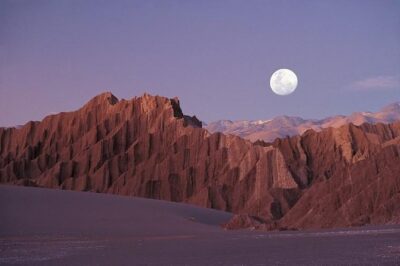
Moon Valley earns its name honestly. Its bare ridges, mineral crusts, caves, and wind-carved shapes look more like a distant planet than northern Chile. This five-hour outing gives you the best-known sights, then saves the grand finale for a lookout above the valley as the sun drops.
I like the small group of up to 15 and the chance to explore several formations rather than stop at one scenic point. I also like the bilingual guide service, with Spanish and English available. The main catch is practical: admission to Moon Valley costs extra, hotel drop-off is not included, and one very poor service report means you should confirm the meeting details carefully.
In This Review
- Key points at a glance
- Why Moon Valley feels so unlike anywhere else
- The route from San Pedro to the valley
- Las Tres Marías and the work of erosion
- Great Dunes, Salt Cave, and Amphitheater
- The sunset viewpoint is worth saving energy for
- What the guide and group size add
- Is $52 a fair price?
- What to bring and what to leave behind
- Who should book this sunset tour?
- Should you book it?
- FAQ
- How long does the Moon Valley sunset tour last?
- How far is Moon Valley from San Pedro de Atacama?
- Is transportation included?
- Is the Moon Valley admission ticket included?
- What languages are available?
- What is the maximum group size?
- Can I cancel for a full refund?
Key points at a glance
- Moon Valley is only 13 kilometers from San Pedro, so you spend more time seeing the desert and less time on the road.
- Las Tres Marías, the Great Dunes, Salt Cave, Amphitheater, and Piedra del Coyote give the outing plenty of variety.
- Sunset is the main event, with a wide view across the Atacama’s harsh, colorful terrain.
- Groups are limited to 15 people, a better setup for hearing the guide and moving between stops.
- English and Spanish guides are available, with Cristobal receiving especially strong praise for humor, preparation, and courtesy.
- The $52 price does not include entry, so add the Valley of the Moon ticket to your budget.
Why Moon Valley feels so unlike anywhere else
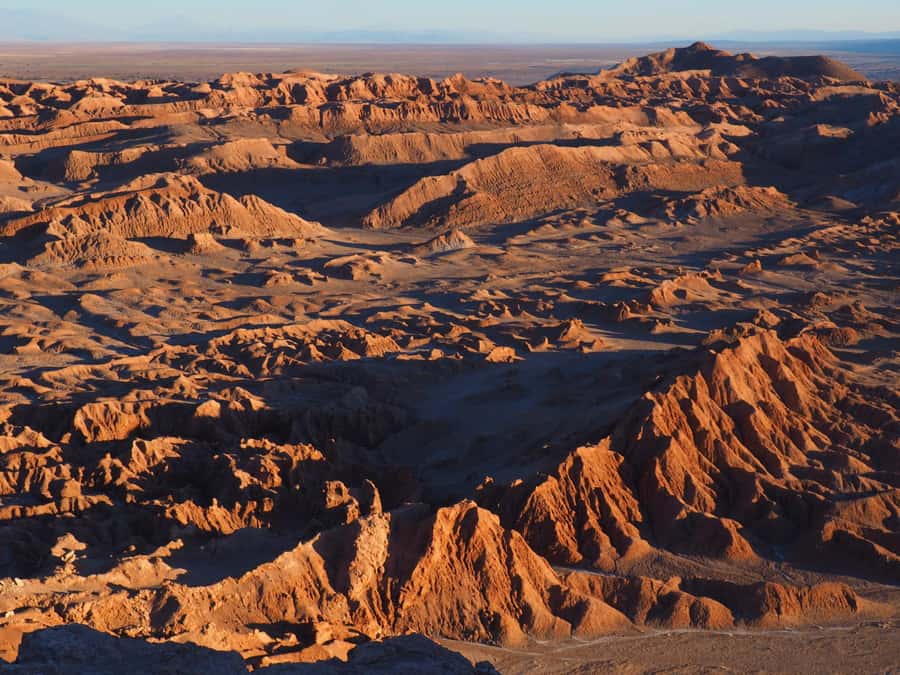
From San Pedro de Atacama, the road to Moon Valley is short. The change in scenery is not. The town gives way to a dry sweep of mineral ridges, salt-streaked surfaces, and sharply cut rock. With almost no vegetation in sight, the shapes and colors take over.
The appeal here is not a long hike through wilderness. It is the chance to read the ground around you. Wind and erosion have worked on natural minerals for decades, creating forms that seem carefully sculpted, even though no artist was involved. Your guide can help connect those shapes to the forces that made them.
I find the setting most striking when you stop trying to compare it with ordinary desert scenery. Moon Valley is not simply a place with sand and rocks. Its textures change from powdery and pale to dark, jagged, and salt-crusted within a short distance.
The tour is best for people who want a strong first look at the Atacama without committing to a full-day outing. You will see several named sites, learn what makes them different, and finish at the right hour for sunset.
More moon valley tours in San Pedro De Atacama:
- San Pedro de Atacama: Valle de la Luna Guided Tour
★ 4.4 · 312 reviews - Valle de la Luna (Moon Valley) from San Pedro de Atacama
★ 4.5 · 145 reviews - San Pedro de Atacama: Shared Moon Valley Tour
★ 4.7 · 135 reviews
The route from San Pedro to the valley
Roundtrip transport from the meeting point in San Pedro de Atacama is included. The valley sits 13 kilometers away, making this a convenient half-day plan for a morning arrival, a free afternoon, or a day when you want to conserve energy for other Atacama excursions.
The exact start time depends on availability and the season. That matters because sunset shifts throughout the year. Check the departure time when booking, and arrive at the stated meeting point with enough time to spare. Hotel drop-off is not part of the service, so plan your return from the meeting point after the tour.
A five-hour duration sounds generous for a nearby site, but it allows the outing to cover several stops and wait for the changing evening light. The schedule is not just a quick drive out for a photograph. You should expect time on foot at more than one formation, followed by a longer pause at the sunset viewpoint.
Transport also helps with the desert conditions. You can carry water, warm clothing, and a camera without having to organize your own vehicle. Since the tour is not suitable for people with mobility impairments, anyone who has trouble walking over uneven ground should choose a different activity.
Las Tres Marías and the work of erosion
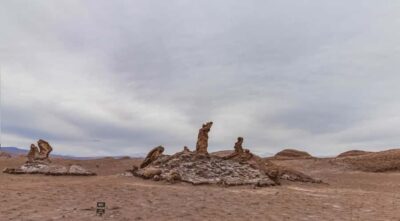
Las Tres Marías is one of Moon Valley’s most recognizable formations. The name refers to three upright shapes created by erosion, with their unusual outlines made from natural mineral material.
This stop is a good reminder that the valley’s drama comes from small details as much as from wide views. Look closely at the surfaces and you will find layers, rough edges, and color changes. Step back, and the formations become bold figures against the open desert.
Your guide is important here. Without explanation, Las Tres Marías can look like three random rocks. With context, you begin to notice how wind and weather have shaped the area over a long period. The bilingual format is useful for mixed-language groups, and the strongest guide feedback singled out Cristobal for being well prepared, courteous, and funny without losing the educational side of the visit.
Do not expect a museum-style presentation or a long geological lecture. This is an outdoor visit with several sights to cover. The value comes from short explanations that make the formations easier to understand, followed by time to look around and take pictures.
Great Dunes, Salt Cave, and Amphitheater
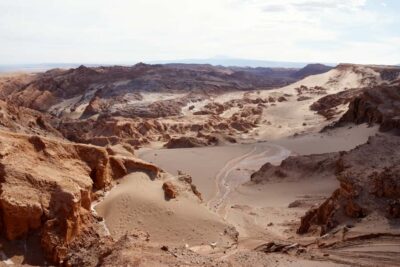
The Great Dunes offer a broader view of Moon Valley’s scale. Their smooth slopes contrast with the harder rock forms at other stops. From higher ground, the desert opens out in several directions, giving you a better sense of why the area feels so empty and vast.
Comfortable shoes matter here. The tour requires movement over dry, uneven terrain, and the dunes are more enjoyable when you are not worrying about thin soles or poor grip. Bring water, too. The Atacama is famously dry, and the cool evening air can make you forget how much sun you have taken earlier in the day.
The Salt Cave adds another texture to the route. Natural salt deposits create a setting that feels enclosed and rough compared with the open dunes. It is an interesting contrast, although you should not expect a large underground attraction. The stop is included as one of several geological features, not as a long cave expedition.
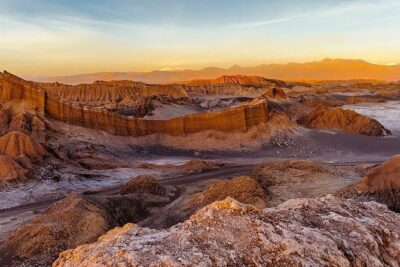
The Amphitheater gives you yet another change in form. Its curved rock walls create a natural bowl, showing how erosion can produce broad shapes as well as narrow pillars. Piedra del Coyote rounds out the main stops with a striking rocky viewpoint. Together, these places keep the visit from becoming one repeated scene of sand and rock.
The itinerary works because each formation offers a different visual lesson. Las Tres Marías gives you isolated shapes. The Great Dunes give you open slopes. The Salt Cave brings mineral detail. The Amphitheater shows a large eroded curve. Piedra del Coyote helps frame the wider desert.
A few more San Pedro De Atacama trips to weigh up
- Explore Moon Valley with Sunset, Snacks and Refreshments
★ 4.5 · 7 reviews - Atacama Desert: Floatation in Laguna Cejar and Sunset
★ 3.1 · 3 reviews - Santiago: Andes Mountains Sunset and Valle Nevado & Picnic
★ 4.6 · 181 reviews - Santiago: Alyan Winery Sunset with Wine Tastings and Dinner
★ 4.7 · 75 reviews
The sunset viewpoint is worth saving energy for
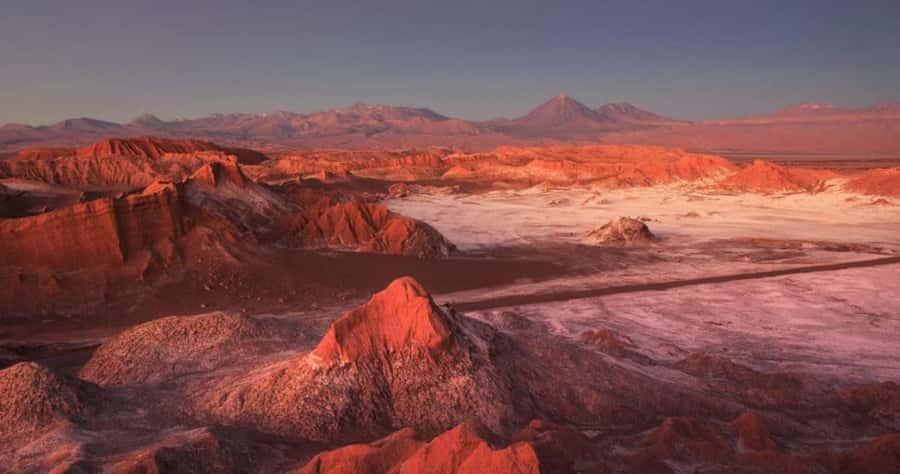
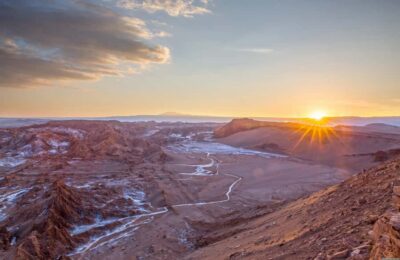
At the end of the day, the group gathers at a lookout with broad views across the valley. This is when Moon Valley changes most quickly. Low sunlight catches the ridges, pulls out the folds in the dunes, and shifts the sky through warm colors as the sun sets.
I like that the tour does not treat sunset as an accidental bonus. The timing is built around it. After the named formations, you have a clear finish at a point chosen for a wide view rather than a close-up rock feature.
Bring a camera, but do not spend the whole stop staring at a screen. The desert can look pale and flat in strong daylight, then take on more contrast as the sun sinks. Your best photograph may come just before the final moment, when the ridges still have detail and the sky has begun to change.
Warm clothing is essential advice. Desert evenings can feel cold after the sun disappears, even if the afternoon was hot. A jacket or extra layer will make the final viewpoint much more comfortable. Sunscreen remains useful earlier in the outing, and water should stay within easy reach.
The lookout is also where the group size matters. With no more than 15 participants, you have a better chance of finding a useful viewing position and hearing the guide’s closing explanation. Still, this is a shared sunset, not a private photo session. If you need total quiet or unlimited time at one angle, a private vehicle would suit you better.
What the guide and group size add
The tour provides a live guide in English or Spanish. That is more useful here than it might be at a simple scenic overlook because the rock names and mineral formations are part of the experience. The guide gives the places meaning, points out what erosion has done, and keeps the group moving through several stops.
Cristobal received especially warm praise for his preparation, courtesy, and sense of humor. Those qualities matter on a five-hour desert outing. A well-paced guide can keep explanations clear, make the drive and stops feel connected, and help the group enjoy the setting without turning every formation into a technical lesson.
The 15-person limit is small enough to feel manageable but not intimate. You will not have the privacy of a personal guide, and the pace may need to suit the whole group. In return, the shared transport keeps the cost below what a private excursion would usually require, while still giving you a live explanation in your chosen language.
The overall rating is 4.2 out of 5 from seven ratings. That is a solid result, but the small sample deserves caution. One verified booking received a one-star report because the provider did not appear or make contact. Other feedback gave five stars, including the praise for Cristobal, so the service record is mixed rather than uniformly dependable.
That poor report is the one issue I would take seriously. Confirm the meeting point, departure time, and provider contact information before the day of the tour. The activity offers free cancellation up to 24 hours before departure, with a full refund, and you can reserve now and pay later. Those terms give you some flexibility, but they do not replace confirming the practical details.
Is $52 a fair price?
At $52 per person, this tour offers reasonable value if you want transport, a guide, several major Moon Valley stops, and a sunset viewpoint in one half-day. You are paying for a structured route rather than only a ride to the park entrance.
The price needs one adjustment in your planning: admission to Moon Valley is not included. Add that ticket before deciding what the outing really costs. Hotel drop-off is also excluded, so you need to return to the meeting point and arrange your own onward plan from there.
The value is strongest for a first visit to San Pedro. You get an introduction to the area’s geology and the famous evening colors without spending a full day away from town. It also suits travelers who prefer not to rent or arrange their own transport in a remote desert setting.
The value is weaker if you already know Moon Valley well, dislike group schedules, or want a more active walk. This is a sightseeing tour with stops and views, not a demanding trek. Since mobility impairments are listed as a reason not to take it, be realistic about your comfort on uneven ground.
What to bring and what to leave behind
Pack for two kinds of weather. Sunscreen and water help during the brighter part of the outing, while warm clothing becomes important at the sunset stop. Comfortable shoes are a must, and a camera is worthwhile if you enjoy changing light and unusual rock forms.
Smoking, alcohol, drugs, and littering are not allowed. The rule against littering matters especially in a fragile desert setting, where small pieces of waste are highly visible and slow to disappear.
Keep your bag light, but do not skip the basics. A water bottle, sun protection, warm layer, and shoes with decent support cover the main needs listed for the outing.
Who should book this sunset tour?
I would choose this tour if you want a manageable introduction to the Atacama’s most famous nearby valley. It suits first-time visitors, photographers, geology fans, and anyone who likes scenery with a clear beginning, middle, and sunset finish.
It is also a sensible choice for a mixed-language group because English and Spanish guiding are available. The small group limit and the strong comments about Cristobal make it more appealing than a large coach-style visit, though you should not expect a private experience.
I would look elsewhere if you need hotel pickup and drop-off, have limited mobility, or want a silent, flexible outing. I would also confirm the operator’s meeting arrangements because of the one serious no-show report. With that check made, the tour gives you a good amount of scenery and explanation for a $52 base price, provided you remember the separate admission fee.
Should you book it?
Book it if you want Moon Valley’s key formations and sunset in one five-hour trip from San Pedro, and you are comfortable walking over rough ground. The combination of Las Tres Marías, the Great Dunes, Salt Cave, Amphitheater, Piedra del Coyote, and the final lookout gives the afternoon real variety.
Before paying, check the entry cost, departure time, meeting point, and return plan. If those details work for you, this is a practical way to see the Atacama’s most unusual nearby terrain without arranging transport yourself. Just bring a warm layer, water, sturdy shoes, and realistic expectations about a shared group outing.
FAQ
How long does the Moon Valley sunset tour last?
The tour lasts five hours, including transport from the meeting point in San Pedro de Atacama, visits to the main formations, and the sunset lookout.
How far is Moon Valley from San Pedro de Atacama?
Moon Valley is located 13 kilometers from San Pedro de Atacama.
Is transportation included?
Roundtrip transportation from the meeting point in San Pedro de Atacama is included. Hotel drop-off is not included.
Is the Moon Valley admission ticket included?
No. The entry ticket for the Valley of the Moon is not included in the tour price.
What languages are available?
The live guide service is available in English and Spanish.
What is the maximum group size?
The tour is offered as a small-group experience with up to 15 participants.
Can I cancel for a full refund?
Yes. You can cancel up to 24 hours in advance for a full refund. You can also reserve now and pay later.
Just added around San Pedro De Atacama
- Atacama Desert and Magic Bus Visit★ 4.8 · 15 reviews
- Vallecito★ 4.7 · 13 reviews
- San Pedro de Atacama: Valle de la luna★ 3.0 · 3 reviews
- Valle de la Luna: A Moon-Like Escape in Atacama★ 5.0 · 3 reviews
- Valley of the moon★ 5.0 · 50 reviews
- San Pedro de Atacama: Half day Valle de la Luna, Afternoon Tour★ 4.5 · 52 reviews
- Piedras Rojas and Altiplanic Tour★ 4.5 · 38 reviews
- Uyuni Salt Flats 4-days tour from Atacama> private room available★ 4.5 · 44 reviews
Moon Valley Tours, compared.
Valle de la Luna (Moon Valley) from San Pedro de Atacama
Read our review →
Small-Group Tour to Moon Valley from San Pedro de Atacama
Read our review →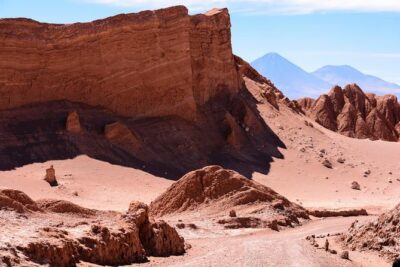
Browse the lists this tour appears in