
Reviewed · MOON VALLEY TOURS
Moon Valley Tour from San Pedro de Atacama
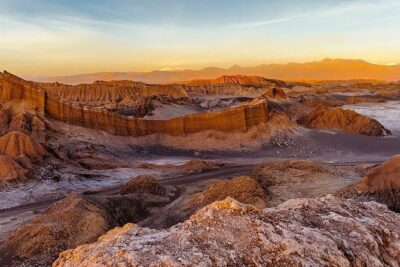
The best part of this half-day outing is the light. Near sunset, the Salt Mountain Range turns from harsh white and brown to soft gold, orange, and purple. I like the mix of salt caves and strange rock shapes and the chance to reach a high dune or viewpoint without giving up a full day. I also like that transport and a guide are included.
The main catch is that the quality depends heavily on the guide and group. Some guides, including Damian Berrios, Edgar, Anita, and Francisca, have been praised for clear explanations and kind help. Other departures have suffered from weak English, thin commentary, rushed stops, or long waits before sunset.
In This Review
- Key points to know
- Why Moon Valley works best at sunset
- Pickup from San Pedro and the ride into the desert
- The Salt Mountain Range and first views
- The Licanantay viewpoint above the salt formations
- Salt caves, Las Tres Marias, and the amphitheater
- The dune walk and Coyote Stone sunset
- The guide can make or break the experience
- How much value do you get for $51?
- What to wear and carry
- Who should book this outing?
- Should you book the Moon Valley sunset tour?
- FAQ
- How long does the Moon Valley tour last?
- What time does the tour start?
- Is hotel pickup included?
- Is the entrance fee included?
- What places does the tour visit?
- Do I need to be physically fit?
- What should I bring?
- What vehicle is used?
- What happens if bad weather cancels the tour?
Key points to know
- Sunset is the centerpiece: Coyote Stone offers the final view across Moon Valley as the sun drops.
- The outing lasts about four to five hours: Pickup begins around 3:30 p.m., with seasonal pickup windows.
- You will walk on sand and climb: The dune and ridge walks call for moderate fitness.
- The entrance fee costs extra: Bring cash for the CLP 10,800 admission charge.
- The group can be limited to 15 people: That is far more manageable than a large coach, though timing can still feel tight.
- Pack for two climates: The desert can feel hot early, then cold and windy after sunset.
Why Moon Valley works best at sunset
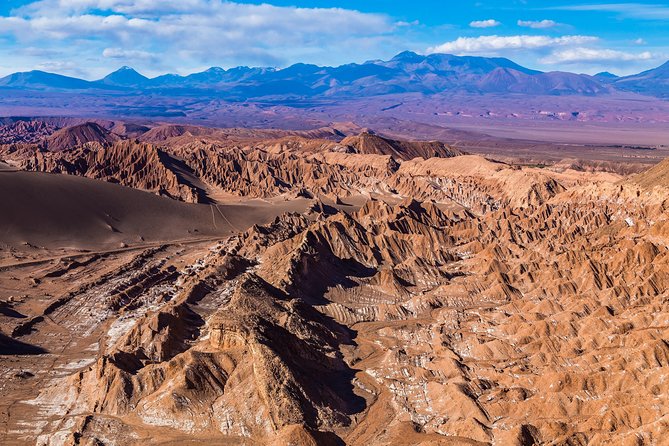
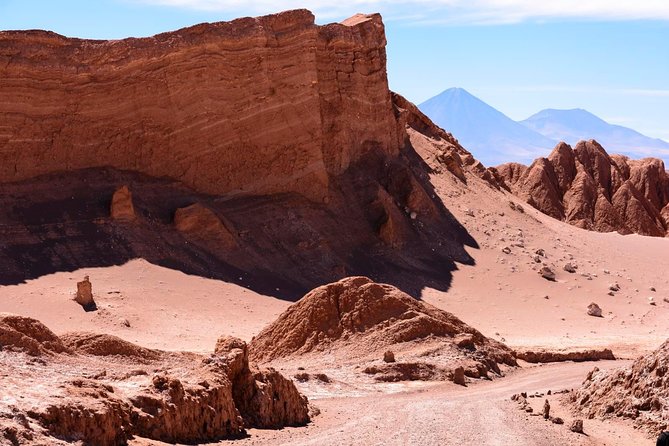
Moon Valley, or Valle de la Luna, sits in the Cordillera de la Sal, the Salt Mountain Range outside San Pedro de Atacama. Wind, water, salt, and mineral folding have shaped the area into ridges, hollows, caves, dunes, and sharp formations.
You do not need a vivid imagination to see why the name stuck. The ground looks dry, bare, and almost alien. At some points you are looking across salt-crusted surfaces; at others, you see soft dunes pressed against dark folds of rock. The setting feels closer to a film set for Mars than to an ordinary Chilean valley.
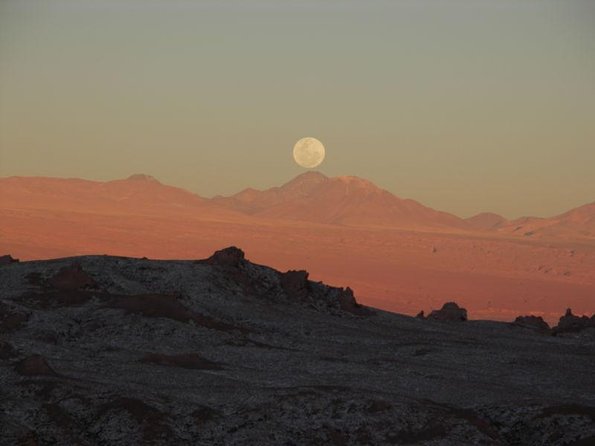
The sunset adds drama, but it is not guaranteed to produce a blazing red sky. Clouds and haze can mute the color. Even on a quieter evening, the changing shadows across the folds and gullies are worth watching. I would book this for the shapes and scale first, with sunset as the bonus.
More moon valley tours in San Pedro de Atacama:
- San Pedro de Atacama: Valle de la Luna Guided Tour
★ 4.4 · 312 reviews - Valle de la Luna (Moon Valley) from San Pedro de Atacama
★ 4.5 · 145 reviews - San Pedro de Atacama: Shared Moon Valley Tour
★ 4.7 · 135 reviews
Pickup from San Pedro and the ride into the desert
The outing begins with pickup from a hotel near San Pedro de Atacama. Hotel pickup and return service apply only to hotels close to town, so give the operator your exact hotel details and reconfirm the time at least one day before departure.
The published start time is 3:30 p.m., but pickup runs within a window. In summer, it is listed as 3:00 to 3:40 p.m.; in winter, 2:30 to 3:10 p.m. That difference matters, since sunset timing changes with the season and the tour needs time to reach several stops.
You ride in an air-conditioned minivan or bus for the roughly 8-mile, or 13-kilometer, trip. The air conditioning is welcome in the afternoon heat. The ride itself is not the attraction, but it gives you a gradual change from the compact streets of San Pedro to open desert and bare mineral ridges.
The return drop-off is in the city center rather than necessarily at your hotel. Plan your evening on that basis. The full outing normally takes four to five hours, so it occupies most of the late afternoon and early evening.
The Salt Mountain Range and first views
The first major area is the Cordillera de la Sal. This is where the tour begins to show you the forces that shaped the region. The rock and sand formations are the result of mineral deposits and long-term folding, then further worn by wind and water.
One early stop looks toward Death Valley and the surrounding salt ridges. The views are broad, stark, and excellent for photographs. I like this first pause because it gives you scale before the shorter walks inside Moon Valley. You can see that the formations are not isolated curiosities. They form a large, connected sweep of folded ground.
There is no admission included at this point, and the national park entrance is paid separately later. Keep your water and sun protection handy. Afternoon light can still be fierce, even when the air feels cooler than expected.
The guide’s role matters here. A strong guide will explain how the white, gray, tan, and rust-colored surfaces formed, and will help you distinguish natural shapes from local nicknames. Past departures have included excellent explanations from guides such as Damian Berrios and Edgar, while other outings have provided little more than directions to the next photo stop. If your guide speaks in both Spanish and English, listen early for the pattern of the commentary and ask questions while the group is still small and attentive.
The Licanantay viewpoint above the salt formations
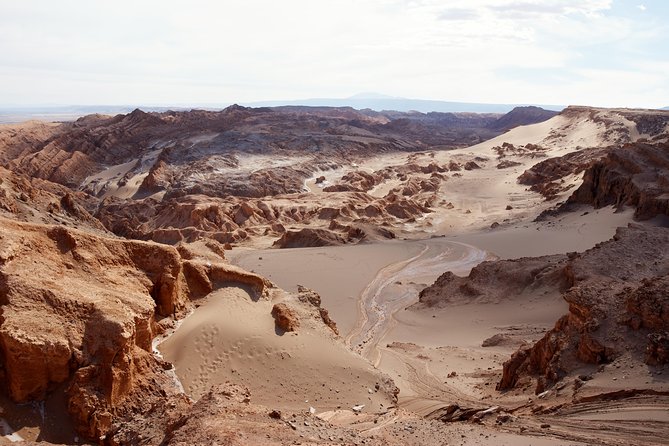
The next stop is the Licanantay viewpoint. From above, you get a better view of the Salt Mountain Range and the dry folds running through it. This is less about a single formation and more about seeing how large and varied the area is.
The viewpoint is useful after the first stop because it changes your angle. At ground level, you notice texture: salt crust, sand, rock, and small ridges. From above, the area reads as a series of long folds and depressions. The contrast between the empty desert and the sculpted formations makes this one of the strongest photo stops.
Expect about an hour in this section, including walking and explanations. The pace may feel brisk if you want to study every ridge. Some past itineraries have spent too long waiting near the final viewpoint, while others have moved quickly through the formations. The exact balance can depend on sunset time, traffic at the park, and how well the group keeps together.
Same long country, a very different day out:
- San Pedro de Atacama: El Tatio Geysers Tour
★ 4.7 · 943 reviews - San Pedro de Atacama: Etno-Stargazing Tour with Transfer
★ 4.8 · 629 reviews - Piedras Rojas, Altiplanics Lagoons & Salar Full-Day Tour
★ 4.7 · 592 reviews - San Pedro de Atacama: Stargazing Experience
★ 4.7 · 489 reviews
Salt caves, Las Tres Marias, and the amphitheater
Inside Moon Valley, the tour visits several named features. The salt caves offer the most enclosed and tactile part of the outing. You move through a small cave and see how mineral deposits and erosion have left irregular walls and openings.
The route also includes Las Tres Marias, or the Three Marys, a set of salt statues. This is a short viewing stop rather than a long hike. The formations are photogenic, though I would not plan the entire trip around them. The larger impression comes from the whole valley, where many shapes appear and disappear as the light changes.
The amphitheater is another notable formation. Its curved walls show how the valley’s mineral layers have been pressed and worn over time. A guide who explains the geology can turn a quick photo stop into a useful lesson. Without that explanation, you may simply see another dramatic wall of rock.
The tour description also mentions an onsite exhibition or museum near the entrance. This is a worthwhile pause because it gives physical and ecological context before you walk farther into the protected area. The exhibition helps connect what you see outside with the region’s mineral structure and desert environment.
The admission fee is not included. The listed cost is CLP 10,800 per person, and you should bring cash. At about $51 for the tour itself, the extra park charge is a small but important addition when you work out the total price.
The dune walk and Coyote Stone sunset
The final section is the reason most people choose the late departure. You walk toward a large sand dune and then wait for sunset near Coyote Stone, the stated final viewpoint.
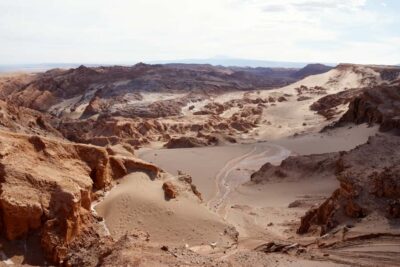
Climbing the dune requires average physical fitness, but it is not a flat stroll. Sand gives way under your feet, and the climb can feel tiring in the afternoon heat. One account describes the slope as quite steep, while another says the walks are manageable but not easy for every child. Wear shoes with a firm sole and expect sand to get inside them.
The dune gives you a high view across the valley. The curved ridges and salt formations catch the last light from above, and shadows slowly fill the depressions. At Coyote Stone, the sun drops toward the horizon and the color changes across the valley. This is the most atmospheric part of the trip, but it can also be the most crowded.
Timing is crucial. A well-run departure reaches the viewpoint with enough time to settle in before the sun touches the horizon. A poorly paced one may leave you waiting for a long period or arrive only minutes before the key moment. Bring a jacket for the wait. The temperature can fall quickly after sunset, and wind makes the exposed viewpoints feel colder.
Do not expect a guaranteed explosion of color. Several departures have produced only modest changes in tone. The better reason to stay is the slow shift from bright desert detail to layered silhouettes. If you want a private, quiet sunset, a group outing may disappoint. If you want an easy way to reach the main viewpoints and return to San Pedro the same evening, it remains practical.
Some departures have included a cocktail break or a simple sunset spread. Food and drinks are not listed as standard inclusions, so do not count on them. Bring water and a snack if you need one.
The guide can make or break the experience
This outing is sold as a guided look at the geology, ecology, and physical story of the valley. That promise is important. The formations are unusual, but the explanations help you understand what you are seeing rather than simply collect photographs.
The strongest guide accounts describe Damian Berrios and Edgar explaining the different landforms, helping with pictures, and preparing a pleasant sunset spread. Anita has been praised for watching out for an older family member and keeping an eye on the group. Francisca has also been singled out for clear explanations and attentive service.
The weaker experiences involve guides who speak mostly Spanish despite English-speaking members in the group, give little detail about the formations, or let the group spread out. One poor departure reportedly lost time to a long personal story, then allowed only a few minutes at an earlier viewpoint. That is not a small issue on a four-hour tour with several scheduled stops.
If English commentary is important to you, confirm the language when booking and listen for clear bilingual explanations at the first stop. A small group of up to 15 people should help, but it cannot replace a guide who manages time and communicates well.
How much value do you get for $51?
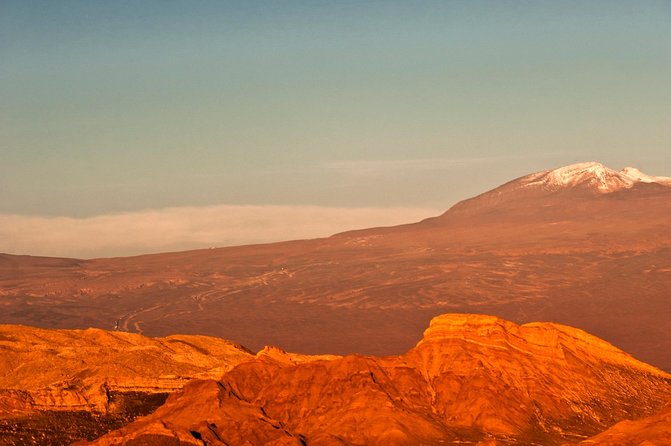
At $51 per person, this is a mid-priced half-day excursion. The price covers transport from a nearby San Pedro hotel, an air-conditioned vehicle, a professional guide, and the return to the city center. You also get access to several major stops without arranging a vehicle or navigating the park yourself.
The separate CLP 10,800 entrance fee raises the final cost. You should also budget for your own water, sunblock, and any snack. Still, the price can be fair if you value convenience and want the sunset included.
The value drops if you mainly want a long walk or quiet time at one formation. This is a scheduled circuit with multiple stops, not a flexible private visit. Some outings have felt rushed, while others have included too much waiting. A private or self-arranged visit might give you more control, but that option is not described here and would require separate transport planning.
For a first look at Moon Valley, the package is reasonably useful. You see the Cordillera de la Sal, a high viewpoint, the caves, Las Tres Marias, the amphitheater, the dune, and Coyote Stone in one afternoon. You pay for efficiency, not solitude.
What to wear and carry
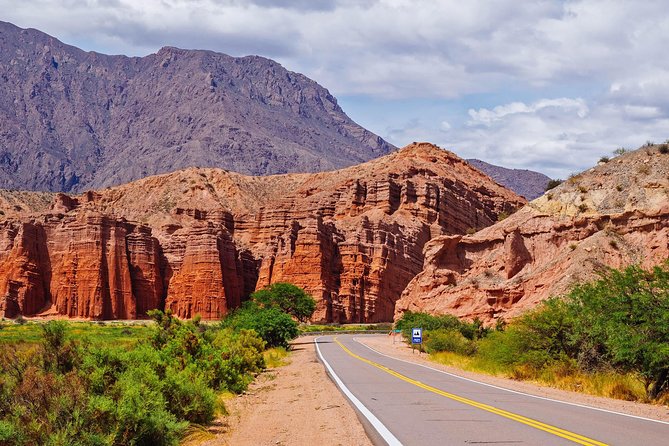
The desert demands simple preparation. Wear comfortable trekking clothes, socks, and walking shoes that can handle sand. Lightweight clothing helps during the warm first part of the trip, while a windbreaker or jacket becomes important near sunset.
Carry:
- Water
- Sunblock
- Sunglasses
- A windbreaker or warm layer
- Gloves for the cool evening
- Cash for the CLP 10,800 entrance fee
A hat is also sensible, though it is not specifically listed among the required items. Keep your phone or camera accessible, but protect it from blowing sand when you are near the dune.
The route calls for moderate fitness. You will walk on sand, climb a dune, and may use narrow or uphill paths. If you find steep walking difficult, ask the guide how much climbing is planned before leaving the vehicle. The tour is not described as accessible for limited mobility, and the supplied information only says that moderate fitness is needed.
Who should book this outing?
I would recommend it to a first-time visitor with one free afternoon who wants the major Moon Valley sights and a sunset without planning transport. Couples, solo visitors, and families with active older children can all fit the format, provided everyone is ready for heat, wind, sand, and a late return.
It also suits you if photography is a major goal. The route offers several different angles, from broad salt ridges to close formations and a high dune view. The changing light gives you more variety than a midday visit.
I would be more cautious if you dislike groups, waiting, or fixed schedules. It may also disappoint you if your priority is detailed geology. The scenery is exceptional, but the quality of interpretation can vary. Ask about the guiding language and group size before paying, and confirm the pickup time the day before.
Should you book the Moon Valley sunset tour?
Book it if you want a straightforward introduction to the Salt Mountain Range, with transport, several major formations, and a sunset viewpoint rolled into one outing. The scenery is the clear strength, especially around the dune and Coyote Stone, and the four-to-five-hour format leaves your mornings open for another Atacama activity.
Skip it if you need a quiet, unhurried visit or if you are unwilling to pay the entrance fee separately. The most important decision is not simply the $51 price. It is whether you are comfortable trading independence for convenience and accepting that the guide may determine how much you learn.
Free cancellation is available up to 24 hours before the start time. Changes made within 24 hours are not accepted, and poor weather can lead to a new date or a full refund. That gives you useful flexibility, but the desert light itself remains beyond anyone’s control.
FAQ
How long does the Moon Valley tour last?
The experience lasts approximately four to five hours, including pickup, the visits to the Salt Mountain Range and Moon Valley, sunset, and the return toward San Pedro de Atacama.
What time does the tour start?
The listed start time is 3:30 p.m. Pickup is scheduled between 3:00 and 3:40 p.m. in summer, and between 2:30 and 3:10 p.m. in winter.
Is hotel pickup included?
Pickup is included for hotels near San Pedro de Atacama. You must provide the correct hotel information and reconfirm the pickup details at least one day before the outing.
Is the entrance fee included?
No. The Valle de la Luna entrance fee is listed as CLP 10,800 per person. Bring cash to pay it.
What places does the tour visit?
The route includes the Cordillera de la Sal, a view toward Death Valley, the Licanantay viewpoint, Moon Valley, salt caves, Las Tres Marias, the amphitheater, a large sand dune, and Coyote Stone.
Do I need to be physically fit?
You should have a moderate level of fitness. The outing includes walking on sand and climbing a sand dune, with some uphill sections.
What should I bring?
Bring water, sunblock, sunglasses, comfortable walking clothes, trekking shoes, a windbreaker or jacket, gloves, and cash for the entrance fee.
What vehicle is used?
Transport is provided by an air-conditioned minivan or bus.
What happens if bad weather cancels the tour?
If poor weather causes cancellation, you will be offered another date or a full refund. You can also cancel for a full refund if you do so at least 24 hours before the start time.
Just added around San Pedro de Atacama
- Atacama Desert and Magic Bus Visit★ 4.8 · 15 reviews
- Vallecito★ 4.7 · 13 reviews
- San Pedro de Atacama: Valle de la luna★ 3.0 · 3 reviews
- Valle de la Luna: A Moon-Like Escape in Atacama★ 5.0 · 3 reviews
- Valley of the moon★ 5.0 · 50 reviews
- San Pedro de Atacama: Half day Valle de la Luna, Afternoon Tour★ 4.5 · 52 reviews
- Piedras Rojas and Altiplanic Tour★ 4.5 · 38 reviews
- Uyuni Salt Flats 4-days tour from Atacama> private room available★ 4.5 · 44 reviews
Moon Valley Tours, compared.
Valle de la Luna (Moon Valley) from San Pedro de Atacama
Read our review →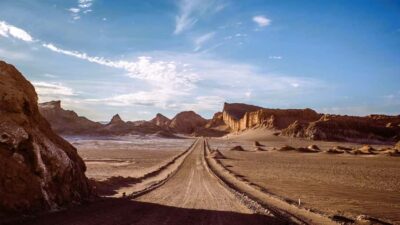
Small-Group Tour to Moon Valley from San Pedro de Atacama
Read our review →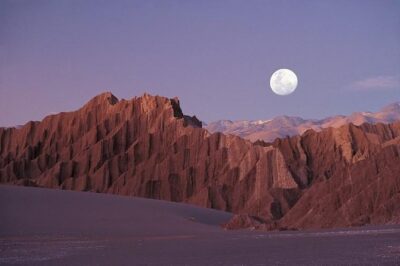
San Pedro de Atacama Tour Guiado Valle de la Luna & Cocktail
Read our review →Browse the lists this tour appears in