
Reviewed · ATACAMA STARGAZING TOURS
San Pedro de Atacama: Stargazing Experience
San Pedro de Atacama gives you one of the world’s finest places to look up. Just 15 minutes outside town, the darkness opens wide enough for the Milky Way, Magellanic Clouds, planets, star clusters, and sometimes the International Space Station. The best part is the mix of naked-eye stargazing and telescope viewing, so you learn to read the sky before looking at it in close-up.
I like the patient telescope work, especially when the guide resets the instrument for each person and provides a step stool for children. I also like the small comforts: blankets, hot chocolate, tea, coffee, snacks, and a starry portrait to take home. The drawback is simple: desert nights are cold, and a full moon can hide many faint stars.
In This Review
- Key points to know before you book
- Why San Pedro is made for looking up
- The 15-minute ride beyond town
- Settling in with a drink and blanket
- Learning the Southern sky before using telescopes
- What you may see through the telescopes
- Moon phases can change the whole experience
- Star photography is a useful extra
- Is $35 good value?
- What to wear for a desert night
- Who will enjoy this most
- Should you book the Llama Stargazing experience?
- FAQ
- How long does the stargazing experience last?
- What can I see through the telescopes?
- Is transportation included?
- What should I wear?
- Are food and drinks included?
- Is the tour available in English?
Key points to know before you book
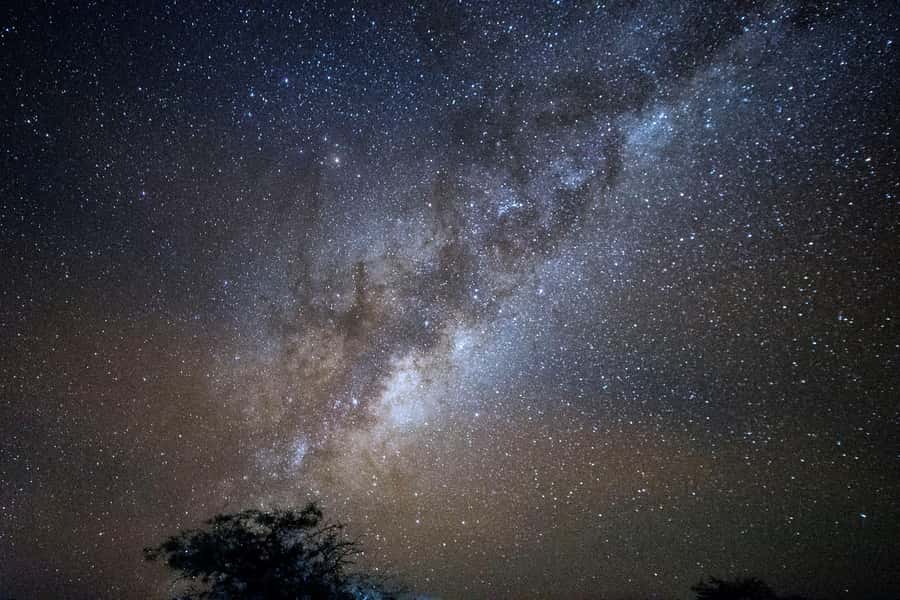
- The sky is the main event: Expect views of stars, planets, constellations, nebulae, galaxies, and binary stars, depending on the season and conditions.
- You get real telescope time: Guides adjust the equipment between viewers, giving you a better chance of a clear look.
- The Southern Hemisphere matters: You may learn to locate the Southern Pole and see the Magellanic Clouds, sights unfamiliar to many northern visitors.
- The tour lasts 150 minutes: Allow for a 15-minute drive each way, with roughly two hours at the observation site.
- Warm clothing is essential: Bring a jacket, warm layers, and comfortable shoes. Blankets are supplied, but do not rely on one blanket to beat the cold.
- The price is reasonable for the package: At $35 per person, transport, a guide, telescopes, drinks, snacks, blankets, and astrophotography are included, though buying locally may sometimes cost less.
Why San Pedro is made for looking up
The Atacama is famous for its clear, dry air and sparse settlement. You do not need to know much about astronomy to appreciate the setting. Once the van leaves San Pedro and the town lights fade, the silence does much of the work.
This is not just a quick stop to point at a few bright stars. The session begins with the naked eye, which is important. You first learn what sits where, how the Southern sky differs from the northern one, and how ancient people made shapes and stories from the stars. The guide may take you back to Ancient Greece and explain the roots of familiar constellations.
That approach gives the evening some structure. Instead of looking at a random field of stars, you begin to recognize patterns. A good guide can turn a confusing sky into a map.
Several guides have earned particularly strong praise for making the subject easy to follow. Alejandro is described as enthusiastic and clear, while Alberto has led sessions in English and Spanish and has been especially helpful with families. Connie has also been singled out for her friendly approach. The exact guide depends on the date and language of your booking.
More Atacama Stargazing Tours in San Pedro de Atacama
- San Pedro de Atacama: Etno-Stargazing Tour with Transfer
★ 4.8 · 629 reviews - Astronomical Tour with Guide and Pick Up San Pedro de Atacama
★ 4.5 · 145 reviews - “Astronomical Adventure in San Pedro de Atacama”
★ 4.5 · 96 reviews
The 15-minute ride beyond town
The meeting point varies by the option you choose, so check your confirmation carefully. From there, you travel by van for about 15 minutes to the observation site. The short drive works well: you get away from San Pedro’s lights without spending much of the evening on the road.
If you have a rental car, following the bus is possible, but I would favor the organized transport. The road to the site can be dark and dusty, and the van removes the worry of finding the right place after sunset. Return drop-offs can include several points in San Pedro, including locations on Ignacio Carrera Pinto.
The group may be small, which makes a real difference at the telescope. You have a better chance of asking questions and getting a clear view rather than waiting behind a large crowd. Still, group size depends on the option booked, so select a small-group choice if personal attention is important to you.
Settling in with a drink and blanket
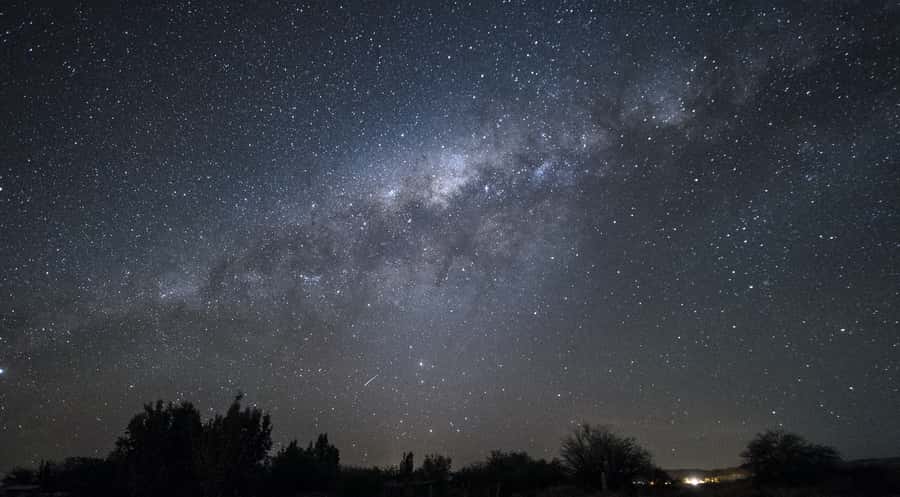
At the site, you receive a short introduction before the main observation begins. Benches, cushions, and blankets are available, and you can take a drink while your eyes adjust to the darkness.
The included drinks vary across the evening. Cold juice, red wine, and pisco sour are listed for the welcome period, while tea, coffee, and hot chocolate are served later. Snacks and cake add a pleasant finish. These touches do not replace the astronomy, but they make the long pauses outdoors easier, especially when the temperature drops.
One small caution: the welcome drink may not impress everyone. Treat it as a courtesy, not a reason to book. The hot drinks matter more, since cold hands and a stiff neck can spoil even a perfect sky.
Alcohol and drugs are not allowed beyond the drinks supplied as part of the experience. The tour is also not suitable for children under four or people over 80. Families with older children can do well, particularly when the guide takes time to explain things at a child’s height and provides a step stool for telescope viewing.
Learning the Southern sky before using telescopes
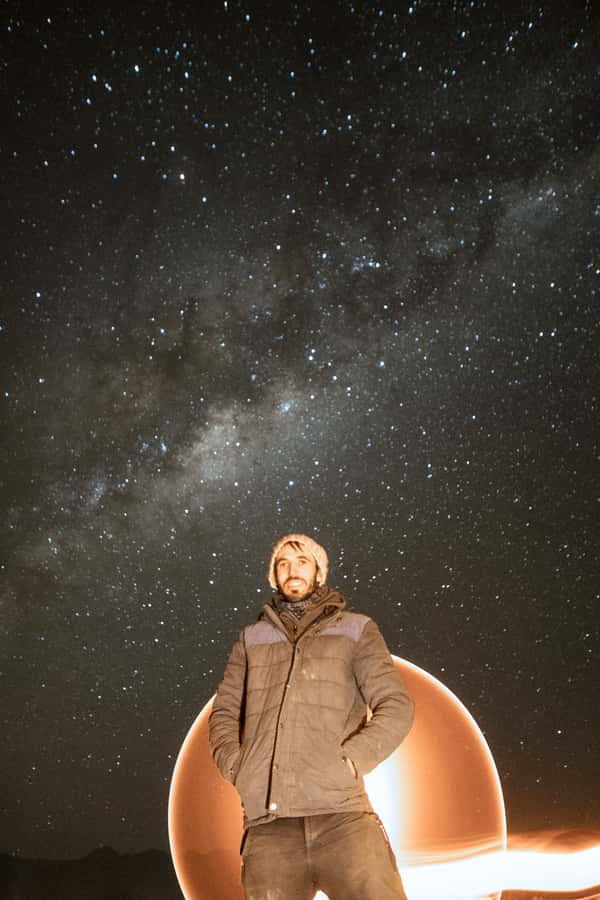
The first major part of the session is a guided talk under the open sky. You may learn how to find the Southern Pole, identify constellations, and understand why certain stars are visible in Atacama but not from Europe or North America.
This is where your guide matters most. The strongest sessions make complicated ideas plain and welcome questions. Alberto, for example, has been praised for spending about 20 minutes on the night sky and mixing scientific facts with a friendly presentation. Alejandro has also been noted for explaining the solar system in a way that beginners could follow.
The Ancient Greek material gives the talk a familiar starting point. It helps explain why many constellation names sound familiar, even when the stars appear in a different part of the sky. But if you want a wide look at Southern Hemisphere traditions, ask about them directly. The experience appears to focus mainly on Greek astronomy, and some people may wish for more attention to Indigenous or non-Greek ways of reading the sky.
That is not a flaw for everyone. First-time stargazers may appreciate a clear framework rather than too many competing systems. If astronomy already interests you, ask questions early and let the guide take the subject further.
Same long country, a very different day out:
- San Pedro de Atacama: El Tatio Geysers Tour
★ 4.7 · 943 reviews - Piedras Rojas, Altiplanics Lagoons & Salar Full-Day Tour
★ 4.7 · 592 reviews - San Pedro Atacama: Baltinache Lagoons
★ 4.6 · 359 reviews - San Pedro de Atacama: Valle de la Luna Guided Tour
★ 4.4 · 312 reviews
What you may see through the telescopes
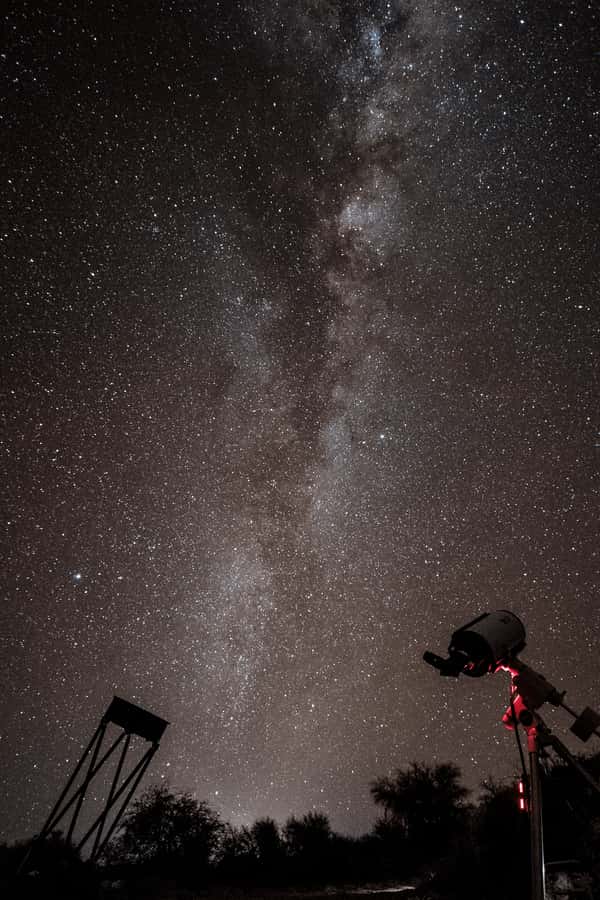
After the naked-eye introduction, the telescopes come out. Depending on the season, time of night, and sky conditions, the targets can include planets, stars, binary stars, stellar clusters, nebulae, and galaxies.
Planetary viewing is often the most memorable part. Saturn and its rings have made a particularly strong impression, while Jupiter may appear with several of its moons. Mars, the Moon, and other bright objects can also be possible. The target list is not fixed, so you should not book expecting one exact planet.
The Milky Way is visible without optical aid when conditions are favorable. You might also see the Magellanic Clouds, two galaxies that are especially meaningful in the Southern Hemisphere. A few people have even seen shooting stars or the International Space Station during the session, but these are lucky additions rather than promised features.
The telescope viewing is handled carefully. The guide adjusts the instrument after each person takes a turn, helping the next viewer get a sharp image. That simple habit saves frustration. At many public stargazing sessions, one person sees a blur and the next person sees the object clearly because no one reset the telescope. Here, the equipment is treated as part of the teaching.
Expect some waiting while others look. Use that time to keep scanning the sky with your own eyes. In fact, the contrast between the broad Milky Way overhead and the focused view of a planet through the telescope is one of the evening’s best lessons.
Moon phases can change the whole experience
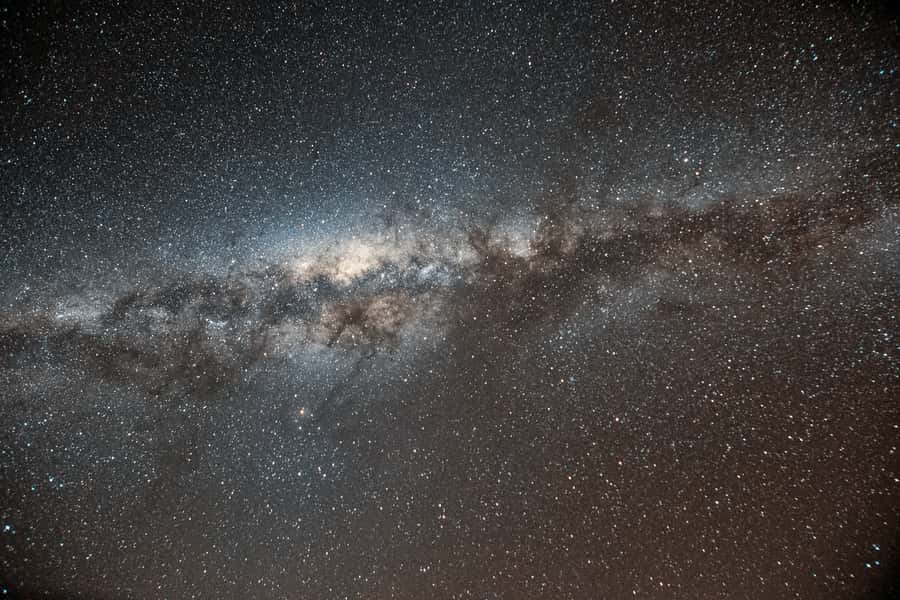
The moon deserves special attention when choosing your date. A bright full moon washes out faint stars, so you may see fewer constellations and less of the Milky Way. That does not make the evening pointless. The Moon itself can become the star of the show through a telescope, with a bright, detailed view that is hard to forget.
The timing of moonrise matters. During one full-moon week, the moon did not rise until after 11 p.m., allowing the group to see the Milky Way, Magellanic Clouds, Saturn, and many stars first. After the moon appeared, it became a new telescope target. This is the best-case arrangement.
Before booking, check the moon phase and expected starting time if the booking page provides them. For the darkest sky, choose a night near the new moon. For a chance to see the Moon in detail, a brighter lunar phase can be a good choice.
Season matters too. The visible planets and constellations change during the year. Winter can still bring a worthwhile astronomy lesson, but fewer visible stars or less favorable conditions may affect the show. Think of this as a guided sky session rather than a guaranteed checklist.
Star photography is a useful extra
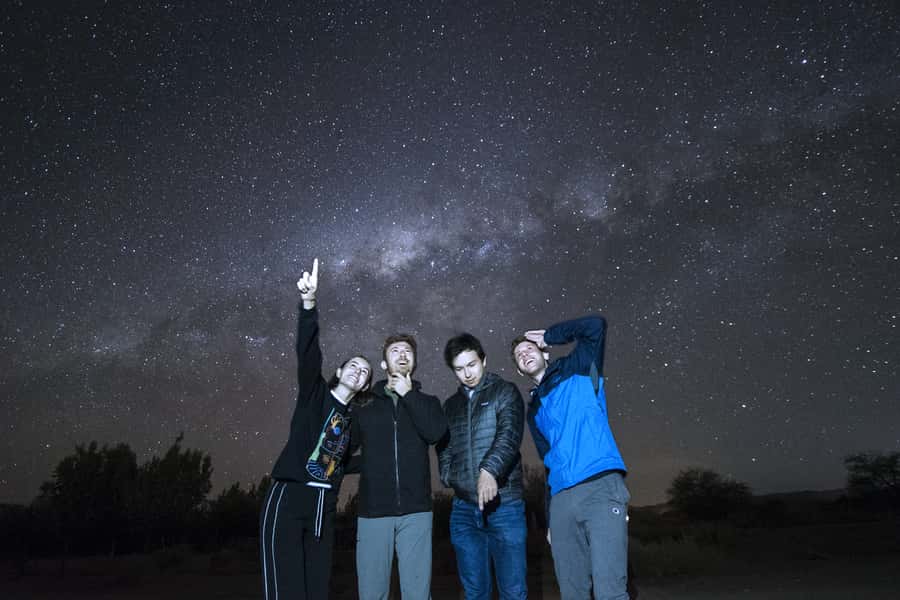
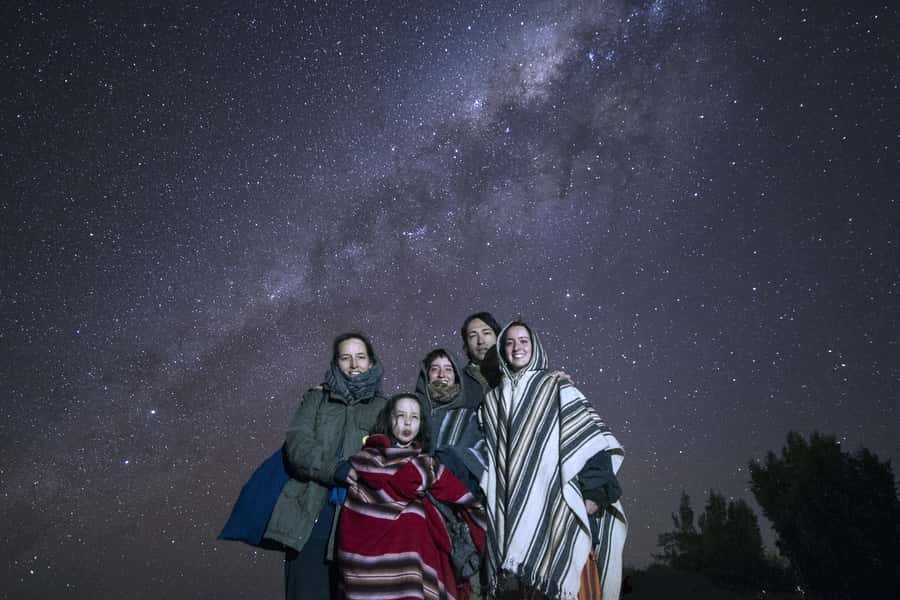
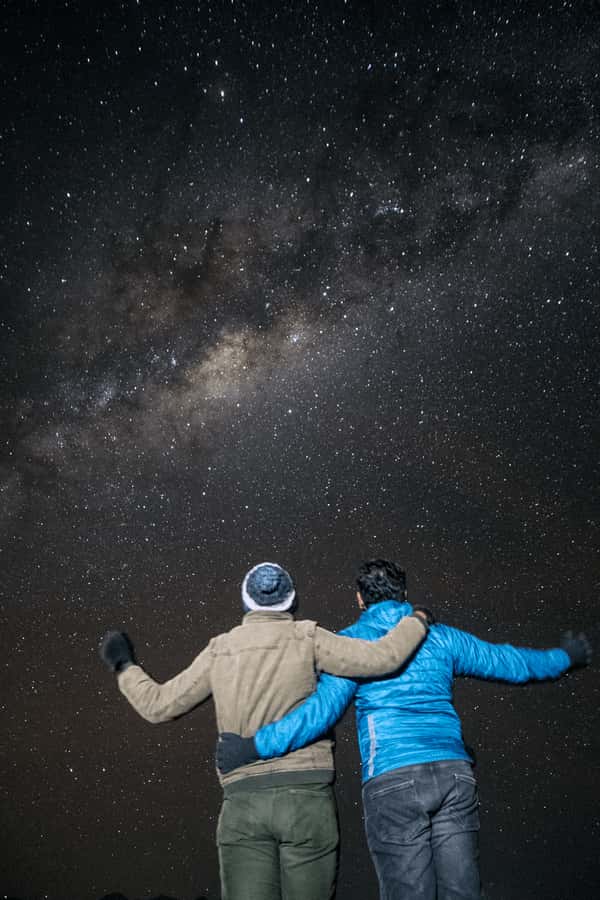
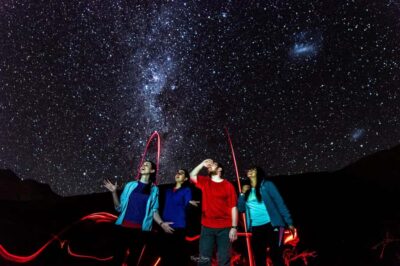
The tour includes astrophotography, with a photo taken of you beneath the stars. This gives the evening a clear souvenir and can produce a much better result than a quick phone snapshot.
You can also receive tips for taking your own night-sky photos. Bring a camera or phone if you want to try, but do not assume every device will manage the darkness well. The included portrait is the safer keepsake.
There is one practical point to remember: make sure you understand how and when the photo will be delivered. A few people have had trouble receiving theirs, including one person who contacted the operator without getting an answer. Before leaving, confirm the delivery method and provide the correct contact details.
Do not let the photo session take over the night. The strongest use of your time is looking up, listening, and using the telescope. The portrait is a bonus, not the main attraction.
Is $35 good value?
At $35 per person, this is a fair price for a 150-minute experience that includes the guide, transport, telescope use, drinks, snacks, blankets, and astrophotography. You are paying for access to a dark site and for someone to explain what you are seeing, not simply for a ride into the desert.
The price looks especially good if you value the telescope time and return transport. Hiring equipment or arranging a private astronomy guide would cost more. A private option can be worthwhile for serious enthusiasts, but it becomes expensive for only two people.
There is also a local-price question. One booking may cost about a third more through an online platform than when purchased in San Pedro. Online booking gives you advance planning, flexible cancellation up to 24 hours before departure, and a reserve-now, pay-later option. If you have several days in town and want to compare prices locally, you may save money by waiting.
That choice comes down to your travel style. I would book ahead during a short stay or a busy season. If your schedule is loose, check local operators once you arrive.
What to wear for a desert night
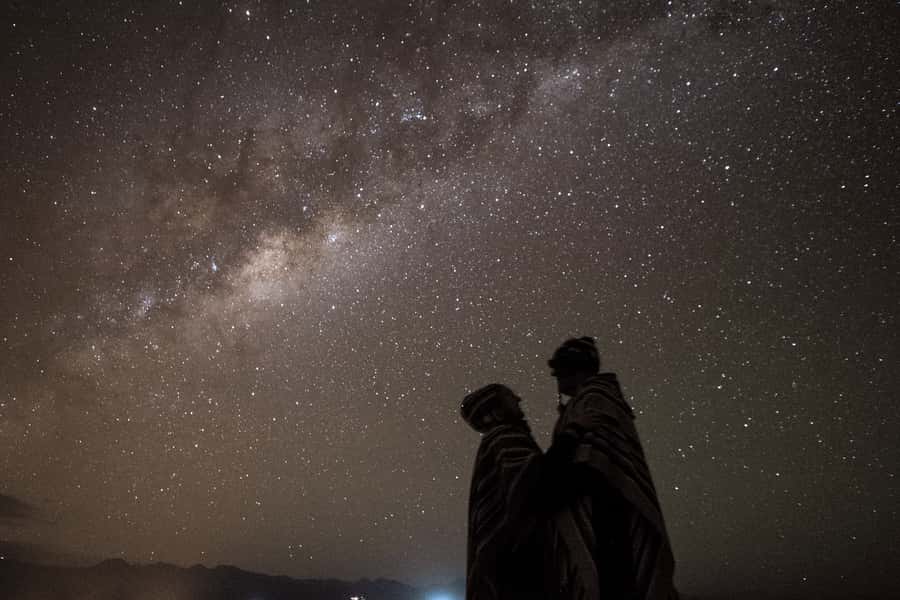
Take the cold seriously. San Pedro can feel mild in daylight, but standing still in the open desert after dark is another matter. Bring warm clothing, a jacket, and comfortable shoes. Several layers are better than one bulky item, and the supplied blankets are a useful extra rather than a complete cold-weather plan.
You will spend much of the time standing or sitting outdoors. Comfortable footwear matters, particularly on dusty ground. There is no bathroom included, so use facilities before departure. This is a small point, but it matters during a two-and-a-half-hour outing away from town.
The tour operates in English and Spanish. Confirm the language option when you book. A clear explanation is central to the experience, especially if astronomy is new to you.
Who will enjoy this most
I would recommend this to first-time stargazers, couples, families with older children, and anyone visiting San Pedro who wants more than a daytime excursion. You do not need a science background. The best guides explain basic ideas without making beginners feel lost.
It also suits people who have already seen the Milky Way but want a closer look at planets and star clusters. The combination of open-sky viewing and telescopes gives the night more variety than simply lying on a blanket and pointing upward.
You may want to skip it if you dislike cold, quiet outdoor activities or long explanations. One person found the astronomy talk too detailed and the evening dull, which is a fair warning for anyone who prefers fast-moving tours. The experience has a calm pace, and the sky cannot be rushed.
Should you book the Llama Stargazing experience?
Yes, if you are visiting San Pedro de Atacama and the weather and moon phase look favorable. The strongest reasons are the dark setting, careful telescope handling, Southern Hemisphere sights, warm drinks, and the chance to see the Milky Way properly.
Choose your date with care. Near a new moon, you have the best chance of faint stars and galaxies. Around a bright moon, expect fewer stars but a fine lunar view. Dress warmer than you think you need, confirm the meeting point, and ask how the photograph will be delivered.
If saving money matters more than booking ahead, compare local prices in San Pedro. Otherwise, $35 is a sensible spend for a well-organized introduction to the sky, with enough science to make the stars feel like places rather than pinpricks of light.
FAQ
How long does the stargazing experience last?
The full activity lasts 150 minutes, including approximately 15 minutes by van from town to the observation site and about 15 minutes back.
What can I see through the telescopes?
Depending on the season and conditions, you may see planets, stars, binary stars, stellar clusters, nebulae, and galaxies. The Moon, Saturn, Jupiter, Mars, and the Magellanic Clouds have all been possible targets at different times.
Is transportation included?
Yes. The experience includes van transportation from a designated meeting point in San Pedro de Atacama to the observation site and a return drop-off. The meeting point can vary by booking option.
What should I wear?
Bring warm clothing, a jacket, and comfortable shoes. Desert nights can be very cold. Blankets are supplied, along with hot drinks later in the session.
Are food and drinks included?
Yes. The experience includes a snack, tea, coffee, hot chocolate, juice, red wine, and pisco sour. Alcohol and drugs are not allowed beyond the supplied drinks.
Is the tour available in English?
Yes. Live guiding is available in English and Spanish. Check the selected option to confirm your preferred language and meeting point.
Just added around San Pedro De Atacama
- Atacama Desert and Magic Bus Visit★ 4.8 · 15 reviews
- Vallecito★ 4.7 · 13 reviews
- San Pedro de Atacama: Valle de la luna★ 3.0 · 3 reviews
- Valle de la Luna: A Moon-Like Escape in Atacama★ 5.0 · 3 reviews
- Valley of the moon★ 5.0 · 50 reviews
- San Pedro de Atacama: Half day Valle de la Luna, Afternoon Tour★ 4.5 · 52 reviews
- Piedras Rojas and Altiplanic Tour★ 4.5 · 38 reviews
- Uyuni Salt Flats 4-days tour from Atacama> private room available★ 4.5 · 44 reviews
Atacama Stargazing Tours, compared.
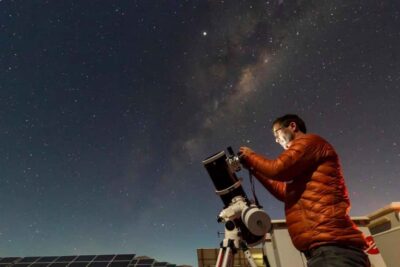
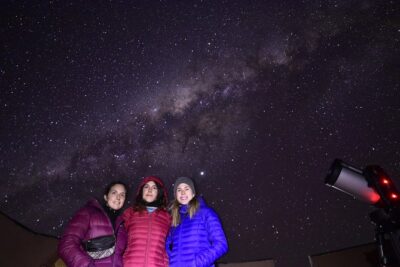
Astronomical Tour with Guide and Pick Up San Pedro de Atacama
Read our review →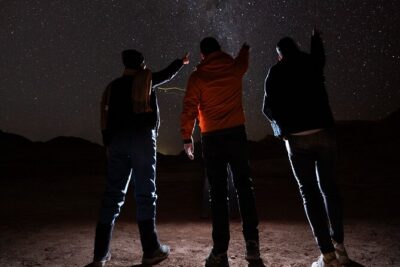
“Astronomical Adventure in San Pedro de Atacama”
Read our review →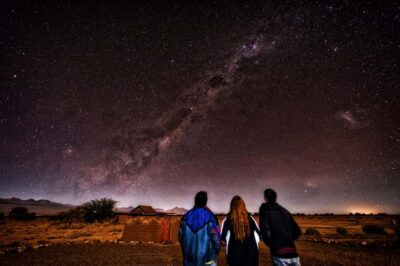

Pisco Elqui: Mountaintop Stargazing and Night Portrait
Read our review →
Browse the lists this tour appears in