
Reviewed · ATACAMA STARGAZING TOURS
Stargazing Hiking Valle de Elqui
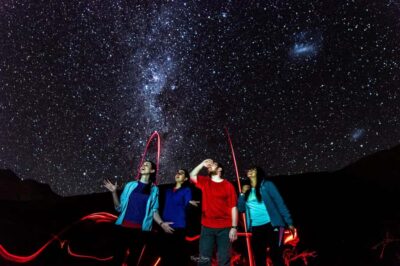
The best part of this Elqui Valley outing comes after sunset, when Loreto turns a simple night walk into an introduction to Andean constellations and indigenous sky traditions. You begin with mountain views and meditation, then settle into astronomy with Celestron 20×80 binoculars on a tripod.
I like the mix of sound therapy and practical stargazing, and I like that the price includes private transport from Vicuña to Villaseca, a chair, snacks, tea, and astronomical photographs. The main caution is physical: you need moderate fitness, proper hiking shoes, and patience for an evening that lasts about four and a half hours.
In This Review
- Key points before you book
- From Vicuña to a sunset viewpoint in Villaseca
- Meditation and sound bowls under the evening sky
- Indigenous astronomy and the Andean view of the sky
- Viewing the stars through Celestron 20×80 binoculars
- An astronomical photograph to take home
- Tea, snacks, a chair, and trekking poles
- Is $100 a fair price?
- Seasonal departure times from January through March
- Who will enjoy this evening most?
- Booking, weather, and cancellation details
- Should you book Stargazing Hiking Valle de Elqui?
- FAQ
- Where does the experience start?
- Where does the activity end?
- How long does the experience last?
- What is the price?
- What age is allowed?
- Is transportation included?
- What equipment is provided?
- Are refreshments included?
- What should I wear?
- What happens if the weather is poor?
Key points before you book
- Sunset comes first: The outing starts at a mountain viewpoint, where you watch the colors change before the stars appear.
- Loreto leads the experience: Her approach combines meditation, sound bowls, cultural interpretation, and guided astronomy.
- The binocular setup is serious: Celestron 20×80 astronomical binoculars sit on a tripod for steadier viewing.
- This is a private activity: Only your own group participates, giving the evening a quieter, more personal feel.
- The outing is for ages 14 and up: You need moderate physical fitness and hiking shoes.
- Timing changes by month: Departure is around 8 PM in January, 7:30 PM in February, and 7 PM in March.
From Vicuña to a sunset viewpoint in Villaseca
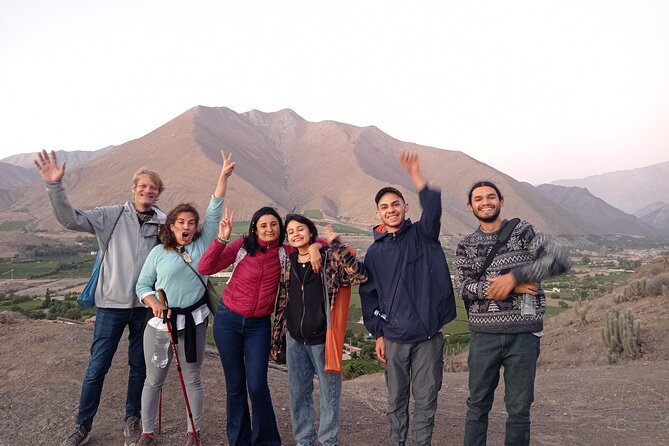
The experience begins at Casa Pumagui, with safety guidance before you head toward the activity area in Villaseca. Private transport from the city of Vicuña is included, which is useful if you are staying in town and do not want to arrange a separate ride.
The meeting point is listed at Navarino, Peralillo, Vicuña. You need to arrive 15 minutes before departure. This is not a casual suggestion: arriving more than 10 minutes late can mean missing the activity altogether. In a rural evening setting, that firm rule makes sense, but it means you should plan your route carefully.
The first major stop is a viewpoint above the mountains. The purpose is not just to fill time before darkness. Sunset gives you a visual beginning for the night, shifting your attention from the valley around you to the sky above it. The mountain colors provide the evening’s first spectacle, while the later astronomy gives you a second one.
I like this order. If the tour began in full darkness, you would get the stars but miss the sense of place. Here, the sunset helps you understand the setting before Loreto asks you to look upward.
The precise trail details are not specified, so you should not expect a technical route description in advance. What is clear is that this is a hiking experience, not a roadside astronomy stop. Trekking poles are provided, and a moderate fitness level is required.
More atacama stargazing tours in Chile:
- San Pedro de Atacama: Etno-Stargazing Tour with Transfer
★ 4.8 · 629 reviews - San Pedro de Atacama: Stargazing Experience
★ 4.7 · 489 reviews - Astronomical Tour with Guide and Pick Up San Pedro de Atacama
★ 4.5 · 145 reviews
Meditation and sound bowls under the evening sky
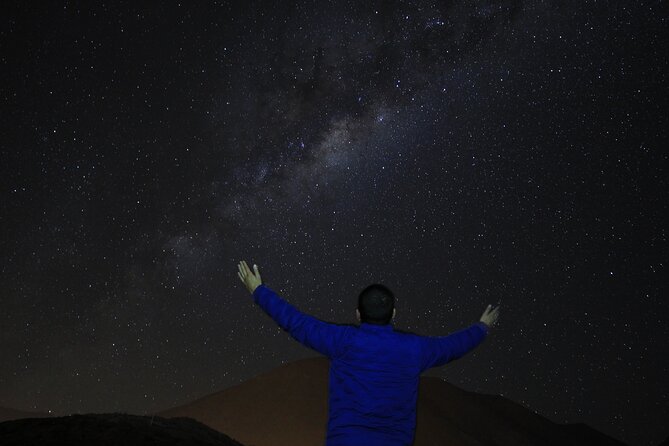
After the sunset portion, the experience shifts from sightseeing to quiet attention. Meditation and sound therapy with bowls are used to help you connect with the surroundings before the astronomy talk begins.
This is a distinctive feature, but it will not suit everyone equally. If you enjoy a calm, reflective start, the bowls and meditation can make the evening feel more focused. You are given time to slow down before studying the sky, rather than being rushed straight from transport to equipment.
If you prefer a strictly technical astronomy session, this part may feel less essential. The activity is designed as a blend of nature, culture, sound, and astronomy. It is not simply a telescope lesson or a fast list of constellations.
The private format helps here. With only your group participating, the meditation does not have to compete with a large crowd. You can give it your full attention or simply treat it as a peaceful pause before the stars come out.
Indigenous astronomy and the Andean view of the sky
Loreto also introduces the indigenous worldview connected to the stars. The focus is on ancestral links between cultures and the way Andean communities understand the heavens.
That cultural context matters because astronomy is not only about identifying bright objects. It is also about the stories, patterns, and beliefs people attach to them. The evening gives you a chance to see the sky through a regional lens instead of treating it as a collection of anonymous points of light.
The information provided does not list the exact constellations or the cultures discussed, so you should avoid booking this expecting a fixed catalogue of named sights. The promise is broader: Loreto guides you toward Andean constellations and explains their cultural meaning.
I especially like this balance. You get an outdoor activity and a cultural lesson in the same outing, without having to choose between a daytime heritage tour and a nighttime astronomy session. It also makes the experience more suitable for people who want a sense of place, not just a photograph of the stars.
The tone appears to be personal and respectful. Loreto’s response to one participant praised her interest in the cultural material and her respectful attitude toward the experience. That gives you a useful clue about what the guide values: attention, curiosity, and an open mind.
Viewing the stars through Celestron 20×80 binoculars
The astronomy equipment is one of the practical strengths of the evening. You look through Celestron 20×80 binoculars mounted on a tripod, rather than relying only on your own eyes.
The 20x magnification can reveal more detail than ordinary binoculars, while the tripod helps keep the view steady. That matters at night, when even a small hand movement can make an object difficult to follow. You should still expect binocular viewing rather than a full observatory experience. The supplied details do not promise a telescope, observatory dome, or professional astronomical instruments beyond the binocular setup.
The guide directs your gaze toward Andean constellations and explains what you are seeing. This is valuable if you are new to stargazing. You do not need to arrive knowing the night sky, and you will have someone helping you connect the equipment, the stars, and the cultural ideas discussed earlier.
The quality of the viewing will depend on weather and conditions. The activity requires good weather, and a poor-weather cancellation leads to a different date or a full refund. That policy is fair for an outdoor astronomy session, since clouds can remove the central reason for going.
The moon, seasonal sky, and local conditions may also affect what you see, but no specific celestial schedule is provided. For that reason, book this for the full experience of sunset, culture, and guided sky watching, not for a guarantee of one particular planet or constellation.
A few more Chile trips to weigh up
- Puerto Natales: Base of the Towers Day Hike
★ 4.8 · 727 reviews - From Santiago: Cajón del Maipo and Volcán San José Hike 8K
★ 4.9 · 418 reviews - Puerto Natales: Base of the Towers Trekking Experience
★ 4.8 · 191 reviews - Puerto Natales: Base Torres Small Group Trekking
★ 4.9 · 106 reviews
An astronomical photograph to take home
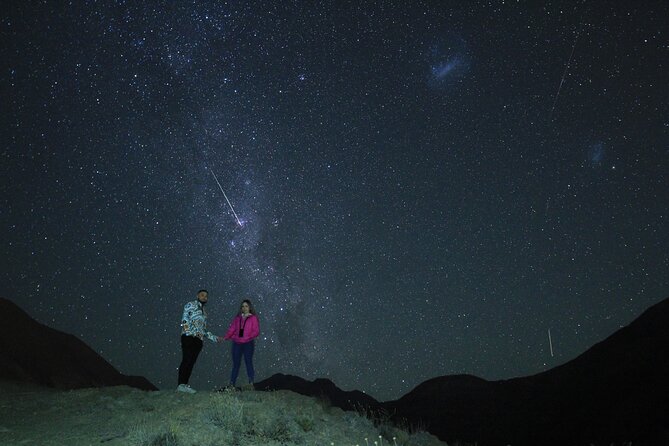
Astrophotography is included as part of the experience. This gives the evening a useful finish: you do not have to depend on your phone to capture a dark sky.
The supplied details do not say how many photographs you receive, the delivery method, or the technical process used. Still, the inclusion has real value. Night photography is difficult, especially when you are also trying to enjoy the moment. A photograph made during the activity lets you keep a record of the encounter without spending the entire evening adjusting your own camera.
You should treat the photograph as a memory of the event rather than a full photography workshop. There is no stated instruction in camera settings, tripod use, or image editing. If your main goal is to learn astrophotography, ask for those details before booking.
For most people, the photograph will be a pleasant extra. It also supports the wider idea of the outing: the sunset, the sound bowls, the cultural stories, the binocular viewing, and the final image all become parts of one evening.
Tea, snacks, a chair, and trekking poles
The practical inclusions are modest but well chosen. You receive trekking poles, a portable chair, coffee or herbal tea, and a snack.
The chair is especially useful during the astronomy portion. Standing and looking upward for a long time can become tiring, even on a gentle outing. A seat lets you pay attention to the sky instead of shifting your weight or searching for a rock.
Tea or coffee and a snack help bridge the long evening. The total duration is approximately four hours and 30 minutes, so these are more than decorative extras. The exact snack and drink choices are not specified, so you should not plan on a full meal.
The poles are useful support, but they do not replace suitable footwear. Hiking shoes are required. Wear clothing suitable for an outdoor evening, though the supplied information does not give a temperature range or a packing list. You should be ready for changing conditions after sunset and bring anything you personally need for comfort.
Do not arrive under the influence of alcohol. Admission can be refused, and there is no refund protection described for that situation.
Is $100 a fair price?
At $100 per person, this is not a bargain-basement night out, but the price covers more than a short stargazing stop. You receive roughly four and a half hours of programming, private transport from Vicuña to Villaseca, a private group format, astronomy equipment, a portable chair, trekking poles, refreshments, and astronomical photography.
The value depends on how many parts you plan to use. If you only want to look at stars for an hour, the price may feel high. If you want a private evening that combines a hike, sunset, meditation, cultural interpretation, guided astronomy, and a photograph, the package makes more sense.
Private transport is an important part of the calculation. The included transfer is specifically from Vicuña to Villaseca. Transfers from La Serena or other places are not included, so you need to arrange your own way to Vicuña or the listed meeting point if you are staying elsewhere.
The private format can also justify the cost for couples, families with older teenagers, or small groups of friends. You are not paying for a large coach full of people. You get an outing intended for your own group, with Loreto able to keep the pace and discussion focused on you.
The activity is booked, on average, 16 days ahead. That is useful planning information if your dates are fixed. It does not guarantee availability, but it suggests that last-minute booking may not be wise during busy periods.
Seasonal departure times from January through March
The departure time changes as sunset shifts. In January, the listed operating window is 8 PM to 9 PM every day. In February, it is 7:30 PM to 9 PM every day. In March, it is 7 PM to 9 PM from Monday through Saturday.
These times are presented as operating hours, so confirm the exact departure time when you book. The schedule is particularly important because the experience depends on catching both the sunset and the dark sky. Arriving at the wrong time could mean missing the opening safety briefing or the sunset viewpoint.
March has no Sunday departure listed. If Sunday is your only free day, choose another month or confirm availability before paying.
The activity ends back at the meeting point. That makes the return simple, but you still need to plan your onward transport if you are not staying nearby.
Who will enjoy this evening most?
I would choose this for you if you like the outdoors but also want a cultural layer. It suits people who enjoy astronomy, quiet reflection, mountain views, and guided interpretation rather than a fast-paced sightseeing schedule.
The minimum age is 14. Children under 14 cannot take part. Older teenagers may enjoy the binocular viewing and photography, but the meditation and cultural discussion may appeal more to adults and mature young people.
You should have moderate physical fitness. The outing involves trekking, and hiking shoes are required. No detailed trail difficulty or distance is provided, so anyone with mobility concerns should ask for more information before booking.
The experience is also a good fit if you value a small, private setting. The group is limited to your own booking, which can make the sound therapy and astronomy more comfortable than they would be in a crowded public event.
It is less suitable if you want a guaranteed list of astronomical objects, a long technical lecture, or a full meal. The emphasis is on a carefully paced evening that joins nature, Andean culture, and sky watching.
Booking, weather, and cancellation details
You receive confirmation at the time of booking. Free cancellation is available if you cancel at least 24 hours before the local start time, with a full refund.
Cancellations made within 24 hours are not refunded, and changes inside that window are not accepted. Since good weather is required, the operator can cancel for poor conditions and offer another date or a full refund.
Service animals are allowed, and the meeting area is near public transportation. Those details help, but they do not replace checking the trail conditions or asking how a service animal would manage the hiking portion.
Should you book Stargazing Hiking Valle de Elqui?
Book it if you want more than a quick look through binoculars. The combination of sunset, sound bowls, indigenous astronomy, guided constellation viewing, refreshments, and astrophotography gives you a full evening rather than one isolated activity.
The strongest reason to go is Loreto’s personal approach. She brings together cultural content and astronomy, and her response to a participant shows that she values respectful attention to the subject. That suits you if you want an experience with meaning as well as scenery.
Think twice if you dislike meditation, have limited fitness, need a full meal, or want a highly technical observatory session. Also check your transport plans carefully, since the included transfer is from Vicuña to Villaseca, not from every nearby town.
For the right person, $100 is a reasonable price for a private, four-and-a-half-hour evening with equipment and transport included. Arrive early, wear hiking shoes, expect the schedule to shift with the season, and let the night unfold at a slower pace.
FAQ
Where does the experience start?
It starts at Navarino, Peralillo, Vicuña, Coquimbo, Chile, with safety recommendations at Casa Pumagui.
Where does the activity end?
The activity ends back at the meeting point.
How long does the experience last?
The experience lasts approximately four hours and 30 minutes.
What is the price?
The price is $100 per person.
What age is allowed?
The experience is designed for people aged 14 and older. Children under 14 cannot participate.
Is transportation included?
Private transportation from the city of Vicuña to Villaseca, the activity location, is included. Transfers from other places are not included.
What equipment is provided?
The activity provides trekking poles, a portable chair, and Celestron 20×80 astronomical binoculars on a tripod.
Are refreshments included?
Coffee, tea or herbal tea, and a snack are included.
What should I wear?
You must wear hiking shoes. Participants should also have a moderate level of physical fitness.
What happens if the weather is poor?
If poor weather causes cancellation, you will be offered another date or a full refund. You can also cancel at least 24 hours before the start time for a full refund.
Just added around Chile
- Volcanic Refuges: Excursion to Underground Civilization★ 4.7 · 8 reviews
- Walking City Tour with Funicular, Cable Car and Tasting★ 4.3 · 6 reviews
- Viña del Mar and Valparaiso: guided day tour★ 4.2 · 8 reviews
- Ascent to Villarrica volcano 2,847masl, from Pucón★ 4.8 · 36 reviews
- Viña del Mar and Reñaca 4-Hour Pacific Coast Tour★ 4.7 · 14 reviews
- VIÑA DEL MAR AND VALPARAISO TOUR★ 4.8 · 20 reviews
- Viña del Mar: Guided city tour★ 4.9 · 10 reviews
- Valparaíso y Viña del Mar full day★ 4.6 · 3 reviews
Atacama Stargazing Tours, compared.
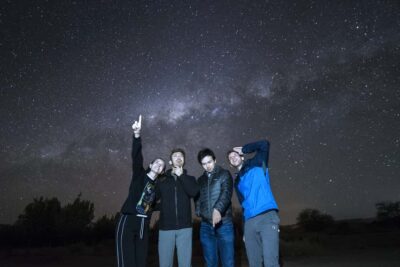
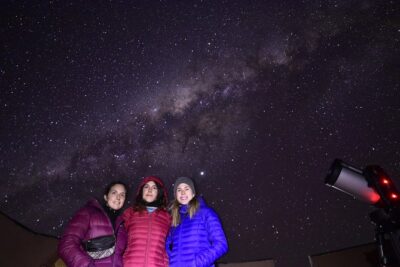
Astronomical Tour with Guide and Pick Up San Pedro de Atacama
Read our review →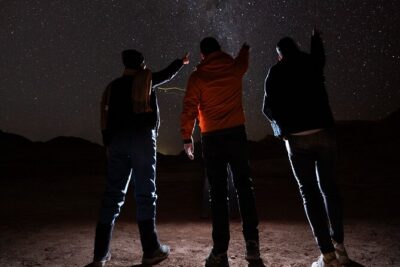
“Astronomical Adventure in San Pedro de Atacama”
Read our review →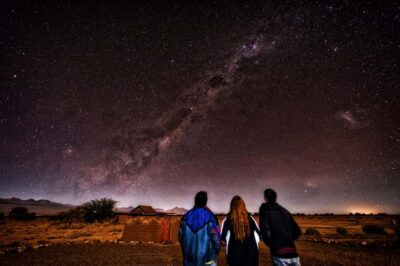

Pisco Elqui: Mountaintop Stargazing and Night Portrait
Read our review →
Browse the lists this tour appears in