
Reviewed · ATACAMA STARGAZING TOURS
Astronomical Tour with Guide and Pick Up San Pedro de Atacama
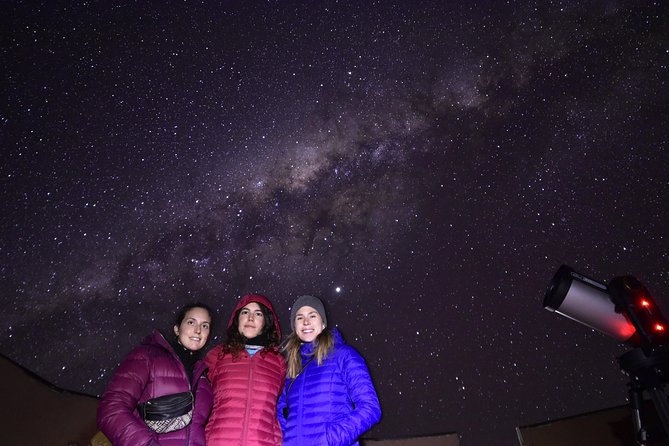
San Pedro de Atacama gives you one of the world’s finest settings for looking up, and this small-group astronomy tour puts telescopes, guides, and warm drinks together for a simple night under the stars. Depending on the season and sky conditions, you may see planets, star clusters, galaxies, nebulae, or the Moon.
I like the clear, friendly explanations from guides such as Patricio and Nathan, especially for families and people who know little about astronomy. I also like the included professional photo, which gives you a keepsake beyond a few blurry phone shots. The main catch is that a bright Moon, clouds, wind, or a crowded departure can limit what you see and increase waiting time.
In This Review
- Key points to know before booking
- Why Atacama nights are made for astronomy
- The 9:30 p.m. pickup and ride outside town
- Taking turns at the telescopes
- The guide makes the difference
- Moon phases can change the whole night
- The included photo and the end-of-night refreshments
- Is $38 a fair price?
- Who will enjoy this most?
- Should you book the astronomy tour?
- FAQ
- Where does the astronomy tour take place?
- What time does the tour start?
- How many people can join the tour?
- What can I see through the telescopes?
- Is the tour available in English?
- Is a photo included?
- Are drinks and snacks provided?
- What happens if the weather is poor?
Key points to know before booking
- The 9:30 p.m. start lets you visit after a full day of exploring the Atacama region.
- Telescopes do the real work, showing planets, clusters, and lunar details that your eyes cannot pick out alone.
- Patricio and Nathan are named guides associated with especially clear, engaging explanations.
- The Moon matters: dark lunar phases give you the best chance of seeing the Milky Way.
- A professional photo is included, though the final quality can depend on conditions and setup time.
- Pickup is included from San Pedro, but not from the ayllus of Cucuter, Tulor, Coyo, Solor, or Quitor.
Why Atacama nights are made for astronomy
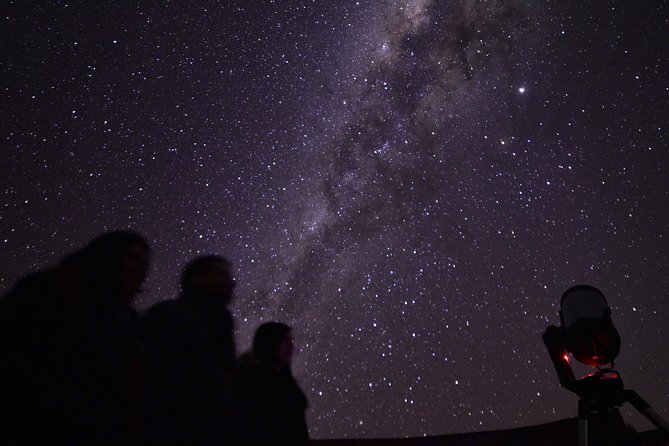
The Atacama is famous for its dry air and dark skies. That does not mean every night produces a perfect view, but it gives this region a real advantage over a city or suburban backyard. Once you leave the lights of San Pedro, the sky can feel much larger and more crowded with stars.
The best part of the experience is not simply seeing a bright dot through a telescope. It is learning what that dot is, how far away it sits, and what you are actually seeing. A good guide can turn a dark sky into a map of planets, constellations, clusters, and stellar objects.
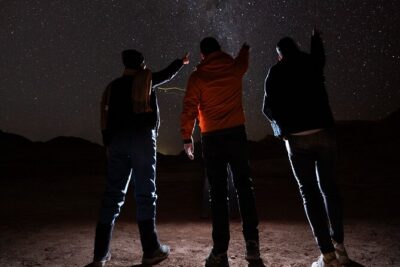
The guides use an astronomical laser pointer to identify the main constellations of the southern hemisphere. This is useful because southern skies may be unfamiliar to visitors from North America or Europe. You may learn to spot patterns that do not appear in the same way, or at all, from home.
The tour is built for a broad audience. You do not need a science background, and the explanations are intended to work for children, couples, families, and curious beginners. The most praised guides explain complex ideas in plain language and take questions rather than simply pointing the telescope and moving on.
More Atacama Stargazing Tours in San Pedro de Atacama
- San Pedro de Atacama: Etno-Stargazing Tour with Transfer
★ 4.8 · 629 reviews - San Pedro de Atacama: Stargazing Experience
★ 4.7 · 489 reviews - “Astronomical Adventure in San Pedro de Atacama”
★ 4.5 · 96 reviews
The 9:30 p.m. pickup and ride outside town
The tour begins around 9:30 p.m., with pickup from your accommodation in San Pedro de Atacama. The trip lasts about two and a half hours in total, so plan for a late evening rather than a quick one-hour look at the sky.
The drive to the observing site is short, but hotel pickups can add time. Some past departures have spent roughly 15 to 20 minutes collecting people, followed by a 10 to 15 minute ride to the site. Return transfers can take a similar amount of time, depending on the group and the order of drop-offs.
This is convenient if you do not have a rental car or prefer not to find a dark roadside location after sunset. Pickup also means you can enjoy the included drinks without worrying about driving afterward. The tradeoff is that shared transport is rarely precise. If you are trying to get to bed early for a 4 a.m. desert excursion, this late finish may be a poor match.
Pickup is not available from every outlying settlement. The tour does not collect from Cucuter, Tulor, Coyo, Solor, or Quitor, so check your accommodation location before paying. The stated maximum is 16 people, though some previous departures have been larger than expected. Ask about the current group size if personal telescope time matters to you.
Taking turns at the telescopes
At the observing site, chairs and blankets are provided. That matters more than it may sound. San Pedro can feel cold at night, and standing still while waiting for a telescope can chill you quickly.
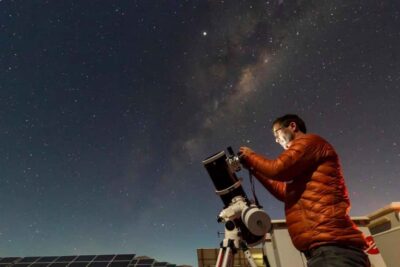
The setup uses both manual and computerized telescopes. You will generally gather around the instruments while the guide selects targets and explains what you are seeing. The exact objects depend on the month, the Moon, cloud cover, wind, and visibility.
Possible sights include:
- Planets such as Saturn and Jupiter
- The Moon and its surface details
- Star clusters
- Galaxies
- Nebulae
- Bright stars and southern constellations
Do not expect a space telescope image. Through a ground-based telescope, atmospheric conditions affect sharpness, and the view is not always large or colorful. The pleasure comes from seeing a real celestial object through the eyepiece, often with features that are invisible to the naked eye.
Saturn and Jupiter can provide the biggest wow moment when they are visible. Past participants have seen Saturn’s rings and storm details on Jupiter. The Moon can also be remarkable, with craters and ridges appearing far more clearly than they do from a casual glance.
The weaker part of the format is waiting. With only two or three telescopes for a group, each person must take a turn. On an efficient night, that rotation can feel relaxed. On a crowded night, you may spend much of the session listening, standing near the equipment, or waiting for the eyepiece.
That is not necessarily wasted time. The explanations are a central part of the activity. Still, you should book this expecting a shared astronomy lesson, not continuous telescope viewing. If you want several minutes at each target, ask about group size before the date.
The guide makes the difference
Patricio is particularly associated with accessible astronomy talks. He explains the scale of the universe, the life of stars, and the meaning of the objects above you in a way that works for beginners. Nathan has also been praised for strong English and an energetic approach to the subject.
Language can affect the night. Some departures are mainly in Spanish, with English translation added by a second guide. When the group is mixed, the Spanish explanation may take longer and the English section may feel rushed. At other times, the guide delivers the full session in English.
If you need detailed English explanations, confirm the language arrangement before booking. This is more than a small comfort. The guide’s talk is a major part of the value, especially if the Moon is bright or clouds reduce the number of objects visible through the telescopes.
A bilingual session can still work well, but the guides need to control the pace. When one guide is explaining beside a telescope and another is translating while people take turns, parts of the talk can overlap. A smaller group usually makes that problem less noticeable.
Same long country, a very different day out:
- San Pedro de Atacama: El Tatio Geysers Tour
★ 4.7 · 943 reviews - Piedras Rojas, Altiplanics Lagoons & Salar Full-Day Tour
★ 4.7 · 592 reviews - San Pedro Atacama: Baltinache Lagoons
★ 4.6 · 359 reviews - San Pedro de Atacama: Valle de la Luna Guided Tour
★ 4.4 · 312 reviews
Moon phases can change the whole night
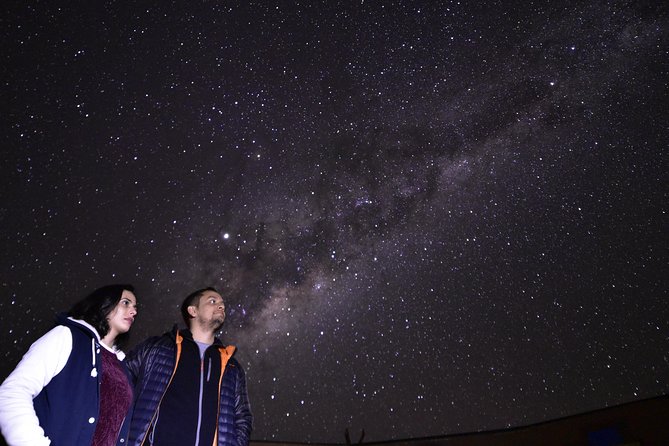
The Moon is the single biggest planning detail. A new Moon or a night with little moonlight gives you the best chance of seeing the Milky Way clearly. This is when the Atacama sky is most likely to deliver the dramatic, star-filled view many people expect.
A full Moon does not make the tour pointless. It can be an excellent target through the telescope, and you may still see many stars, planets, and clusters. The guide can also use the bright Moon for photos. But moonlight washes out faint objects, so you should not expect the same Milky Way view on a bright lunar night.
A half Moon sits somewhere between the two. You may enjoy the Moon itself and several bright targets, but faint galaxies and dense star fields will be harder to see.
I would check the lunar calendar before choosing your date. If your main goal is a dramatic Milky Way photo, prioritize a dark period. If you are traveling with children or want to see the Moon’s surface, a brighter night can still work well.
Clouds and wind create another limit. The provider may cancel when weather forecasts and satellite images suggest poor visibility. That decision can be frustrating if conditions improve later, but astronomy depends on the sky at the actual observing time. If bad weather cancels the tour, you should be offered another date or a full refund.
The Atacama can also have less predictable conditions during the Chilean summer, especially from January through March, when high-altitude rain can affect visibility. This does not guarantee a poor night, but it makes weather more important when you plan.
The included photo and the end-of-night refreshments
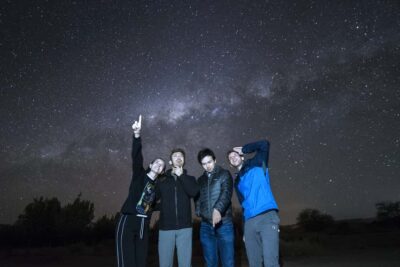
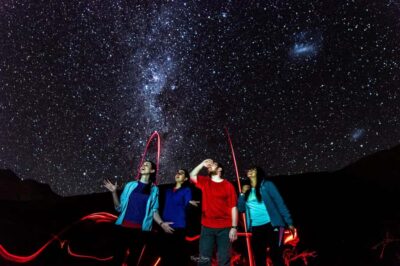
The tour includes astrophotography without the Moon, along with a professional photograph of you beneath the stars. This is a genuine benefit if you want a souvenir showing both the person and the sky. A phone held up in the dark usually cannot create the same result without careful setup, a tripod, and suitable camera controls.
Expect the photo session to take time. People often gather around the camera, adjust positions, and take several attempts. That can create a bottleneck at the end of the evening, particularly with a large group. The final image may be excellent, but it can also be slightly blurred if conditions or movement interfere.
The wording without Moon matters. A Milky Way-style image generally requires a dark sky, so the result may differ on a bright lunar night. If photography is your main reason for booking, ask exactly what type of photo is offered for your date.
After the telescope session, you can have coffee, tea, soft drinks, snacks, and alcoholic beverages. Wine, whiskey, and warm drinks have been offered, and the refreshments are welcome in the cold air. They are simple hospitality rather than a meal, so eat beforehand if you need dinner.
One practical point: the social portion may be brief. Once photos are finished, the group may be asked to leave promptly. Enjoy the drinks, but do not assume you will have a long, relaxed campfire-style gathering.
A restroom is available at the site, another useful detail for a late-night activity away from town.
Is $38 a fair price?
At $38 per person, the price is reasonable if you value transport, instruction, equipment, and the photo as one package. You would otherwise need to arrange your own ride to a dark location, bring warm clothing and seating, learn how to use a camera, and identify targets without a guide.
The value is strongest when the sky is clear, the Moon is small, the group stays near the stated limit, and the guide has time to explain each target. Families may find the package especially practical because chairs, blankets, snacks, and drinks are already handled.
The value drops if your departure is crowded, bilingual explanations are rushed, or clouds block most of the sky. You are paying for the chance to observe, not a guarantee that Saturn, the Milky Way, or a particular galaxy will appear.
A self-guided night outside San Pedro may cost less if you already have transport and photography equipment. But it will not give you the same access to prepared telescopes or a guide who can explain what you are seeing. For most visitors, the $38 fee is fair, provided expectations are realistic.
Who will enjoy this most?
I would recommend this tour to families, couples, first-time stargazers, and anyone who wants the science explained in an easy way. Children often respond well to the Moon and planets, while adults may enjoy the discussion of stellar distances, galaxies, and the southern sky.
It also suits photographers who want a ready-made night-sky portrait. You should not book it as a serious astrophotography workshop, though. The tour provides a photo and may offer help with a personal camera, but the central purpose is guided observation.
You may want to skip it if you dislike waiting in a group or need a private, silent night. It is also a poor choice if your schedule cannot handle a late return, or if you are visiting during a period when clouds are a major concern and cannot spare a possible rescheduling.
The tour is accessible to most people, according to the activity information, and confirmation is provided when you book. Free cancellation is available up to 24 hours before the 9:30 p.m. start time. Inside that window, changes and refunds are not accepted unless the operator cancels because of poor weather.
Should you book the astronomy tour?
Yes, if you want a guided introduction to the Atacama sky at a modest price. Choose a night close to the new Moon, confirm the pickup area and language, and ask about the expected group size. Bring warm layers even though blankets are supplied.
I would book it for the combination of clear astronomy instruction, telescope access, and a professional photo. I would not book it expecting a private observatory session or guaranteed Milky Way views.
The best version of this evening has a dark, cloudless sky, a calm rotation among the telescopes, and a guide such as Patricio or Nathan who keeps the science lively. If those conditions line up, this can become one of the most memorable nights of your stay in San Pedro de Atacama.
FAQ
Where does the astronomy tour take place?
The tour starts with pickup in San Pedro de Atacama and continues to an observing site outside the town. The activity lists San Pedro de Atacama as its location.
What time does the tour start?
The scheduled start time is 9:30 p.m. The total experience lasts approximately two hours and 30 minutes.
How many people can join the tour?
The advertised maximum is 16 participants. Ask about the current group size if you want to reduce waiting time at the telescopes.
What can I see through the telescopes?
Depending on the season and conditions, you may see planets, star clusters, galaxies, stars, nebulae, and the Moon. The guide chooses targets based on what is visible that night.
Is the tour available in English?
English availability can vary by departure. Some sessions use a bilingual guide or a second guide who translates from Spanish. Confirm the language arrangement before booking if a full English explanation is important to you.
Is a photo included?
Yes. Astrophotography without the Moon and a professional photo are included. The photo result can depend on cloud, wind, moonlight, and the time needed to arrange the group.
Are drinks and snacks provided?
Yes. The inclusions list coffee or tea, soft drinks, alcoholic beverages, and snacks. Blankets, chairs, and access to a restroom are also provided.
What happens if the weather is poor?
The tour requires suitable weather. If the provider cancels because of poor conditions, you will be offered a different date or a full refund. You can cancel for a full refund if you do so at least 24 hours before the start time.
Just added around San Pedro de Atacama
- Atacama Desert and Magic Bus Visit★ 4.8 · 15 reviews
- Vallecito★ 4.7 · 13 reviews
- San Pedro de Atacama: Valle de la luna★ 3.0 · 3 reviews
- Valle de la Luna: A Moon-Like Escape in Atacama★ 5.0 · 3 reviews
- Valley of the moon★ 5.0 · 50 reviews
- San Pedro de Atacama: Half day Valle de la Luna, Afternoon Tour★ 4.5 · 52 reviews
- Piedras Rojas and Altiplanic Tour★ 4.5 · 38 reviews
- Uyuni Salt Flats 4-days tour from Atacama> private room available★ 4.5 · 44 reviews
Atacama Stargazing Tours, compared.
“Astronomical Adventure in San Pedro de Atacama”
Read our review →

Pisco Elqui: Mountaintop Stargazing and Night Portrait
Read our review →
Browse the lists this tour appears in