
Reviewed · ATACAMA STARGAZING TOURS
Rapa Nui Stargazing
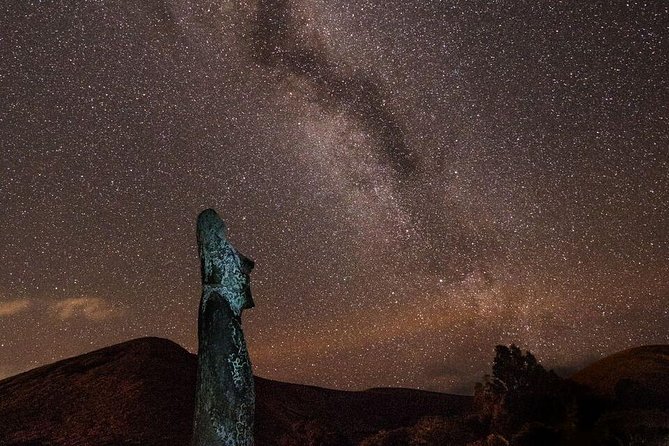
Far from Hanga Roa’s streetlights, the night sky over Rapa Nui can feel almost three-dimensional. This experience pairs telescope viewing and a short astronomy talk with special nighttime access to Ahu Nau at Anakena Beach, where you can pose beside the moai for a long-exposure photograph.
I especially like the small groups of no more than 12, which make it easier to ask questions and take turns at the telescopes. I also like the Polynesian navigation lesson, which connects the stars to the voyages that brought people across the Pacific.
The main drawback is weather reliability. The tour can be canceled close to departure because conditions at Anakena may be cloudy or windy even when the sky looks clear in Hanga Roa. A full moon can also cancel the stargazing, so timing matters.
In This Review
- Key points at a glance
- Why the Rapa Nui night sky is worth your time
- Meeting at Katipare Library in Hanga Roa
- The remote telescope stop before Anakena
- Hot chocolate, local cake, and a little island warmth
- Anakena Beach and Ahu Nau after dark
- The value of a $140 price
- Weather, clouds, wind, and moonlight
- Who will enjoy this experience most
- Practical tips for a better night
- Should you book Rapa Nui Stargazing?
- FAQ
- Where does the Rapa Nui Stargazing tour meet?
- Is hotel pickup included?
- What time does the tour start?
- How long does the experience last?
- What is included in the price?
- Are telescope viewing and photography included?
- Is the Anakena admission ticket included?
- What happens if the weather is poor?
- Can I cancel for a full refund?
Key points at a glance
- Night access to Ahu Nau: Visit the moai at Anakena after dark, a rare and atmospheric part of the outing.
- Remote telescope site: The astronomy session takes place away from town lights, with telescopes and binoculars used to view planets, the moon, star clusters, and other objects.
- Polynesian navigation: The guide explains how Rapa Nui and other Polynesian voyagers used the stars to cross the Pacific.
- Warm refreshment included: Hot chocolate or another hot drink is served with local cake during the evening.
- Hotel drop-off provided: You meet at Katipare Library in Hanga Roa, then return to your lodging after the tour.
- Weather needs flexibility: The operator may confirm or cancel only about an hour before departure, and poor conditions can lead to a refund or rescheduling.
Why the Rapa Nui night sky is worth your time
Easter Island is a fine place to look up. Once you leave Hanga Roa, artificial light drops away, and the sky becomes the main event. You may see the Milky Way, bright planets, star clusters such as the Pleiades, and southern-sky objects that are difficult to view from northern latitudes.
The appeal here is not simply pointing a telescope at a few bright objects. The guide adds a cultural frame by explaining how Polynesian navigators read the sky. That gives the stars a human purpose. You are not just memorizing names. You are considering how sailors found direction across a huge ocean without modern instruments.
The astronomy portion has included views of Jupiter and Saturn, lunar craters, Sirius, the Pleiades, and the Horsehead Nebula. Exact sightings depend on the date, weather, and what is visible that night, so you should not treat any list of objects as guaranteed. Still, the combination of naked-eye viewing and telescopes gives the evening more depth than a simple dark-sky lookout.
I also appreciate that the guides make the material approachable. You do not need an astronomy background. The presentation can cover star patterns, planets, and Polynesian wayfinding in plain terms, with time for questions.
More atacama stargazing tours in Easter Island:
- Easter Island: Rapa Nui Stargazing Tour
★ 4.8 · 16 reviews - San Pedro de Atacama: Etno-Stargazing Tour with Transfer
★ 4.8 · 629 reviews - San Pedro de Atacama: Stargazing Experience
★ 4.7 · 489 reviews
Meeting at Katipare Library in Hanga Roa
The group gathers in front of Centro Lector Katipare, also called Katipare Library, in Hanga Roa. Hotel pickup is not included, so you need to make your own way to the meeting point.
The stated start is 8:00 pm, though the seasonal information gives slightly different times. Winter departures are listed around 7:30 pm, while dates from September through April may begin between 8:30 and 9:00 pm. Confirm the exact meeting time for your date, since a small difference matters when the vehicle is leaving for a remote site.
The local driver-guide provides live commentary during the ride. Names mentioned in connection with the experience include Mark and Marc, and Tuhii is credited with preparing the hot chocolate. The guide team can vary, but the format remains personal rather than lecture-heavy.
Plan to arrive early. You do not want to be searching for the library at the last minute, and the operator may make a late weather decision before departure. Since the group is limited to 12 people, a missed start can be difficult to fix.
The remote telescope stop before Anakena
The first major stop is a dark, remote site where the telescopes are set up. This location is chosen for its distance from town lighting, not for sightseeing facilities. The darkness is exactly what you came for, but it also means you should bring a flashlight or headlamp.
A small light is especially useful when walking around the viewing area. Use a red light if you have one, or keep your regular flashlight pointed at the ground. Bright phone screens can spoil your own night vision and bother people using the telescopes.
The guide may use more than one telescope and binoculars. You can look at bright planets, moon craters, star clusters, and other objects, with the exact program changing according to the sky. One useful point to understand is that telescope viewing takes turns. In a group of eight to 12, you may spend more time listening and waiting than looking through the eyepiece.
This is also the part of the evening most affected by cloud and wind. A clear sky in Hanga Roa does not guarantee clear conditions near Anakena. The operator has explained that telescopes cannot be used comfortably in strong wind, and a brief clear spell may not be enough for a worthwhile session.
Bring a warm layer even if the day was hot. The evening can feel chilly, especially when you are standing still for a long astronomy talk. A jacket or long-sleeved shirt is a simple addition that can make the experience much more pleasant.
Hot chocolate, local cake, and a little island warmth
A hot beverage and local cake are served during the outing. This is a small feature, but it works well. After standing outdoors and focusing on dark skies, a warm drink gives the group a natural pause.
The hot chocolate has earned particular praise, and Tuhii is specifically associated with making it. You may receive hot chocolate or another hot drink, depending on the arrangements that night. The cake is included, but the exact flavor is not specified.
Do not treat this as a meal. Have dinner beforehand, especially since the full outing lasts about three and a half hours and can return late. The refreshment is best understood as a welcome snack, not a substitute for supper.
More easter island moai tours in Easter Island:
- From Hanga Roa: Rapa Nui Culture Sightseeing Tour
★ 4.6 · 307 reviews - From Hanga Roa: Journey from Orongo to Ana Te Pahu
★ 4.3 · 75 reviews - Two days of Full Day Tour of Rapa Nui + Sunrise in Tongariki
★ 4.8 · 55 reviews - Half Day Tour in Rapa Nui
★ 5.0 · 48 reviews
Anakena Beach and Ahu Nau after dark
Anakena is the final setting, and it changes the mood of the evening. In daylight, the beach is one of Rapa Nui’s best-known coastal sites. At night, the focus shifts to the silhouettes of the moai and the sky above them.
The tour has special access to Ahu Nau at night. That access is one of the strongest reasons to choose this experience instead of simply stargazing from your hotel. Seeing the moai after sunset, with little artificial light around you, gives the statues a quiet presence that is hard to reproduce during a busy daytime visit.
The itinerary lists about 40 minutes at Anakena, and an admission ticket is not included. The precise time available for the beach and photography can vary, particularly if the telescope session runs long or conditions change.
The photo session uses long exposure to place you beside the moai under the stars. This can produce a striking souvenir image, but it is not a quick snapshot. The camera needs time to capture the dark scene, and the process may feel slow if you are cold or eager to return.
Souvenir photos are available for purchase, so ask how the images will be delivered and what the price is before committing. In some outings, the guide has collected email addresses so the photos could be sent later. Write your email clearly and check that it has been recorded correctly.
One especially atmospheric touch has been music during the photo session, including guitar and singing by Marc. That is not a guaranteed part of every departure, but music can add a gentle local character to the closing minutes.
The value of a $140 price
At $140 per person, this is not a cheap evening activity. You are paying for transport to a dark site, a local driver-guide, live commentary, telescope equipment, a small group, the special nighttime visit to Ahu Nau, and hotel drop-off.
The price makes the most sense if you value the complete package. A basic stargazing stop might give you dark skies, but this outing adds equipment, cultural interpretation, a remote location, and photography at the moai. The small group also matters. With up to 12 people, the guide can usually handle questions more easily than on a large coach tour.
The value drops if your main goal is simply to see stars with your own eyes. Cloud, wind, or a bright moon can limit the telescope portion, and the tour may be canceled altogether. You also need to pay for any souvenir photo separately, and the Anakena admission ticket is not included.
I would book it early in your island stay, ideally for your first available night. That gives you a chance to move the outing to another evening if weather interrupts it. Booking on your final night leaves little room for a second attempt.
The activity is often booked well ahead, with an average lead time of about 64 days. That does not mean you must reserve two months in advance, but it does suggest booking early if your dates are fixed or you have limited time on Rapa Nui.
Weather, clouds, wind, and moonlight
Weather is the practical issue you need to understand before paying. The operator checks conditions around Anakena, not just in Hanga Roa, and may wait until roughly an hour before departure to confirm the outing.
Some cancellations have disappointed people who later saw clear stars from town. That frustration is understandable, but the remote site can have different cloud and wind conditions. A sky that clears at 10:00 pm in Hanga Roa does not prove the telescope site was usable earlier.
The operator may also cancel around a full moon. A bright moon washes out many stars, so this is a different problem from ordinary cloud. You might still enjoy the moon through a telescope, but the experience is designed around dark skies, and the full moon can make the main purpose difficult.
If poor weather cancels the tour before it begins, you are offered an alternative date or a full refund. If conditions change after the outing has started, the operator says it will try to take you out again free of charge on another night, subject to availability.
If the minimum number of participants is not reached, the activity can also be canceled. You may then receive a different date, another experience, or a full refund. The possibility of a late cancellation is real, so avoid placing this on a night when you have an important onward flight or fixed plan.
The standard cancellation rule allows a full refund if you cancel at least 24 hours before the start time. Changes or cancellations inside that window are not accepted, unless the operator cancels because of weather or minimum numbers.
Who will enjoy this experience most
I would choose this for anyone who wants more than a pretty night sky. The combination of astronomy, Polynesian navigation, and nighttime moai photography gives the outing a strong sense of place.
It suits couples and families, provided everyone can stay outdoors for several hours and handle a late return. Children who enjoy planets and the moon may have a good time, though the waiting between telescope turns may test younger attention spans.
It is also a good match for a solo visitor. The small group makes it easier to meet people, and the guide-led format means you do not need to know where to find the best dark-sky site.
You should think twice if you dislike uncertain schedules, get cold easily, or need a guaranteed activity on one particular night. The tour depends on nature, and the final decision may come close to departure.
Most people can participate, and the meeting point is near public transportation. Hotel drop-off is included at the end, but not pickup at the beginning, so allow time to reach Katipare Library.
Practical tips for a better night
- Book early in your stay: Keep later nights open in case weather forces a change.
- Check the moon phase: A full moon may lead to cancellation or a different night activity, such as a full moon hike.
- Bring a headlamp or flashlight: The remote viewing site and beach will be dark.
- Pack a warm layer: Even a warm island day can turn into a chilly night outdoors.
- Eat before meeting: Hot chocolate and cake are refreshments, not dinner.
- Protect your night vision: Keep phone brightness low and avoid shining lights toward the telescopes.
- Confirm the time: Seasonal departure details vary, so check the exact start time for your date.
- Ask about the photo: Souvenir images cost extra, and you should confirm how they will be sent.
Should you book Rapa Nui Stargazing?
Yes, if you have at least two possible nights and want a thoughtful evening that links the sky to Rapa Nui culture. The best parts are specific: dark-sky viewing away from town, telescope access, Polynesian navigation, hot chocolate and cake, and nighttime photographs with the moai at Anakena.
I would not book it as your only chance to see the stars unless you are comfortable with the risk of cancellation. Weather and moonlight can defeat even a well-planned night, and the final confirmation may come late.
For a flexible visitor, the $140 price is fair for the transport, equipment, small group, guide, special access, and photography setting. Reserve it near the start of your stay, carry a jacket and light, and keep your expectations tied to nature. On a clear, dark night, this can become one of the most distinctive things you do on Easter Island.
FAQ
Where does the Rapa Nui Stargazing tour meet?
You meet in front of Centro Lector Katipare, also called Katipare Library, in Hanga Roa, Easter Island.
Is hotel pickup included?
No. You make your own way to the Katipare Library meeting point. Hotel drop-off is included after the tour.
What time does the tour start?
The listed start time is 8:00 pm. Seasonal information also gives 7:30 pm in winter and between 8:30 and 9:00 pm from September through April, so confirm the exact time for your date.
How long does the experience last?
The tour lasts approximately 3 hours and 30 minutes.
What is included in the price?
The price includes a driver-guide, live commentary, hotel drop-off, and a small-group outing for a maximum of 12 people. A hot beverage and local cake are also included during the itinerary.
Are telescope viewing and photography included?
Telescope viewing is part of the experience. Souvenir photographs are available to purchase, but they are not included in the price.
Is the Anakena admission ticket included?
No. The admission ticket for the Anakena portion is not included.
What happens if the weather is poor?
The tour requires favorable weather. If it is canceled before departure, you are offered an alternative date or a full refund. If weather changes during the outing, the operator will try to arrange another free night, subject to availability.
Can I cancel for a full refund?
Yes. You can cancel at least 24 hours before the local start time for a full refund. Cancellations or changes made less than 24 hours before departure are not accepted, unless the operator cancels the activity.
Just added around Easter Island
- Volcanic Refuges: Excursion to Underground Civilization★ 4.7 · 8 reviews
- Ride to the highest point on the island for sunset★ 5.0 · 40 reviews
- Half Day Tour in Rapa Nui★ 5.0 · 48 reviews
- Tongariki Sunrise: Half Day Private Tour★ 3.8 · 9 reviews
- Easter Island: Private Full Day History Of The Moai★ 4.6 · 12 reviews
- Terevaka Horse Excursion: The highest point and 360° view.★ 4.7 · 38 reviews
- Sunrise Tongariki: Sunrise at Tongariki Park Private Tour★ 4.5 · 47 reviews
- Rapa Nui: Polynesian Massage★ 4.8 · 5 reviews
Atacama Stargazing Tours, compared.
Astronomical Tour with Guide and Pick Up San Pedro de Atacama
Read our review →
“Astronomical Adventure in San Pedro de Atacama”
Read our review →
Pisco Elqui: Mountaintop Stargazing and Night Portrait
Read our review →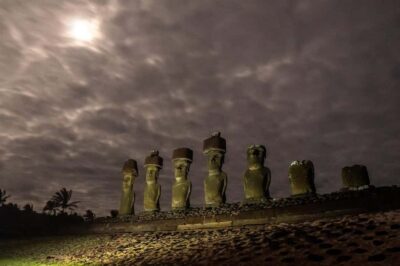
Browse the lists this tour appears in