
Reviewed · EASTER ISLAND MOAI TOURS
Half Day Tour in Rapa Nui
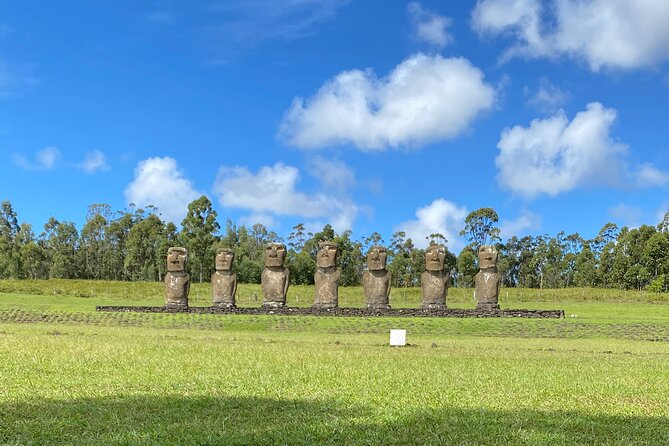
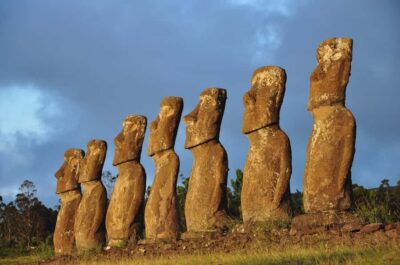
Ahu Akivi is the star of this half-day trip: seven moai look toward the ocean, an unusual sight on Rapa Nui and a fine starting point for stories about the island’s beginnings. I like the focus on oral tradition and the small group of no more than six. I also like that the route links the moai, pukao quarry, volcanic crater, and Birdman village into one clear story.
The main catch is value. At the listed price of $1,500 per person, this is a costly short outing, and admission is not included at Rano Kau or Orongo. The tour is advertised for two to four hours, yet the published stop times suggest a longer visit, so confirm the day’s timing before you pay.
In This Review
- Key points to know before booking
- Why this route adds something beyond the famous moai
- Ahu Akivi and the seven moai facing the Pacific
- Puna Pau and the red-stone quarry
- Rano Kau, a crater with a story of its own
- Orongo and the dangerous Birdman contest
- What the guide adds to the experience
- Is $1,500 per person fair value?
- Timing, food, water, and group size
- How the tour fits into an Easter Island stay
- Who should book this Rapa Nui half-day tour?
- Should you book it?
- FAQ
- Where does this half-day tour take place?
- Which sites are included?
- How long does the tour last?
- Is hotel pickup available?
- How many people can join?
- What is included in the price?
- Can I cancel for a full refund?
Key points to know before booking
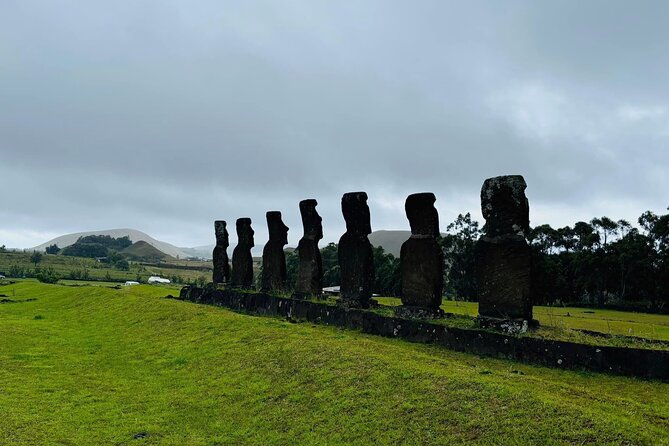
- Seven moai facing the sea: Ahu Akivi offers one of Rapa Nui’s most unusual moai settings and a full hour for guided interpretation.
- A local guide named Nicolás: Also called Nico or Niko, he is presented as the person who explains the island’s language, customs, traditions, and stories.
- Four major cultural stops: The route covers Ahu Akivi, Puna Pau, Rano Kau, and Orongo in the island’s northern and central sectors.
- A small group with hotel pickup: Private transportation, an air-conditioned vehicle, snacks, and soda are included for a maximum of six people.
- A serious price question: The listed $1,500 per person is high for a half-day experience, especially since two stops have admission costs not included.
- Weather can change the feel of the day: The local team has a reputation for adjusting plans during rain, but you should still bring water and clothing for quick changes.
Why this route adds something beyond the famous moai
Many first visits to Rapa Nui focus on the giant ceremonial platforms and dramatic coastal views. This tour takes a different angle. It is built around the question of where the island’s people came from, how their traditions developed, and how oral accounts connect with places you can still visit.
That makes the route useful if you already know the basic moai story and want more context. You are not simply driving from one photo stop to the next. Ahu Akivi introduces the island’s origins, Puna Pau explains the red cylinders placed on some moai, and Rano Kau and Orongo bring in one of Rapa Nui’s best-known political and ceremonial traditions.
I would choose this experience early in a stay if understanding the island matters as much to you as seeing its monuments. The guide, Nicolás, is repeatedly praised for explaining patiently and with feeling. He is from Rapa Nui, and that local connection is important here because much of what makes these places meaningful comes through names, customs, language, and oral accounts.
The small group also changes the pace. With no more than six people, you have a better chance to ask questions and hear a story without a large crowd talking over it. The vehicle is air-conditioned, a useful comfort on a warm or changeable day, and pickup is offered from your accommodation.
More easter island moai tours in Easter Island:
- From Hanga Roa: Rapa Nui Culture Sightseeing Tour
★ 4.6 · 307 reviews - From Hanga Roa: Journey from Orongo to Ana Te Pahu
★ 4.3 · 75 reviews - Rapa Nui Stargazing
★ 4.5 · 62 reviews
Ahu Akivi and the seven moai facing the Pacific
The first stop is Ahu Akivi, reached after pickup and a drive of about 30 minutes. The visit itself is listed at one hour, which is generous for a half-day outing and shows where the emphasis lies.
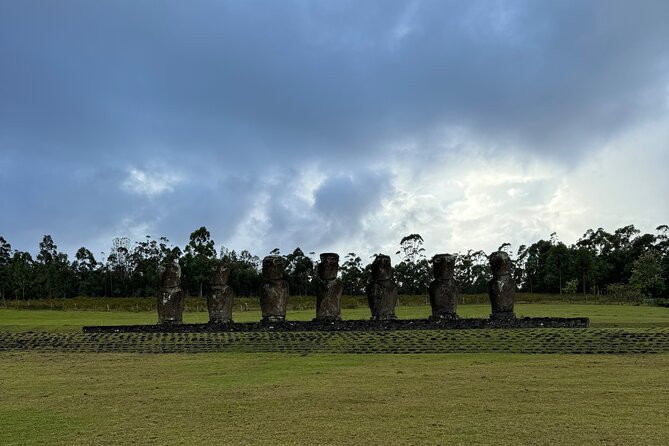
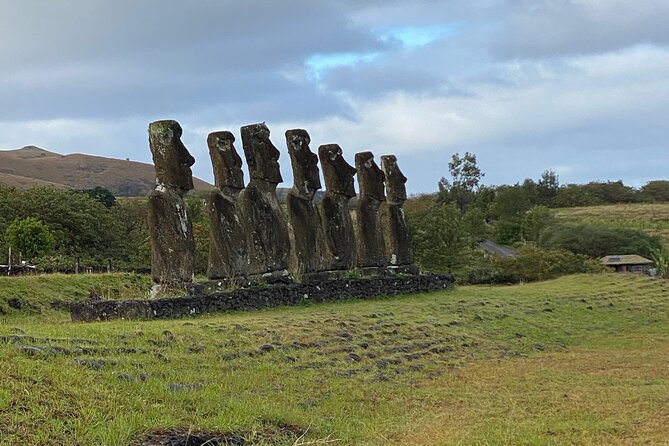
Ahu Akivi is unusual because its seven moai face toward the ocean. Many visitors find that orientation striking, and it gives the guide a natural way to explain the stories and mysteries tied to the site. The tour description places special weight on oral tradition, including accounts about the island’s origins and how its people arrived.
I like beginning here because the site is not treated as a collection of statues without context. The seven figures become part of a larger story about ancestors, voyaging, belief, and the way Rapa Nui remembers its past.
Give yourself time to listen closely. This is the part of the outing where the quality of the guide matters most. Nicolás is known for taking the time needed to explain rather than rushing through a memorized speech. He also explains the meaning of words and place names, which can help you see the island as a living culture rather than an outdoor museum.
The drawback is that Ahu Akivi can set up expectations for a slower cultural tour than the stated duration allows. If the full day runs closer to two hours, the guide will have to keep the interpretation focused. If you want long walks, extended photography, or time to sit quietly at each site, this itinerary may feel brisk.
Puna Pau and the red-stone quarry
From Ahu Akivi, the route continues to Puna Pau, the quarry associated with pukao. These are the red stone cylinders placed on the heads of some moai, and the stop gives you a chance to understand that they came from a distinct source rather than being part of the same carving process as the statues.
The visit is listed at about 30 minutes, although the itinerary also describes the quarry visit as one hour. That mismatch is worth noting. Ask the operator how long you should expect to spend here, especially if you care about walking time or photography.
Puna Pau also offers broad views across the island. The description calls them 180-degree views, so this is a good place to step back from the individual monuments and see how much ground Rapa Nui covers. The red quarry stone adds a different color and texture to a route otherwise centered on gray stone and volcanic forms.
I like this stop because it answers a practical question many people have after seeing moai: where did the headgear come from, and how was it connected to the wider ceremonial system? The explanation helps you read the statues more carefully later.
This is not the longest stop, so do not expect a full hike or a long picnic. The terrain may also feel exposed, and Rapa Nui weather can shift quickly. Bring your own drinking water, since bottled water is not included. The operator says local bottled water may be carried, but it is rainwater, and the clearest advice is to bring the water you prefer.
Rano Kau, a crater with a story of its own
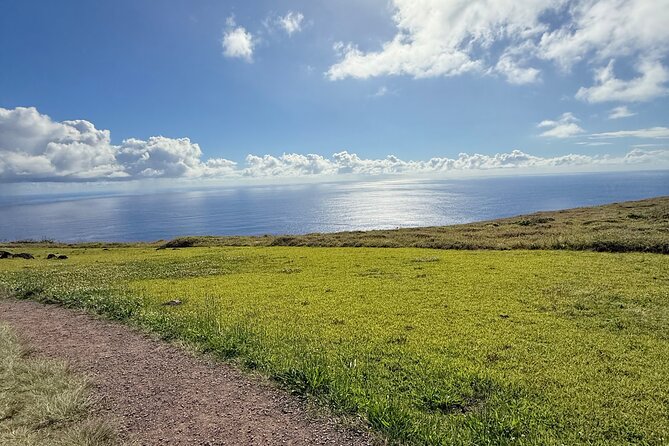
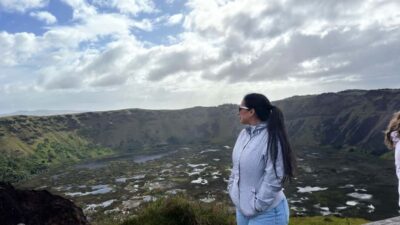
Rano Kau is the natural centerpiece of the second half of the tour. The large volcanic crater is described as one of the island’s most impressive places, both for its size and for the way its interior functions like a natural greenhouse.
The itinerary allows roughly 30 minutes for the volcano area, then lists a one-hour climb and a further hour at Orongo. Because the overall tour length is advertised as two to four hours, the timing here is not perfectly clear. You should confirm whether the listed hour refers to the climb and whether the crater viewpoint is combined with the Orongo visit.
Even a short stop at Rano Kau can add important context. The crater is not presented only as a scenic lookout. It is tied to stories about Haumaka and to the island’s oral tradition. That connection makes the place useful for understanding how geography, belief, and political power overlap in Rapa Nui culture.
The word climb deserves attention. The description says you will climb the Rano Kau volcano, but it does not give a difficulty rating, trail surface, or distance. Most people can take part in the activity according to the supplied information, but you should ask the provider directly if you have mobility concerns or need a slower pace.
Carry water, sun protection, and sensible shoes. Those are straightforward precautions for an outdoor site, and they matter even more when the weather can turn from sun to rain. The vehicle provides comfort between stops, but it cannot replace basic preparation once you are outside.
Same long country, a very different day out:
- From Hanga Roa: Easter Island Highlights 2-Day Tour
★ 4.3 · 205 reviews - From Hanga Roa: Easter Island Sightseeing Full Day Tour
★ 4.5 · 189 reviews - Full day tour – DREAM
★ 5.0 · 86 reviews - Two days of Full Day Tour of Rapa Nui + Sunrise in Tongariki
★ 4.8 · 55 reviews
Orongo and the dangerous Birdman contest
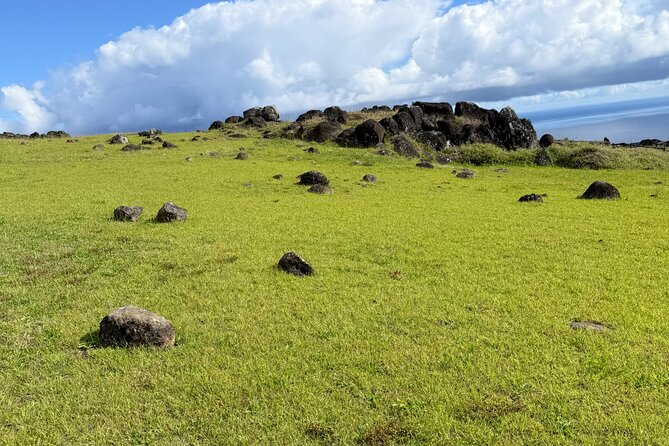
Orongo is the most distinctive cultural stop on the route. This ceremonial village sits by Rano Kau and is linked to the Birdman competition, in which elite warriors risked their lives in a contest to secure the position of supreme leader.
That story gives Orongo a different feel from Ahu Akivi. Ahu Akivi points toward origins and ancestors. Orongo focuses on authority, ritual, competition, and the risks taken to gain political power. A good guide can connect those ideas without flattening them into a simple legend.
The tour allows about 30 minutes in one part of the description and one hour in another. Again, confirm the schedule. You want enough time to hear the explanation, see the ceremonial village, and enjoy the views without being hurried back to the vehicle.
Admission is not included for Rano Kau or Orongo. The information provided does not state the separate fee or explain how tickets are handled, so ask about the current cost before booking. This is a key point when calculating the real price of the outing.
Orongo is also a place where weather affects the experience. Rain can soften the views and make the site feel moody, but it can also limit visibility. The operator has shown flexibility when weather changes, offering alternatives or adjusting plans when possible. That is helpful, though no tour company can guarantee clear skies on a remote Pacific island.
What the guide adds to the experience
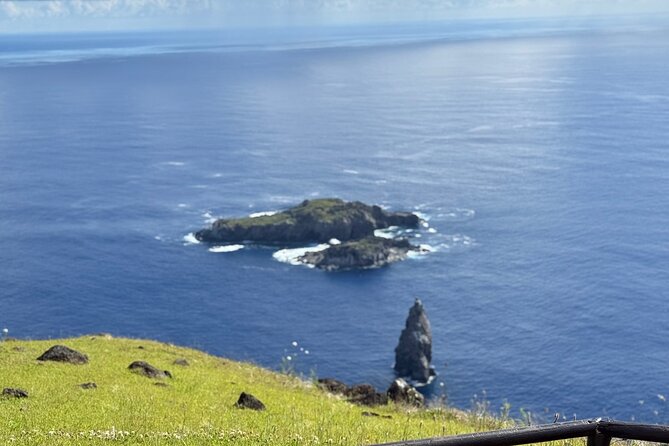
The strongest part of this tour is likely to be the guide rather than the transport. Nicolás is repeatedly identified as attentive, patient, and passionate about Rapa Nui. He explains history, customs, language, and the meaning of places, while also helping with practical plans beyond the excursion.
That last point may matter if you have only a short stay on the island. The guide has helped coordinate other activities and offered restaurant suggestions. Those services are not listed as formal inclusions, so do not book on that basis alone, but they suggest a personal style rather than a strictly timed transfer service.
The English quality of the supplied material is uneven, and some customer comments were auto-translated. If you need the tour in a specific language, confirm that directly. The available information clearly names Nicolás, but it does not provide a full language schedule or guarantee a particular guide for every departure.
I also like the way the route gives the guide room to tell connected stories. The island’s past is not neatly divided into separate chapters. Places, ancestors, volcanoes, ceremonial practices, and oral tradition overlap. A local guide who can explain those links is more useful than a guide who only recites dates.
Is $1,500 per person fair value?

The listed price is $1,500 per person. The currency is not specified in the supplied details, so you should verify exactly what amount and currency will appear at checkout.
At that price, this is not a casual sightseeing shuttle. The value would need to come from the small group, local guiding, private transportation, and the depth of the cultural explanation. You are paying for a focused introduction to Rapa Nui’s northern and central sites, not just for a ride between monuments.
The price is easier to justify if your group values privacy and wants to ask many questions. A maximum of six people can make the day feel tailored, especially with pickup and an air-conditioned vehicle. Snacks and soda are included, which is convenient but not a major part of the financial value.
The price is harder to justify if you are traveling alone, comparing it with longer island tours, or mainly want scenic stops. This is a short outing, lunch is not included, water is not included, and admission at Rano Kau and Orongo is extra.
The best practical step is to compare the total cost, not only the headline figure. Add any entrance fees, food afterward, and the cost of another tour if you still need to see the island’s other major sites. At the same time, a cheaper group tour may give you less time with a local guide and less flexibility when weather shifts.
Timing, food, water, and group size
Pickup is offered, and the stated meeting window is between 9:30 and 10:00 a.m. The information does not specify whether that is a fixed departure time or a pickup range for different accommodations. Confirm your exact pickup time and location after booking.
The tour duration is given as approximately two to four hours. The individual timing notes do not line up neatly, with Ahu Akivi listed at one hour, Puna Pau at 30 minutes, and separate estimates for Rano Kau and Orongo. Treat the schedule as approximate and ask how much time will be spent at each place.
Private transportation and an air-conditioned vehicle are included. The group size is capped at six, which is small enough for direct conversation and easier coordination at the sites.
Snacks and soda are included. Lunch is not, though you can be left at a place to eat at the end of the excursion. Bottled water is not included, so bring your own preferred supply. The operator notes that local bottled water may be available, but it is rainwater.
The tour is intended for most people to participate in. Still, the Rano Kau climb, outdoor exposure, changing weather, and possible walking around ceremonial sites mean you should ask specific questions if you have mobility limits or need special support. The supplied information does not promise wheelchair access or adapted transport.
How the tour fits into an Easter Island stay
This route works best as a cultural primer or as a focused half-day for someone who wants more than the standard highlights. It covers the northern and central parts of the island and concentrates on origin stories, pukao production, the volcanic setting, and the Birdman tradition.
It does not cover every important site on Rapa Nui. If this is your only organized outing, you will need to check what else you want to see and how much independent time you have. The tour can complement a broader visit, but it is not a complete survey of the island.
I would also book it early if the dates are firm. The experience is booked an average of 305 days ahead, which signals strong advance demand or limited availability. Free cancellation is available up to 24 hours before the start time, but changes or cancellations inside that window are not accepted and are not refunded.
The provider is Agencia de Turismo NCP. The company’s strongest identity is personal service, with Nicolás and the team keeping in touch, adjusting plans around rain when possible, and helping with other arrangements. That can be especially useful on an island where a canceled or delayed plan affects a large part of your day.
Who should book this Rapa Nui half-day tour?
I would choose this tour if you want a local voice, a small group, and a story-driven visit to four important sites. It suits families, couples, and small groups who prefer time for questions rather than a large coach and a fixed script.
It is also a good match if you are curious about Rapa Nui’s oral tradition and want to understand why Ahu Akivi, Puna Pau, Rano Kau, and Orongo belong in one conversation. Nicolás’s patient approach should appeal to you if you value explanation over speed.
I would hesitate if you are highly price-sensitive, need a full-day island circuit, or want a detailed accessibility guarantee. The $1,500 per-person price is substantial, entrance fees are extra at two sites, and the duration details need clarification.
Should you book it?
Book this experience if the guide and cultural focus are your priorities, and if a small group is worth paying for. The route has a clear purpose: it explains Rapa Nui through its origins, moai, pukao, volcano, and Birdman traditions rather than treating each stop as an isolated photo opportunity.
Before committing, confirm the currency, exact duration, pickup time, entrance fees, walking requirements, and language. If those details work for your plans, this can be a thoughtful and personal way to meet Rapa Nui. If not, compare the price with a longer island tour and make sure you are not paying half-day money for a schedule that feels too short.
FAQ
Where does this half-day tour take place?
The experience takes place on Easter Island, Chile, also known as Rapa Nui. It visits sites in the northern and central sectors of the island.
Which sites are included?
The route includes Ahu Akivi, Puna Pau, Rano Kau, and Orongo. These sites cover the seven moai at Ahu Akivi, the pukao quarry, the Rano Kau volcano and crater, and the Orongo ceremonial village.
How long does the tour last?
The tour is advertised as approximately two to four hours. The individual stop estimates vary, so confirm the exact schedule with the provider.
Is hotel pickup available?
Yes. Pickup from your accommodation is offered. The stated meeting window is between 9:30 and 10:00 a.m., but you should confirm your exact pickup details.
How many people can join?
The activity has a maximum of six participants. Private transportation is provided in an air-conditioned vehicle.
What is included in the price?
Private transportation, an air-conditioned vehicle, snacks, and soda are included. Lunch, bottled water, and admission at Rano Kau and Orongo are not included.
Can I cancel for a full refund?
Yes. You can cancel at least 24 hours before the experience start time for a full refund. Cancellations or changes made less than 24 hours before the start time are not accepted and are not refunded.
Just added around Easter Island
- Volcanic Refuges: Excursion to Underground Civilization★ 4.7 · 8 reviews
- Ride to the highest point on the island for sunset★ 5.0 · 40 reviews
- Tongariki Sunrise: Half Day Private Tour★ 3.8 · 9 reviews
- Easter Island: Private Full Day History Of The Moai★ 4.6 · 12 reviews
- Terevaka Horse Excursion: The highest point and 360° view.★ 4.7 · 38 reviews
- Sunrise Tongariki: Sunrise at Tongariki Park Private Tour★ 4.5 · 47 reviews
- Rapa Nui: Polynesian Massage★ 4.8 · 5 reviews
- Rapa Nui Highlights Program: 3 incredible tours to discover!★ 4.8 · 18 reviews
Easter Island Moai Tours, compared.

Two days of Full Day Tour of Rapa Nui + Sunrise in Tongariki
Read our review →
Adventures in Rapa Nui: High-quality tourism with Easter Island Your Tour.
Read our review →
Private Tour: The Underground World of Rapa Nui Caves
Read our review →
Ahu Vinapu, Rano Kao and Orongo City Half-Day Tour
Read our review →Browse the lists this tour appears in