
Reviewed · EASTER ISLAND MOAI TOURS
Ahu Vinapu, Rano Kao and Orongo City Half-Day Tour
Ahu Vinapu gives you one of Easter Island’s most intriguing sights right away: a huge ceremonial platform built from tightly fitted stone slabs. The careful construction has prompted comparisons with Inca masonry in Cusco, though the site belongs to Rapa Nui’s own ceremonial tradition. I like that this tour then moves from archaeology to volcanic scenery, ending at Orongo, where the birdman ceremony shaped island life for centuries.
I especially like the efficient three-hour route and the small group limit of 10 people. You get three major sites without spending a full day on the road, and a guide such as Uka can add the legends and local context that signs alone cannot provide. The main consideration is cost: the tour is $91, and the Rapa Nui National Park entrance fee adds another $100, so you should budget $191 per person before booking.
In This Review
- Key details at a glance
- Three major Rapa Nui sites in three hours
- Ahu Vinapu and the puzzle of its stonework
- Rano Kau and the island’s largest crater
- Orongo, where the birdman was worshiped
- What the guide adds to the visit
- Why the three-hour length matters
- The real cost: $91 plus the park fee
- Who should book this Easter Island tour?
- A practical way to fit it into your stay
- Should you book Ahu Vinapu, Rano Kau, and Orongo?
- FAQ
- How long does the Ahu Vinapu, Rano Kau, and Orongo tour last?
- What sites are included?
- Is hotel pickup included?
- Is the national park entrance fee included?
- Which languages are available?
- Can cruise ship passengers join the tour?
Key details at a glance
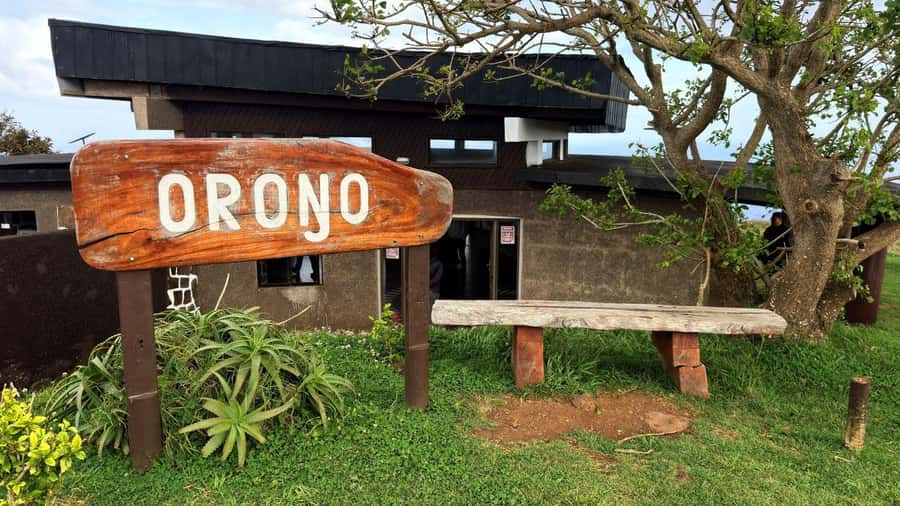
- Ahu Vinapu’s fitted stonework: See one of Rapa Nui’s largest ahu platforms and consider why its construction has been compared with Inca masonry.
- Rano Kau’s crater lake: Look into one of Easter Island’s three natural sources of fresh water from the volcano’s slopes.
- Orongo’s birdman village: Walk among roughly 50 elliptical stone houses linked to ceremonies held from 1600 to 1866.
- Views to three offshore islets: From Rano Kau, look toward Motu Nui, Motu Iti, and Motu Kao Kao.
- Small-group transport: Hotel pickup and drop-off in Hanga Roa are included, with no more than 10 people in the group.
- A focused half-day: The three-hour schedule suits you if you want major sights but still need time for other Easter Island plans.
Three major Rapa Nui sites in three hours
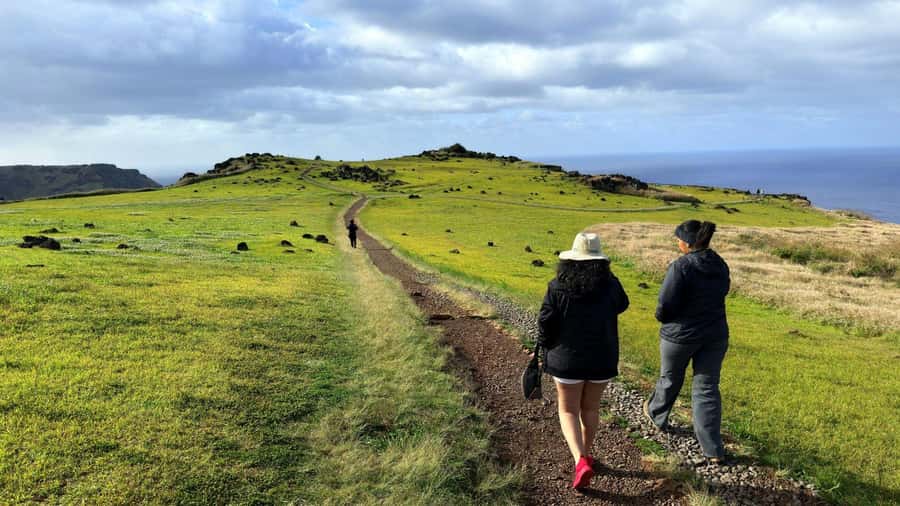
This is a compact route through some of Easter Island’s most important ceremonial and natural sites. You begin with the stonework of Ahu Vinapu, continue to the great crater of Rano Kau, then finish at Orongo, where the island’s birdman tradition took place.
That order works well. Ahu Vinapu introduces the ahu, or ceremonial platforms, while Rano Kau gives you a sense of the island’s volcanic setting. Orongo then brings together the ocean, crater rim, petroglyphs, and a major religious tradition.
You are not signing up for a slow, full-day archaeological study. The tour is designed to give you a strong overview in a short period. That makes it useful early in your stay, especially if you want a guided introduction before exploring other parts of Rapa Nui on your own.
More easter island moai tours in Hanga Roa:
- From Hanga Roa: Rapa Nui Culture Sightseeing Tour
★ 4.6 · 307 reviews - From Hanga Roa: Journey from Orongo to Ana Te Pahu
★ 4.3 · 75 reviews - Two days of Full Day Tour of Rapa Nui + Sunrise in Tongariki
★ 4.8 · 55 reviews
Ahu Vinapu and the puzzle of its stonework
The ceremonial complex at Ahu Vinapu includes one of the largest ahu on Rapa Nui. An ahu is a ceremonial platform, and these structures are closely tied to the island’s ancestors, status, and religious life.
The most striking feature here is the platform’s construction. Large slabs were carefully wedged together, creating a surface that has reminded many observers of Inca stonework in Cusco. That resemblance makes Vinapu a good place to listen closely to your guide, since the stones raise questions about engineering, contact, and how the comparison should be understood.
The useful point for you is not simply that the stones look impressive. It is that Vinapu shows the skill involved in moving and placing large blocks without modern machinery. You can look at the joints and the shape of the platform, then picture the planning and labor needed to create a ceremonial center of this scale.
The site also helps correct a common mistake about Easter Island. The moai are not the whole story. Their platforms, ceremonial spaces, social meaning, and the wider setting matter just as much. At Vinapu, your attention shifts from individual statues to the architecture that supported Rapa Nui religious practice.
Because the tour is only three hours, the time at each stop is focused. If you want a long, quiet visit to inspect every stone, you may find the schedule brisk. If you want a clear introduction to one of the island’s largest ahu, the stop earns its place.
Rano Kau and the island’s largest crater
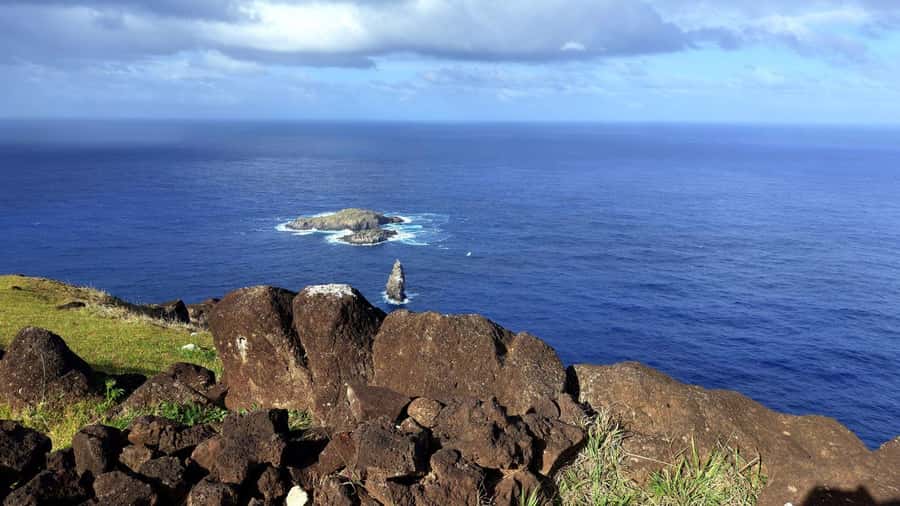
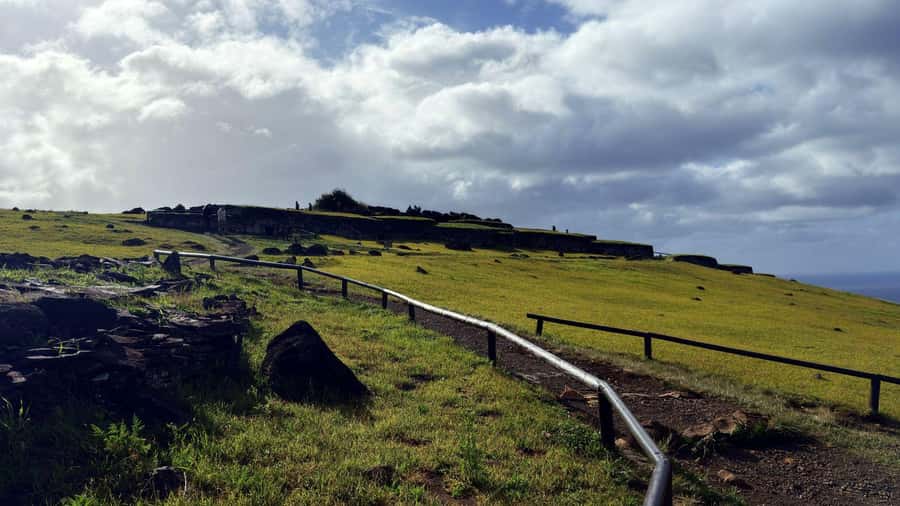
From Vinapu, the tour continues to Rano Kau, one of Easter Island’s defining volcanic features. The slopes provide broad views toward Motu Nui, Motu Iti, and Motu Kao Kao, three small offshore islets that became central to the birdman ceremony you learn about at Orongo.
Rano Kau is also important for its crater lake. The lake is one of the island’s three natural bodies of fresh water, so it is more than a scenic stop. It helps you understand how water shaped life on an island with limited natural supplies.
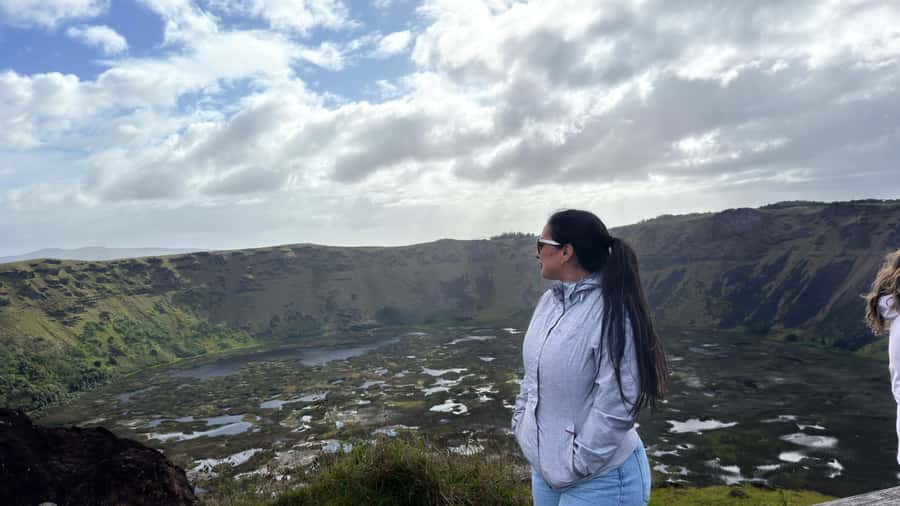
The crater’s scale can be hard to grasp from a photograph. From the slopes, you can look across the basin and see how the volcano forms a huge natural bowl. The setting also gives you a useful connection between the island’s geology and its ceremonial traditions. Orongo sits nearby, and its rituals were tied to the sea, the islets, and the seasonal search for the first manutara, or sooty tern egg.
The information provided for this tour does not specify how much walking takes place at Rano Kau or whether the weather will be clear. Bring comfortable shoes, as requested, and be ready for open, exposed viewpoints. The scenery is one of the tour’s strongest rewards, but the quality of the view depends on conditions on the day.
Orongo, where the birdman was worshiped
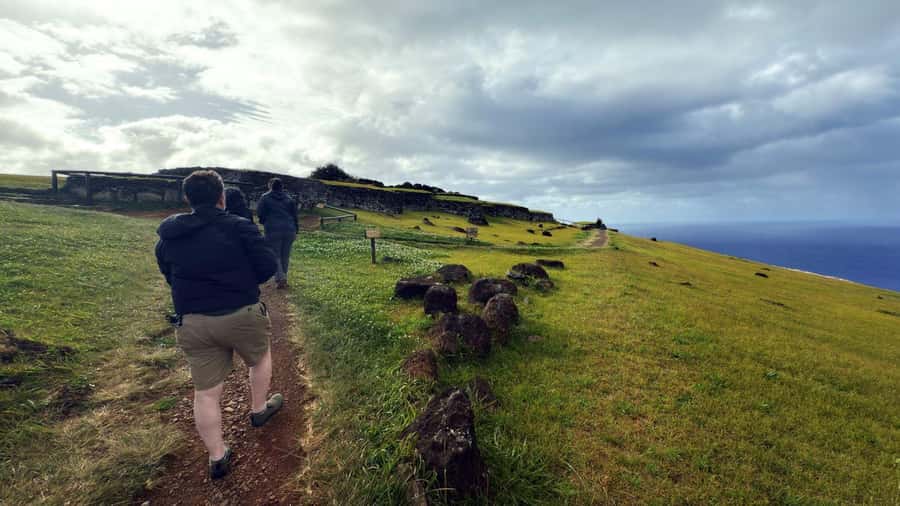
Orongo is the tour’s most dramatic historical stop. Between 1600 and 1866, the village was connected with the birdman tradition, a ceremony in which contestants or representatives sought the first egg from a seabird nesting on Motu Nui. The winner’s sponsor gained influence for the coming year.
The village contains about 50 elliptical houses made with shale walls. Each has a small square entrance facing the ocean. The houses are arranged in two uneven rows, and the lower row ends at Mata Ngarahu, the sacred area where the birdman was worshiped.
This layout gives you something concrete to study. You can see how the homes were placed along the crater edge, how their low forms fit the site, and how the ocean view connects the village to the ceremony. The houses are not grand buildings. Their power comes from their position and purpose.
Mata Ngarahu also contains one of the island’s most heavily decorated petroglyphs. Your guide can explain the symbols and legends associated with the site, though the exact depth of that discussion will depend on the pace of the group and the guide’s approach.
I like Orongo because it links several parts of Rapa Nui in one place: volcanic geology, village design, religious belief, competition, and the offshore islets. It also gives you a more complete picture of the island’s past than a quick stop at a single moai site would.
Please remember that the supplied information describes Orongo as a visit to the ceremonial village, but it does not promise a particular walking route, time at the petroglyphs, or a private viewing area. If those details matter to you, ask the operator before paying.
A few more Hanga Roa trips to weigh up
- Easter Island: Half-Day Archaeology Tour
★ 4.2 · 19 reviews - Santiago Half-Day Walking Tour with Hotel Pick up & Brunch
★ 4.7 · 148 reviews - Half-Day Small-Group Panoramic Santiago Tour
★ 4.0 · 89 reviews - Half-Day Tour to Laguna Cejar
★ 5.0 · 54 reviews
What the guide adds to the visit
A guide is important on this route because the sites can otherwise seem like a series of stones, slopes, and low walls. The tour includes live guiding in English or Spanish, with legends about Easter Island woven into the visit.
Uka is one named guide connected with this experience, and the available feedback specifically praises Uka as pleasant and interesting to listen to. That is a useful clue about the tone you may hope for, though guide assignments can vary.
A good explanation at Vinapu helps you understand why the stone joints matter. At Rano Kau, it connects the crater lake and offshore islets to the island’s wider story. At Orongo, it turns a cluster of low houses into a place shaped by ceremony and belief.
Since the group is limited to 10 people, you should have a better chance of hearing the guide than you would in a large coach group. Small groups also make it easier to ask a short question or keep the visit moving without long delays. The tradeoff is that this remains a shared tour, not a private archaeological guide.
Why the three-hour length matters
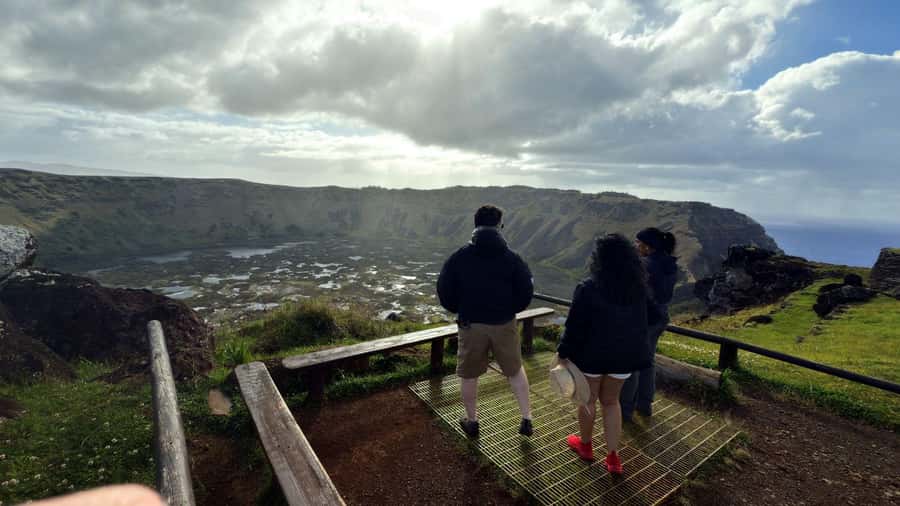
Three hours is short enough to fit around other plans in Hanga Roa. You can use it as a first look at Rapa Nui National Park, then reserve another day or half-day for different parts of the island.
The short length also keeps the experience manageable if you do not want a full-day outing. Hotel pickup and drop-off in Hanga Roa remove the need to arrange separate transport to three sites.
Still, you should set realistic expectations. The tour covers important ground, but it cannot provide long periods at every location. You will be moving between sites, hearing an overview, and seeing the main features rather than spending hours on detailed photography or independent study.
Starting times depend on availability. Check the offered time before you book, especially if you have other activities planned. The tour lasts three hours, but the exact rhythm may vary with pickup arrangements and the group.
The real cost: $91 plus the park fee
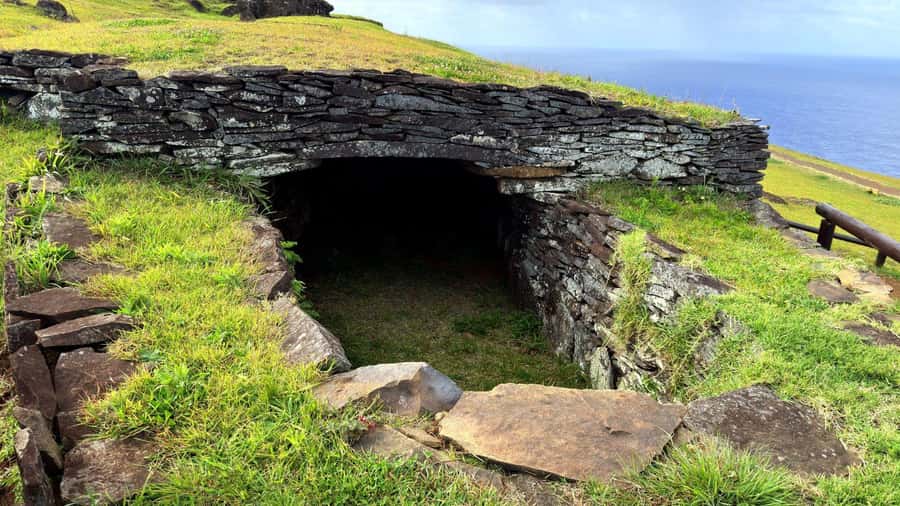
The advertised price is $91 per person. That includes hotel pickup and drop-off in Easter Island hotels, transport between the sites, and an English or Spanish guided tour.
The key budget issue is the Rapa Nui National Park entrance fee, listed separately at $100. That brings the stated cost to $191 per person before any other trip expenses. The entrance fee is higher than the tour itself, so you should include it when comparing this outing with other ways to see the same sites.
The tour can still offer fair value if you want transport, a structured route, and explanations at all three locations. Renting or arranging separate transport may not provide the same ease, and visiting without a guide means you will need to supply your own historical context.
The value is weaker if you already have independent transport and plan to visit these sites with a guide included elsewhere. In that case, compare your full costs rather than looking only at the $91 tour price.
Who should book this Easter Island tour?
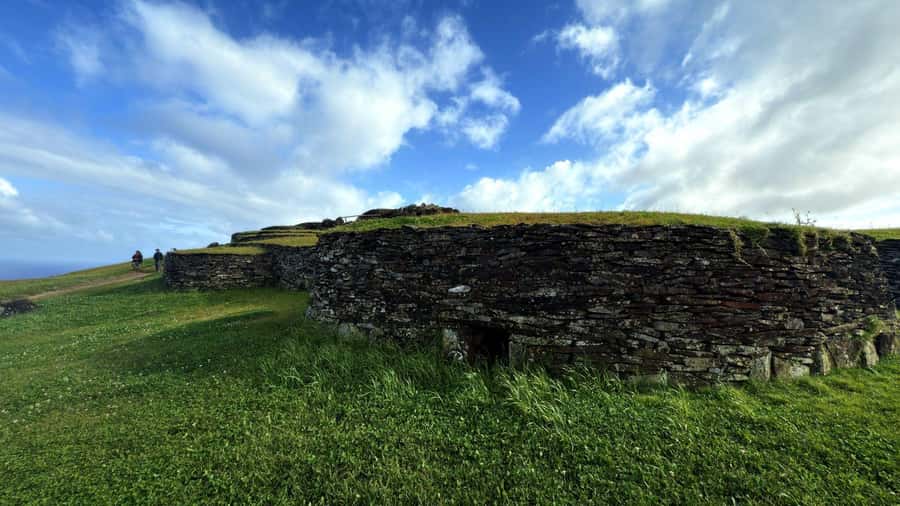
I would choose this tour if you want a guided introduction to Rapa Nui’s ceremonial world and have only a few hours available. It suits first-time visitors who want to see a large ahu, a major volcano, and Orongo in one outing.
It also fits you if you prefer a small group. A maximum of 10 people is more personal than a large bus tour, while the hotel pickup keeps the logistics simple.
This is a good match for people who enjoy history, archaeology, volcanic scenery, and local legends. You will get the most from it if you pay attention to the connections between the sites rather than treating each stop as a separate photo opportunity.
You should think twice if you use a wheelchair, since the experience is not suitable for wheelchair users. It is also not intended for cruise ship passengers. Pickup is for people staying at hotels in Hanga Roa, and shore pickup and drop-off are not included.
Bring comfortable shoes. Baby strollers, large bags, non-folding wheelchairs, alcohol, and drugs are not allowed.
A practical way to fit it into your stay
If you have several days on Easter Island, this half-day tour can give you a useful framework near the start of your visit. After seeing Vinapu, Rano Kau, and Orongo with a guide, you may find it easier to place other ahu and ceremonial sites in context.
If your schedule is tight, the three-hour format is the main reason to book. You see three important places without committing a full day. Just remember that the park fee is separate and that the tour is not designed for cruise passengers.
The free cancellation policy allows you to cancel up to 24 hours in advance for a full refund. You can also reserve now and pay later, which helps if your island plans are still changing.
Should you book Ahu Vinapu, Rano Kau, and Orongo?
Book it if you want an efficient, small-group introduction to three of Rapa Nui’s most meaningful places. The combination is strong: unusual stonework at Vinapu, a huge crater and freshwater lake at Rano Kau, and the birdman village at Orongo.
The main caution is the total price once the $100 national park entrance fee is added. Check that fee against your full itinerary and confirm that your hotel is in Hanga Roa. If you are staying at a hotel, are comfortable walking in suitable shoes, and value a guide who can explain the legends and ceremonial meaning, this is a practical way to begin seeing Easter Island.
FAQ
How long does the Ahu Vinapu, Rano Kau, and Orongo tour last?
The tour lasts three hours. Starting times depend on availability, so check the available options before booking.
What sites are included?
The tour visits the Ahu Vinapu ceremonial complex, Rano Kau volcano, and Orongo Ceremonial Village within Rapa Nui National Park.
Is hotel pickup included?
Yes. Pickup and drop-off are included for hotels in Hanga Roa, Easter Island.
Is the national park entrance fee included?
No. The Rapa Nui National Park entrance fee is listed separately at $100 per person.
Which languages are available?
The tour provides a live guide in English or Spanish.
Can cruise ship passengers join the tour?
No. The tour is intended for passengers staying in hotels. Pickup and drop-off from shore or cruise ships are not included.
Just added around Hanga Roa
- Volcanic Refuges: Excursion to Underground Civilization★ 4.7 · 8 reviews
- Sunrise Tongariki: Sunrise at Tongariki Park Private Tour★ 4.5 · 47 reviews
- Rapa Nui: Polynesian Massage★ 4.8 · 5 reviews
- Rapa Nui Highlights Program: 3 incredible tours to discover!★ 4.8 · 18 reviews
- Rapa Nui: 3 Excursions with Hotel Transfers★ 4.3 · 6 reviews
- Hanga Roa: Full Day Moai and Mistery★ 4.4 · 22 reviews
- Easter Island: Tropical Diving★ 4.8 · 13 reviews
- Easter Island: The Moai Trail Private Archeological Tour★ 4.9 · 12 reviews
Easter Island Moai Tours, compared.

Two days of Full Day Tour of Rapa Nui + Sunrise in Tongariki
Read our review →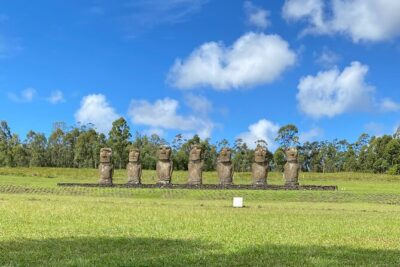
Adventures in Rapa Nui: High-quality tourism with Easter Island Your Tour.
Read our review →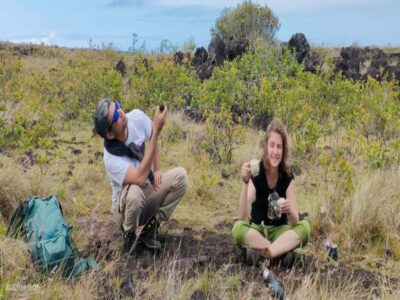
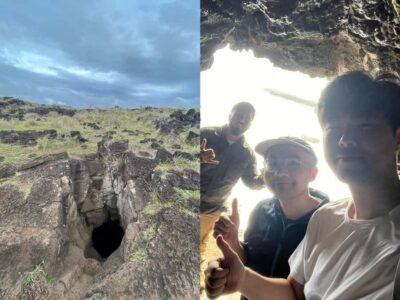
Private Tour: The Underground World of Rapa Nui Caves
Read our review →
Browse the lists this tour appears in