
Reviewed · EASTER ISLAND MOAI TOURS
Easter Island: The Moai Trail Private Archeological Tour
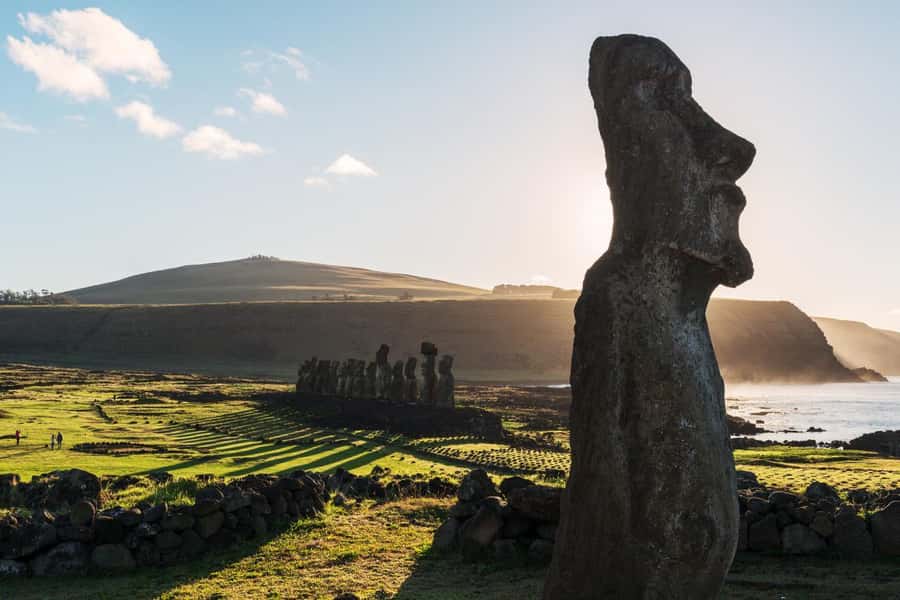
Easter Island’s moai are impressive anywhere, but Rano Raraku Quarry is where the story becomes startlingly clear. Here you walk among roughly 400 statues in different stages of carving, with some still attached to the volcanic rock. It is the closest you get to seeing how this famous tradition actually worked.
I like two things right away: the private vehicle and hotel pickup make a full day around Rapa Nui simple, and the route combines major ceremonial sites with Anakena Beach. I also like that the guides, including Sol, Isa, Hugo, Miguel, and Yoyo, are praised for adding cultural context, humor, and links between the island’s past and present.
The main caution is timing. The advertised duration is six hours, but the listed stop times add up to seven and a half hours. The $200 price also excludes the $80 entrance fee, so your real cost is about $280 per person before food and drinks. Confirm the day’s schedule before booking.
In This Review
- Key points to know before booking
- Why Rano Raraku makes this tour special
- Ahu Akahanga and the story of fallen moai
- Ahu Tongariki and the island’s grandest row of statues
- Te Pito Kura and the navel of the world
- Anakena Beach, moai, and the island’s founding story
- What the guide adds to a private day
- Is $280 per person a fair value?
- Who should book this experience?
- Weather, clothing, and practical preparation
- Should you book the Moai Trail Private Archaeological Tour?
- FAQ
- Where does the tour begin and end?
- How long does the tour last?
- What sites are included?
- Is the entrance fee included?
- What languages are available?
- Is this a private tour?
- Can cruise ship passengers or wheelchair users join?
Key points to know before booking
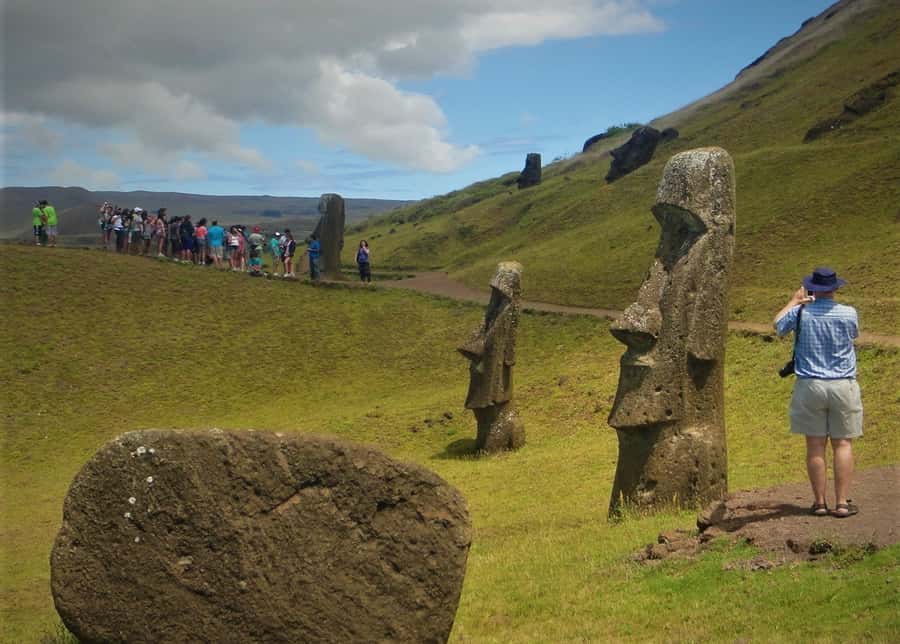
- Rano Raraku is the heart of the day: Walk among about 400 moai at the volcanic quarry where the statues were carved.
- Ahu Tongariki has 15 moai: This is the island’s largest ahu, or ceremonial platform, and its broad row of statues is the tour’s grandest sight.
- The route includes Anakena Beach: Ancient ceremonial remains meet white sand and a setting linked to the arrival of Ariki Hotu Matua and Avareipua.
- Private touring adds flexibility: You travel with your own group, guide, and vehicle instead of joining a large bus.
- The cultural explanation is a major part of the value: Guides such as Sol and Hugo are noted for storytelling, humor, and discussion of Rapa Nui life today.
- It is a walking tour at important sites: Comfortable shoes and warm clothing matter, and the experience is not suitable for wheelchair users or people with mobility impairments.
Why Rano Raraku makes this tour special
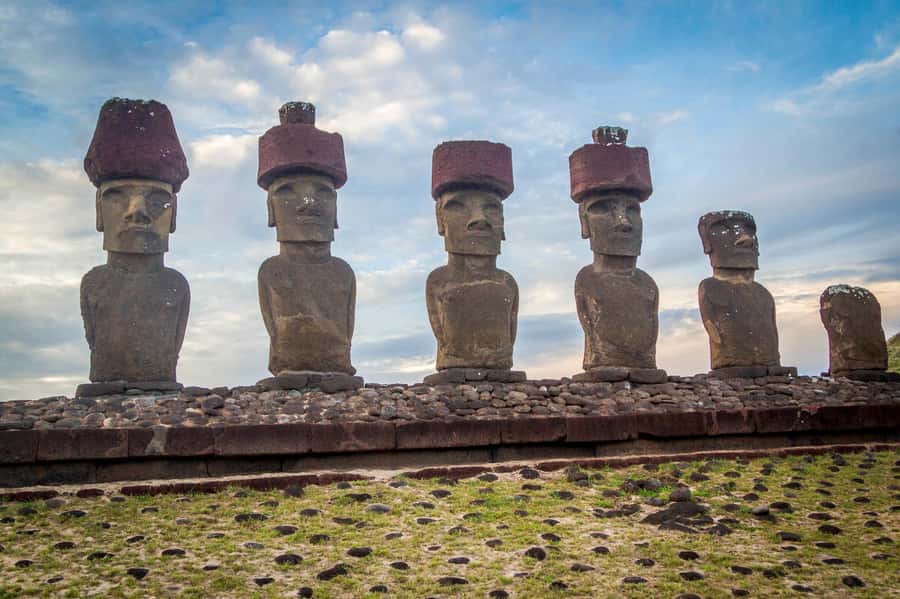
Many visitors first picture a single line of moai facing the sea. Rano Raraku gives you something more revealing: a hillside and quarry filled with statues at many points in the carving process.
You can see completed figures, unfinished forms, and moai that remain part of the volcanic slope. That changes your understanding of the statues. They were not simply placed in the ground as mysterious stone heads. They were shaped from volcanic rock, prepared for movement, and tied to a much larger ceremonial system.
The tour allows 3.5 hours at Rano Raraku, the longest stop of the day. That is useful because this is not a quick photo stop. You have time to walk, listen, look closely at the stonework, and consider how a community could organize such a demanding task.
Your guide’s role matters here. A good explanation helps you separate documented archaeology from island tradition and later speculation. Hugo, one of the guides associated with this experience, is especially noted for giving historical background alongside wider cultural discussion, including the relationship between Rapa Nui and Japan and the way outside cultural studies have viewed the island.
The walking can be uneven and tiring. If you have limited mobility, this is the stop that deserves the most thought before booking.
More easter island moai tours in Hanga Roa:
- From Hanga Roa: Rapa Nui Culture Sightseeing Tour
★ 4.6 · 307 reviews - From Hanga Roa: Journey from Orongo to Ana Te Pahu
★ 4.3 · 75 reviews - Two days of Full Day Tour of Rapa Nui + Sunrise in Tongariki
★ 4.8 · 55 reviews
Ahu Akahanga and the story of fallen moai
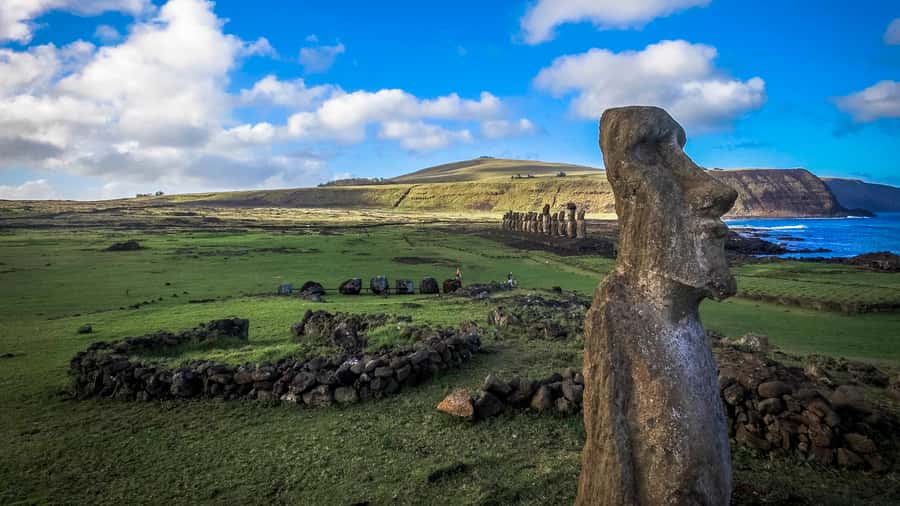
The first major stop is Ahu Akahanga, a ceremonial center near the village of Akahanga. The visit lasts about 30 minutes, so expect a focused introduction rather than a long walk through the site.
Here you see moai that were knocked down during periods of tribal conflict. Their fallen position is part of the site’s story, but the scene is not just about warfare. You also see the remains of hare paenga, boat-shaped stone houses used by the island’s ancient inhabitants.
This is a good early stop because it gives your guide a chance to explain how an ahu functioned and how the moai related to community identity and ceremony. The stones of the house foundations also help you picture ordinary settlement life, not just the monumental statues.
Akahanga is less polished and less immediately dramatic than Tongariki. That is part of its value. You are looking at ruins and fallen figures in a setting that can feel more raw, rather than at a carefully reconstructed display.
Ahu Tongariki and the island’s grandest row of statues
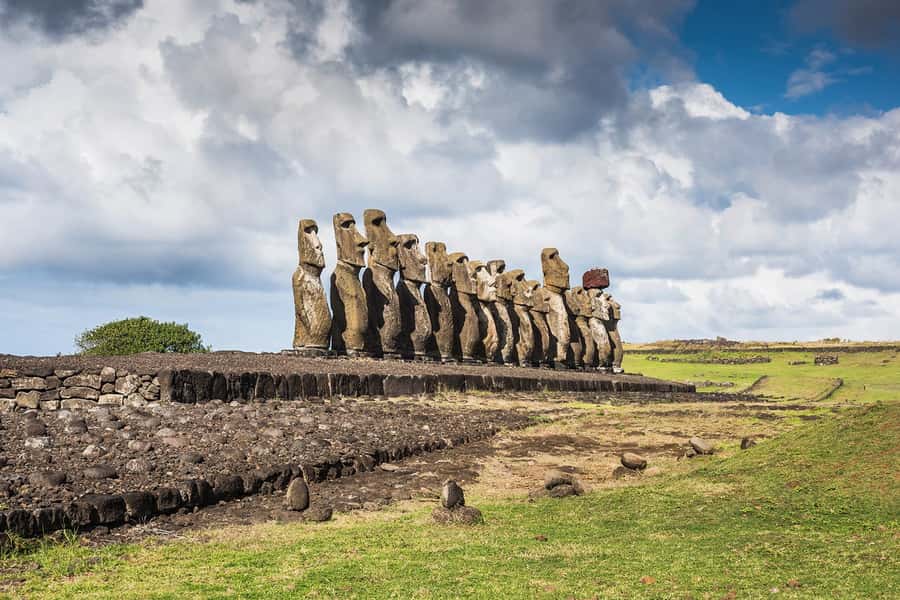
Ahu Tongariki is the largest ahu on Rapa Nui and carries 15 moai. The platform is the visual centerpiece of the route, with the statues arranged across a broad ceremonial setting.
Give yourself time to look at the figures individually. They are not identical, and their scale becomes clearer when you notice people near the platform. The group also shows how much the meaning of a moai comes from its relationship to the ahu and the wider setting, not from the statue alone.
The planned visit is listed as two hours, although the overall timing deserves confirmation because it conflicts with the stated six-hour tour length. If the schedule is compressed, ask how much time you will actually have at Tongariki and Rano Raraku. Those are the two stops where rushing would cost you most.
Tongariki is also where the private format may be useful. Your guide can focus on your questions and help you understand what you are seeing, rather than delivering a fixed speech to a large mixed group. The private setting does not guarantee unlimited time, but it gives the day a more personal feel.
Te Pito Kura and the navel of the world
Ahu Te Pito Kura is a shorter stop, planned for about 30 minutes, but it packs in several distinctive details. The site includes Paro, described as the tallest statue on the island, along with a large spherical stone beside the ahu.
That stone is linked to the name Te Pito o Te Henua, often translated as the navel of the world. According to Rapa Nui tradition, it was brought to the island on the boat of Hotu Matua. Your guide can help place this story alongside the archaeological remains without treating legend and physical evidence as the same thing.
This is the kind of stop that rewards a few quiet minutes. The sphere is unusual enough to attract attention, but its importance comes from the meaning attached to it. Rapa Nui culture is not only a collection of old stones. It includes stories, ancestry, place names, and ideas that still shape how the island is understood.
Because the stop is brief, it is worth asking your guide to point out the highest-priority details as soon as you arrive.
A few more Hanga Roa trips to weigh up
- Sunrise Tongariki: Sunrise at Tongariki Park Private Tour
★ 4.5 · 47 reviews - Private Santiago City Half Day Tour
★ 4.0 · 414 reviews - Private Transfer from Santiago Airport to Santiago
★ 4.0 · 330 reviews - Private Tour: Viña del Mar and Valparaíso Tour with Wine Tasting in Casablanca Valley
★ 4.5 · 188 reviews
Anakena Beach, moai, and the island’s founding story
The route ends at Anakena, a white sand beach connected with the arrival of Ariki Hotu Matua and his sister Avareipua. After a day of volcanic stone and open archaeological sites, the beach offers a welcome change of setting.
Anakena is not simply a scenic finish. You also visit Ahu Nau Nau, an ancient complex with five moai. Several have pukao, the red stone topknots placed on the heads of some statues. Petroglyphs appear on the backs of the figures, giving you small details to look for rather than another distant row of stone shapes.
The planned time here is 1.5 hours. Food and drinks are not included, so ask in advance how the stop fits your meal plans. The supplied details do not promise a meal or beach facilities as part of the tour, so bring what you need within the operator’s guidance.
Anakena works well as the final stop because it joins natural beauty with a major cultural site. You get the beach, the founding story, and the chance to see moai with pukao in one place. Bring warm clothing even if the beach sounds tropical. The tour specifically advises warm layers, and weather on an exposed island can change quickly.
What the guide adds to a private day
The strongest part of this experience is not just transportation between famous sites. It is the chance to have a guide explain how the sites connect.
The guide language is English or Spanish. Names associated with the experience include Sol, Isa, Hugo, Miguel, and Yoyo. Sol is praised for clear, engaging storytelling and punctual service. Hugo is noted for combining detailed history with humor, cultural comparison, and discussion of lifestyles that remain relevant today. Yoyo is described as friendly, funny, and generous with useful information.
Those details matter because Rapa Nui is easy to reduce to a collection of puzzles about giant statues. A strong guide gives you a fuller picture: ceremonial platforms, house foundations, tribal conflict, quarry work, oral tradition, and the concerns of people living on the island now.
The private group format is best for people who want to ask questions. You can spend more time on the points that interest you, though the actual flexibility will depend on the day’s schedule and the guide.
Is $280 per person a fair value?
The listed tour price is $200 per person, but the entrance fee is another $80. That puts the known total at approximately $280 per person, excluding food and drinks.
That is a serious price for a six-hour private outing. The value improves if you are traveling with people who want a dedicated vehicle and guide, or if you place a high value on detailed interpretation. Hotel pickup and drop-off also remove the hassle of arranging transport around Hanga Roa.
The price is harder to justify if you mainly want quick photographs at the main platforms. In that case, the private format and guide may offer more than you need. But for first-time visitors who want the major archaeological sites covered in one day, the route is efficient and well chosen.
There is one important practical issue: the listed stop durations total about 7.5 hours when added together:
- Akahanga: 30 minutes
- Rano Raraku: 3.5 hours
- Tongariki: 2 hours
- Te Pito Kura: 30 minutes
- Anakena: 1.5 hours
That does not include driving time from Hanga Roa. Ask the operator to clarify whether the six-hour figure is rounded, whether some stop times are estimates, or whether the route can run longer. This is especially important if you have evening plans or a fixed departure.
Who should book this experience?
I would recommend it to a first-time visitor staying in Hanga Roa who wants the major moai sites explained in one private outing. It suits couples, families with older children, and small groups that prefer a personal guide over a large coach.
It is also a good match for people who care about cultural context. The best moments are not limited to the biggest statues. Akahanga’s house foundations, Te Pito Kura’s traditional story, and the carvings at Ahu Nau Nau all reward careful explanation.
You should think twice if walking is difficult. The experience is not suitable for people with mobility impairments or wheelchair users, and the day includes substantial time at an outdoor quarry. Comfortable shoes are essential.
Cruise ship passengers cannot join this tour. Pickup is provided from your hotel in Hanga Roa, so it is designed for people based on the island rather than for a short port call.
Weather, clothing, and practical preparation
Wear comfortable shoes and bring warm clothing. The route includes open archaeological sites, a quarry, ceremonial platforms, and a beach, so you should be prepared for changing conditions and uneven ground.
Rain does not necessarily ruin the day. One participant still found the experience worthwhile in pouring rain, but wet weather will make walking less comfortable and may affect how long you want to spend outdoors. A warm layer is a sensible choice even for a beach stop.
Pack food or arrange your meal plans because food and drinks are not included. The supplied details do not specify a restaurant stop, so do not assume lunch is part of the outing.
Hotel pickup and drop-off in Hanga Roa are included. Transportation is by private vehicle, and the group is private. You should confirm the pickup time and the actual expected length before the day begins.
Free cancellation is available up to 24 hours before departure for a full refund. You can also reserve and pay later, which helps if your island plans depend on weather or other arrangements.
Should you book the Moai Trail Private Archaeological Tour?
Book it if you want a focused introduction to Rapa Nui’s major moai sites, with a private guide who can explain both archaeology and living culture. Rano Raraku alone makes the route worthwhile, while Tongariki, Te Pito Kura, and Anakena give you a strong range of settings and stories.
The main reasons to pause are the added $80 entrance fee, the lack of included food, the walking demands, and the unclear six-hour versus 7.5-hour timing. Confirm that schedule before paying.
If those points work for you, this is a strong choice for seeing the island’s essential archaeological sites without giving up personal attention. It offers more than a statue checklist, especially when your guide brings the kind of storytelling and cultural perspective associated with Sol, Hugo, Miguel, Isa, or Yoyo.
FAQ
Where does the tour begin and end?
The tour includes pickup from and drop-off at your hotel in Hanga Roa.
How long does the tour last?
The activity is advertised as six hours. The listed stop times add up to about 7.5 hours before driving time, so confirm the exact schedule with the operator.
What sites are included?
The route includes Ahu Akahanga, Rano Raraku Quarry, Ahu Tongariki, Ahu Te Pito Kura, Anakena Beach, and Ahu Nau Nau.
Is the entrance fee included?
No. The entrance fee is listed as $80 per person and is paid separately from the $200 tour price.
What languages are available?
The live guide is available in English or Spanish.
Is this a private tour?
Yes. Transportation is provided in a private vehicle, and the activity is for a private group.
Can cruise ship passengers or wheelchair users join?
No. The activity is not available to cruise ship passengers and is not suitable for wheelchair users or people with mobility impairments.
Just added around Hanga Roa
- Volcanic Refuges: Excursion to Underground Civilization★ 4.7 · 8 reviews
- Sunrise Tongariki: Sunrise at Tongariki Park Private Tour★ 4.5 · 47 reviews
- Rapa Nui: Polynesian Massage★ 4.8 · 5 reviews
- Rapa Nui Highlights Program: 3 incredible tours to discover!★ 4.8 · 18 reviews
- Rapa Nui: 3 Excursions with Hotel Transfers★ 4.3 · 6 reviews
- Ahu Vinapu, Rano Kao and Orongo City Half-Day Tour★ 4.6 · 20 reviews
- Hanga Roa: Full Day Moai and Mistery★ 4.4 · 22 reviews
- Easter Island: Tropical Diving★ 4.8 · 13 reviews
Easter Island Moai Tours, compared.

Two days of Full Day Tour of Rapa Nui + Sunrise in Tongariki
Read our review →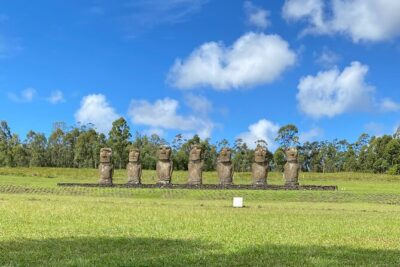
Adventures in Rapa Nui: High-quality tourism with Easter Island Your Tour.
Read our review →
Private Tour: The Underground World of Rapa Nui Caves
Read our review →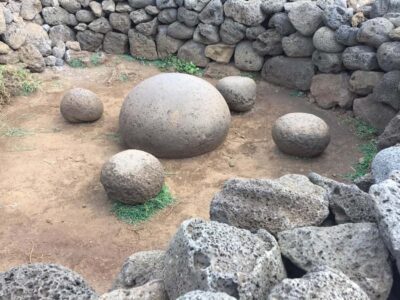
Browse the lists this tour appears in