
Reviewed · EASTER ISLAND MOAI TOURS
Private Tour: The Underground World of Rapa Nui Caves
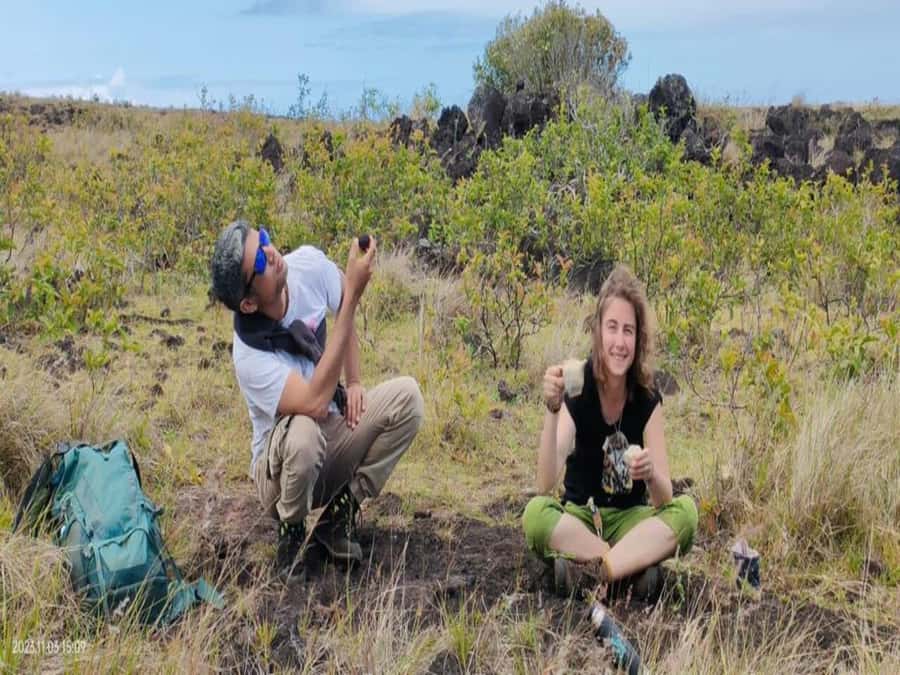
Rapa Nui’s most surprising sights are often below ground. This private tour takes you into Ana Kakenga, Ana Te Pora, and Ana Te Pahu, where old lava tubes open into shadowy chambers and the island’s volcanic past becomes something you can see and feel.
I like the native guide and the small private setting, which make it easier to ask about Rapa Nui beliefs, cave use, and moai culture. I also like the mix of quiet coastal walking, dramatic views, and underground exploration. The catch is simple: some cave entrances are small, and you may need to crawl inside. The National Park ticket is also not included.
In This Review
- Key points at a glance
- Why Rapa Nui’s caves are worth your time
- Ana Kakenga, your first look underground
- Ana Te Pora and the power of light
- Ahu Te Peu brings the moai into focus
- Ana Te Pahu and the final underground stop
- Coastal cliffs and open-air breathing room
- What the private format adds
- What is included for $150 per person
- Who will enjoy this tour most
- Timing, cancellation, and what to pack
- Should you book the Rapa Nui cave tour?
- FAQ
- How long is the Rapa Nui cave tour?
- What caves are visited?
- Is a moai site included?
- Is the tour private?
- What languages does the guide speak?
- Is transportation included?
- Are lanterns provided?
- Is the National Park ticket included?
- What should I bring?
- Can I cancel for a full refund?
Key points at a glance
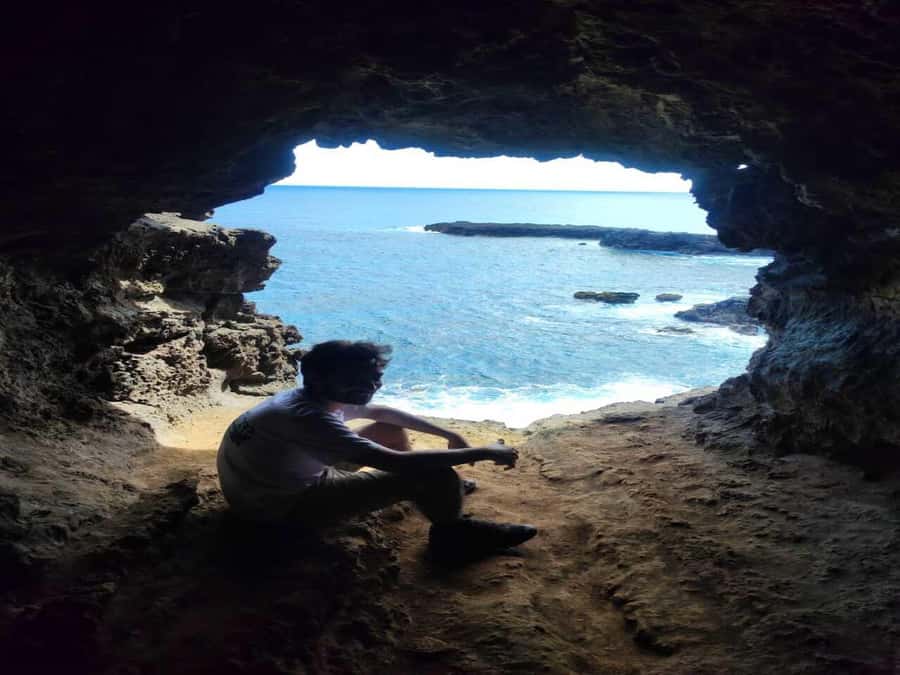
- Three lava caves: Ana Kakenga, Ana Te Pora, and Ana Te Pahu each offer a different underground setting.
- A moai site included: Ahu Te Peu adds cultural weight to a tour that could otherwise feel mostly geological.
- Peaceful coastal walking: The route includes cliffside scenery and open views along the Rapa Nui coast.
- Private native guide: You receive live commentary in English or Spanish without a large group around you.
- Half-day timing: The five-hour format leaves room for other island plans, but the pace is not suited to a rushed schedule.
- Practical gear provided: Transportation, lanterns, pickup, drop-off, and a rain cape are included.
Why Rapa Nui’s caves are worth your time
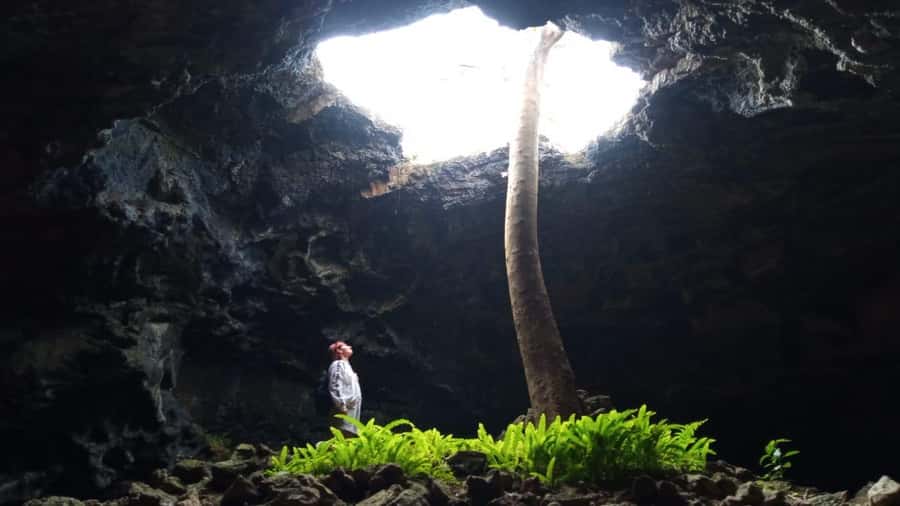
Most people come to Rapa Nui for the moai. That makes sense, but the island’s caves add another layer to the story. The statues sit in open ceremonial spaces, while the caves reveal the volcanic ground beneath them. You move from wide ocean views to tight passages, from bright grass-covered slopes to cool darkness.
I like this change of scale. A moai site can feel grand and formal. A lava tube feels close and physical. You see the rough walls, watch a lantern pick out the rock, and pay attention to your footing. The island stops being only a place of famous monuments and becomes a place shaped by fire, stone, weather, and human use.
This is also a good choice if you want an experience away from the busiest sightseeing pattern. The route combines walking along the coast with visits to several caves, so you are not spending all five hours in one enclosed space. The coastal sections give you air, light, and time to look outward before the next cave entrance.
More easter island moai tours in Easter Island:
- From Hanga Roa: Rapa Nui Culture Sightseeing Tour
★ 4.6 · 307 reviews - From Hanga Roa: Journey from Orongo to Ana Te Pahu
★ 4.3 · 75 reviews - Rapa Nui Stargazing
★ 4.5 · 62 reviews
Ana Kakenga, your first look underground
Ana Kakenga introduces the basic character of the tour: old volcanic rock, narrow access, and a sudden shift from open scenery to darkness. The cave was formed by ancient volcanic activity, as were the other lava tubes on the route. Inside, natural formations show how flowing lava once shaped the island.
You receive a lantern for the cave visits, which matters more than it may sound. Natural light can reach some openings, but the interior changes quickly as you move away from the entrance. A lantern lets you see the walls and the uneven surfaces without relying only on a phone light.
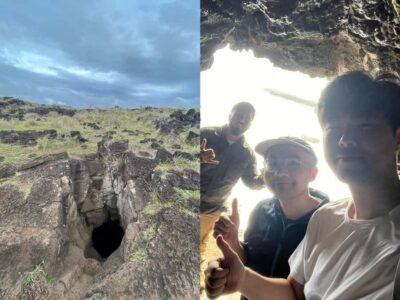
The entrance may be small. One recent experience specifically noted that some entrances required crawling, so you should not expect a simple walk-in cavern with a high ceiling and smooth floor. Comfortable clothes and sturdy, comfortable shoes are the right choice. Sunscreen still belongs in your day bag because the walk between caves and along the coast is exposed.
Ana Kakenga is a strong opening stop because it gives you a clear sense of what makes Rapa Nui’s caves different from a standard sightseeing attraction. This is not a polished show cave. The appeal comes from the raw setting and the feeling of finding your way through volcanic space with a guide.
Ana Te Pora and the power of light
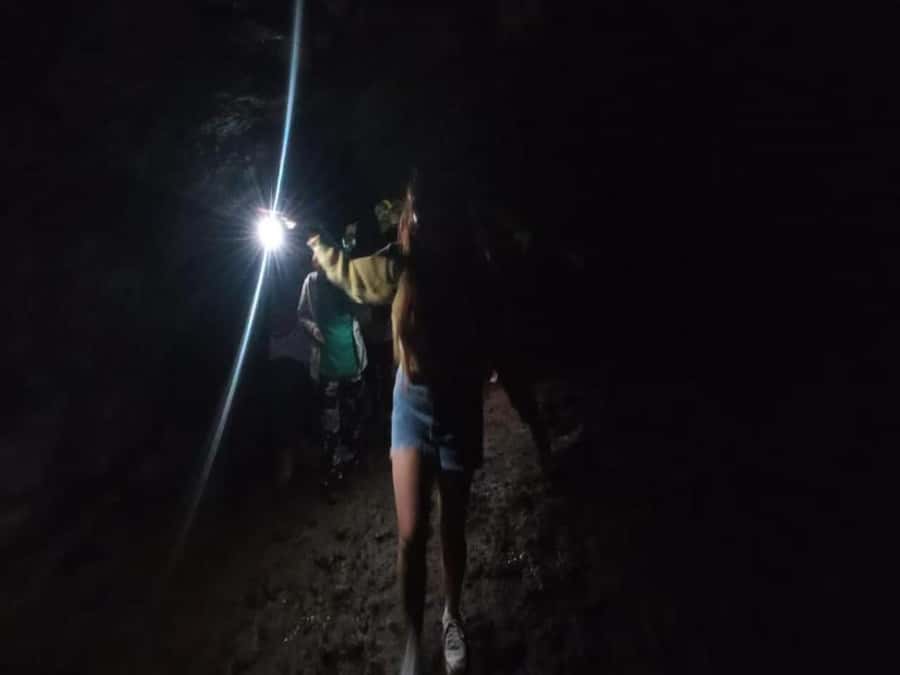
Ana Te Pora continues the underground portion of the route. Here, the play between light and shadow becomes a central part of the experience. The cave’s mood changes as the lantern moves across the rock, and the natural acoustics make the interior feel separate from the world outside.
Your guide provides cultural context alongside the geology. That is important because a cave can otherwise become just another unusual rock formation. The guide connects the site with Rapa Nui beliefs and past practices, helping you understand that these spaces are part of the island’s cultural story, not simply holes in the ground.
I would pay close attention during this section. The value of a private tour is not only having transport or avoiding a large group. It is the chance to stop and ask questions when a detail catches your interest. If you want to know how the island’s volcanic terrain shaped daily life or why certain places carry spiritual importance, a private format gives you room to ask.
The cave experience is not designed for everyone. If you dislike tight spaces, uneven ground, or crawling through a narrow entrance, you may find this stop uncomfortable. The description does not provide an accessibility rating, so you should treat the route as an active outing rather than an easy paved walk.
Ahu Te Peu brings the moai into focus
Ahu Te Peu changes the mood again. This sacred site features the remains of a ceremonial platform and moai statues, giving you a direct link to the island’s best-known cultural tradition.
The stop is valuable because it keeps the caves from feeling disconnected from Rapa Nui history. Your guide explains the craftsmanship behind the colossal stone figures and the ceremonies associated with the platform. You get the chance to think about how the island’s people worked with stone above ground, then compare that monumental work with the volcanic spaces below it.
I like the contrast. The caves are intimate and dark. Ahu Te Peu is open, monumental, and tied to public ritual. The tour uses both settings to show different sides of Rapa Nui culture.
Do not expect the moai stop to replace a full archaeological tour of the island. The experience lasts five hours and includes several separate sites, so each stop has a limited amount of time. Still, Ahu Te Peu adds needed context and makes the half-day route feel more balanced.
A few more Easter Island trips to weigh up
- Sunrise Tongariki: Sunrise at Tongariki Park Private Tour
★ 4.5 · 47 reviews - Private tour: where the history of the Moai was born
★ 4.7 · 13 reviews - Easter Island: Private Full Day History Of The Moai
★ 4.6 · 12 reviews - Easter Island: The Moai Trail Private Archeological Tour
★ 4.9 · 12 reviews
Ana Te Pahu and the final underground stop
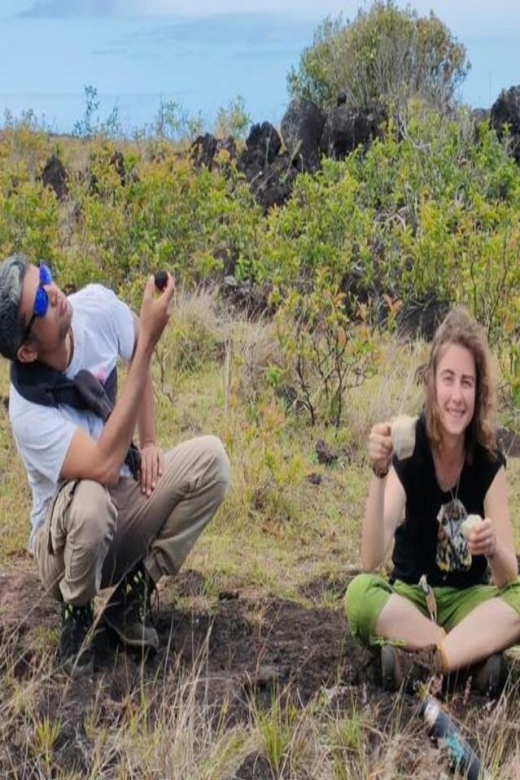
Ana Te Pahu is the last cave on the route and carries its own historical meaning. The guide shares stories about Rapa Nui’s past while you explore the interior, and the cave’s natural acoustics add a sensory element to the visit.
Sound behaves differently underground. Voices can carry, soften, or bounce off the rock in ways that make the cave feel larger than it is. That does not turn the stop into a staged performance. It simply gives you another way to notice the space.
By this point, the sequence of caves also becomes clearer. You have seen different entrances, different patterns of light, and different relationships between the underground rooms and the coast above. The final stop works best if you take your time and let the guide connect the physical site with local folklore and cultural memory.
The tour description does not specify the exact order or amount of time spent at each cave, so your day may vary with conditions and timing. The five-hour duration is the firm guide. Plan on a full half-day, not a quick add-on between two tightly scheduled activities.
Coastal cliffs and open-air breathing room
The walking between caves is part of the experience, not just a way to get from one entrance to the next. The route includes coastal cliffs and broad ocean views, giving you a chance to see how the volcanic terrain meets the sea.
One especially appealing feature is the calm pace along the coast. This is not presented as a high-speed adventure. It is a guided walk with quiet stretches, scenic pauses, and underground sections that require more attention. You get a useful rhythm: walk, look, listen, enter a cave, then return to the open air.
Bring sunscreen and comfortable clothing. The tour provides a rain cape, which is useful in changeable weather, but it does not remove the need to dress sensibly. Shoes matter most. You may be walking over uneven ground and entering spaces where crawling is possible.
The coastal views also make this a good option for anyone who wants more than archaeology. You are not confined to ceremonial sites or museum-style interpretation. The setting itself is part of the story.
What the private format adds
This is a private group experience with a live guide in English or Spanish. No guide name is provided in the tour information, but the guide is described as native to Rapa Nui. That local connection is a major reason to consider this experience.
A private tour gives you a more personal exchange than a standard group outing. You can ask for clarification, spend longer at a point that interests you, or request more explanation about folklore and ritual. The exact flexibility is not specified, so do not assume the itinerary can be completely redesigned. Still, the private format should feel less rigid than a large scheduled group.
The guide also handles the cultural bridge between the sites. Without that explanation, Ana Kakenga and Ana Te Pahu could blur together as volcanic caves. With context, you can place the caves alongside Ahu Te Peu, the moai, and the wider story of Rapa Nui.
The language choice is straightforward. English and Spanish are available. If you need another language, this experience does not list it.
What is included for $150 per person
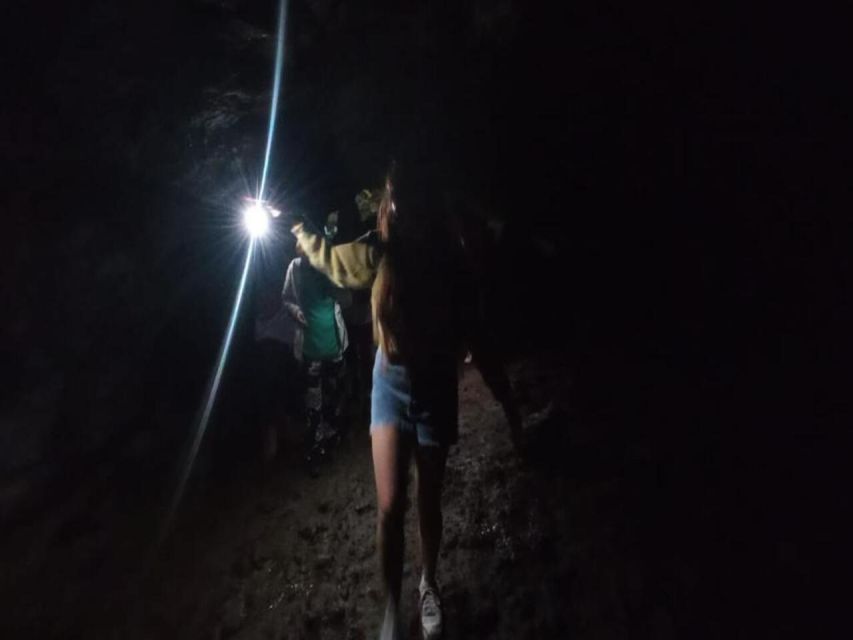
The price is $150 per person. That is not a budget walk, but the value depends on how much you want from the format.
You receive:
- A private group experience
- A native guide
- Transportation
- Pickup and drop-off
- Lanterns for the cave visits
- A rain cape
The private guide and transportation are the biggest value points. You are paying for an arranged half-day outing rather than simply entering a cave on your own. The lanterns are also practical, since the underground sections are a central part of the route.
The National Park ticket is not included. Add that cost to your budget before booking. Since the price is per person, the tour may make more financial sense if you are traveling with several people who can share the private experience. For one person or a very small party, the personal attention may be worth it, but the cost per person feels higher.
The overall rating is 4.2 from 23 reviews, which suggests a generally strong experience with some room for variation. The most consistent strengths are the unusual caves, peaceful coast, off-the-main-route feeling, and island information. The main practical warning is the physical nature of the entrances.
Who will enjoy this tour most
I would recommend this tour to you if you want to combine several sides of Rapa Nui in one half-day:
- You enjoy geology and volcanic formations.
- You want a native guide rather than a self-guided visit.
- You like quiet coastal walks.
- You are curious about moai culture and ceremonial sites.
- You can manage uneven ground and possibly crawl through small entrances.
- You prefer a private group to a larger scheduled outing.
It is less suitable if you want a completely easy walk, dislike enclosed spaces, or have a strict accessibility requirement. The supplied details do not confirm step-free access, entrance dimensions, or accommodations for limited mobility, so ask the provider before paying if those points matter to you.
It is also not the right pick if you want an entire day devoted to moai sites. Ahu Te Peu is included, but the focus is clearly the combination of caves, coast, geology, and cultural interpretation.
Timing, cancellation, and what to pack
The experience lasts five hours, with starting times available according to the date you select. That makes it easy to fit into a wider Rapa Nui schedule, but leave breathing room around it. Cave visits and coastal walking are better enjoyed without watching the clock every few minutes.
Pickup and drop-off are included, which simplifies the day. Transportation also matters on an island where several points of interest may be spread apart. The tour does not specify a meeting point in the information provided.
Wear comfortable clothes and shoes, and bring sunscreen. A rain cape and lanterns are supplied. I would keep valuables to a minimum and avoid clothing that restricts movement, since at least some entrances may require crawling.
You can cancel up to 24 hours in advance for a full refund. The reserve-now, pay-later option also gives you flexibility if your island plans are still taking shape.
Should you book the Rapa Nui cave tour?
Book it if you want to see a less obvious side of Rapa Nui and you are comfortable with a bit of physical effort. The strongest reasons are the native guide, private setting, three caves, coastal views, and the smart inclusion of Ahu Te Peu.
The tour offers good value for someone who wants several experiences in one five-hour outing. You get geology, folklore, moai culture, and quiet walking instead of a single isolated attraction. Just budget separately for the National Park ticket and be ready for tight entrances.
If your priority is comfort and easy access, choose something less demanding. If you want a memorable half-day that takes you below the island’s surface, this is a strong choice.
FAQ
How long is the Rapa Nui cave tour?
The tour lasts five hours, making it a half-day experience.
What caves are visited?
The route includes Ana Kakenga, Ana Te Pora, and Ana Te Pahu.
Is a moai site included?
Yes. The tour visits Ahu Te Peu, a sacred site with an ancient ceremonial platform and moai statues.
Is the tour private?
Yes. It is offered for a private group.
What languages does the guide speak?
Live guiding is available in English and Spanish.
Is transportation included?
Yes. Transportation, pickup, and drop-off are included.
Are lanterns provided?
Yes. Lanterns are included for the cave visits.
Is the National Park ticket included?
No. The National Park ticket is an additional cost.
What should I bring?
Bring comfortable shoes, sunscreen, and comfortable clothes. A rain cape is provided.
Can I cancel for a full refund?
Yes. You can cancel up to 24 hours in advance for a full refund.
Just added around Easter Island
- Volcanic Refuges: Excursion to Underground Civilization★ 4.7 · 8 reviews
- Ride to the highest point on the island for sunset★ 5.0 · 40 reviews
- Half Day Tour in Rapa Nui★ 5.0 · 48 reviews
- Tongariki Sunrise: Half Day Private Tour★ 3.8 · 9 reviews
- Easter Island: Private Full Day History Of The Moai★ 4.6 · 12 reviews
- Terevaka Horse Excursion: The highest point and 360° view.★ 4.7 · 38 reviews
- Sunrise Tongariki: Sunrise at Tongariki Park Private Tour★ 4.5 · 47 reviews
- Rapa Nui: Polynesian Massage★ 4.8 · 5 reviews
Easter Island Moai Tours, compared.

Two days of Full Day Tour of Rapa Nui + Sunrise in Tongariki
Read our review →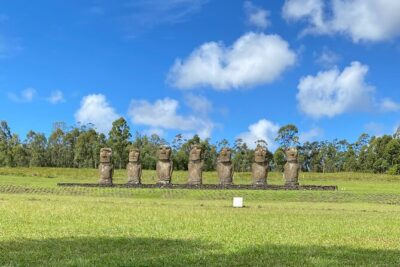
Adventures in Rapa Nui: High-quality tourism with Easter Island Your Tour.
Read our review →
Ahu Vinapu, Rano Kao and Orongo City Half-Day Tour
Read our review →Browse the lists this tour appears in