
Reviewed · EASTER ISLAND MOAI TOURS
Hanga Roa: Full Day Moai and Mistery
The heart of this seven-hour Rapa Nui tour is Rano Raraku, the volcanic quarry where the Moai were carved. You see unfinished figures still attached to the rock, then follow the story to Tongariki, where fifteen restored statues face the Pacific. It is a powerful way to connect the island’s scattered archaeological sites.
I like the broad route, which covers major Moai sites plus the calm sands of Anakena Beach. I also like the chance to have an English or Spanish local guide explain what you are seeing, with past guests praising guides Ene, an archaeologist, and Zoe for their clear teaching and warm hospitality. The main caution is pace: one poor experience included too much time at lesser sites and too little at Tongariki, so the quality of the guide matters.
In This Review
- Key points at a glance
- Why this route works for a first day on Rapa Nui
- Vaihu begins with fallen Moai and coastal silence
- Akahanga shows the cost of a changing society
- Rano Raraku is the tour’s essential stop
- Tongariki delivers the great Moai view
- Pito Kura adds a quieter ceremonial layer
- Anakena Beach ends the day on a gentler note
- The guide can make or break the day
- Is $100 a fair price?
- Who will get the most from this seven-hour tour?
- Practical advice before you book
- Should you book the Moai and Mystery tour?
- FAQ
- Where does the tour begin?
- How long does the tour last?
- What sites are included?
- Is transportation included?
- Is a guide included?
- Which languages are available?
- Is the National Park ticket included?
- How much does the activity cost?
- Is the tour wheelchair accessible?
- Can I cancel for a full refund?
Key points at a glance
- Rano Raraku gives you the clearest look at Moai making, with statues shown at several stages of work.
- Tongariki is the visual high point, home to fifteen restored Moai beside the Pacific.
- The route mixes major and quieter sites, including Vaihu, Akahanga, Pito Kura, and Anakena Beach.
- Native local guiding is central, with live commentary in English or Spanish and past guides including Ene and Zoe.
- The $100 price covers transportation, a driver, and a local guide, but the National Park ticket costs extra.
- A seven-hour schedule covers a lot of ground, so ask how long you will have at Tongariki and the other main stops.
Why this route works for a first day on Rapa Nui
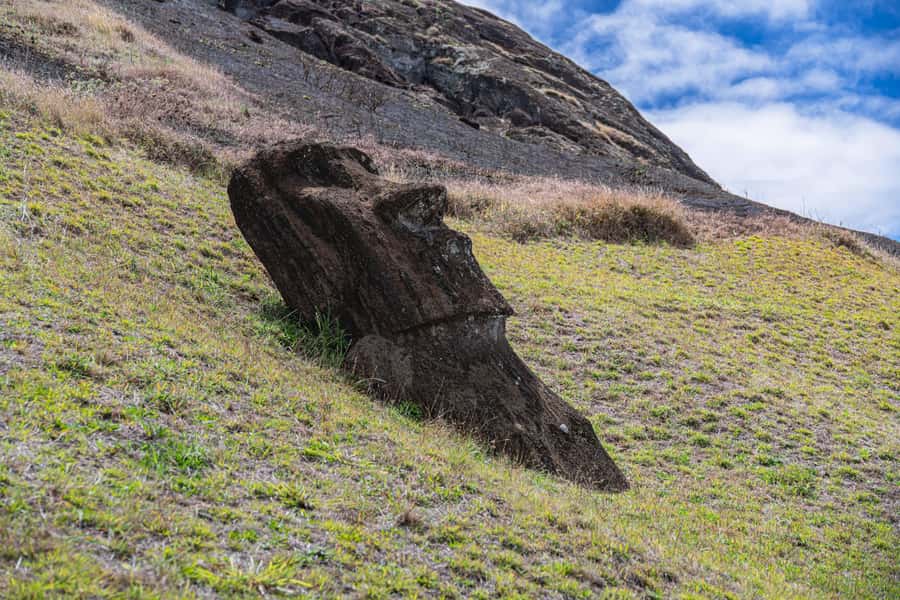
Rapa Nui is not a place where one famous monument tells the whole story. The Moai are spread across the island, and each site gives you a different piece of the puzzle: a coastal platform, a quarry, a ceremonial area, a fallen statue, or a beach tied to the island’s traditional past.
This tour is designed to show you that full arc in one day. You begin with sites connected to fallen or unfinished Moai, reach the great quarry and ceremonial platform, then finish at Anakena. I like that structure because it gives the statues a setting and a history instead of treating them as isolated stone figures.
The route is also useful if your time in Hanga Roa is limited. Seven hours is long enough to reach several major places without asking you to plan separate transport. You get a driver, transportation, and a local guide, all for $100 per person, while the National Park ticket is separate.
The score of 4.4 from 22 ratings suggests a generally strong experience, but not a flawless one. The sharp difference between enthusiastic praise and one very poor account tells you to pay attention to guiding quality and time management rather than assuming every departure will feel identical.
More easter island moai tours in Hanga Roa:
- From Hanga Roa: Rapa Nui Culture Sightseeing Tour
★ 4.6 · 307 reviews - From Hanga Roa: Journey from Orongo to Ana Te Pahu
★ 4.3 · 75 reviews - Two days of Full Day Tour of Rapa Nui + Sunrise in Tongariki
★ 4.8 · 55 reviews
Vaihu begins with fallen Moai and coastal silence
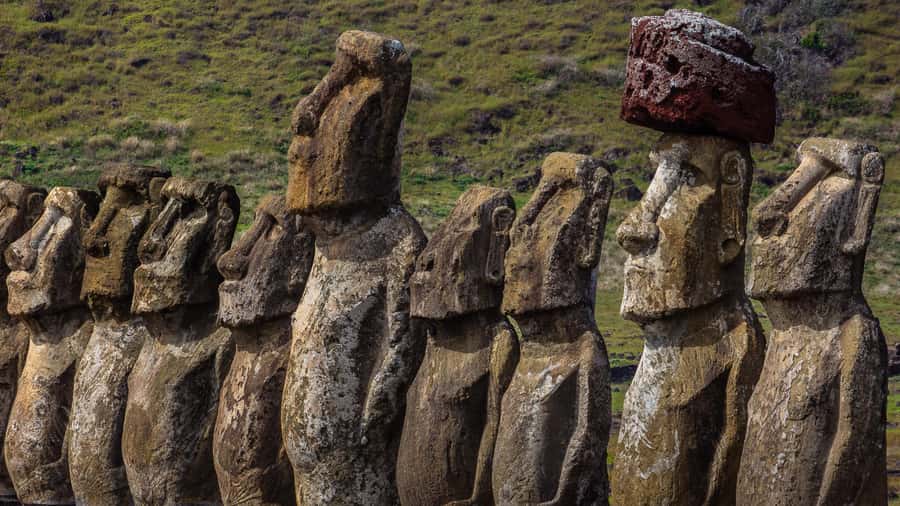
Vaihu is an effective first stop because it introduces the solemn side of Rapa Nui. Ancient Moai lie around the ceremonial area, reminding you that these statues were part of a living culture and not simply giant carvings placed for modern photographs.
Your guide can explain the stones, their purpose, and the traditions connected to them. This is where a good guide earns the fee. Without context, fallen statues can look like a pile of broken rock. With clear explanation, the scene points to changes in Rapa Nui society and the island’s difficult past.
The setting also helps you adjust to the scale of the island. You are not moving through a museum with labels at every turn. You are looking across open ground and coastal space, trying to understand how people shaped and moved objects of enormous size.
Give yourself time to listen here. Vaihu may not have the instant impact of Tongariki, but it sets up the story that the later sites will complete.
Akahanga shows the cost of a changing society
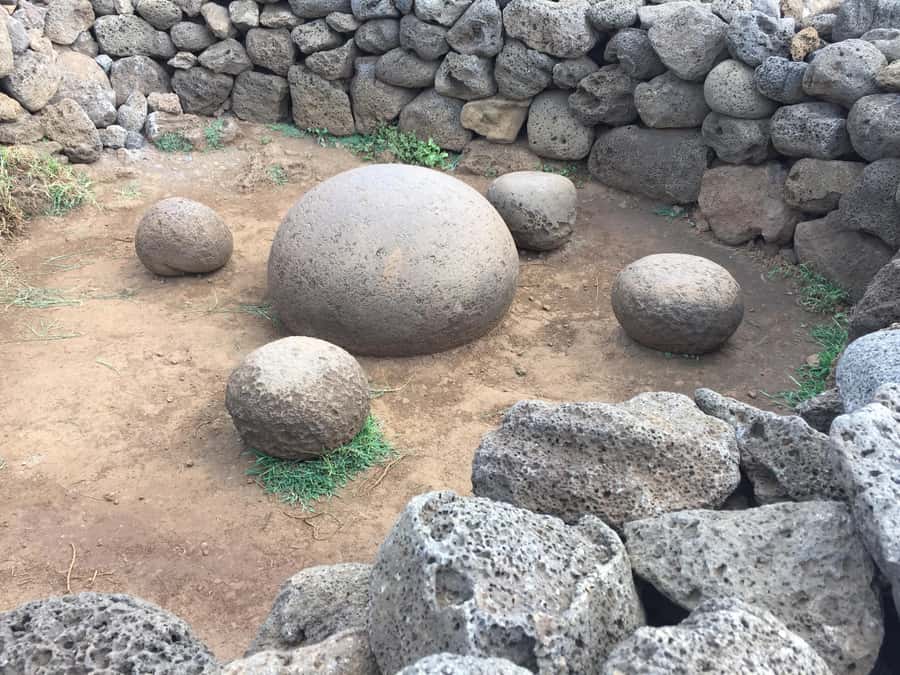
At Akahanga, more fallen Moai and topknots lie scattered across the site. The toppled figures give you a direct sense of how much has been lost, and how much archaeologists and the Rapa Nui community have worked to understand and preserve.
The topknots are especially useful to notice. These red or reddish stone pieces once sat on the heads of some Moai, and seeing them separated from the statues makes the construction process easier to picture. Ask your guide to point out how the topknots relate to the figures nearby.
This stop may feel less polished than the restored platform at Tongariki. That is part of its value. You see the remains in a more disrupted state, rather than a carefully reassembled row. I would treat Akahanga as a place for explanation and close observation, not as the day’s biggest photo stop.
The tour description places Akahanga early in the route, before Rano Raraku. That order makes sense. You first see the result of collapse and change, then later visit the place where the statues began.
Rano Raraku is the tour’s essential stop
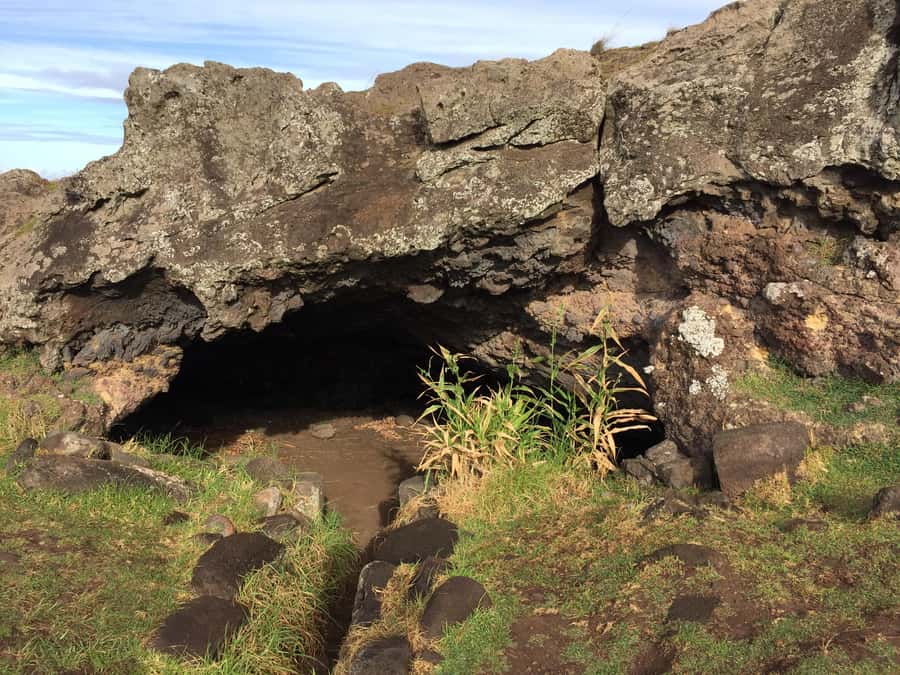
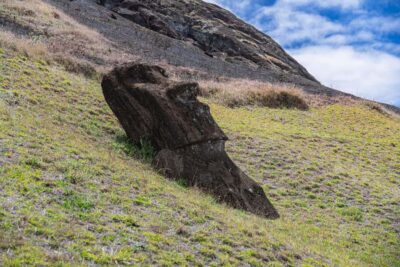
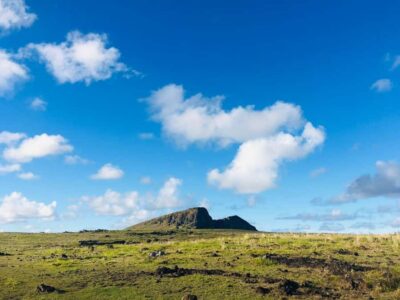
Rano Raraku is the quarry where the Moai were made, and it is the most important place on this route for understanding their creation. The volcanic crater surrounds figures in different conditions, including Moai still attached to the stone from which they were carved.
This is where the tour shifts from mystery to process. You can see that the statues were not produced in a distant workshop and somehow delivered fully finished. They were cut from volcanic rock, shaped on the slope, and prepared for a role in Rapa Nui ceremonial life.
The unfinished figures are the stars here. Some seem to be waiting for the final cuts that would free them from the mountain. Others appear more complete, letting you compare different stages of work. Your guide’s explanation matters because the shapes can be hard to read at first, especially from a distance.
Past guide Ene was praised as an archaeologist with strong command of the subject. You cannot count on having Ene specifically, but that comment shows the level of expertise that can make this stop memorable. If your guide offers technical or cultural details, this is the place to ask questions rather than rush for photographs.
Rano Raraku is also the part of the tour most likely to reward a slower pace. The stone figures blend into the volcanic setting, and you need time to notice them. If the schedule feels tight, I would prefer a careful explanation here over an extra pause at a less important roadside stop.
A few more Hanga Roa trips to weigh up
- Easter Island: Full-Day Tour to Anakena
★ 4.7 · 27 reviews - Small-Group Cajón del Maipo Full-Day Tour and Picnic
★ 4.5 · 2,277 reviews - Piedras Rojas, Altiplanics Lagoons & Salar Full-Day Tour
★ 4.7 · 592 reviews - From El Calafate: Torres del Paine Full Day Tour
★ 4.6 · 434 reviews
Tongariki delivers the great Moai view
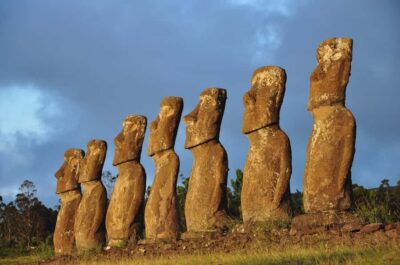
Tongariki is the image many people carry in their heads before arriving on Rapa Nui: fifteen Moai arranged on a ceremonial platform with the Pacific behind them. The scale is striking, and the line of statues gives the site a sense of order after the fallen figures at Vaihu and Akahanga.
This is the tour’s strongest visual moment. Take time to look at the statues as a group, then study their differences in height, shape, and condition. The platform also lets you think about restoration. The present arrangement is not simply untouched ancient stone. It reflects major work to recover and restore a place damaged over time.
One poor experience on this route reported moving too quickly through Tongariki while spending too much time at empty places. That is a fair concern. When you book, ask about the planned time at Tongariki and Rano Raraku. The exact schedule may change, but the guide should understand that these are the stops where most people need room to look, listen, and take photographs.
Do not let the striking view make you forget the cultural meaning of the site. The Moai are not just a row of faces. They are connected to ancestral identity, community power, and the ceremonial life of the Rapa Nui people. A strong guide will explain that connection in plain terms.
Pito Kura adds a quieter ceremonial layer
Pito Kura is less famous than Tongariki, but that can be useful. The site includes a sacred ceremonial village with distinctive features and helps show that Rapa Nui culture was not limited to the large Moai platforms.
Here, your guide can explain the rituals and ceremonies connected to the area. The value comes from seeing how the statues fit into a wider system of sacred places, gathering areas, and traditions.
This is also the stop where expectations matter most. If you want one dramatic view after another, Pito Kura may feel modest. If you want a broader understanding of the island’s spiritual life, it fills an important gap.
The schedule concern applies here too. A well-run day should give you enough time to understand why the site matters, without letting a quieter stop take time away from Tongariki or Rano Raraku.
Anakena Beach ends the day on a gentler note
Anakena changes the mood completely. After hours among volcanic stone and ancient ceremonial sites, you reach golden sand, turquoise water, and coconut palms. It is an appealing final stop because it shows Rapa Nui as a Pacific island, not only as an archaeological destination.
You can use this time to let the day settle. The beach offers a chance to reflect on the Moai and the people who made them, while enjoying a setting that feels far removed from the quarry and ruined platforms.
The tour description does not promise swimming time, a meal, or beach equipment, so do not book it expecting a full beach outing. Anakena is included as the closing setting, and the amount of time available will depend on the day’s pace.
I like the contrast. A tour made up entirely of archaeological sites could become mentally heavy. Ending at Anakena gives you a quieter view of the island and a pleasant finish before returning to Hanga Roa.
The guide can make or break the day
The advertised languages are English and Spanish, and the activity includes a live guide rather than transport alone. That matters on Rapa Nui, where a site’s meaning is not always obvious from what you can see.
Past departures included guides named Ene and Zoe. Ene was praised for archaeological knowledge, while Zoe received warm praise for her care and professionalism. Those are encouraging signs, but guide assignments can change, so you should not assume either person will lead your departure.
The feedback is not uniformly positive. One guest described an unmotivated guide who slept during the drive, hurried through Tongariki, and spent too long at less meaningful places. The same account rated the driver more favorably. I would take this as a practical warning: the driver and guide may be separate roles, and a capable driver does not always guarantee a strong cultural explanation.
At the start of the day, confirm the route and ask which stops receive the most time. If you have one priority, make it clear. Rano Raraku and Tongariki deserve more than a rushed pass, and the guide should be able to explain how the seven hours will be divided.
Is $100 a fair price?
At $100 per person, the value depends on what you compare it with. You are paying for a full day of transportation around a large island, a driver, and a local guide who can interpret several important archaeological sites.
That makes the price reasonable for anyone who does not want to arrange transport or research the sites alone. The route includes six distinct stops, and reaching them independently would require more planning. The local perspective also gives the tour value that a simple vehicle hire would not provide.
The National Park ticket is not included. Add that cost to your budget before booking, since the advertised price is not the complete cost of seeing the protected archaeological areas.
I would not choose this tour only because it is the cheapest option. I would choose it because the route is broad and the transport is handled for you. The good experiences describe strong hospitality, detailed explanations, and a very satisfying day. The bad experience shows that time allocation and guide effort are important parts of the value.
Who will get the most from this seven-hour tour?
This outing suits you if you are visiting Rapa Nui for a short time and want the major Moai sites in one organized day. It also works well if you value cultural explanation and prefer a local guide to driving between unfamiliar archaeological areas.
It is a good match for first-time visitors who want both famous places and quieter ones. Rano Raraku and Tongariki provide the major highlights, while Vaihu, Akahanga, and Pito Kura give the day more substance.
The tour is listed as wheelchair accessible, which is useful information for anyone who needs an accessible option. The exact conditions at each archaeological site are not described, so ask the provider for site-specific details before booking if mobility is a major concern.
You may prefer another arrangement if you want long, unhurried visits at only two or three sites. This route covers a lot, and its strength is breadth. It is less suited to someone who wants to spend most of a day studying one place.
Practical advice before you book
Bring your attention, not just your camera. The best parts of the day are the contrasts: fallen Moai at Akahanga, unfinished statues at Rano Raraku, restored figures at Tongariki, and the open beach at Anakena.
Keep the National Park ticket in mind because it is not part of the $100 price. Also, transportation is provided from Hanga Roa, so make sure your accommodation is within the pickup area described by the operator.
The activity offers free cancellation up to 24 hours before departure and lets you reserve now while paying later. Those terms give you some flexibility, though they do not change the need to confirm the ticket cost and meeting details.
The tour has a 4.4 rating from 22 ratings, which is a solid result with enough variation to deserve a careful read of the practical details. I would book it with realistic expectations: an efficient island overview, not a private, slow-paced archaeological study.
Should you book the Moai and Mystery tour?
I would book this tour if you want a single, well-filled day around Rapa Nui and value having a driver and local guide in place. The sequence from Vaihu to Anakena gives you a useful understanding of the island’s Moai, ceremonial sites, volcanic quarry, and coastal beauty.
Before paying, ask how much time is planned for Tongariki and Rano Raraku, and confirm the separate National Park ticket. If the operator can reassure you that the main sites will not be rushed, the $100 price is fair for the route and transport.
Choose it with caution if guide quality is your top concern. The strongest experiences praise Ene, Zoe, and the tour’s hospitality, while one poor account describes a serious lack of effort. For most first-time visitors with limited time, the coverage makes this a sensible choice, but your enjoyment will depend heavily on the person leading the day.
FAQ
Where does the tour begin?
Pickup transportation is available from Hanga Roa.
How long does the tour last?
The activity lasts seven hours.
What sites are included?
The route includes Vaihu, Akahanga, Rano Raraku, Tongariki, Pito Kura, and Anakena Beach.
Is transportation included?
Yes. Transportation and a driver are included.
Is a guide included?
Yes. A local live guide is included.
Which languages are available?
The live guide is available in English or Spanish.
Is the National Park ticket included?
No. The National Park ticket is not included in the tour price.
How much does the activity cost?
The listed price is $100 per person.
Is the tour wheelchair accessible?
Yes. The activity is listed as wheelchair accessible.
Can I cancel for a full refund?
Yes. You can cancel up to 24 hours in advance for a full refund.
Just added around Hanga Roa
- Volcanic Refuges: Excursion to Underground Civilization★ 4.7 · 8 reviews
- Sunrise Tongariki: Sunrise at Tongariki Park Private Tour★ 4.5 · 47 reviews
- Rapa Nui: Polynesian Massage★ 4.8 · 5 reviews
- Rapa Nui Highlights Program: 3 incredible tours to discover!★ 4.8 · 18 reviews
- Rapa Nui: 3 Excursions with Hotel Transfers★ 4.3 · 6 reviews
- Ahu Vinapu, Rano Kao and Orongo City Half-Day Tour★ 4.6 · 20 reviews
- Easter Island: Tropical Diving★ 4.8 · 13 reviews
- Easter Island: The Moai Trail Private Archeological Tour★ 4.9 · 12 reviews
Easter Island Moai Tours, compared.

Two days of Full Day Tour of Rapa Nui + Sunrise in Tongariki
Read our review →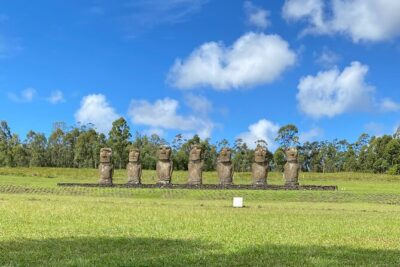
Adventures in Rapa Nui: High-quality tourism with Easter Island Your Tour.
Read our review →
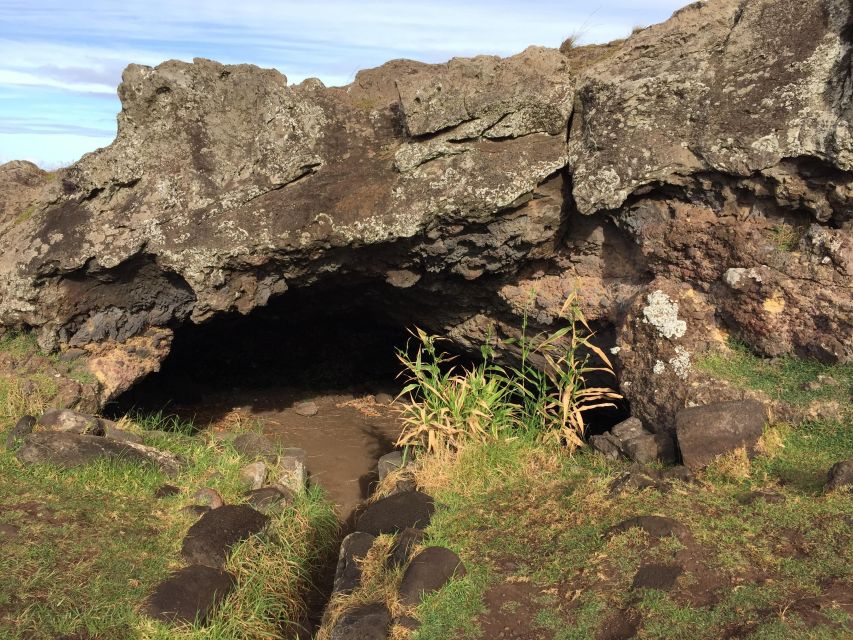
Private Tour: The Underground World of Rapa Nui Caves
Read our review →
Ahu Vinapu, Rano Kao and Orongo City Half-Day Tour
Read our review →Browse the lists this tour appears in