
Reviewed · EASTER ISLAND MOAI TOURS
Rapa Nui Highlights Program: 3 incredible tours to discover!
Rapa Nui’s greatest sights are scattered across a small island, and this two-day program brings them together in a useful sweep. You’ll see moai facing inland and seaward, the crater where they were carved, the ceremonial village of Orongo, and Anakena’s palms and white sand. The best part is the sheer range: Ahu Akivi and Puna Pau explain how the statues and their red stone headdresses were made, while Rano Raraku and Tongariki show the scale of the work.
I like the small-group format, limited to 15 people, and the guides’ clear storytelling. Recent departures have included guides named Jaime and Ugo, and the program can be conducted in English or Spanish. I also like the practical pacing, with stops that include good toilet facilities. The main caution is scheduling: the package lasts two days, but the half-day tours are listed for Monday, Wednesday, and Friday, while the full-day Anakena tour is listed for Tuesday, Thursday, and Saturday. Confirm the exact dates and pickup times before paying.
In This Review
- Key points to know before booking
- Why this two-day plan works on Rapa Nui
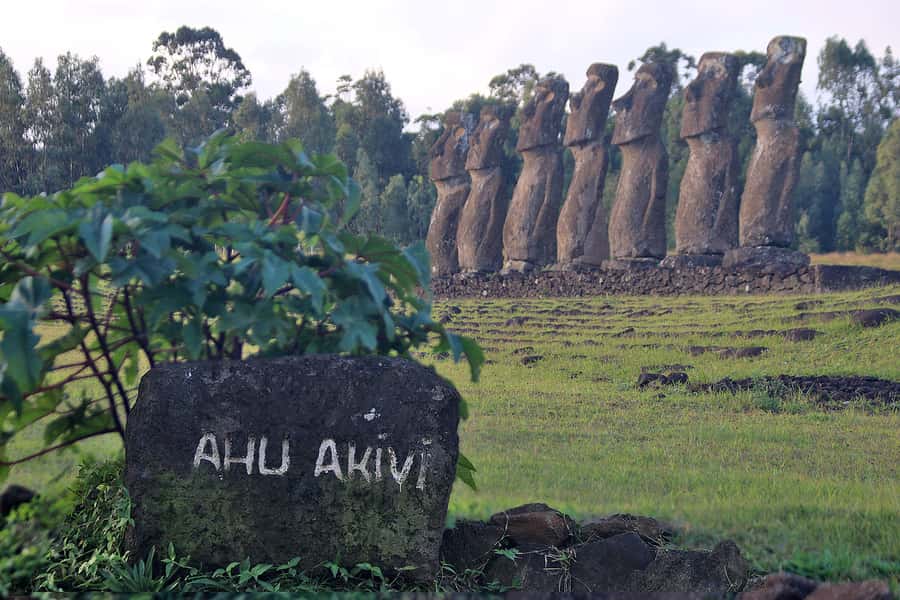
- Ahu Akivi and the seven ocean-facing moai
- Vinapu, Rano Kau, and the Birdman ceremony
- Rano Raraku, the place where the moai began
- Tongariki, Te Pito Kura, and the greatest scale
- Anakena Beach and moai with their backs to the sea
- Guides, group size, and the practical side
- Is $220 a good value?
- Who should book the Rapa Nui Highlights Program?
- My verdict
- FAQ
- How long does the Rapa Nui Highlights Program last?
- What tours are included?
- Which sites are included on the Ahu Akivi tour?
- Which sites are included on the Orongo tour?
- Which sites are included on the full-day Anakena tour?
- Is the National Park ticket included?
- Are food and drinks included?
- What languages are available?
- How large are the groups?
- Is hotel pickup included?
- Can I cancel the tour?
- Who should not book this activity?
Key points to know before booking
- Three major routes in two days: Cover Ahu Akivi, Orongo, Rano Raraku, Tongariki, Te Pito Kura, and Anakena without arranging separate excursions.
- The moai quarry is the centerpiece: Rano Raraku holds 397 unfinished or completed statues on the volcano’s slopes.
- Ahu Tongariki has 15 moai: It gives you one of the island’s strongest views of a restored ceremonial platform.
- Small groups keep the tour manageable: No more than 15 people join each departure.
- The National Park ticket costs extra: Budget for the required admission separately, along with food and drinks.
- Not designed for everyone: The activity is not suitable for wheelchair users, pregnant women, or cruise ship passengers.
Why this two-day plan works on Rapa Nui
Rapa Nui is not a place where one famous monument tells the whole story. The island’s archaeology is spread between volcanoes, coastal platforms, quarry slopes, caves, beaches, and ceremonial sites. If you visit independently, you may see the statues but miss how the pieces fit together.
This program gives you three different angles on the island. The Ahu Akivi route focuses on astronomy, moai symbolism, and stone production. Orongo explains ceremony and political power. The Anakena day follows the coast and reaches the great quarry, the largest platform, and the island’s best-known beach.
You pay $220 per person for the three tours. That is a fair price if you want transport, a guide, and a planned route across the island’s main archaeological areas. The value is less clear if you already have a car, a National Park ticket, and enough time to arrange a private schedule. Food, drinks, and park admission are not included, so add those costs to your budget.
The limited group size matters here. A 15-person maximum is not the same as a private tour, but it is small enough for questions and easier movement than a large coach group. Guides can explain details in English or Spanish, and recent departures have been praised for punctual pickups and clear explanations.
More easter island moai tours in Hanga Roa:
- From Hanga Roa: Rapa Nui Culture Sightseeing Tour
★ 4.6 · 307 reviews - From Hanga Roa: Journey from Orongo to Ana Te Pahu
★ 4.3 · 75 reviews - Two days of Full Day Tour of Rapa Nui + Sunrise in Tongariki
★ 4.8 · 55 reviews
Ahu Akivi and the seven ocean-facing moai
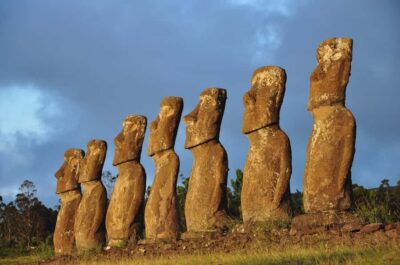
The first half-day route begins at Ahu Akivi, one of the island’s unusual platforms because its seven moai face toward the ocean. The statues represent seven explorers sent by King Hotu Matu’a before the colonization voyage, according to Rapa Nui tradition.
This is a good first stop because it raises a question you will keep asking during the rest of the program: why are these statues here, and who were they meant to face? Most moai are associated with inland-facing platforms, so Ahu Akivi helps you notice that the island’s ceremonial sites were not all built to the same plan.
The route continues to Puna Pau, a small crater made of red volcanic slag. This is where the pukao, the large red headdresses or topknots placed on some moai, were produced. Seeing the source of the red stone gives the statues a practical dimension. They were not carved from one uniform material, and the headdresses required their own quarrying and transport.
At Ahu Uri Aurenga, you see a single moai with an important astronomical alignment. The platform is oriented along the line of the winter solstice, marking the beginning of the season called tonga and the time of certain prohibitions regulating fishing and other activities.
The statue also faces east, aligned with nearby hills and smaller ahu. This makes the stop valuable for anyone interested in how Rapa Nui people linked ceremony, seasonal changes, and the natural world. It is a quieter visit than Tongariki, and the guide’s explanation is especially important because the site itself is less immediately dramatic.
The route includes Tahai as part of the Ahu Akivi program. Tahai is one of the key ceremonial areas near Hanga Roa, and it helps connect the inland sites with the coastal setting that defines Rapa Nui. Ask your guide to explain how the platform, statues, and surrounding settlement relate to one another.
Vinapu, Rano Kau, and the Birdman ceremony
The Orongo half-day begins at Vinapu, an archaeological site known for large basalt slabs fitted closely together. The stonework is often compared with Inca construction at Machu Picchu because of the tight joins between the blocks.
That comparison can be interesting, but do not let it turn Vinapu into a mystery story detached from Rapa Nui. The useful point is the care and skill visible in the construction. Your guide can give the site its proper island context and explain what you are looking at rather than leaving you with a quick photo stop.
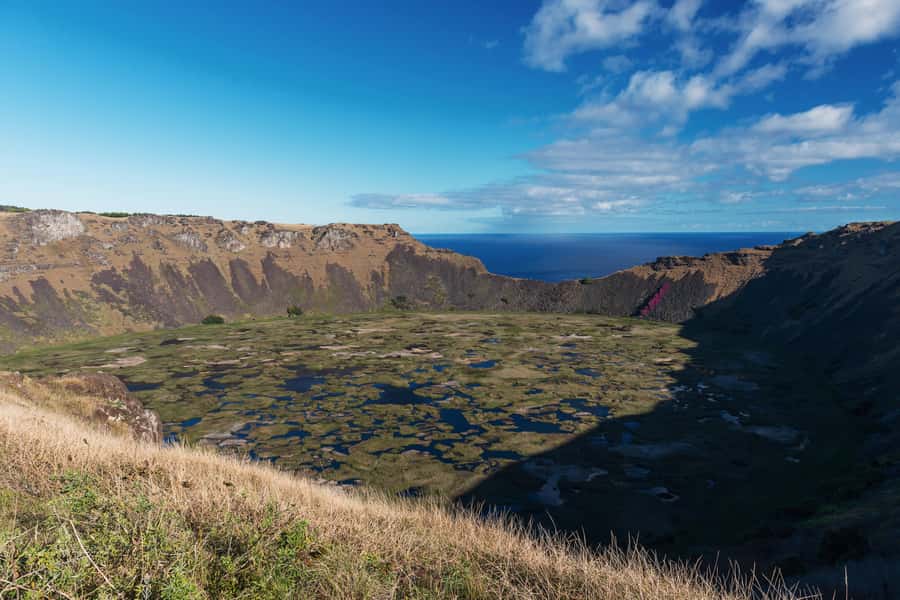
From Vinapu, the route climbs toward Rano Kau. The crater contains a lake dotted with small reed-covered islands, along with heavy vegetation and small forms of lake life. It is a very different setting from the open coastal platforms and bare stone of other stops.
Rano Kau is also a fine place to understand Rapa Nui as a volcanic island. The crater’s broad form and interior water make it more than a scenic pause. It shows how volcanic features shaped settlement, ceremony, and movement around the island.
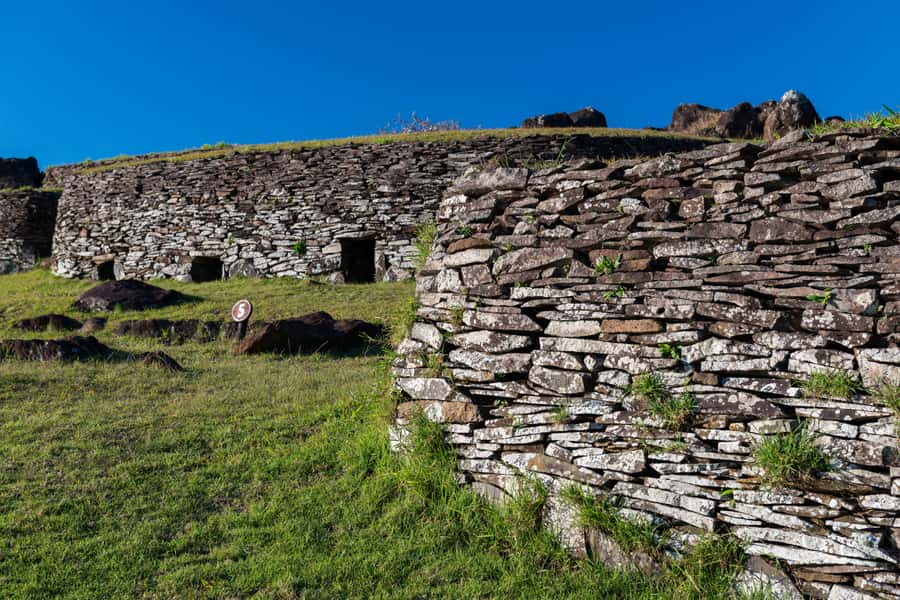
The final stop is Orongo, a ceremonial village perched near the crater. Here you learn about the Birdman contest, one of the island’s best-known ceremonies. The event involved competition and ritual, and it offers a different view of Rapa Nui society from the moai platforms.
I would give this half-day route your full attention even though it is shorter than the Anakena outing. Orongo is not simply another collection of stone structures. It adds ceremony, authority, and competition to the story. The exact pickup times are not supplied, so wait in your hotel lobby 10 minutes before the scheduled departure and confirm the schedule in advance.
Rano Raraku, the place where the moai began
The full-day Anakena route is the most demanding outing, but it also contains the program’s biggest concentration of major sites. It begins on the eastern side of the island with Ahu Vaihu and Akahanga.
Both are ceremonial platforms made from stone and associated with moai and pukao. These sites help you see the monuments in a less polished state than at Tongariki. The fallen statues and scattered stone make the places feel more archaeological and less like a single finished monument.
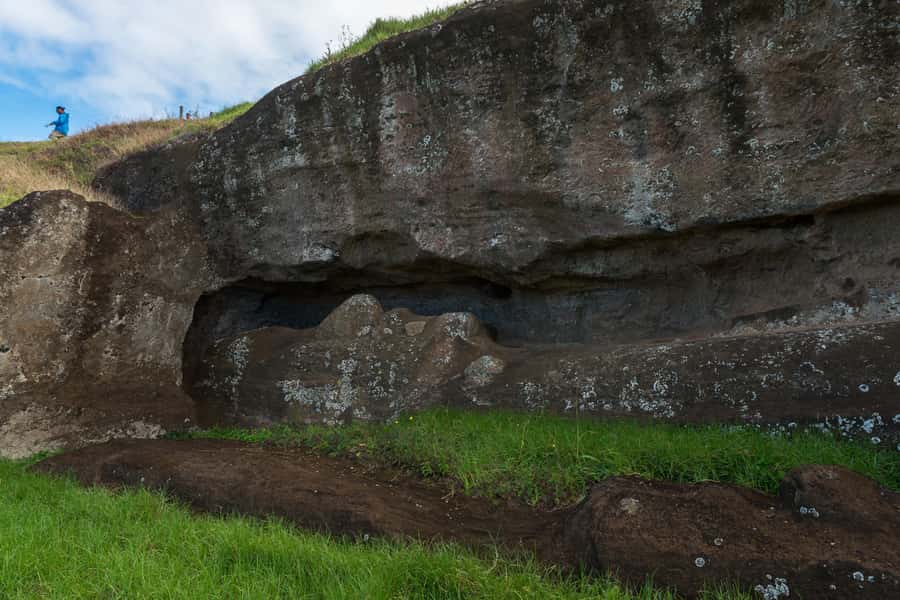
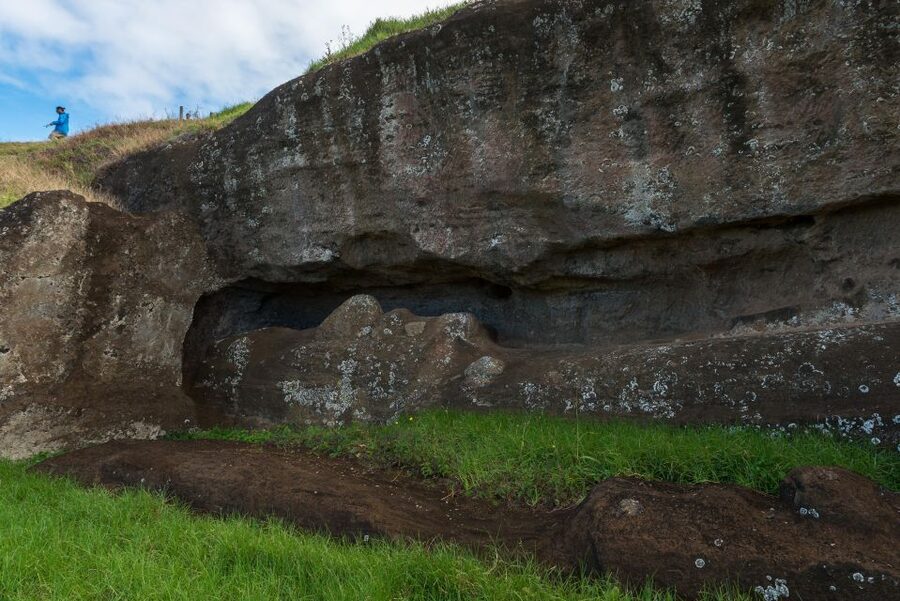
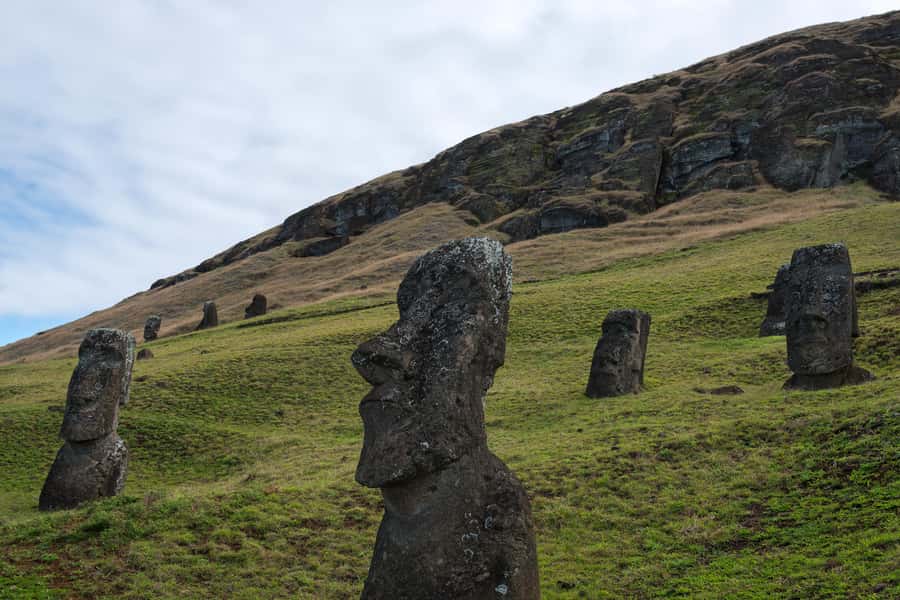
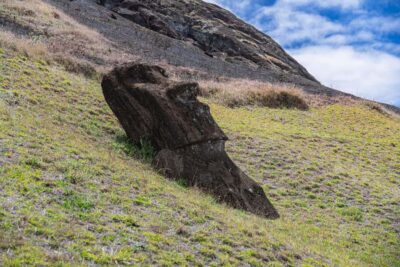
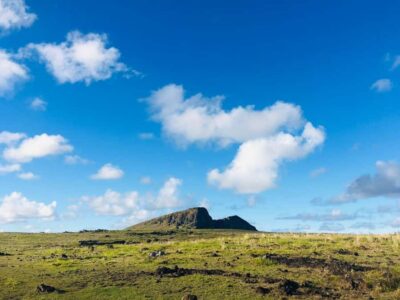
The day’s central stop is Rano Raraku, a volcanic crater formed from consolidated ash. A lagoon sits inside the crater, and the slopes are filled with moai at different stages of completion. The program identifies 397 statues remaining at the site.
This is where the island’s stonework becomes easy to understand. At a coastal ahu, you see statues arranged as a finished display. At Rano Raraku, you see the production zone itself. Some figures appear attached to the rock, while others are further along in the carving process. The quarry turns the familiar moai into a work project involving planning, labor, stone selection, and transport.
Give yourself time to look beyond the most famous figures. The value of Rano Raraku is not only in counting statues. It is in noticing how many were left in different positions and how the crater’s slopes reveal the stages of carving.
The full-day route means you should plan for a long day away from your hotel. Food and drinks are not included, so bring or buy what you need according to the arrangements available to you. The supplied information confirms that breaks with good sanitary facilities have been made on some departures, which is useful on a day with several stops.
Same long country, a very different day out:
- From Hanga Roa: Easter Island Highlights 2-Day Tour
★ 4.3 · 205 reviews - Sunrise Tongariki: Sunrise at Tongariki Park Private Tour
★ 4.5 · 47 reviews - Rapa Nui Dreams: Experiencie Pack 3 Days
★ 4.7 · 32 reviews - Easter Island: Full-Day Tour to Anakena
★ 4.7 · 27 reviews
Tongariki, Te Pito Kura, and the greatest scale
Ahu Tongariki is the visual high point for many people. Fifteen huge moai line the ceremonial platform, creating the clearest sense of scale in the program. Even if you have already seen individual statues, the row changes your understanding of how much work went into a single ahu.
Your guide’s explanation adds value here. Look at the size differences, the placement of the figures, and the relationship between the platform and the surrounding volcanic terrain. This is a place where a few simple facts can make the visit far more meaningful.
Te Pito Kura contains the moai called Paro, described as the largest statue ever erected on an ahu. It is about 10 meters high and weighs approximately 85 tons. The figure is no longer standing, but its size still makes the point. Rapa Nui’s monumental building was not limited to modest statues.
Nearby is a large spherical stone called Te Pito o Te Henua, identified as the navel of the world. The name and symbolism are part of the island’s cultural story, and your guide can help separate the physical object from the many interpretations attached to it.
These stops work well together. Tongariki shows a group of completed statues in a powerful row. Te Pito Kura shows the ambition of a single giant figure and the symbolic importance assigned to a round stone. You get both engineering scale and cultural meaning in one stretch of the day.
Anakena Beach and moai with their backs to the sea
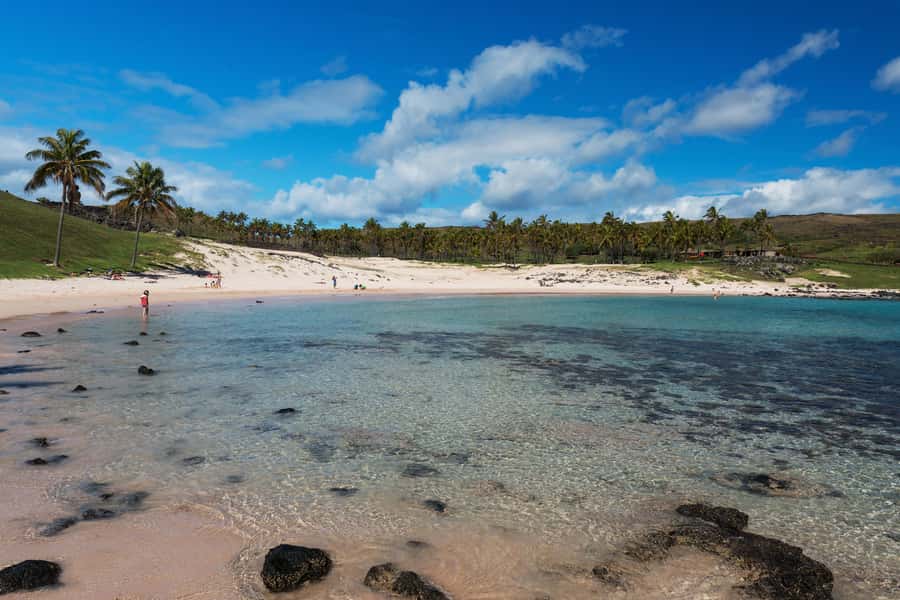
The full-day outing ends at Anakena, Rapa Nui’s most popular beach. Its white sand and Pacific setting provide a welcome change after hours among volcanic rock and archaeological sites.
The beach is not merely a leisure add-on. A row of moai faces inland with its back to the sea, placing ceremonial history directly beside one of the island’s most appealing natural settings. The contrast is part of Anakena’s charm: you can rest by the water while still looking at evidence of an older culture.
This final stop also gives the day a sensible rhythm. Rano Raraku and Tongariki are intense, information-heavy visits. Anakena lets you pause and take in the setting before returning to your hotel.
Do not expect a resort beach program. The main value here is the combination of sand, ocean, and moai. Bring practical sun protection and allow yourself to enjoy the place at an unhurried pace if the schedule permits.
Guides, group size, and the practical side
The experience uses live guides in English and Spanish, with groups limited to 15 participants. That combination suits you if you want context at the sites but do not want the cost of a private guide.
Recent departures have included Jaime and Ugo. Jaime has led bilingual visits with plenty of time at each stop, while Ugo has guided the full-day route with detailed explanations of island culture and history. A German-speaking guide has also been used on a departure, so ask the provider what language and guide are assigned to your dates.
Pickup is included from your hotel, and you should wait in the lobby 10 minutes before the scheduled time. One practical weakness is that the agency may rely on contractor guides, so confirmation of the final pickup time can arrive later than you would like. If you have a tight schedule, contact Koa Ma’ara Travel directly and request the approximate pickup time before the tour date.
The program does not include pickup or drop-off at Explora Hotel. It is also not intended for cruise ship passengers, wheelchair users, or pregnant women. Those limits are important because the itinerary involves multiple archaeological areas and a full day of island touring.
The schedule needs careful attention. Ahu Akivi and Orongo are listed for Monday, Wednesday, and Friday. Anakena is listed for Tuesday, Thursday, and Saturday. Since the package duration is two days, confirm how the three experiences will be arranged for your dates instead of assuming the calendar will fit automatically.
Free cancellation is available up to 24 hours before the activity for a full refund, and you can reserve now and pay later. Those terms help if your Rapa Nui plans are still shifting, but they do not remove the need to check the tour dates and pickup details.
Is $220 a good value?
I consider $220 per person reasonable for three guided routes over two days, especially if you want the main archaeological sites organized in one package. Transport around Rapa Nui, bilingual guiding, and a 15-person limit add practical value.
The price is strongest for a first visit. You avoid spending your limited island time working out how to divide the sites, and you get explanations at places where the stonework alone cannot tell the whole story.
The calculation changes if you already have transport and prefer to set your own pace. The National Park ticket is extra, as are meals and drinks. You should also check whether your hotel qualifies for the included pickup, since Explora Hotel pickup and drop-off are specifically excluded.
For most people staying only a few days, the package earns its price by covering the island’s essential sequence: ceremonial platforms, moai production, astronomical alignment, Birdman culture, and Anakena. It is less attractive to repeat visitors who want long photography sessions or a highly customized route.
Who should book the Rapa Nui Highlights Program?
I would choose this program for a first visit to Rapa Nui when I wanted the major sites explained rather than simply photographed. It suits couples, solo visitors, and small groups who value organized transport and a guide who can connect the monuments to customs, beliefs, astronomy, and seasonal rules.
It is also a good fit if you have only two days for sightseeing. The itinerary covers more than 900 archaeological sites across the island in context, even though you will visit a selected group rather than every site.
I would think twice if you need wheelchair access, are pregnant, or are arriving by cruise ship. I would also avoid booking without clarification if your dates are fixed tightly around the listed weekday pattern.
My verdict
Book it if you want a well-organized introduction to Rapa Nui and the chance to see the quarry, the largest platforms, Orongo, Ahu Akivi, and Anakena in one two-day plan. The strongest features are the small groups, bilingual guiding, clear cultural explanations, and the wide range of places covered.
Before booking, confirm the two-day schedule, the pickup time, the guide language, and the extra cost of the National Park ticket. If those details work for you, this is a practical and worthwhile way to meet the island’s major monuments without spending your short stay on transport planning.
FAQ
How long does the Rapa Nui Highlights Program last?
The program lasts two days and includes three guided experiences: two half-day tours and one full-day tour.
What tours are included?
The package includes the half-day Ahu Akivi tour, the full-day Anakena tour, and the half-day Orongo tour.
Which sites are included on the Ahu Akivi tour?
The route includes Puna Pau, Ahu Akivi, and Tahai. Ahu Uri Aurenga is also described as part of the visit.
Which sites are included on the Orongo tour?
The Orongo route visits Vinapu, Rano Kau, and the ceremonial village of Orongo.
Which sites are included on the full-day Anakena tour?
The route includes Ahu Vaihu, Akahanga, Rano Raraku, Ahu Tongariki, Te Pito Kura, and Anakena Beach.
Is the National Park ticket included?
No. The National Park ticket is not included in the $220 price.
Are food and drinks included?
No. Food and drinks are not included.
What languages are available?
The live tours are available in English and Spanish.
How large are the groups?
Groups are limited to 15 participants.
Is hotel pickup included?
Hotel pickup is included, and you should wait in the lobby 10 minutes before pickup. Pickup and drop-off at Explora Hotel are not included.
Can I cancel the tour?
You can cancel up to 24 hours in advance for a full refund. The activity also allows you to reserve now and pay later.
Who should not book this activity?
The activity is not suitable for wheelchair users, pregnant women, or cruise ship passengers.
Just added around Hanga Roa
- Volcanic Refuges: Excursion to Underground Civilization★ 4.7 · 8 reviews
- Sunrise Tongariki: Sunrise at Tongariki Park Private Tour★ 4.5 · 47 reviews
- Rapa Nui: Polynesian Massage★ 4.8 · 5 reviews
- Rapa Nui: 3 Excursions with Hotel Transfers★ 4.3 · 6 reviews
- Ahu Vinapu, Rano Kao and Orongo City Half-Day Tour★ 4.6 · 20 reviews
- Hanga Roa: Full Day Moai and Mistery★ 4.4 · 22 reviews
- Easter Island: Tropical Diving★ 4.8 · 13 reviews
- Easter Island: The Moai Trail Private Archeological Tour★ 4.9 · 12 reviews
Easter Island Moai Tours, compared.

Two days of Full Day Tour of Rapa Nui + Sunrise in Tongariki
Read our review →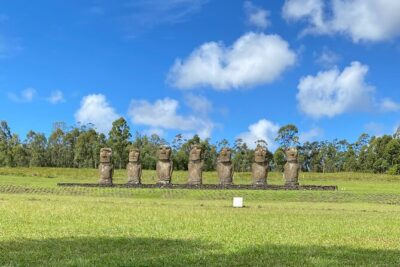
Adventures in Rapa Nui: High-quality tourism with Easter Island Your Tour.
Read our review →
Private Tour: The Underground World of Rapa Nui Caves
Read our review →
Browse the lists this tour appears in