
Reviewed · EASTER ISLAND TOURS
From Hanga Roa: Easter Island Highlights 2-Day Tour
Rapa Nui is far too important for a quick drive-by, and this two-day tour from Hanga Roa gives you a well-planned look at nearly every major site. You will see moai at the coast, the quarry where they were carved, cliff-top Orongo, volcanic caves, and the palm-lined beach at Anakena.
I like the use of local Indigenous guides, who add stories about daily life, family tradition, and the meaning of the moai. I also like the small minibus, hotel pickup, and included rain capes and cave lanterns. The main catch is that the two days are not always equal: Day One is usually the stronger, fuller outing, while Day Two can feel rushed or slow when commentary is repeated in both English and Spanish.
In This Review
- Key points to know before booking
- Why two days make sense on Rapa Nui
- Day One: from toppled moai to the 15 at Tongariki
- Rano Raraku: where the moai began
- Tongariki, Te Pito Kura, and Anakena
- Day Two: Rano Kau and the birdman village
- Vinapu and Puna Pau: stonework and red crowns
- Ana Te Pahu and Ahu Akivi
- The guides are the real value
- Timing, meals, and what to pack
- Is $170 a fair price?
- Who should book this tour?
- Should you book it?
- FAQ
- Where does the tour begin?
- How long does the tour last?
- What languages are offered?
- How many people are in the group?
- Is transportation included?
- Are meals included?
- Are entrance fees included?
- What is included for rainy weather and cave visits?
- Are drones allowed?
- Can I cancel for a refund?
Key points to know before booking
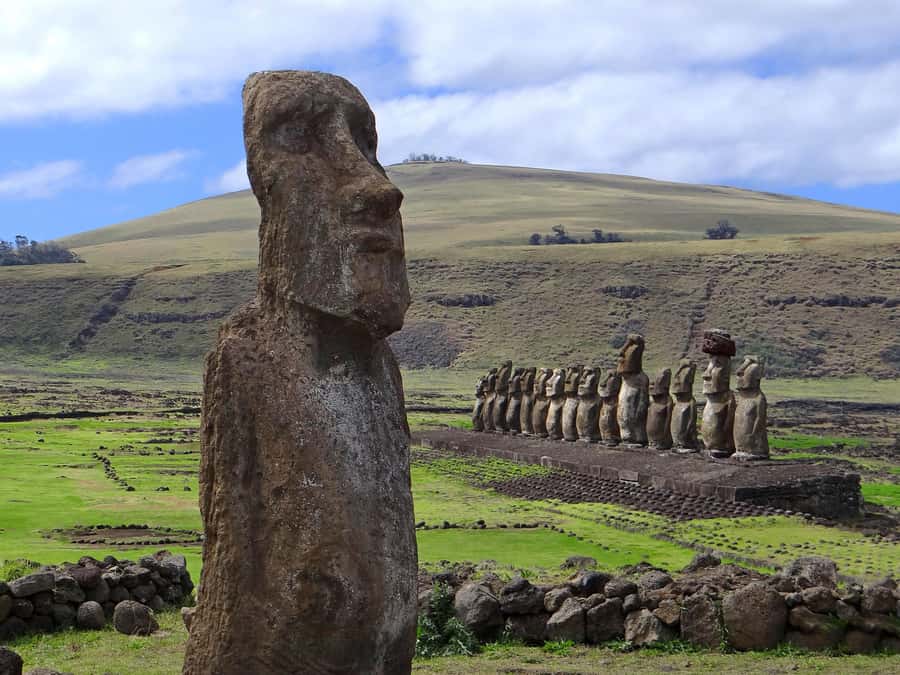
- Rano Raraku and Tongariki anchor Day One: The quarry and the great platform of 15 moai are the tour’s most powerful stops.
- Local guides make the difference: Guides such as Jeremías, Zoe, Enerike Hey, Roberto, Simon, and Franko have been praised for combining archaeology with island culture and personal stories.
- Lunch is not included: Day One usually has a food stop, but Day Two may run until about 3:00 p.m. without a meal break, so pack substantial snacks.
- The group can reach 14 people: That is still fairly intimate, but pickup and bilingual explanations can take extra time.
- You need sun protection: Many sites are open, exposed, and short on shade.
- Site entry fees cost extra: Add that expense to the advertised $170 per person when comparing tours.
Why two days make sense on Rapa Nui
At first glance, Easter Island can seem simple to visit. You drive along a road, walk toward a moai, take a photograph, and repeat. That approach misses the point. The statues make more sense when you see the quarry, the ceremonial platforms, the caves, the beach sites, and the villages that shaped Rapa Nui life.
This tour divides the island into two long sightseeing days. Day One follows the southern and eastern coast before ending at Anakena. Day Two covers the volcanic crater of Rano Kau, ceremonial Orongo, the stonework at Vinapu, the red scoria quarry at Puna Pau, Ana Te Pahu cave, and Ahu Akivi.
The price is $170 per person. That is good value if you want transport, a guide, and the major archaeological sites in one package. You also avoid the work of navigating an unfamiliar island and arranging your own route. Since many important sites are best understood with a guide, the commentary is not a minor extra. It is the main reason to book.
Still, the cost does not cover lunch or entrance fees. That matters. A self-drive day may give you more freedom, but it will not give you the same continuous explanation. One useful approach is to spend a day exploring independently, then use this tour for the places where interpretation matters most.
A few more Hanga Roa trips to weigh up
- Two days of Full Day Tour of Rapa Nui + Sunrise in Tongariki
★ 4.8 · 55 reviews - Santiago: 2-Day Hop-On Hop-Off Bus Ticket and Cable Car
★ 4.3 · 162 reviews - 2 Days in Patagonia. Torres del Paine and Balmaceda and Serrano Glacier.
★ 4.1 · 4 reviews
Day One: from toppled moai to the 15 at Tongariki
Pickup is provided at your accommodation, and the tour travels in a spacious minibus. With up to 14 participants, you get the ease of shared transport without the scale of a large coach tour. The downside is pickup time. With a full group, the morning collection can take a while, and one account records nearly an hour and a half on the second day.
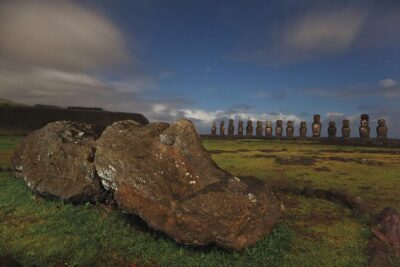
The first major stop is Vaihu, on the southern coast. Here, toppled moai and the remains of a ceremonial platform sit near the sea. The site is less polished than Tongariki, which is part of its appeal. You begin to see the moai not as isolated statues but as part of a larger ceremonial setting.
At Akahanga, more fallen statues lie among the remains of an old platform. This is a quiet, serious place. The toppled figures invite questions about the changes that affected Rapa Nui society, while the scattered stones show how much of the island’s story remains in place rather than behind glass.
Your guide’s explanation is especially useful here. The best guides do not reduce the moai to one neat mystery. Jeremías, Zoe, Enerike Hey, and others have been praised for explaining different ideas about how the statues were made, moved, and used, while also connecting the subject to modern island life.
Rano Raraku: where the moai began
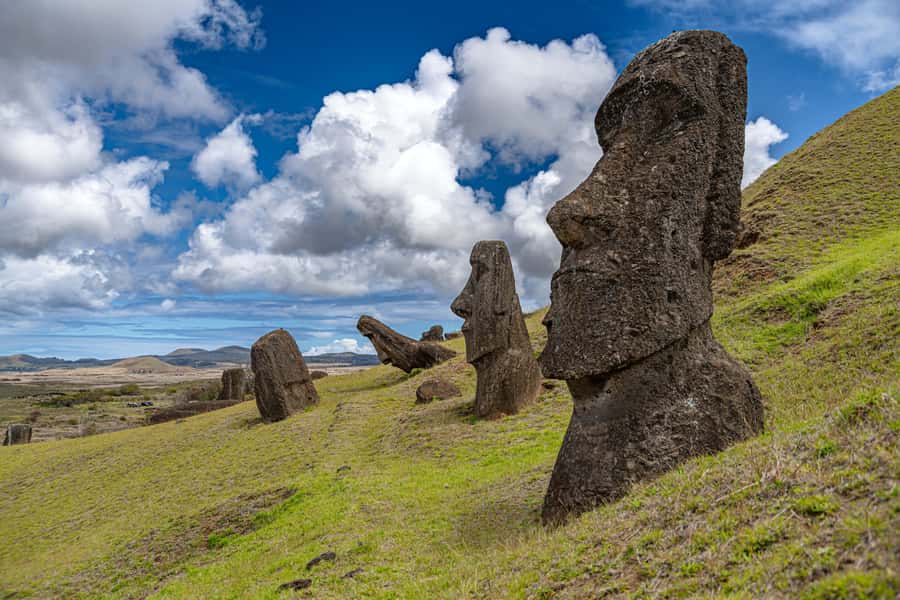
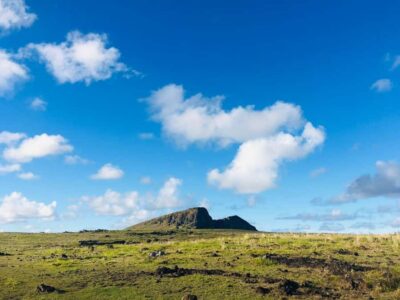
Rano Raraku is the heart of the first day. This volcanic quarry supplied the stone for most of the island’s moai. Walking among unfinished and partly buried figures gives you the clearest sense that these were works in progress, not objects that simply appeared beside the road.
The quarry is more than a photo stop. You can see statues in different stages of completion, which helps explain the scale of the work. Some remain attached to the rock, while others were cut free and prepared for transport. Your guide can place the figures within the wider story of Rapa Nui ceremony and social organization.
This is also one of the practical points in the schedule. A café near the quarry may be available for lunch, but it can become busy. One guide chose to continue the sightseeing rather than spend too long waiting, with food later at Anakena. Bring snacks so you are not forced to choose between missing time and going hungry.
The walking areas are exposed, so bring water, a hat, sunscreen, and clothing that handles strong sun. The tour provides rain capes for sudden showers, but rain protection does not replace sensible footwear or sun protection.
Tongariki, Te Pito Kura, and Anakena
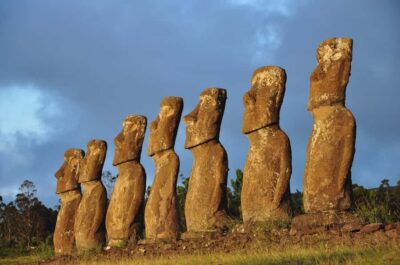
Next comes Ahu Tongariki, the famous ceremonial platform with 15 moai facing inland. The row is so large that it can make the earlier sites feel like a prelude. The setting is wide open, and the statues have a formal, unified presence that is different from the scattered figures at Vaihu and Akahanga.
Tongariki is also a place where a guide’s timing matters. You need enough time to look from several angles and hear how the platform fits into the island’s ceremonial tradition. A rushed visit would undercut one of the tour’s strongest moments, so pay attention to the day’s pace.
At Te Pito Kura, the focus shifts to sacred tradition and local legends. This stop adds variety after the large quarry and platform. Instead of another line of moai, you get a site tied to the island’s spiritual ideas and stories.
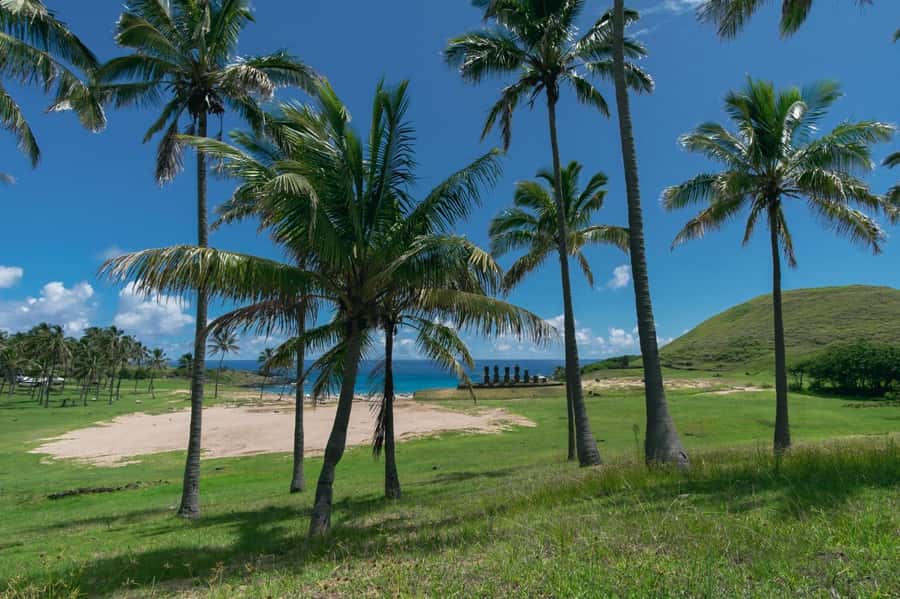
The day ends at Anakena, a rare sandy beach framed by palms and ancient moai. It is a welcome change from open archaeological ground. You may have about an hour here, and the stop can be late in the afternoon. One schedule reached the beach around 4:30 p.m., so do not count on an early lunch or a long leisurely beach day.
Anakena is an excellent finish because it brings together several sides of Rapa Nui: sacred statues, coastal scenery, and a place associated with island life rather than only archaeology. If you want to swim or simply sit by the palms, check how much free time your guide allows.
Same long country, a very different day out:
- From Hanga Roa: Rapa Nui Culture Sightseeing Tour
★ 4.6 · 307 reviews - From Hanga Roa: Journey from Orongo to Ana Te Pahu
★ 4.3 · 75 reviews - Sunrise Tongariki: Sunrise at Tongariki Park Private Tour
★ 4.5 · 47 reviews - Rapa Nui Dreams: Experiencie Pack 3 Days
★ 4.7 · 32 reviews
Day Two: Rano Kau and the birdman village
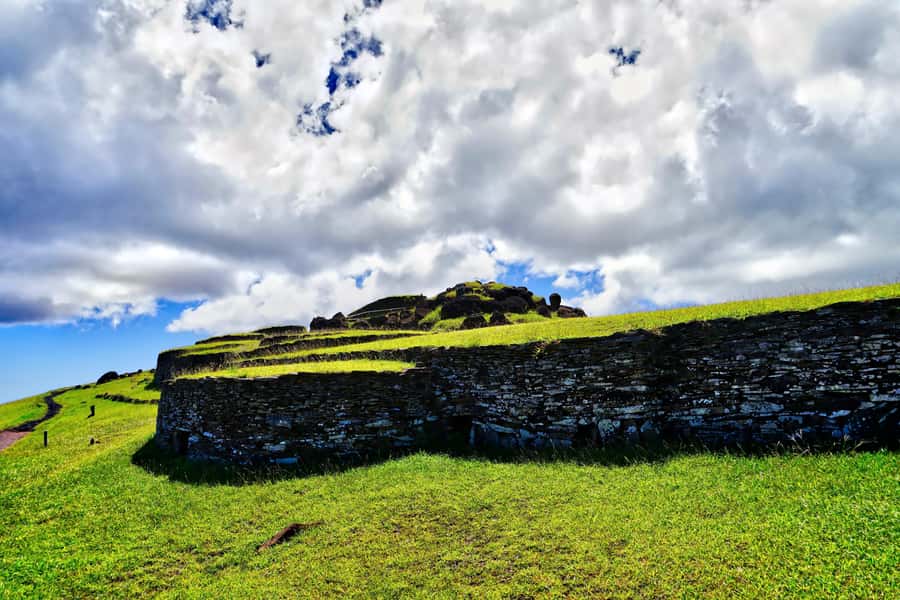
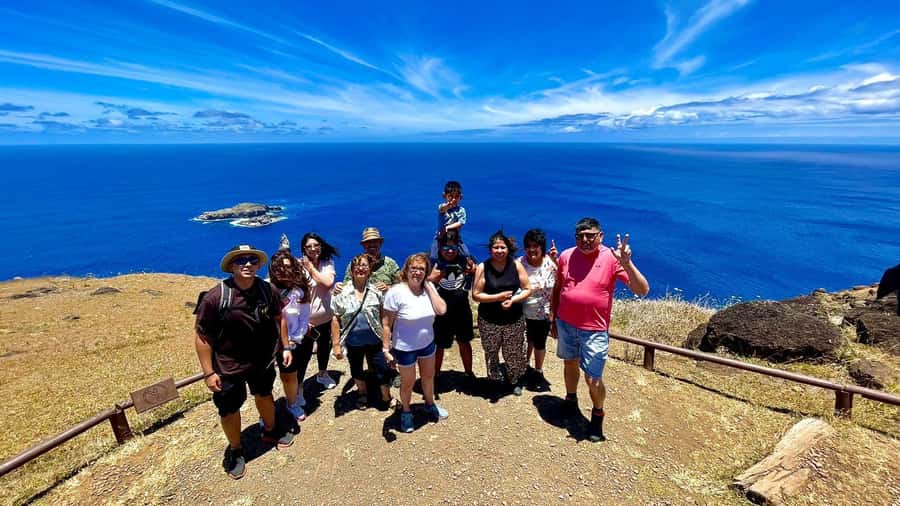
The second day begins with Orongo, a ceremonial village perched on the rim of Rano Kau. The crater views are among the most dramatic on the island. From this high position, you see the broad volcanic basin and the Pacific beyond it.
Orongo is tied to the birdman ceremony, one of the most distinctive parts of Rapa Nui culture. The stone houses and cliff-top setting make the site feel different from the coastal platforms. If you have only limited time on the island, this is one of the Day Two stops that deserves real attention.
There is a catch. The order and timing can vary, and some visitors find Day Two less satisfying than Day One. A bilingual guide may explain each point first in English and then in Spanish, or the reverse. That is fair for a mixed group, but it can stretch the schedule if you speak only one language.
One practical detail is worth confirming at pickup: the tour may finish around 3:00 p.m. on the second day. The earlier finish is useful if you have other plans, but the day can feel compressed because it includes several stops and may not include a meal break.
Vinapu and Puna Pau: stonework and red crowns
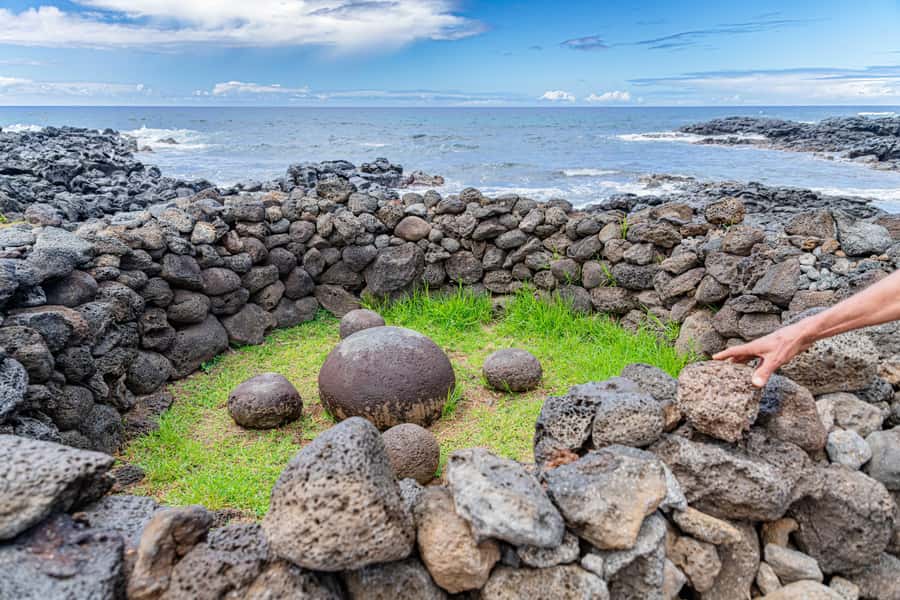
At Vinapu, you see a ceremonial platform known for carefully fitted stone walls. The precise masonry has led to comparisons with South American construction, and it is a good place to ask questions rather than accept easy theories. A strong guide will explain what is known, what remains debated, and how the site fits within Rapa Nui archaeology.
Puna Pau offers a different visual lesson. This red scoria quarry supplied the cylindrical topknots, or pukao, placed on some moai. The color and stone type make the site easy to distinguish from Rano Raraku, and the stop shows that carving the statue was only one part of the work. The headpiece required its own quarry and transport.
These two stops are not as instantly famous as Tongariki, but they reward attention. Vinapu helps you notice the technical skill in the island’s stone platforms. Puna Pau explains a detail many first-time visitors overlook: the moai and their red crowns came from different sources.
Ana Te Pahu and Ahu Akivi
Ana Te Pahu is a network of volcanic caves with chambers and traces of human use. The tour provides personal lanterns, which are useful in the darker sections. You should expect uneven ground and a more hands-on visit than at the open-air platforms, although the supplied information does not specify the exact walking conditions.
The cave stop adds a human scale to the tour. The moai are monumental, but caves show how people used the island’s natural spaces for shelter, movement, and spiritual activity. Ancient petroglyphs add another layer, though your ability to see them clearly will depend on the guide, lighting, and conditions.
Rain can actually change the shape of this part of the day. Zoe has been praised for rearranging the route during wet weather and taking the group into caves away from the usual tourist path. That kind of flexibility is valuable on an island where weather can interrupt an outdoor schedule.
The final stop is Ahu Akivi, where seven moai face toward the sea. Their placement differs from the more common inland-facing statues, giving the site a special place in the island’s story. It is a fitting finish because you end with one of the clearest reminders that Rapa Nui’s monuments do not all follow the same pattern.
The guides are the real value
The tour’s strongest feature is the human explanation. Guides have included Jeremías, Javier’s Hucke, Enerike Hey, Zoe, Roberto, Simon, and Franko, though the person assigned to you can vary.
The praised qualities are consistent: local perspective, patience, warmth, and a clear interest in Rapa Nui culture. Roberto is remembered for songs and ukulele at different sites. Zoe brought personal tradition and family experience into her explanations. Enerike was noted for his pride in the island and its past, while Jeremías was praised for explaining daily life as well as competing ideas about the moai.
That local connection matters because Rapa Nui is not only an archaeological display. You are visiting a living community with Indigenous identity, modern concerns, and traditions that cannot be reduced to a puzzle about giant statues.
The language setup deserves an honest warning. Tours operate in English and Spanish, and the group can be mixed on both days. If everyone speaks both languages, this is no problem. If you speak only English, some of the second day may feel repetitive or slow when the guide repeats the explanation in Spanish.
Timing, meals, and what to pack
Treat the schedule as a framework, not a minute-by-minute promise. Pickup may take time, especially with a larger group. The first day can run from roughly 9:30 a.m. to 6:00 p.m., while the second day may end around 3:00 p.m.
Lunch is not included. Day One may include a stop at the café near Rano Raraku or food at Anakena, but the timing can shift. Day Two may not include a proper meal stop at all. Pack sandwiches, fruit, or other substantial snacks, and carry water.
You should also bring:
- Sunscreen, a hat, and sunglasses
- Comfortable shoes for archaeological paths and cave areas
- Snacks for the long first day and the meal-light second day
- A light rain layer, even though rain capes are supplied
- A camera, but not a drone
Drones are not allowed. The tour is wheelchair accessible, but the practical ease of each archaeological stop may vary, especially in cave areas and on uneven ground. If you need specific access support, confirm the details before booking.
Is $170 a fair price?
For two days, small-group transport, accommodation pickup, and a live guide, $170 is a sensible price. The strongest value comes from the number of major sites covered and the quality of cultural interpretation. You are not paying only to be driven around. You are buying a route that would take planning to reproduce and explanations that make each place easier to understand.
The price becomes less attractive if you want complete control over timing, frequent photo stops, or a private experience. A rented motorcycle or car may suit independent visitors who are comfortable planning their own day. Even then, a guided visit adds context that self-driving cannot easily supply.
Remember to budget separately for entry fees and meals. The tour’s flexibility on cancellation, with a full refund available up to 24 hours before departure, and the option to reserve now and pay later, make it easier to fit into a changing island itinerary.
Who should book this tour?
Book it if this is your first visit to Rapa Nui and you want the major sites handled in a sensible order. It is especially useful if you value Indigenous interpretation, prefer not to drive, or have only two full days available.
It also suits visitors who like a friendly small group rather than a private car. The guide may sing, share local stories, and adjust the route when weather changes. That gives the trip a personal quality, though the bilingual format can slow the commentary.
You may want another option if you dislike fixed schedules or need a guaranteed English-only guide. You should also reconsider if you expect lunch to be organized or assume every stop will have plenty of free time.
Should you book it?
Yes, for most first-time visitors with two days on Rapa Nui. Day One is the clear highlight, with Rano Raraku, Tongariki, and Anakena providing a strong sequence of major sights. Day Two is more uneven, but Orongo, Vinapu, Ana Te Pahu, and Ahu Akivi fill in important parts of the island’s story.
Book with realistic expectations: bring food, protect yourself from the sun, allow for bilingual repetition, and confirm the day’s finish time. With those small adjustments, this is a practical and culturally thoughtful way to see Rapa Nui without leaving the island’s biggest stories unexplained.
FAQ
Where does the tour begin?
Pickup is provided directly from your accommodation in Hanga Roa.
How long does the tour last?
The experience lasts two days. Starting times vary, so you need to check availability when booking.
What languages are offered?
Live guiding is available in English and Spanish.
How many people are in the group?
The tour is limited to 14 participants.
Is transportation included?
Yes. You travel between sites in a spacious minibus.
Are meals included?
No. Lunch is not included. The itinerary includes opportunities to stop for food, but you should bring snacks, especially for Day Two.
Are entrance fees included?
No. Entrance fees to the sites are paid separately.
What is included for rainy weather and cave visits?
The tour provides rain capes and a personal lantern set for exploring the caves.
Are drones allowed?
No. Drones are not allowed on the tour.
Can I cancel for a refund?
Yes. You can cancel up to 24 hours in advance for a full refund. You can also reserve now and pay later.
Just added around Hanga Roa
- Volcanic Refuges: Excursion to Underground Civilization★ 4.7 · 8 reviews
- Sunrise Tongariki: Sunrise at Tongariki Park Private Tour★ 4.5 · 47 reviews
- Rapa Nui: Polynesian Massage★ 4.8 · 5 reviews
- Rapa Nui Highlights Program: 3 incredible tours to discover!★ 4.8 · 18 reviews
- Rapa Nui: 3 Excursions with Hotel Transfers★ 4.3 · 6 reviews
- Ahu Vinapu, Rano Kao and Orongo City Half-Day Tour★ 4.6 · 20 reviews
- Hanga Roa: Full Day Moai and Mistery★ 4.4 · 22 reviews
- Easter Island: Tropical Diving★ 4.8 · 13 reviews
Easter Island Tours, compared.

Two days of Full Day Tour of Rapa Nui + Sunrise in Tongariki
Read our review →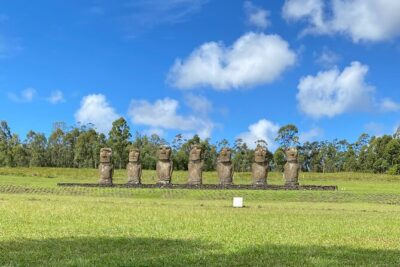
Browse the lists this tour appears in