
Reviewed · RAINBOW VALLEY TOURS
Rainbow Valley
Rainbow Valley is a fine half-day outing for anyone who likes geology with a side of Andean culture. The Domeyko Range, reached after about an hour on the road toward Calama, holds bands of mineral color that give the valley its name. The rock is the main event, but guanacos, llamas, and old petroglyphs keep the morning from feeling like a single-stop photo call.
I like two things here. First, the route joins natural scenery with pre-Hispanic art at Yerbas Buenas, so you get more than a scenic overlook. Second, breakfast is served outdoors, a simple touch that makes the early start feel worthwhile. The main consideration is the extra park entrance fee of 10,000 Chilean pesos, payable in cash, plus walking on uneven ground.
In This Review
- Key points to know before booking
- Why Rainbow Valley is worth a morning
- The 7 AM pickup from San Pedro
- Reading the colors of Rainbow Valley
- Yerbas Buenas and its ancient rock art
- Guanacos, llamas, and the Andean setting
- Breakfast outdoors before the return
- Is the $50 price good value?
- Who should book this Atacama outing?
- What to bring for a comfortable visit
- Should you book Rainbow Valley?
- FAQ
- What time does hotel pickup begin?
- How long does the Rainbow Valley tour last?
- Is breakfast included?
- Is the park entrance fee included?
- What languages are available?
- Where does the tour finish?
Key points to know before booking
- Mineral-colored rock: Rainbow Valley is a good choice if you enjoy geology and unusual stone formations.
- Yerbas Buenas petroglyphs: The stop adds an important cultural layer, with some of Chile’s oldest rock art.
- Andean wildlife: Keep watch for guanacos and llamas during the drive and visits.
- Early hotel pickup: Collection begins at 7 AM, with drop-off in central San Pedro de Atacama.
- Breakfast outdoors: A morning meal is included, giving you a useful start before walking.
- Cash required: Bring 10,000 CLP for the entrance fee, along with water, sunscreen, and identification.
Why Rainbow Valley is worth a morning
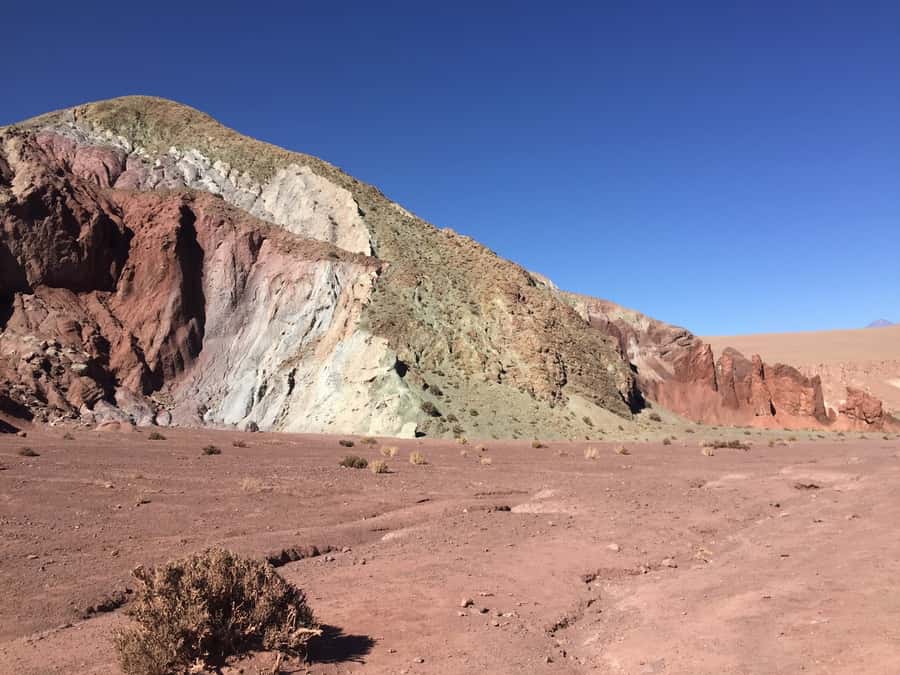
Rainbow Valley is not a polished attraction with a long list of facilities. Its appeal comes from the exposed rock, open space, and the chance to see how minerals have given the hills different tones. If geology catches your eye, you can spend time looking closely at the stone rather than simply taking a quick picture and moving on.
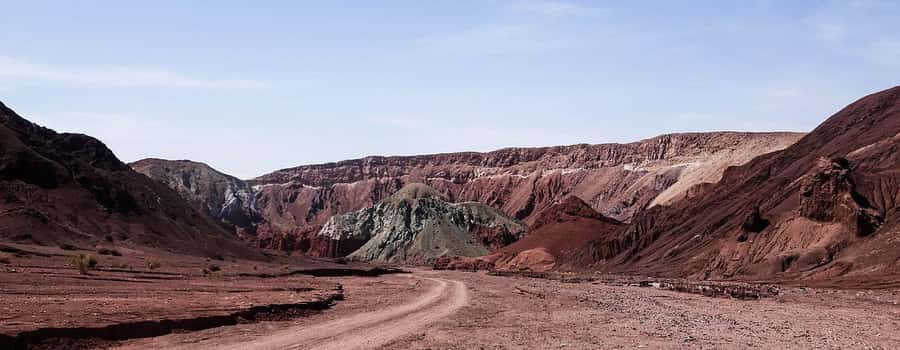
The Domeyko mountain range is part of what gives the outing its character. You reach it by driving toward Calama, then turning into the range described as the oldest in the Atacama. The trip places you in a very different setting from the streets of San Pedro, with broad mountain views and a much stronger sense of the region’s geological past.
I would choose this tour for a first visit to the Atacama if you want a shorter excursion that covers several interests. You see rock formations, pre-Hispanic art, and Andean animals in one morning. That combination gives the $50 price a reasonable amount of value, especially since hotel pickup, a guide, and breakfast are included.
Still, expectations matter. This is a five-hour trip, not a full-day mountain expedition. The outing gives you a focused look at Rainbow Valley and Yerbas Buenas, but it does not replace longer Atacama excursions if your main goal is to spend an entire day among the region’s major natural sights.
More rainbow valley tours in San Pedro De Atacama:
- From San Pedro de Atacama: Rainbow Valley Tour
★ 4.9 · 48 reviews - San Pedro de Atacama: Rainbow Valley & Hierbas Buenas Tour
★ 4.7 · 40 reviews - Rainbow Valley Tour + Petroglyphs (Yerbas Buenas)
★ 4.8 · 32 reviews
The 7 AM pickup from San Pedro
The day begins with pickup at your hotel in San Pedro de Atacama. You are asked to wait in the lobby 10 minutes before the scheduled time, and the guide will make phone contact before arriving. Pickup starts at 7 AM, so this is an early morning outing by holiday standards.
The guide waits no longer than five minutes after the agreed pickup time. That makes it important to be ready rather than still finishing breakfast or searching for sunscreen. The tour ends at Plazoleta La Apacheta, in the center of San Pedro, which is useful if you plan to continue exploring town on foot afterward.
The drive takes you in the direction of Calama and then into the Domeyko Range. The transport portion is a substantial part of the morning, but it is also how you reach the remote setting that makes the visit worthwhile. You will spend time in a van, so bring water and wear comfortable clothes.
An English or Spanish-speaking guide accompanies the group. The guide’s role matters most at the rock formations and petroglyphs, where a few explanations can turn colored stone and weathered markings into something easier to understand. No guide names are provided, so you should not expect to request a particular person when booking.
Reading the colors of Rainbow Valley
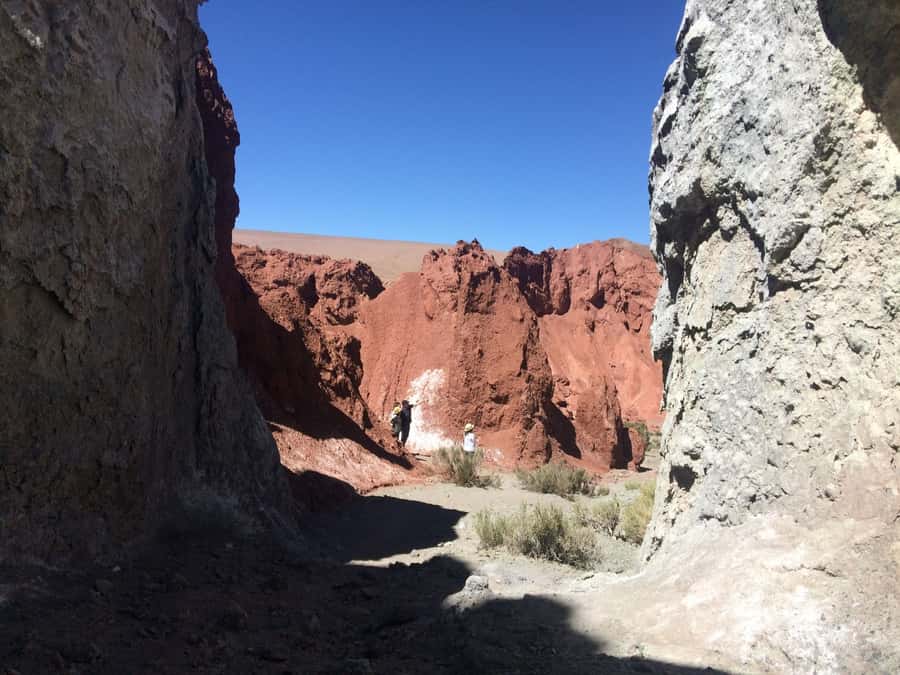
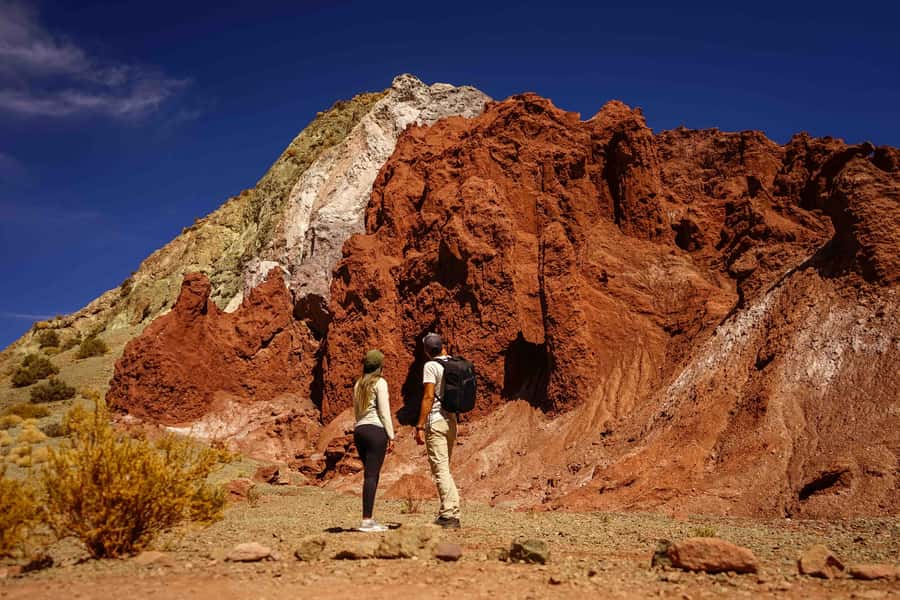
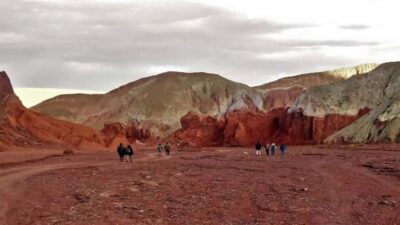
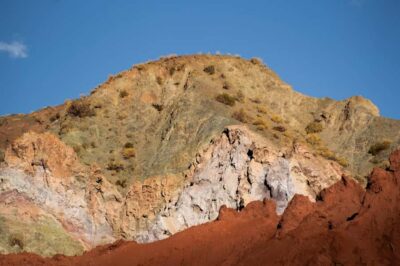
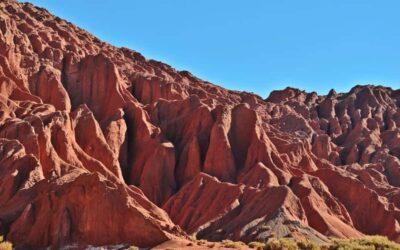
At Rainbow Valley, the guide introduces the rocks and formations that shape this unusual area. The valley contains a high amount of minerals, and those minerals help create the different tones visible in the hills. This is the place to slow down and look at the ground, the slopes, and the layers of color instead of treating the stop as one large scenic backdrop.
The name is a practical description of what you see. The colors are tied to the mineral content of the rock, giving the valley a striped and varied appearance. You do not need to be a geology specialist to enjoy it, but a curious eye helps. Notice how the shades change across different formations and how the dry setting leaves the stone fully exposed.
The walk is part of the experience. Comfortable shoes are specifically advised, and water is essential in the Atacama’s dry conditions. The provided information does not describe the length or difficulty of every walking section, so anyone with mobility concerns should ask the operator for current conditions before paying.
Rainbow Valley suits photographers, geology fans, and people who like quiet natural settings. It may be less satisfying if you prefer dramatic facilities, long guided hikes, or a packed schedule of many attractions. The value lies in the quality of the setting rather than in the number of stops.
Yerbas Buenas and its ancient rock art
The visit to Yerbas Buenas adds a human story to the morning. Here you see petroglyphs described as among the oldest in Chile. The markings connect the dry mountain country with the people who lived here long before modern roads and tour vans arrived.
Petroglyphs can be easy to overlook if you are rushing. Give yourself time to study the rock surfaces and let the guide explain what is known about the images and their place in Andean pre-Hispanic culture. The experience is not just about seeing old markings. It is about recognizing that these mountains were used, observed, and represented by earlier communities.
The information provided does not identify individual petroglyph figures or give a precise age, so I would avoid arriving with a fixed list of symbols to find. Instead, treat the stop as a chance to see ancient art in its original setting. That setting is part of the value: the rock art is not separated from the terrain that shaped the lives of the people who made it.
You should also follow the guide’s instructions around the petroglyphs. Do not touch or climb on the marked surfaces. The tour description does not list special site rules, but care is always the sensible approach at an archaeological location.
Same long country, a very different day out:
- San Pedro de Atacama: El Tatio Geysers Tour
★ 4.7 · 943 reviews - San Pedro de Atacama: Etno-Stargazing Tour with Transfer
★ 4.8 · 629 reviews - Piedras Rojas, Altiplanics Lagoons & Salar Full-Day Tour
★ 4.7 · 592 reviews - San Pedro de Atacama: Stargazing Experience
★ 4.7 · 489 reviews
Guanacos, llamas, and the Andean setting
The tour includes the chance to see animals such as guanacos and llamas. These are not presented as a wildlife sanctuary visit, so sightings cannot be treated as guaranteed. Keep your eyes open during the drive and at the stops, especially across open ground and around the mountain areas.
That uncertainty is part of the appeal. You are visiting an Andean environment where animals may appear naturally rather than being brought out for a scheduled encounter. If you see a guanaco or llama, give it space and let the guide help you identify it.
The animal sightings also add context to the scenery. The Andes are not simply an attractive collection of hills and rock colors. They are living places, and noticing wildlife helps you understand the area as an environment rather than just a backdrop for photographs.
Bring your own water even though breakfast is included. The supplied information specifically recommends sunscreen, water, cash, and a passport or identification card. A hat and sunglasses are sensible additions, though only the first four items are formally listed.
Breakfast outdoors before the return
An outdoor breakfast is included during the morning. The meal is a useful practical benefit, since the early pickup gives you little time for a relaxed start in San Pedro. It also fits the character of the outing better than stopping at a conventional restaurant would.
Do not expect breakfast to turn this into a food tour. Its purpose is to feed you during the excursion and give you a pause in the open air. The exact menu is not provided, so bring any special snacks you may need rather than assuming particular dietary options will be available.
I like this part of the schedule because it gives the morning a natural rhythm. You travel out from town, see the mountains and rock formations, visit the petroglyphs, and eat outside before returning. The breakfast is not the reason to book, but it makes the five-hour format more comfortable.
Is the $50 price good value?
At $50 per person, the tour is fairly priced if you want a guided half-day outing with transport from your hotel. You are paying for a five-hour experience, an English or Spanish-speaking guide, breakfast, and the convenience of reaching Rainbow Valley without arranging your own vehicle.
The price is not the complete cost. You must also pay a 10,000 CLP entrance fee directly to the park in cash. That extra charge is easy to miss, so set the money aside before pickup. The tour also asks you to carry cash, making it wise to prepare in San Pedro rather than hope you can find an ATM at the site.
Value depends on your interests. A geology fan may find the trip especially worthwhile because Rainbow Valley is the central attraction, while a visitor seeking major archaeological ruins or a longer mountain route may want a different excursion. The addition of Yerbas Buenas and wildlife makes the price easier to justify than a short drive to a single viewpoint.
Free cancellation up to 24 hours before departure and reserve-now, pay-later booking give you some planning flexibility. Those terms are useful in the Atacama, where you may be arranging several outings and watching the weather or your energy levels.
Who should book this Atacama outing?
I would recommend Rainbow Valley to you if you want:
- A half-day trip rather than a full-day commitment
- Mineral-colored rock and geological formations
- A guided look at pre-Hispanic petroglyphs
- A chance to see guanacos and llamas in the Andes
- Hotel pickup and central drop-off
- A simple breakfast included in the price
It is also a good fit if you want to combine natural scenery and culture without spending the entire day in a van. The schedule is focused, and the central drop-off leaves you with time in San Pedro later.
You may want to choose another activity if walking is difficult or if you need a clearly confirmed accessibility setup. The activity information says wheelchair accessibility is available, but it also lists the experience as not suitable for wheelchair users. Because the route includes walking and the terrain details are limited, contact Feel Atacama before booking if this affects your plans.
What to bring for a comfortable visit
Pack light, but bring the essentials. You need a passport or identification card, sunscreen, water, and cash. The 10,000 CLP park entrance fee must be paid in cash, so do not rely on a card.
Wear comfortable clothes and shoes for walking. The outing takes place outdoors in mountain country, and the description does not promise smooth paths or short walking distances at every stop. Drones are not allowed, so leave yours at the hotel.
A phone is useful because the guide may contact you before pickup. Be in the lobby 10 minutes early, and do not cut the timing close. A five-minute waiting limit can turn a small delay into a missed departure.
Should you book Rainbow Valley?
Book it if you want a compact, well-rounded morning that links geology, ancient art, wildlife, and Andean scenery. The outdoor breakfast, hotel pickup, and central drop-off add practical value, while the $50 price is reasonable once you understand the separate 10,000 CLP entrance payment.
Skip it if your priority is a long hike, a full-day route, or a guaranteed wildlife encounter. For most visitors with an interest in the Atacama’s rock formations and pre-Hispanic culture, though, Rainbow Valley is an efficient choice. Just bring cash, water, sturdy shoes, and enough curiosity to look closely at the rocks.
FAQ
What time does hotel pickup begin?
Pickup starts at 7 AM. Wait in your hotel lobby 10 minutes before the scheduled pickup, and keep your phone available because the guide will make contact before arrival.
How long does the Rainbow Valley tour last?
The experience lasts about five hours, including transportation and visits to Rainbow Valley and Yerbas Buenas.
Is breakfast included?
Yes. An outdoor breakfast is included during the morning excursion.
Is the park entrance fee included?
No. You must pay the park entrance fee separately in cash. Bring 10,000 CLP for this payment.
What languages are available?
The tour has live guides who speak English and Spanish.
Where does the tour finish?
Drop-off is in central San Pedro de Atacama, at Plazoleta La Apacheta.
Just added around San Pedro De Atacama
- Atacama Desert and Magic Bus Visit★ 4.8 · 15 reviews
- Vallecito★ 4.7 · 13 reviews
- San Pedro de Atacama: Valle de la luna★ 3.0 · 3 reviews
- Valle de la Luna: A Moon-Like Escape in Atacama★ 5.0 · 3 reviews
- Valley of the moon★ 5.0 · 50 reviews
- San Pedro de Atacama: Half day Valle de la Luna, Afternoon Tour★ 4.5 · 52 reviews
- Piedras Rojas and Altiplanic Tour★ 4.5 · 38 reviews
- Uyuni Salt Flats 4-days tour from Atacama> private room available★ 4.5 · 44 reviews
Rainbow Valley Tours, compared.
Rainbow Valley Tour + Petroglyphs (Yerbas Buenas)
Read our review →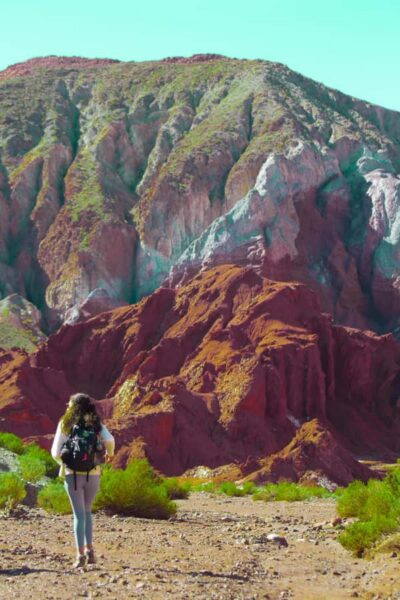
Rainbow Valley Tour: Mesmerizing Colors and Flavors
Read our review →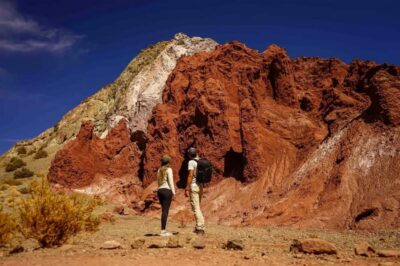
Browse the lists this tour appears in