
Reviewed · SAN PEDRO DE ATACAMA TOURS
San Pedro de Atacama: 3 D. Tour Uyuni and Back to San Pedro
Uyuni is not a quick side trip from San Pedro de Atacama. It is a hard-driving, high-altitude journey across Bolivia’s Altiplano, with red water, volcanoes, flamingos, giant cacti, and the world’s largest salt flat. The reward is scenery so strange it can feel invented, especially when the sun drops across the white salt.
I like the small vehicle setup, which keeps the group to no more than four people per car, and I like the care built into the trip by guides such as Freddy and drivers such as Cristian, Isaac, Javier, and Roly. The guides add useful detail about wildlife, geology, Bolivian history, and local life instead of simply pointing at the view. The main drawback is the physical cost: the first day begins at 6 a.m., reaches altitudes around 4,500 meters, and involves long hours on rough roads.
In This Review
- Key points
- Crossing from San Pedro to Bolivia at 4,500 meters
- Green Lagoon, Dali’s Rocks, and Bolivia’s red water
- From San Cristobal to the Uyuni Salt Flat
- The return through Villa Mar and the Altiplano
- What the guides and drivers add
- Lodging, meals, and what $750 buys
- The physical reality of the three-day schedule
- Who should book this Uyuni trip?
- FAQ
- How long is the San Pedro de Atacama to Uyuni tour?
- What time does the tour begin?
- Where does the tour cross into Bolivia?
- Is the tour conducted in English?
- How many people are in the group?
- What accommodation is included?
- Are meals included?
- Is Incahuasi Island included?
- What should I bring?
- Who should not take this tour?
Key points
- High-altitude border crossing: Start with a shared transfer from San Pedro to Hito Cajones, then enter Bolivia by four-wheel drive.
- Colorful lagoons and wildlife: See Laguna Verde, Laguna Colorada, flamingos, vicuñas, llamas, viscachas, and other Altiplano animals.
- Two very different salt-flat moments: Visit Incahuasi Island’s giant cacti, then watch the sunset from the salt.
- Simple but warm lodging: Kachi Wasi and Hotel Toñito provide heating and hot water, but this is not a luxury tour.
- Fast round trip: Reach Uyuni and return to San Pedro in three days, useful if you cannot spare the usual four-day itinerary.
- Price with practical value: At $750 per person, the trip costs more than a basic shared excursion, but includes transport, meals, lodging, park fees, an English-speaking guide, and a small car group.
Crossing from San Pedro to Bolivia at 4,500 meters
Your day begins with pickup at about 6 a.m. from your hotel in San Pedro de Atacama. The first leg is a shared van transfer of roughly one hour to Hito Cajones, the Chilean-Bolivian border.
From there, you complete immigration formalities and switch to a four-wheel-drive vehicle for the Bolivian portion. That change matters. The route ahead is not a paved coach excursion. It is a remote desert crossing on high roads, where the vehicle and driver are central to your comfort and safety.
The ascent brings wide views of the Atacama Desert, enormous volcanoes, wind-cut rock formations, and open Andean emptiness. You may find the border crossing itself a little slow or plain, but once you are in Bolivia, the trip changes character quickly.
Altitude is the first serious issue. The route reaches about 4,500 meters, and the schedule gives your body little time to adjust. Bring water, snacks, a jacket, and clothes you can layer. One useful feature is that the guides are prepared for altitude problems and may have oxygen available, but you should not treat that as a substitute for taking altitude sickness seriously.
The tour is not suitable for children under 10, people with altitude sickness, or people over 70. That guidance is sensible. Even fit adults can find the combination of altitude, cold, early starts, and long drives tiring.
Other San Pedro De Atacama days people book alongside this one:
- San Pedro de Atacama: El Tatio Geysers Tour
★ 4.7 · 943 reviews - San Pedro de Atacama: Etno-Stargazing Tour with Transfer
★ 4.8 · 629 reviews - Piedras Rojas, Altiplanics Lagoons & Salar Full-Day Tour
★ 4.7 · 592 reviews
Green Lagoon, Dali’s Rocks, and Bolivia’s red water
The first day takes you through a chain of stark volcanic and desert sights. Laguna Verde is one of the early highlights, with its green coloring set beneath high volcanoes. The exact color of the lagoons can change with light and conditions, so think of the route as a series of shifting shades rather than a set of fixed postcard colors.
At the Rocks of Dali, wind-shaped stone forms rise from the desert in shapes associated with the surrealist painter Salvador Dalí. The name is playful, but the rock formations are a good reminder that erosion is the artist here. There is no need for elaborate interpretation to enjoy the stop, though a guide can help explain how wind and weather shaped the area.
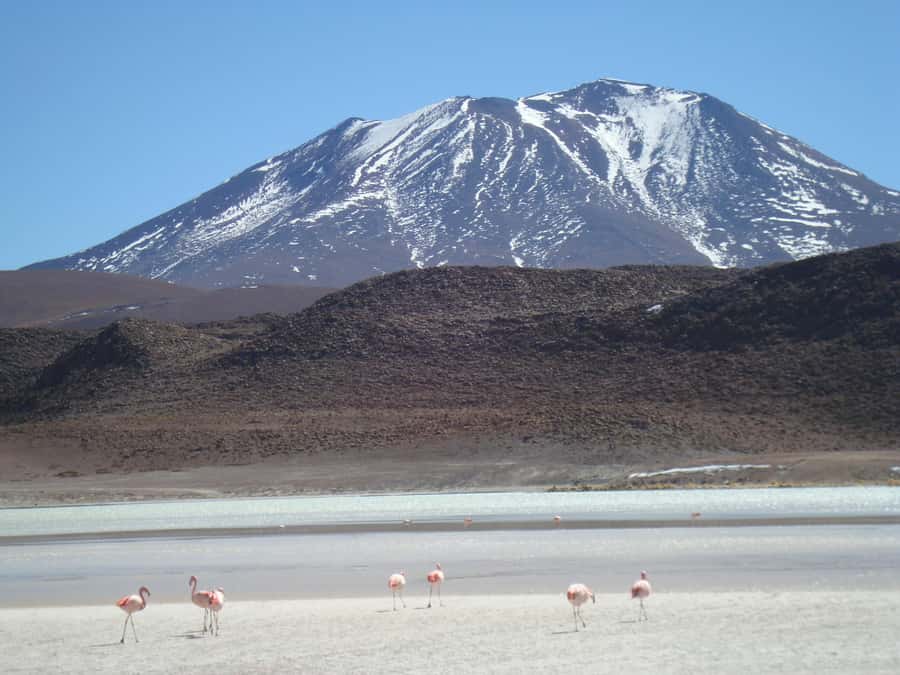
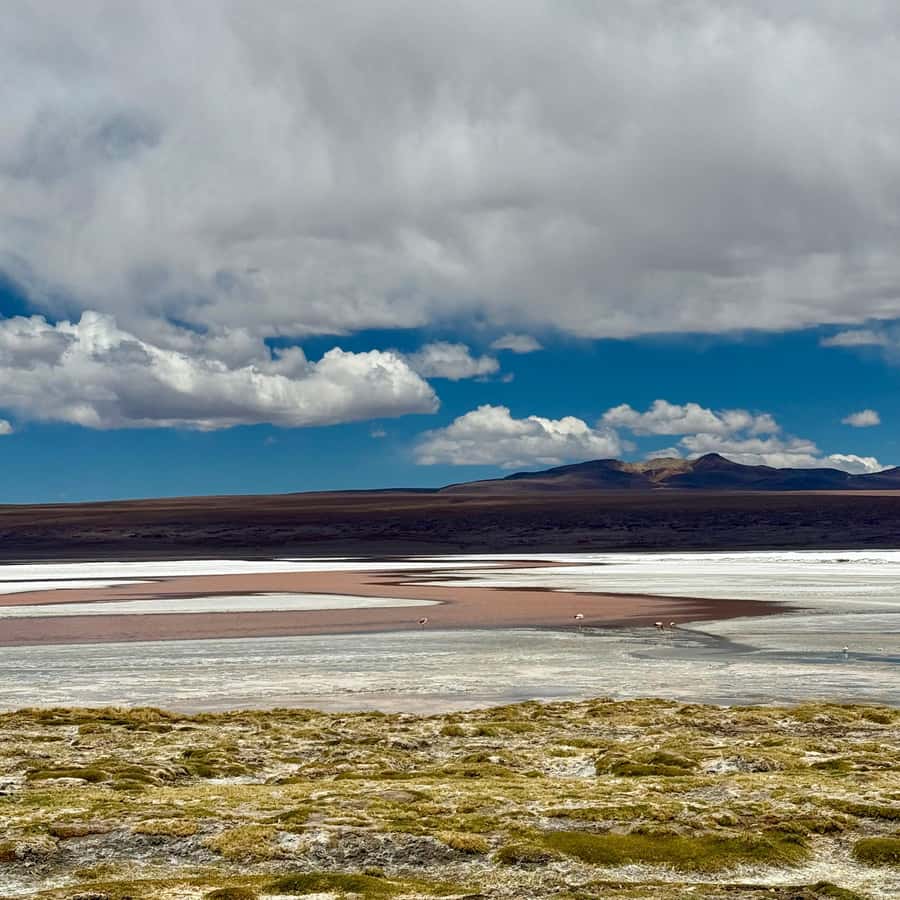
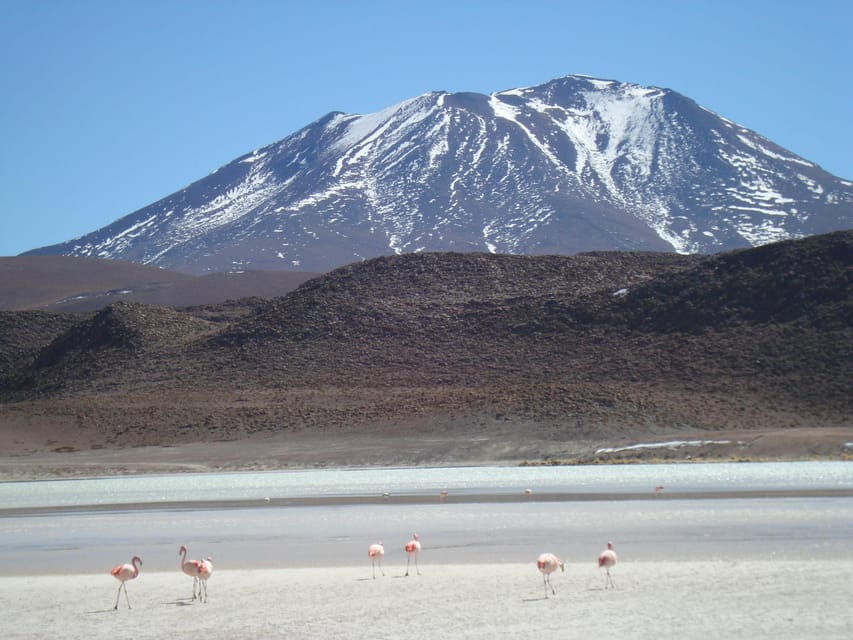
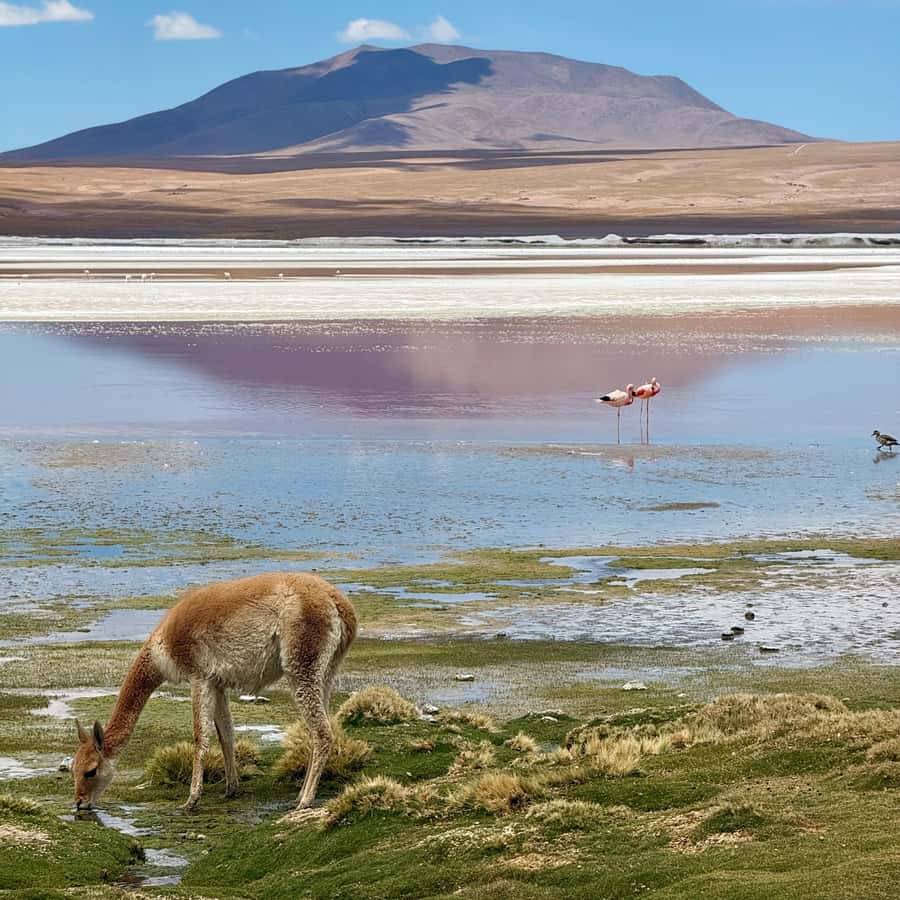
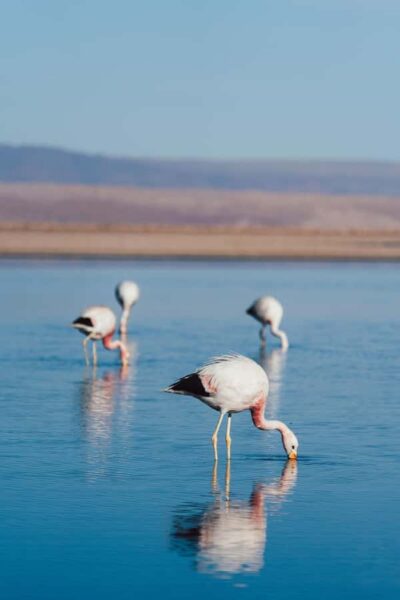
The route continues through lagoons that can appear red, blue, white, or green. Laguna Colorada is the star. Its red tone comes from Dunaliella salina algae and a high level of ocher in the water. The lagoon is also a place to look for hundreds of flamingos, which feed and breed in this high, harsh environment.
This is one of the tour’s best combinations of color and wildlife. You are not simply stopping at a scenic viewpoint. You are seeing how birds and other animals survive where the air is thin, the temperatures are severe, and vegetation is scarce.
The first day is also the most demanding. Expect a lot of time in the vehicle, basic facilities, and rough roads. The reward comes from the scale and silence, but you should not book this day expecting a relaxed sightseeing pace.
That evening, you stay at Hotel Kachi Wasi. It has heating and hot water, which are valuable comforts at altitude. Still, the accommodation is simple, and the trip’s overall standard is practical rather than polished.
From San Cristobal to the Uyuni Salt Flat
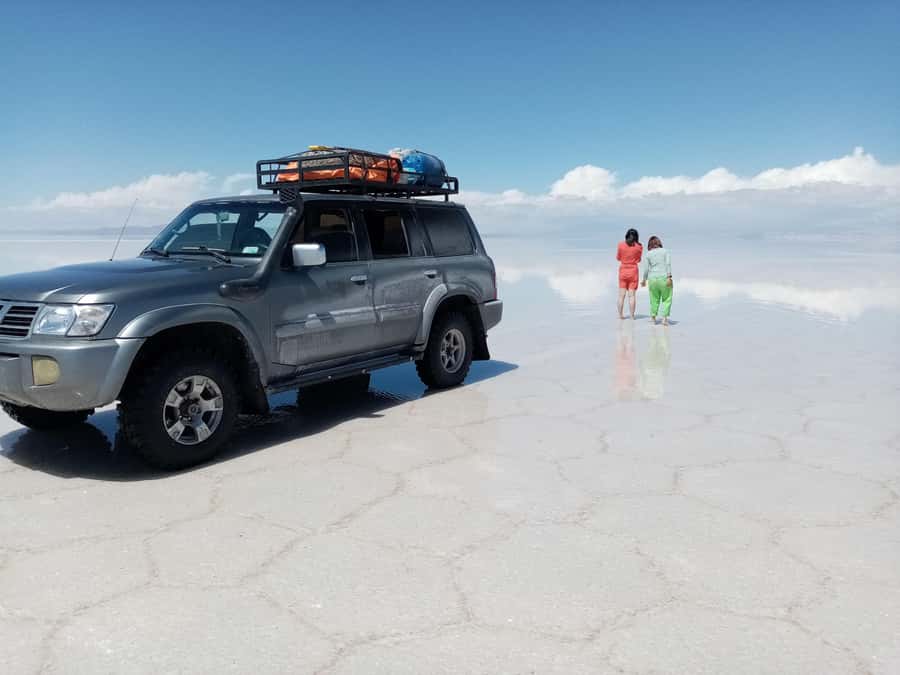
Day two shifts from colored lagoons to the enormous white expanse of Salar de Uyuni. The salt flat covers about 10,000 square kilometers and sits at roughly 3,600 meters above sea level. Its size is difficult to grasp from photographs. Once you are out on the salt, the horizon can seem to erase all distance.
The route includes San Cristobal before reaching the salt flat. The journey remains long, but the scenery opens out in a new way. The earlier volcanic desert feels broken and textured. Uyuni feels almost blank, with bright salt, sharp light, and very few visual reference points.
Incahuasi Island gives the day a welcome change of pace. Despite its name, this is not a tropical island. It is a rocky outcrop rising from the salt, covered with giant cacti that can reach seven or eight meters in height.
The island also contains coral fossils, evidence of the ancient sea that once covered the Altiplano. That detail helps make sense of the salt. You are not just looking at a broad white surface. You are standing in the remains of a much older body of water.
Incahuasi supports a small range of life, including viscachas, lizards, insects, and green hummingbirds. The thin air makes even a short walk feel more strenuous, so take your time. Comfortable shoes are important, and you should bring a jacket because the temperature can change quickly.
The salt flat is also the place for playful photographs. The level surface and lack of scale allow you to create forced-perspective pictures, making people appear tiny or enormous. Your driver may help with photo ideas and positioning, but bring patience. The best images often require a few attempts.
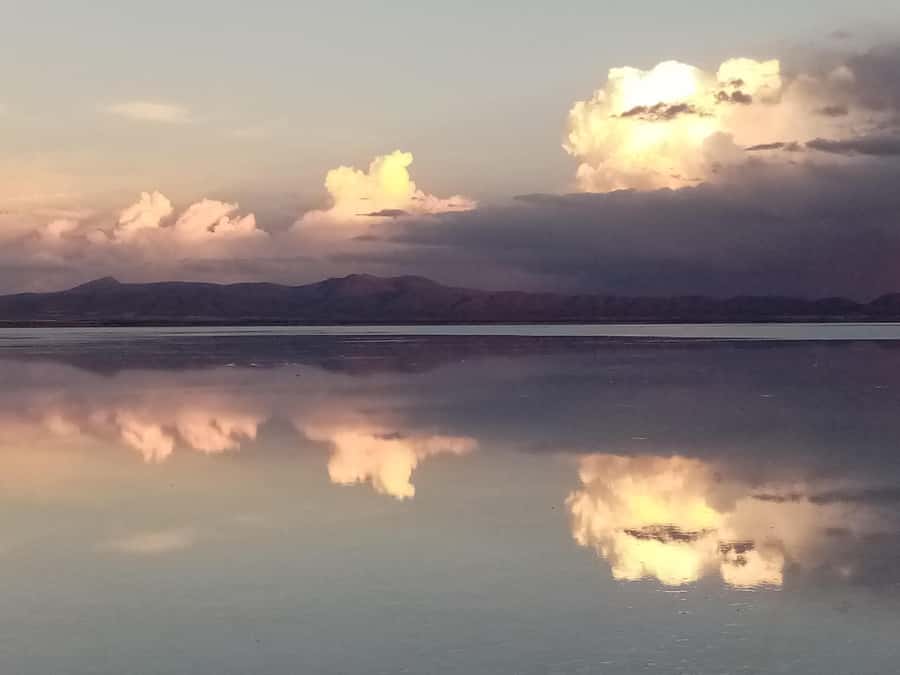
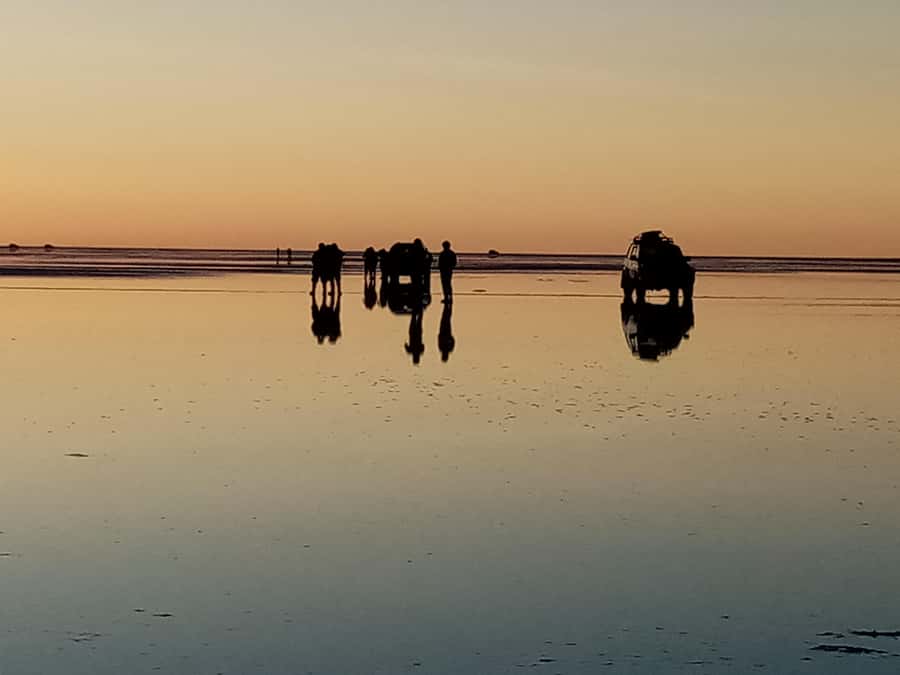
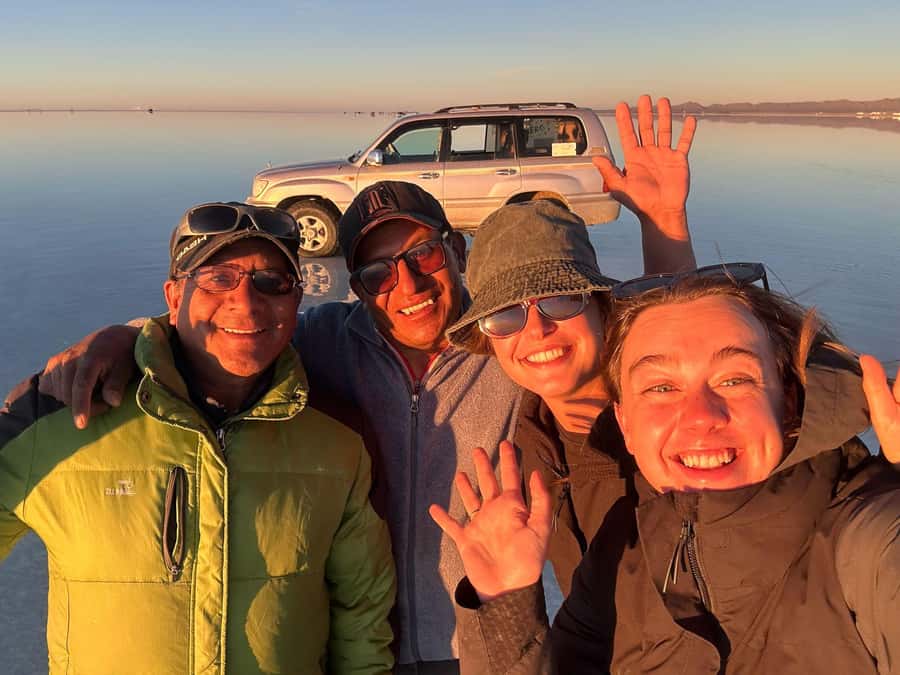
Later, the vehicle crosses the salt toward the shore for sunset. This is the emotional high point of the trip. The white ground reflects changing colors, and the enormous open space gives the sunset a scale you will not get from a normal viewpoint.
You stay at Hotel Toñito, with hot water and heating. Dinner is not included on the second night, so budget for it separately. The listed meals include two breakfasts, three boxed lunches, and one dinner, so check the daily plan before setting out and carry snacks for the long stretches between stops.
The return through Villa Mar and the Altiplano
Day three starts early again. The first stop is the train cemetery near Uyuni, where old locomotives sit in the open desert. It is a brief, unusual stop that shows a different side of the region, tied to the old rail network and the mining economy.
The route then continues by four-wheel drive toward Villa Mar and Lake Catal. One section involves about three hours in the car before a hike around the lake area. The setting includes volcanoes and hundreds of llamas, giving you one more strong wildlife and mountain moment before the return to Chile.
After the hike, the vehicle crosses the Altiplano and the main volcanic range toward Hito Cajones. You are scheduled to reach your San Pedro de Atacama hotel at about 3:30 p.m.
That timing is useful, but you should keep some flexibility in your plans. This is a remote route, and the trip includes border procedures, long drives, rough roads, and weather-sensitive conditions. Do not schedule a tight evening flight or an important appointment immediately afterward.
The return arrangement is different from the opening transfer. You travel out from Bolivia in a private transfer back to San Pedro, using the four-wheel-drive vehicle and driver. That gives the final day a more direct feel, but it remains a full day on the road.
Same long country, a very different day out:
- San Pedro de Atacama: Stargazing Experience
★ 4.7 · 489 reviews - San Pedro Atacama: Baltinache Lagoons
★ 4.6 · 359 reviews - San Pedro de Atacama: Valle de la Luna Guided Tour
★ 4.4 · 312 reviews - San Pedro de Atacama: 3-Day Activity Combo with 4 Tours
★ 4.6 · 247 reviews
What the guides and drivers add
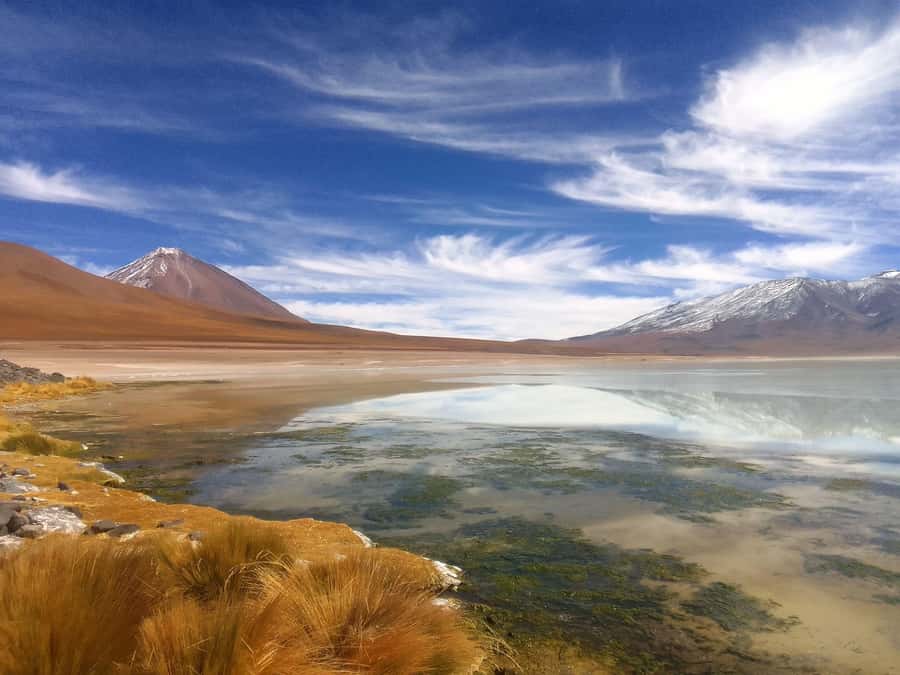
The guide is an important part of the value here. Freddy is frequently named as the lead guide, while Victor is also associated with the trip. The driver may be Cristian, Isaac, Javier, or Roly, depending on the departure.
Freddy’s strongest contribution is interpretation. He can discuss Bolivian history, geography, geology, wildlife, culture, economics, and politics in English. That range changes the trip from a succession of photo stops into a better understanding of why this remote region looks and functions as it does.
The drivers matter just as much. Isaac is praised for careful driving and spotting animals. Cristian is described as skilled on rough roads and helpful with salt-flat photographs. Javier and Roly are also noted for safe driving and finding good viewpoints.
You should still remember that this is not a private luxury safari. The group is limited to 12 participants overall, while the vehicle is described as carrying no more than four people. The exact group arrangement can vary, and several cars may travel together. Ask ahead if having a maximum of four in your own vehicle is important to you.
The good part of a small vehicle is space and attention. You have a better chance of asking questions, stopping briefly for wildlife, and getting help with photos. The tradeoff is that comfort depends heavily on the specific vehicle, driver, road conditions, and weather.
Lodging, meals, and what $750 buys
At $750 per person, this tour is not the cheapest way to see Uyuni. Basic multi-day trips in the region can cost less, but the comparison is not completely even.
This price includes the shared transfer from San Pedro to the border, the private return transfer from Bolivia, a four-wheel-drive vehicle with driver, two nights of accommodation, meals during the trip, park and Incahuasi Island fees, and an English-speaking guide. The small-car format also helps explain the higher cost.
The hotels provide hot water and heating, both of which matter at high altitude. I would describe them as serviceable and comfortable enough for a demanding route, not as destinations in themselves. The standard is simple, and one night may feel merely adequate after a long day.
Food is included for most of the route, with two breakfasts, three boxed lunches, and one dinner. Vegetarian meals can be arranged, and the food is described as good for the setting. You should still pack snacks, especially if you have specific dietary needs or tend to feel weak at altitude.
The second night’s dinner in Uyuni is excluded. That is a small cost compared with the total, but it is easy to overlook when comparing tour prices.
For me, the value comes from the combination of speed, guide support, and transport. You see southern Bolivia and return to San Pedro in three days rather than committing to a longer round trip. If you have limited time, that can make the higher price reasonable.
The physical reality of the three-day schedule
The phrase three days can sound compact. It is compact. The tour covers a large area, begins early, and spends long periods on remote roads.
The first day is especially tough because of the rapid rise from San Pedro to high Altiplano elevations. Cold mornings, thin air, and extended driving can make the body feel worn out before the main sights are finished.
The second day is easier for some people because the route feels more open and the salt flat provides a clear visual focus. The altitude remains high, though, and walking around Incahuasi Island can leave you short of breath.
The third day brings another early start and a long return. A hike near Lake Catal adds movement after hours in the car, so comfortable shoes are essential.
Pack lightly but sensibly:
- A warm jacket and comfortable layered clothing
- Comfortable walking shoes
- Swimwear and a towel for the hot springs
- A change of clothes
- Water, snacks, and possibly an electrolyte drink
- Any personal medication you use for headaches or altitude discomfort
Hot springs and geysers are part of the wider route, but the exact timing of each stop can vary. Bring swimwear and a towel if you want to use the springs.
This trip suits you if you value unusual scenery, wildlife, photography, and local explanation more than soft beds and slow mornings. It is a poor match if you want luxury, pampering, or consistently warm temperatures.
Who should book this Uyuni trip?
I would choose this tour if I had three days, wanted to return to San Pedro, and did not want to arrange separate border transport, lodging, guides, and park tickets. The route packs a great deal into a short time.
I would also choose it if I cared about seeing more than the salt flat. The lagoons, flamingos, volcanoes, Dali’s Rocks, viscachas, vicuñas, llamas, and train cemetery give the trip much greater range.
I would hesitate if I had a history of altitude sickness or strongly disliked rough roads. I would also compare the cost carefully if I were happy in a larger shared vehicle with more basic accommodation.
The strongest part of the experience is the combination of expert explanation and careful driving. The most repeated praise centers on guides such as Freddy and drivers such as Cristian and Isaac, along with the feeling of safety on difficult roads. Those elements are worth paying for in a remote region.
Book this tour if you want a fast, well-supported route through Bolivia’s high desert and can accept basic lodging and tiring days. Skip it if your idea of a holiday requires comfort at every stage. The salt-flat sunset is special, but you earn it with early starts, altitude, and a lot of time in the car.
FAQ
How long is the San Pedro de Atacama to Uyuni tour?
The experience lasts three days and returns you to San Pedro de Atacama.
What time does the tour begin?
Pickup from your hotel is scheduled for 6 a.m. on the first day. The guide is expected at reception about 10 minutes before pickup.
Where does the tour cross into Bolivia?
The shared transfer takes you from San Pedro de Atacama to Hito Cajones, the Bolivian border. You complete immigration there and continue by four-wheel-drive vehicle.
Is the tour conducted in English?
Yes. An English-speaking live guide is included.
How many people are in the group?
The overall group is limited to 12 participants. The tour information also states that there will be no more than four people in the car.
What accommodation is included?
The two listed hotels are Kachi Wasi and Hotel Toñito. Both provide hot water and heating.
Are meals included?
The package includes two breakfasts, three boxed lunches, and one dinner. Dinner on the second night in Uyuni is not included.
Is Incahuasi Island included?
Yes. The entrance fee for Incahuasi Island is included, as is the visit to the Uyuni Salt Flat.
What should I bring?
Bring comfortable shoes, swimwear, a towel, a jacket, comfortable clothing, and a change of clothes. Water, snacks, and an electrolyte drink are also practical for the long days at altitude.
Who should not take this tour?
The experience is not suitable for children under 10, people with altitude sickness, or people over 70. It is also not a good fit for anyone seeking luxury, pampering, or comfortable temperatures throughout the trip.
Just added around San Pedro De Atacama
- Atacama Desert and Magic Bus Visit★ 4.8 · 15 reviews
- Vallecito★ 4.7 · 13 reviews
- San Pedro de Atacama: Valle de la luna★ 3.0 · 3 reviews
- Valle de la Luna: A Moon-Like Escape in Atacama★ 5.0 · 3 reviews
- Valley of the moon★ 5.0 · 50 reviews
- San Pedro de Atacama: Half day Valle de la Luna, Afternoon Tour★ 4.5 · 52 reviews
- Piedras Rojas and Altiplanic Tour★ 4.5 · 38 reviews
- Uyuni Salt Flats 4-days tour from Atacama> private room available★ 4.5 · 44 reviews
San Pedro de Atacama Tours, compared.
Piedras Rojas, Altiplanics Lagoons & Salar Full-Day Tour
Read our review →
Triple tour: Red stones, highland lagoons and Chaxa Lagoon
Read our review →Browse the lists this tour appears in