
Reviewed · FULL-DAY
From San Pedro de Atacama: The Salt Flats Route, Full Day
The best part of this six-hour outing is the quick shift from San Pedro’s desert floor to the high plateau around Salar de Tara, where flamingos, volcanic rock formations, and huge open views share the same harsh setting. You also get a clear look at 5,916-meter Licancábur volcano, a striking landmark near the Chilean border.
I like the shorter schedule, which lets you see high-altitude salt flats without giving up an entire day. I also like the mix of wildlife and geology: flamingos and ostriches on one hand, the Moai de Tara and Pakana Cathedrals on the other. The main drawback is practical: there are no toilets along the route, and the meeting point instructions need careful attention.
In This Review
- Key points at a glance
- From San Pedro to the high plateau
- The first high view: Salar de Atacama and San Pedro
- Licancábur from Hito Cajón Norte
- Birds around the small high-altitude lakes
- Pakana hills and the Farellón de Tara
- Moai de Tara and the Pakana Witness
- Pakana Cathedrals and Salar de Tara
- What $78 gets you
- Guide quality and meeting-point care
- Who should book this route
- Should you book the Salt Flats Route?
- FAQ
- Where does the Salt Flats Route begin?
- What time does the tour depart?
- How long does the activity last?
- What languages does the guide speak?
- Is transport included?
- Is breakfast included?
- Are entrance fees included?
- Are meals and drinks included?
- Can I cancel for a refund?
Key points at a glance
- Licancábur at 5,916 meters: Stop for broad views of one of the region’s most memorable volcanoes.
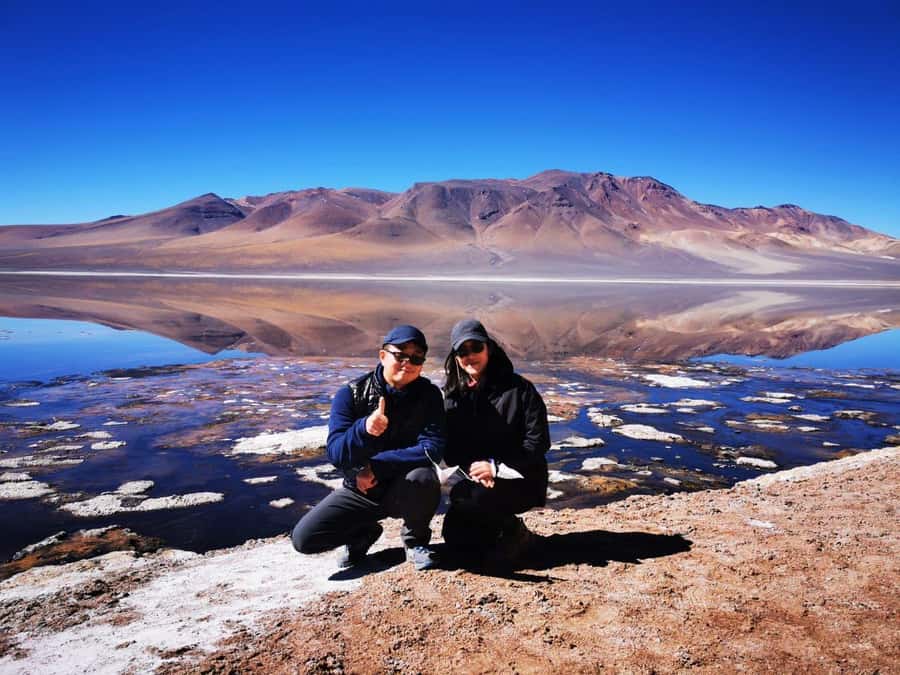
- Salar de Tara at 4,500 meters: Reach a remote salt-flat setting with a distinct high-plateau ecosystem.
- Flamingos and other birds: Small lakes along the route can attract flamingos and other birdlife.
- Moai de Tara and Pakana Cathedrals: See unusual rock pillars and a sculpted volcanic wall shaped by old geological forces.
- Breakfast and a snack included: The morning starts with food, useful before the road climbs into thin, cold air.
- $78 for six hours: A reasonable choice if you want a focused high-altitude excursion, though entrance fees and unspecified meals are extra.
From San Pedro to the high plateau
The day begins at 8:00 a.m. in San Pedro de Atacama, with shared transport heading toward Paso de Jama. That international route climbs steadily through a world formed by lava and volcanic ash. The road itself becomes part of the experience, as the low desert gives way to broad, spare high-country views.
This is not a slow village-to-village outing. You are covering a long route with several scenic stops, so the value comes from variety rather than extended time at one site. If you like seeing how the Atacama changes with altitude, the route gives you that story in a compact format.
A bilingual guide speaks Spanish and English. That matters here because the scenery can look deceptively simple at first glance. A salt flat, a volcanic wall, and a column of rock each have a different geological story, and a guide can help turn a photo stop into something more meaningful.
Breakfast is included at the start, along with a snack later in the outing. That is a welcome touch. The altitude, cold wind, and early departure can make even a short road trip feel demanding, so you should not count on finding food along the way. Drinks and meals not specifically listed are not included.
A few more San Pedro De Atacama trips to weigh up
- Piedras Rojas, Altiplanics Lagoons & Salar Full-Day Tour
★ 4.7 · 592 reviews - Full Day Tour to Geyser del Tatio, Vado Putana and Machuca
★ 5.0 · 134 reviews - Full Day Tour to Ruta de los Salares
★ 5.0 · 105 reviews
The first high view: Salar de Atacama and San Pedro
As the vehicle climbs, the route pauses for a panoramic view over the Salar de Atacama and the Oasis of San Pedro de Atacama. This is one of the useful early stops because it lets you see the relationship between the town, its green oasis, and the immense salt basin beyond it.
From above, San Pedro’s oasis appears as a small pocket of life surrounded by dry country. The contrast helps explain why the town has long been such an important base for exploring northern Chile. You get more than a scenic overlook here: you get a sense of scale.
Take time at this stop to adjust your clothing. Conditions can change quickly at altitude, and the review information specifically warns about cold winds. A light jacket that blocks wind is more useful than relying on warm temperatures in San Pedro. Keep your camera accessible, but do not let photography distract you from the wide view.
Licancábur from Hito Cajón Norte
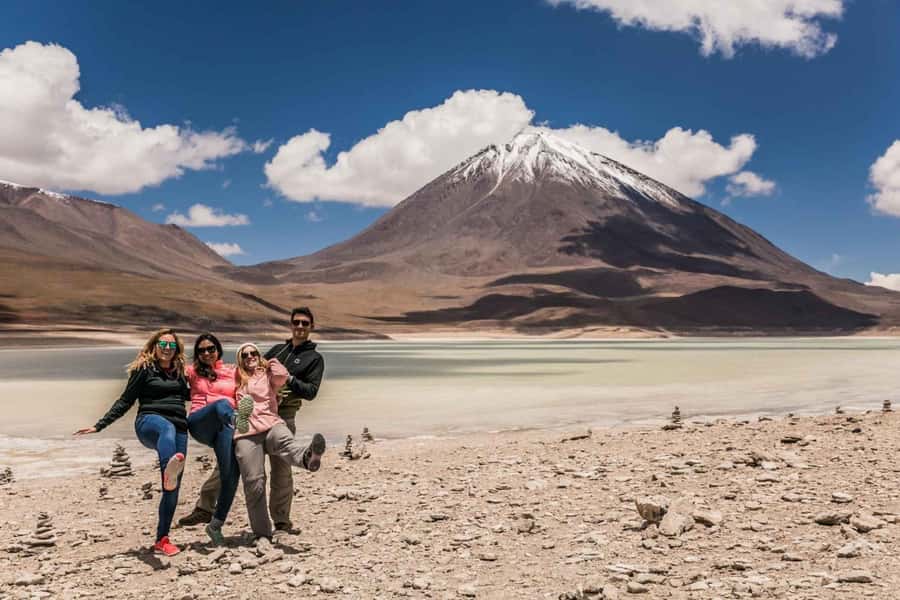
At approximately kilometer 41, the route reaches a crossing or detour toward Hito Cajón Norte and Licancábur, at about 4,200 meters. The volcano rises to 5,916 meters, making it one of the defining sights of the day.
Licancábur is not just another mountain in the distance. Its near-symmetrical volcanic form gives the high plateau a strong focal point, especially when the air is clear. The stop is a good reminder that the Atacama is shaped by fire as much as by dryness. Lava and ash created the terrain, while wind and time have carved it into the forms you see today.
Altitude is a real part of this stop. You are much higher than San Pedro, and the route continues to still higher ground. Move slowly when getting out of the vehicle, drink water you bring with you, and pay attention to how you feel. The activity information does not promise a medical service or special altitude program, so you need to make your own judgment about joining an excursion at these elevations.
Birds around the small high-altitude lakes
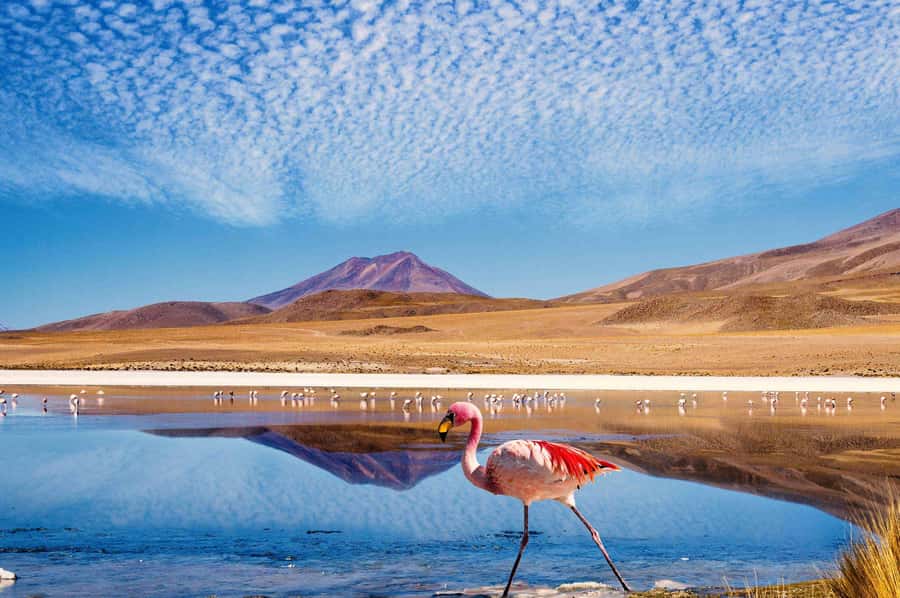
The road continues between high mountains. Around kilometer 75, small lakes provide habitat for flamingos and other birds. Groups of ostriches may also appear along the route.
These sightings are never guaranteed, and the animals may be far from the road. Still, the combination of salt, cold, volcanic ground, and birdlife is what gives this trip its character. It is easy to think of the high plateau as empty, but the lakes show how much life can gather around a small source of water.
Flamingos are the star here, but do not overlook the setting. Their presence makes sense only when you see the shallow water and mineral-rich salt country around them. Bring patience and a zoom lens if you have one. You may spend only a short time near each lake, and the best view can be across open ground rather than close at hand.
The route also gives you a chance to watch for ostriches. The information describes groups appearing along the road, but it does not guarantee sightings. Treat wildlife as a bonus, not the sole reason to book.
Same long country, a very different day out:
- San Pedro de Atacama: El Tatio Geysers Tour
★ 4.7 · 943 reviews - San Pedro de Atacama: Etno-Stargazing Tour with Transfer
★ 4.8 · 629 reviews - San Pedro de Atacama: Stargazing Experience
★ 4.7 · 489 reviews - San Pedro Atacama: Baltinache Lagoons
★ 4.6 · 359 reviews
Pakana hills and the Farellón de Tara
At around kilometer 91, the vehicle passes through the Pakana hills and then circles the Farellón de Tara. The Farellón is a rock wall carved into striking shapes, and it is one of the route’s more unusual geological stops.
This part of the journey feels different from the open salt basin. Instead of a flat expanse, you see rock formations shaped by volcanic activity and erosion. The forms can look almost designed, though their origin is entirely natural. The attraction is visual first, but a bilingual guide can add useful context about the geological events that formed them.
The route does not simply rush to Salar de Tara. That is one reason I find the trip appealing at this price. You get a chain of connected sights, each showing a different side of the high plateau. The tradeoff is that you should not expect long walks or extended time at every formation. This is a scenic circuit, not a hiking tour.
Moai de Tara and the Pakana Witness
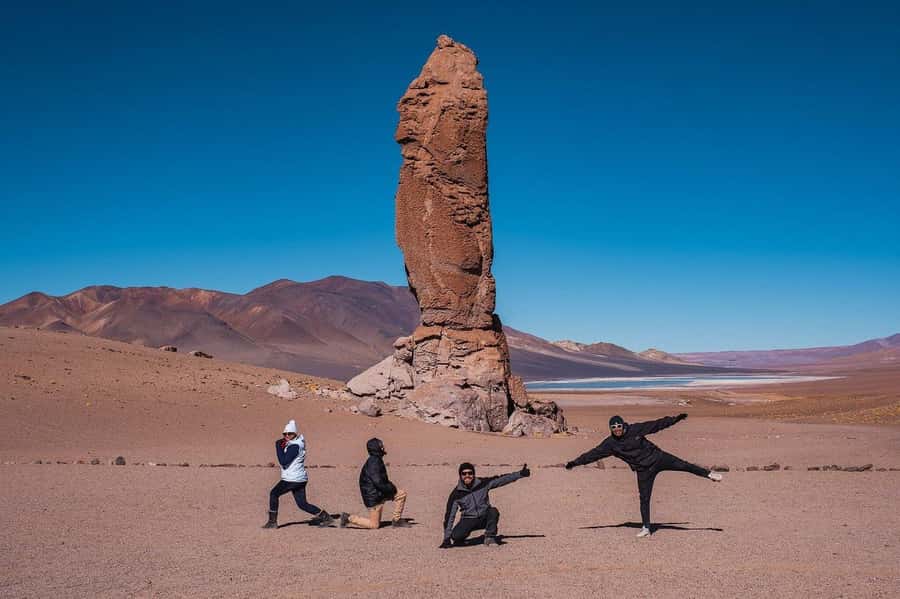
A little farther on, the route reaches the Moai de Tara, also called the Pakana Witness. These are columns and rock structures preserved from geological periods linked to violent volcanic events during the Tertiary period.
The name Moai de Tara refers to their upright, statue-like appearance. They are not carved monuments, and that distinction matters. Their shapes come from natural geological processes, which makes the stop a fine example of how the Atacama can look almost artificial without human construction.
You will want to look at the formations from more than one angle. Their outlines change as you move, and the open surroundings make them easy to frame in photographs. Keep in mind that wind can be strong and cold here. The first booking account specifically advised preparing for cold winds, so a hat and secure layers are practical additions.
There are no toilets anywhere along the route, according to the most specific practical feedback available. Plan accordingly before leaving San Pedro. This is not a minor issue on a six-hour trip, particularly when the road reaches remote areas with no facilities.
Pakana Cathedrals and Salar de Tara
After the Moai de Tara, you get a panoramic view of the Pakana Cathedrals. These rock forms continue the route’s geological theme, but their scale gives the stop a different feel. The name suggests tall, cathedral-like shapes, and the view is meant to be appreciated from a broad vantage point rather than through a close technical visit.
The final major destination is Salar de Tara, located at about 4,500 meters. Here the salt-flat environment supports a distinct ecosystem, including Chilean flamingos. The setting is remote, stark, and unusually quiet, with salt, rock, sky, and water forming the main visual elements.
This is the point where the route’s different pieces come together. You have seen the oasis from above, the volcano at 4,200 meters, high-altitude lakes with birds, and the volcanic formations of Pakana. Salar de Tara provides the final setting where those elements feel part of one large high plateau.
The phrase salt flats can suggest a simple white plain, but Salar de Tara is more varied than that. You may see salt deposits, open ground, rock formations, and small bodies of water supporting birdlife. The appeal lies in the combination of geology and ecology, not only in the salt itself.
What $78 gets you
At $78 per person, the trip offers fair value for a focused six-hour outing. Shared transport, a bilingual Spanish and English guide, breakfast, and a snack are included. You also cover a long route with several named stops, rather than paying for a short viewpoint visit.
The price looks strongest for someone who wants to see the high plateau but does not want a longer full-day schedule. One booking account specifically appreciated the shorter option and the extra sleep it allows compared with longer salt-lagoon excursions. The 8:00 a.m. departure is early, but it is not an extreme pre-dawn start.
You need to budget for entrance fees, since they are not included. Meals and drinks not specified are also extra, so bring water and any food you know you will need. The available details do not state the amount of any entrance charge, so ask before departure if you want a precise total.
The vehicle is shared, which keeps the price down but means you will not control the pace. Stops are shaped by the group and the route. If you prefer private transport, long walks, or time to linger at one site, this may feel too structured.
Guide quality and meeting-point care
The guide can make a real difference on a route where much of the attraction is geological. Marta received especially strong praise for helping make the stops enjoyable, so if she is assigned to your departure, you can expect a guide who has made a good impression on this route.
The guide service is offered in Spanish and English. Confirm your preferred language at booking if that matters to you, since the activity lists both but does not promise a particular guide for every departure.
Pay close attention to the meeting-point instructions. One person missed the outing after arriving 30 minutes early but still being unable to find the exact meeting place because the directions were unclear. That is the most serious warning attached to the experience. Do not rely on finding the vehicle by chance. Confirm the location in advance and allow time to get your bearings.
Free cancellation is available up to 24 hours before the activity for a full refund. You can also reserve and pay later, which helps if your San Pedro plans depend on weather, altitude, or changing schedules.
Who should book this route
I would choose this trip if you want a compact introduction to the high plateau and care about seeing several types of scenery in one morning. It suits you especially well if Licancábur, flamingos, and unusual rock formations are more important than a long stop at one salt lagoon.
The route also fits a trip with limited time in San Pedro. Six hours leaves room for another afternoon activity, rest, or a slower meal in town. That shorter format is a real advantage compared with excursions that run from very early morning until evening.
You should think twice if you are uncomfortable at 4,200 to 4,500 meters, need regular toilet access, or want a relaxed, unhurried pace. The activity moves through remote country, includes shared transport, and provides no toilets along the way. The cold wind can also make the stops feel tougher than the duration suggests.
Should you book the Salt Flats Route?
Book it if you want a well-priced, shorter route that combines salt flats, high-altitude wildlife, Licancábur, and the Pakana formations. The strongest reasons to go are the variety, the scenic geology, the included breakfast and snack, and the chance to reach Salar de Tara without giving up a full day.
Before paying, confirm the meeting point, ask about entrance fees, and prepare for cold wind and altitude. If you can manage those conditions and plan ahead for the lack of toilets, this is a practical way to see a remote part of northern Chile in six hours.
FAQ
Where does the Salt Flats Route begin?
The activity begins with pickup in San Pedro de Atacama.
What time does the tour depart?
The stated departure time is 8:00 a.m.
How long does the activity last?
The activity lasts six hours.
What languages does the guide speak?
The live guide service is available in Spanish and English.
Is transport included?
Yes. Shared transport and pickup are included.
Is breakfast included?
Yes. Breakfast and a snack are included.
Are entrance fees included?
No. Entrance fees are not included in the stated price.
Are meals and drinks included?
Only the listed breakfast and snack are included. Other meals and drinks are not specified as included.
Can I cancel for a refund?
Yes. You can cancel up to 24 hours in advance for a full refund.
Just added around San Pedro De Atacama
- Atacama Desert and Magic Bus Visit★ 4.8 · 15 reviews
- Vallecito★ 4.7 · 13 reviews
- San Pedro de Atacama: Valle de la luna★ 3.0 · 3 reviews
- Valle de la Luna: A Moon-Like Escape in Atacama★ 5.0 · 3 reviews
- Valley of the moon★ 5.0 · 50 reviews
- San Pedro de Atacama: Half day Valle de la Luna, Afternoon Tour★ 4.5 · 52 reviews
- Piedras Rojas and Altiplanic Tour★ 4.5 · 38 reviews
- Uyuni Salt Flats 4-days tour from Atacama> private room available★ 4.5 · 44 reviews
Full-Day, compared.
Small-Group Cajón del Maipo Full-Day Tour and Picnic
Read our review →
Piedras Rojas, Altiplanics Lagoons & Salar Full-Day Tour
Read our review →
Full day Vina del Mar and Valparaiso experience
Read our review →
Browse the lists this tour appears in