
Reviewed · ATACAMA STARGAZING TOURS
Milky Way Sanctuary Stargazing Tour at Pangue Observatory
At Pangue Observatory, the real show begins after the sun drops behind the pre-Andean mountains. Under the Gabriela Mistral Dark Sky Sanctuary, you can view planets, nebulae, clusters, galaxies, and supernova remnants through large 16-inch or 25-inch telescopes. This is not a quick look through one crowded telescope. The group is capped at eight people.
I like the small-group format and the serious equipment. You get time to ask questions and move between more than 10 stellar objects instead of being rushed along. I also like the setting: Pangue sits about 1,500 meters above sea level, opposite major observatories such as Tololo, SOAR, Gemini, and the future Vera Rubin Observatory.
The main drawback is timing. This is a six-hour evening outing, and the return to La Serena is late. It is also not scheduled near the full moon, so dates are limited. The experience is best for people who truly want astronomy, not simply a pretty night drive.
In This Review
- Key points before you book
- Why Pangue is such a strong place for stargazing
- The ride from La Serena to Vicuña
- Sunset and mountain scenery at Pangue
- What you see through the telescopes
- The planets, stars, and unusual objects
- Why the moon phase changes the experience
- A six-hour evening, broken down
- Is the $225 price fair?
- Who will enjoy this most
- Booking, language, and cancellation details
- Should you book the Pangue Observatory tour?
- FAQ
- Where does the Pangue Observatory tour begin?
- How long does the tour last?
- How many people are in the group?
- Which languages are available?
- What can you see through the telescopes?
- Why is the tour not held close to the full moon?
- What should you bring?
Key points before you book
- Small group of eight or fewer: You get a more personal session at the telescope and room for questions.
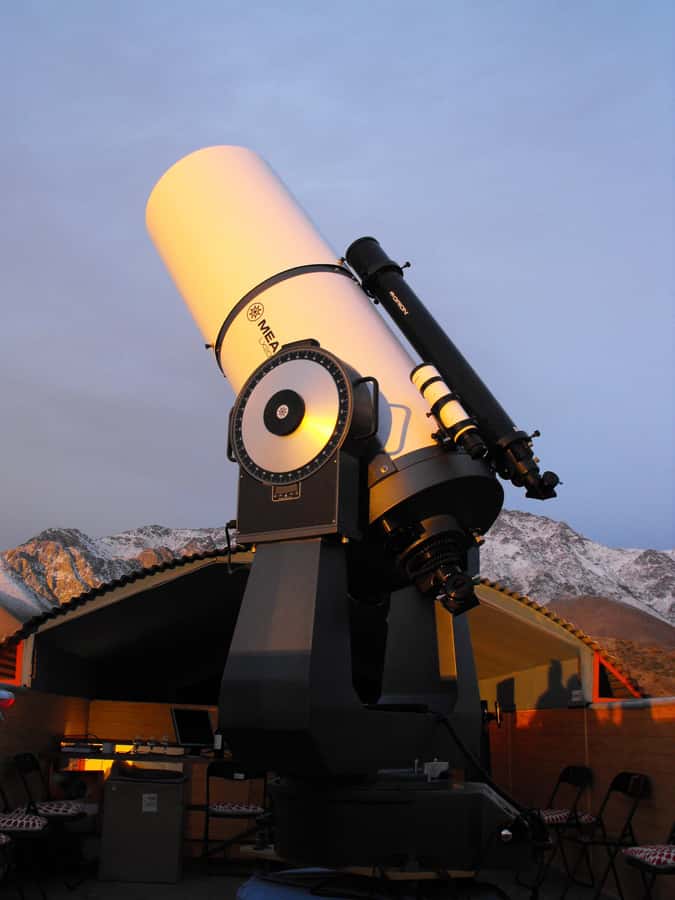
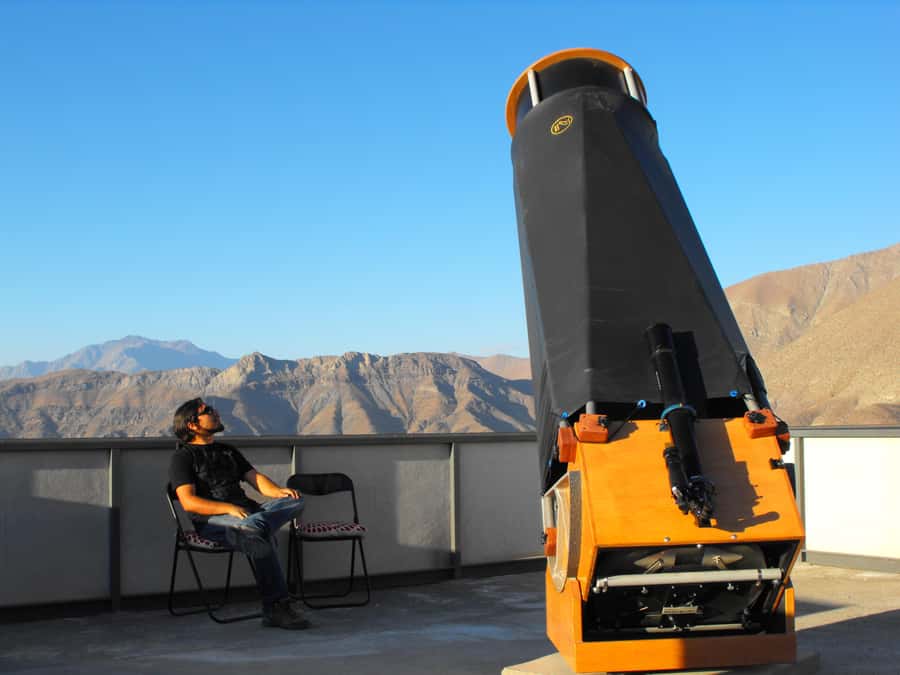
- 16-inch and 25-inch telescopes: Large instruments and specialized eyepieces bring distant objects into clearer view.
- More than 10 celestial targets: Expect a mix of planets, nebulae, clusters, galaxies, stars, and supernova remnants.
- A one-hour drive from La Serena: The trip passes through Vicuña, giving you a short break in the Elqui Valley.
- Moon phase matters: The tour does not operate on nights close to a full moon because bright moonlight weakens the view.
- Coffee area at the observatory: Free coffee, tea, and water are available while you wait or warm up.
Why Pangue is such a strong place for stargazing
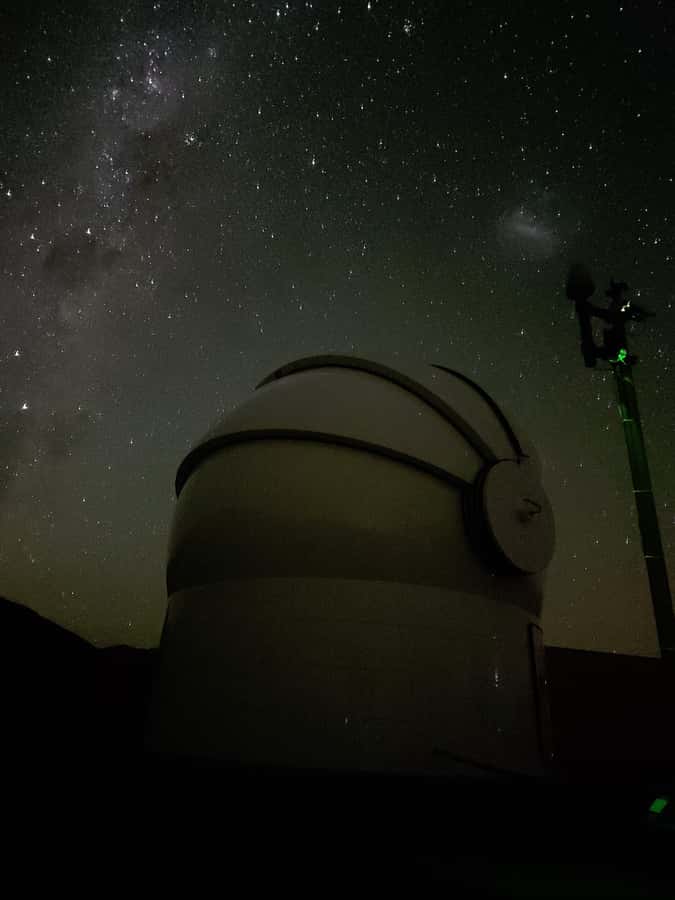
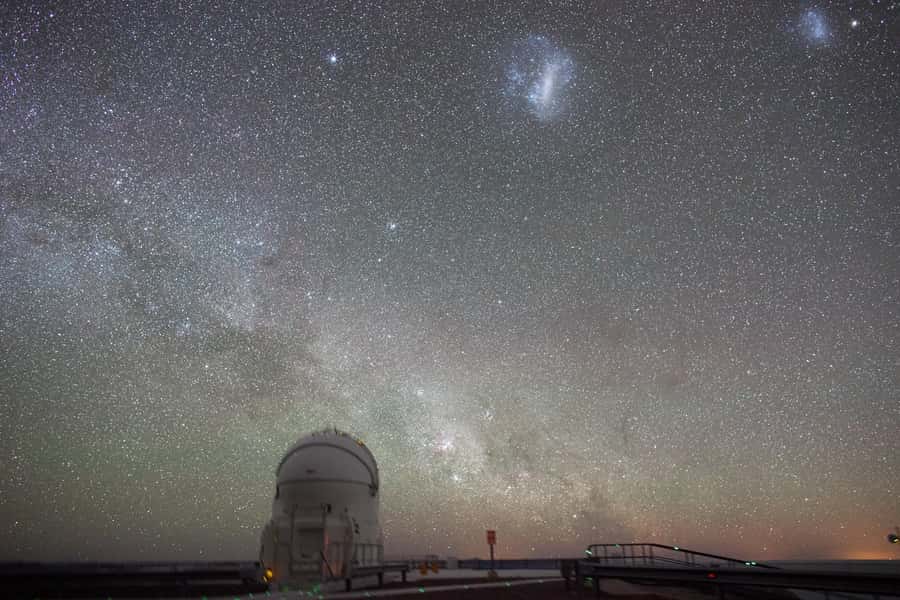
Chile’s Elqui Valley is famous for dry, clear skies, and Pangue Observatory takes advantage of that setting. The observatory is about 1,500 meters above sea level in the pre-Andean mountain range, within the Gabriela Mistral dark skies sanctuary.
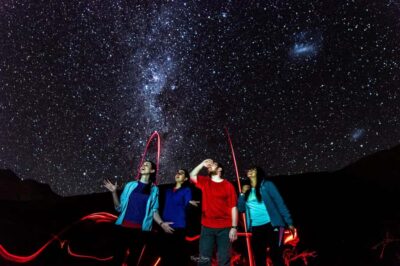
That location matters more than fancy marketing. Dry air and low light pollution help stars appear sharper and more numerous. On a good night, the Milky Way is not a faint smudge. It can become the main feature overhead, with the center of our galaxy visible among countless stars.
Pangue is also positioned opposite a remarkable group of scientific facilities. Tololo, SOAR, Gemini, and the Vera Rubin Observatory are all part of the wider astronomical setting. The Vera Rubin Observatory is known for its huge digital camera, while Pangue gives you a more direct experience: you look through an eyepiece and see the night sky with your own eyes.
That difference is important. This is not a visit to a research observatory where you simply admire buildings from a distance. You come to Pangue to observe the sky through powerful amateur and visitor-focused equipment, with a guide explaining what you are seeing.
More atacama stargazing tours in Chile:
- San Pedro de Atacama: Etno-Stargazing Tour with Transfer
★ 4.8 · 629 reviews - San Pedro de Atacama: Stargazing Experience
★ 4.7 · 489 reviews - Astronomical Tour with Guide and Pick Up San Pedro de Atacama
★ 4.5 · 145 reviews
The ride from La Serena to Vicuña
Pickup is provided at your accommodation in La Serena or nearby areas. You need to wait at the reception, which keeps the departure simple and avoids confusion at a large meeting point.
The drive to Vicuña takes about an hour. It is a useful transition from the coastal city to the Elqui Valley, though you should not expect a full sightseeing tour during this section. The point is to reach darker skies and higher ground.
Vicuña provides a 15-minute break. You have a little free time to stretch your legs and see a small part of the town. One strong review singled out Vicuña as especially appealing, so this short stop can add a pleasant local touch to a trip focused mainly on astronomy.
Still, keep expectations in check. Fifteen minutes is enough for a brief pause, not enough for a full visit. If Vicuña interests you, consider returning during the day on another outing.
Sunset and mountain scenery at Pangue
After the stop in Vicuña, the journey continues toward Pangue. The observatory visit and scenic portion take about two and a half hours, including sunset, views along the way, and the guided astronomy session.
Arriving before dark is useful. You see the shape of the mountains and the wide valley before the stars take over. The sunset also gives you a natural start to the evening, rather than dropping you straight into a dark field with no sense of place.
Bring a long-sleeved shirt and comfortable clothes. Even if the day in La Serena or Vicuña feels warm, the temperature can change after sunset at a high, open observatory. The information provided does not specify winter temperatures or heated viewing areas, so dressing in layers is the sensible choice.
Pangue has a small coffee area with comfortable seats. Coffee, tea, and water are free. This is a modest feature, but it matters during a six-hour outing, especially when you are waiting between viewing sessions or taking a break from the cold.
Alcohol is not allowed in the vehicle. That is worth knowing before pickup, since the tour involves a long drive in each direction.
What you see through the telescopes
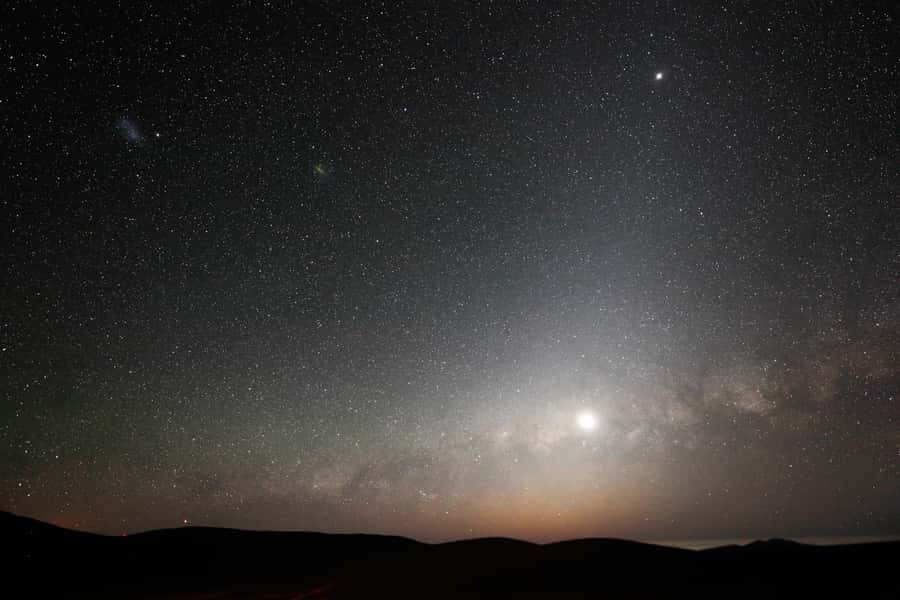
The program is built around observing more than 10 stellar objects. The exact list changes with the season, the time of night, and the visibility of each object, so you should not treat any one target as guaranteed.
The planned range is broad:
- Planets
- Nebulae
- Star clusters
- Galaxies
- Supernova remnants
- Massive blue stars
- Red dwarfs
- The center of the Milky Way
- Other visible objects selected by the guide
The large telescopes are the heart of the experience. Pangue uses 16-inch and 25-inch instruments with advanced eyepieces. Larger equipment can gather more light, which helps reveal faint objects that would be difficult to see with a small backyard telescope.
The experience is not just about magnification. A good guide needs to explain what is in the eyepiece, where the object sits in the wider sky, and why it matters. The tour is offered in English, French, and Spanish, so you can select the language that makes technical explanations easiest to follow.
One guest described having enough time to ask questions and observe several objects through the telescope. That is exactly where the eight-person limit earns its keep. A large crowd can turn astronomy into a queue. Here, you have a better chance of taking your time and returning to the eyepiece without feeling hurried.
Same long country, a very different day out:
- Santiago: Cajon del Maipo/Embalse del Yeso Tour with Picnic
★ 4.3 · 3,789 reviews - Santiago: Vina Del Mar, Valparaiso, Casablanca & Reñaca Tour
★ 4.2 · 2,838 reviews - Small-Group Cajón del Maipo Full-Day Tour and Picnic
★ 4.5 · 2,277 reviews - Santiago: Cajon del Maipo & Embalse El Yeso Trip with Picnic
★ 4.5 · 1,859 reviews
The planets, stars, and unusual objects
Bright planets are often the easiest targets for a first astronomy outing. A recent experience included clear views of Mars, Saturn, and Jupiter. Seeing a planet through a telescope gives you a more direct sense of its shape and position than a photograph on a screen.
The program can also move beyond familiar planets. A supernova remnant and a dying star were among the objects observed during one small-group session. These are the moments that can make the evening feel less like a standard sightseeing stop and more like a guided tour through space.
Nebulae and clusters offer a different kind of view. A cluster may appear as a tight gathering of stars, while a nebula can look softer and more diffuse. Galaxies are usually much fainter, which makes the dark location and telescope size especially important.
You should also understand the limits of visual astronomy. What you see through an eyepiece will not always resemble a colorful space-agency photograph. Many objects appear as pale points, hazy shapes, or subtle patches of light. The reward comes from knowing what you are looking at and understanding how far away it is.
Why the moon phase changes the experience
Pangue does not schedule this stargazing tour close to the full moon. That may seem inconvenient when you are trying to fit the excursion into a holiday, but it is a sound choice.
A bright moon can wash out faint stars and make nebulae, galaxies, and other dim objects harder to see. A moonlit night can still be beautiful, but it is not ideal for viewing the Milky Way or the faint targets that make a serious observatory visit worthwhile.
Book at least 24 hours ahead whenever possible. Same-day bookings may have few available spaces, especially because the group is limited and the schedule must match suitable moon conditions.
The best approach is to check dates early, then build your La Serena plans around the confirmed evening. This tour is not as flexible as a regular city attraction, but the limits protect the quality of the viewing.
A six-hour evening, broken down
The full outing lasts about six hours. Pickup begins in La Serena, followed by roughly one hour on the road to Vicuña.
At Vicuña, you have a 15-minute break. Then you continue to Pangue for the main portion of the evening, including the visit, guided explanations, sunset, and stargazing. The observatory section takes about two and a half hours.
The return includes about 30 minutes of bus travel back through Vicuña, followed by another hour to La Serena. In practical terms, this is a long evening with several hours in a vehicle. If you want a relaxed dinner or an early night, plan around the tour rather than trying to fit it into a busy schedule.
The driving has received strong praise, and Cristobal was specifically noted for being accommodating. That is valuable on a route where the transport time is a large part of the outing. Still, comfort depends on your own tolerance for evening road travel and sitting in a vehicle after a full day of sightseeing.
Is the $225 price fair?
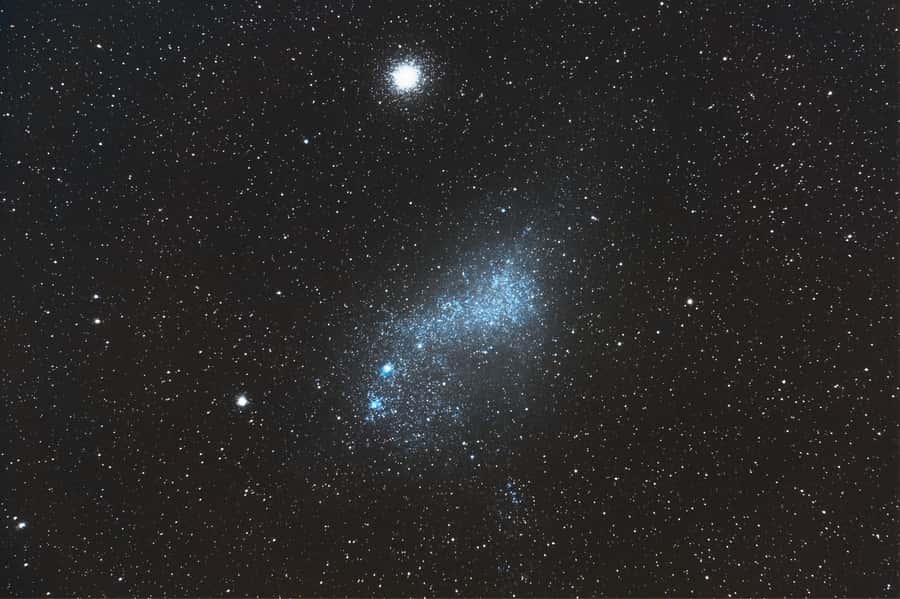
At $225 per person, this is not a budget excursion. The value comes from the combination of transport, a small group, a specialized observatory, multilingual guiding, large telescopes, and a session designed around several celestial targets.
You are not paying only for a transfer to a viewpoint. You are paying for access to a dedicated astronomy experience in one of Chile’s most important areas for sky observation. The group size also matters. With no more than eight participants, the price buys personal access to the telescope rather than a rushed turn in a large crowd.
The cost makes more sense if astronomy is one of your main interests. If you simply want to see stars from the countryside, there may be cheaper options. If you want a structured explanation, powerful equipment, and a chance to observe planets, faint objects, and stellar remnants, Pangue offers a more serious evening.
Free coffee, tea, and water are useful but should not influence your decision much. The real value is the site, the equipment, and the time at the eyepiece.
Who will enjoy this most
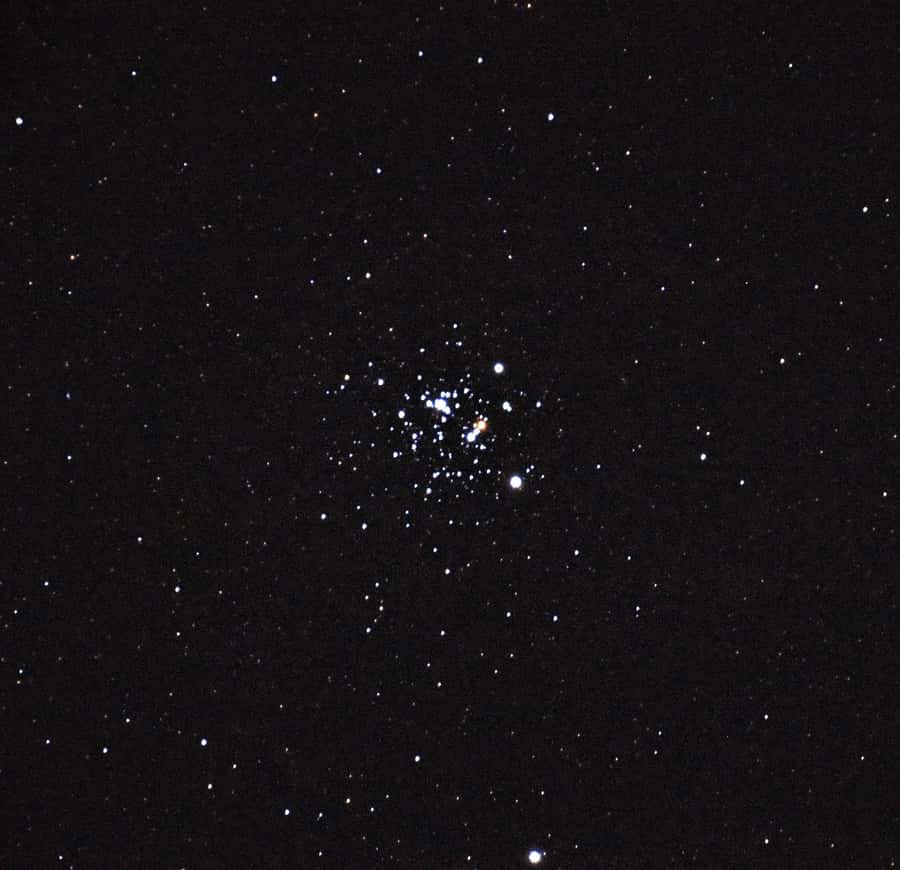
I would recommend Pangue to anyone curious about astronomy, including beginners. You do not need to know the constellations or understand telescope design before arriving. The guide and observatory staff provide the explanation.
It is also a good match for couples, families with older children, and small groups of friends who want a memorable evening outside La Serena. The small-group limit helps people who prefer conversation and questions over a quick photo stop.
This is less suitable for visitors using wheelchairs, since the experience is not listed as wheelchair accessible. You should also think carefully about the late return if you have mobility concerns, young children, or a packed schedule the next morning.
People who dislike cold evenings, long drives, or changing plans around the moon may find the tour demanding. The astronomy is the point, so patience pays off.
Booking, language, and cancellation details
The tour provides pickup from accommodation in La Serena or nearby areas, and you wait at reception for the vehicle. It is available with live guiding in English, French, or Spanish.
You can reserve now and pay later, which helps if your itinerary is still taking shape. Free cancellation is available up to 24 hours before the tour for a full refund.
Because Pangue uses small groups and avoids nights near the full moon, I would not leave this booking until the same day. Confirming at least 24 hours ahead gives you a better chance of finding a suitable date.
Should you book the Pangue Observatory tour?
Book it if you want a focused astronomy night rather than a casual star-viewing stop. The small group, 16-inch and 25-inch telescopes, experienced guides, and dark mountain setting give the evening real substance.
I would be especially keen to book when the moon phase is favorable and the sky forecast looks promising. I would also leave room in the schedule for the six-hour round trip and bring a warm extra layer.
Skip it if $225 feels too high for one evening, if you want a short activity, or if you need wheelchair access. But if seeing Saturn, Jupiter, a nebula, a star cluster, or even a supernova remnant through serious equipment is on your Chile wish list, Pangue is a strong choice. The night sky here is not background scenery. It is the main event.
FAQ
Where does the Pangue Observatory tour begin?
Pickup is included from your accommodation in La Serena or nearby areas. You should wait at the reception of your accommodation.
How long does the tour last?
The experience lasts six hours, including transportation between La Serena, Vicuña, and Pangue Observatory.
How many people are in the group?
The group is limited to no more than eight participants.
Which languages are available?
Live guiding is available in English, French, and Spanish.
What can you see through the telescopes?
The session may include planets, nebulae, clusters, galaxies, massive blue stars, red dwarfs, supernova remnants, and other stellar objects. More than 10 objects are included in the observation program.
Why is the tour not held close to the full moon?
Bright moonlight creates light pollution in the sky and can make faint stars and other distant objects harder to see.
What should you bring?
Wear comfortable clothes and bring a long-sleeved shirt. Coffee, tea, and water are available at the observatory. Alcoholic drinks are not allowed in the vehicle.
Just added around Chile
- Volcanic Refuges: Excursion to Underground Civilization★ 4.7 · 8 reviews
- Walking City Tour with Funicular, Cable Car and Tasting★ 4.3 · 6 reviews
- Viña del Mar and Valparaiso: guided day tour★ 4.2 · 8 reviews
- Ascent to Villarrica volcano 2,847masl, from Pucón★ 4.8 · 36 reviews
- Viña del Mar and Reñaca 4-Hour Pacific Coast Tour★ 4.7 · 14 reviews
- VIÑA DEL MAR AND VALPARAISO TOUR★ 4.8 · 20 reviews
- Viña del Mar: Guided city tour★ 4.9 · 10 reviews
- Valparaíso y Viña del Mar full day★ 4.6 · 3 reviews
Atacama Stargazing Tours, compared.
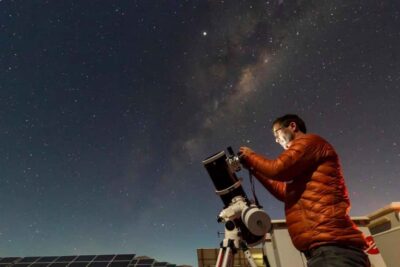
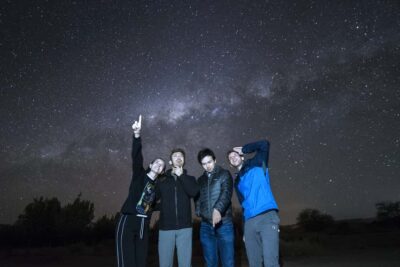
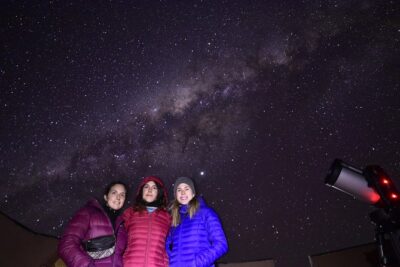
Astronomical Tour with Guide and Pick Up San Pedro de Atacama
Read our review →
“Astronomical Adventure in San Pedro de Atacama”
Read our review →

Pisco Elqui: Mountaintop Stargazing and Night Portrait
Read our review →Browse the lists this tour appears in