
Reviewed · EASTER ISLAND TOURS
Birdman Cult and Caves
Rapa Nui’s greatest stories are carved into stone, buried in volcanic rock, and spread across the rim of Rano Kau. This six-hour tour links Ahu Akivi, Ana Te Pahu, Puna Pau, Vinapu, Rano Kau, and Orongo, giving you a broad look at the island’s moai culture, geology, and Birdman tradition in one day.
I like the way the route joins famous sights with less obvious ones, especially the ceremonial cave of Ana Te Pahu and the red scoria quarry at Puna Pau. I also like having pickup, drop-off, transport, and a local guide included, which removes much of the guesswork on an island where the sites are spread out.
The main caution is the guide. The experience has an overall rating of 4 out of 5 from five reviews, but one 3-out-of-5 review specifically called the guide poor. Since interpretation is a major part of this tour, that is worth weighing before you book.
In This Review
- Key points at a glance
- Why this route makes sense for a first look at Rapa Nui
- Ahu Akivi and the seven moai
- Ana Te Pahu, a ceremonial cave on Rano Kau
- Puna Pau and the red scoria topknots
- Vinapu and precise megalithic construction
- Rano Kau, a crater with a wide Pacific view
- Orongo and the Birdman cult
- What the six-hour schedule means for you
- The guide question deserves attention
- Is the $90 price good value?
- Who should book this experience?
- Should you book Birdman Cult and Caves?
- FAQ
- How long does the Birdman Cult and Caves tour last?
- What locations are included?
- Is transportation included?
- Is the National Park ticket included?
- What languages are available?
- Is the activity wheelchair accessible?
- Can I cancel for a full refund?
Key points at a glance
- Six major Rapa Nui sites in one outing: The route covers moai, caves, a volcanic crater, a red-stone quarry, and the Birdman ceremonial village.
- Ahu Akivi begins the story: Seven moai introduce the island’s stone platforms and their unusual celestial orientation.
- Ana Te Pahu adds a different side of Rapa Nui: This ceremonial cave offers petroglyphs, paintings, and a closer look at sacred underground spaces.
- Orongo is the dramatic finale: The village sits on the rim of Rano Kau, with Pacific views and carvings linked to the Birdman cult.
- Transport and local guidance are included: Pickup and drop-off make the six-hour route easier to manage.
- The park ticket costs extra: You must budget separately for the National Park ticket because the operator does not sell it.
Why this route makes sense for a first look at Rapa Nui
Rapa Nui can seem small on a map, but its archaeological sites are scattered across a volcanic island. This tour makes a practical choice for a first visit because it connects several important places in a single six-hour outing.
You are not seeing only moai. The route also covers caves, quarrying, volcanic geology, ceremonial architecture, and one of the island’s most powerful religious traditions. That mix helps you understand that Rapa Nui is more than a field of statues.
The trip begins at Ahu Akivi and ends at Orongo, giving the day a clear arc. You start with the well-known moai tradition, then move through the materials and methods behind the statues before finishing with the later Birdman cult.
I would choose this outing if you want a broad introduction and do not want to arrange separate transport to each location. It is also useful if your time on Easter Island is limited. Six hours is long enough to cover plenty, but short enough to leave part of your day free.
The tradeoff is depth. Six sites in six hours means some stops will be shorter than others. If you want long walks, quiet time, or detailed study at every location, a route this full may feel brisk.
Other Easter Island days people book alongside this one:
- From Hanga Roa: Rapa Nui Culture Sightseeing Tour
★ 4.6 · 307 reviews - From Hanga Roa: Easter Island Highlights 2-Day Tour
★ 4.3 · 205 reviews - From Hanga Roa: Easter Island Sightseeing Full Day Tour
★ 4.5 · 189 reviews
Ahu Akivi and the seven moai
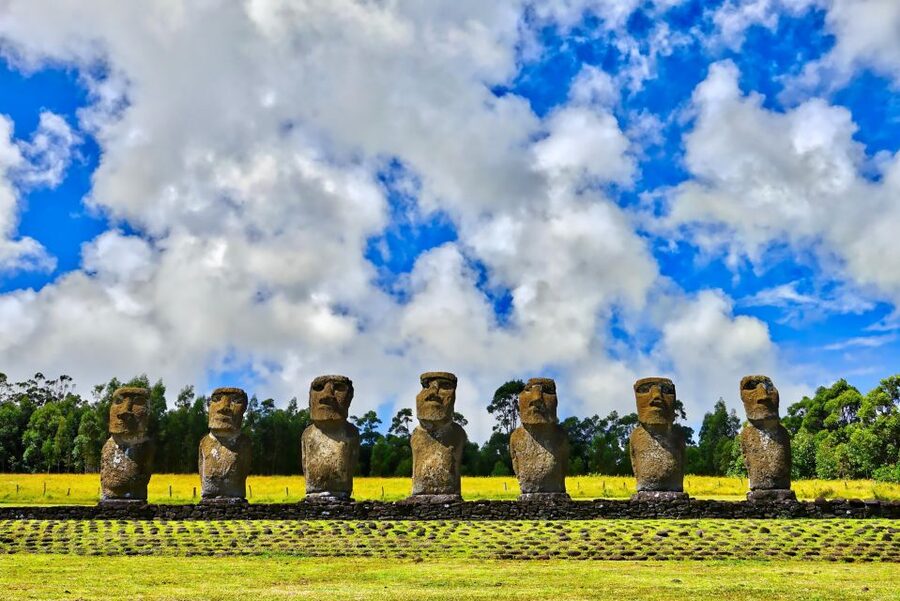
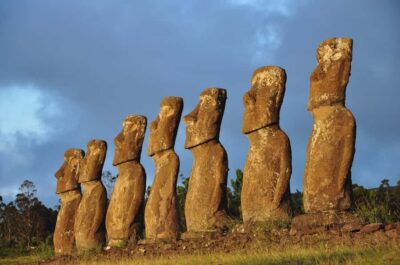
Ahu Akivi is a strong opening stop because it places seven moai together on a ceremonial platform. The statues introduce the central question of Rapa Nui archaeology: how did the island’s people create, move, and position such large stone figures?
Here, the guide is expected to explain the moai culture and the platform’s celestial orientation. That detail gives the site more meaning than a quick photo stop. You can look at the statues as works of stone, but you can also consider how ceremony, astronomy, and community life shaped their placement.
I like beginning here because the seven figures offer a simple visual entry point. You do not need much background to appreciate them, yet the site raises larger questions that can stay with you for the rest of the tour.
Pay attention to the explanation rather than rushing straight to your camera. The quality of the guide matters especially at this first stop, since the rest of the day depends on building a clear story from one place to the next.
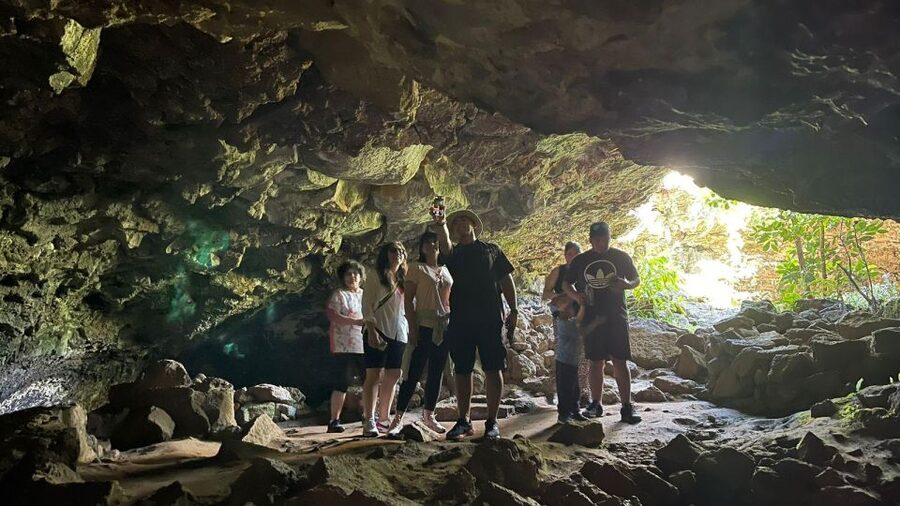
Ana Te Pahu, a ceremonial cave on Rano Kau
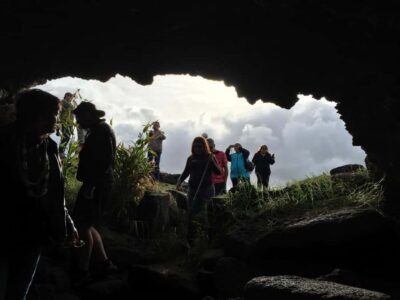
Ana Te Pahu brings you into a different setting. Instead of standing before exposed stone platforms, you visit a ceremonial cave on the slopes of Rano Kau.
The cave includes petroglyphs and paintings connected with the island’s traditions. That makes it valuable for showing how Rapa Nui culture used both open-air ceremonial sites and underground spaces.
You might find the cave more atmospheric than the larger archaeological stops. Its appeal comes from the combination of rock, darkness, markings, and ritual purpose. It also breaks up the day nicely after the open setting of Ahu Akivi.
The information provided does not give the length or difficulty of the cave visit, so you should not assume every part of it will suit every mobility level. The activity itself is listed as wheelchair accessible, but accessibility inside Ana Te Pahu is not explained. If that detail is essential for you, ask the operator before booking.
A good guide should explain the petroglyphs and paintings without turning them into a pile of disconnected facts. Listen for how the cave fits into the wider story of ceremony and daily life on Rapa Nui.
Puna Pau and the red scoria topknots
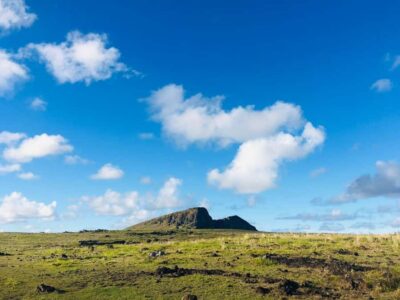
At Puna Pau, the focus shifts from the moai themselves to the red scoria topknots placed on some of them. The quarry supplied this distinctive material, giving you a chance to think about the labor and skill behind the finished statues.
The reddish stone adds a useful detail to the usual moai story. From a distance, the figures can look like one-piece monuments. Puna Pau reminds you that different materials were selected for different parts, and that the topknots carried their own visual and symbolic importance.
This stop should appeal to anyone interested in ancient construction. You can see where the material came from and consider how artisans shaped it before it was placed on a moai elsewhere on the island.
The quarry also helps explain why a guided visit has value. Without context, it may appear to be simply another rocky site. With a clear explanation, it becomes part of a wider production system involving stone selection, carving, movement, and ceremonial design.
Same long country, a very different day out:
- Full day tour – DREAM
★ 5.0 · 86 reviews - From Hanga Roa: Journey from Orongo to Ana Te Pahu
★ 4.3 · 75 reviews - Rapa Nui Stargazing
★ 4.5 · 62 reviews - Two days of Full Day Tour of Rapa Nui + Sunrise in Tongariki
★ 4.8 · 55 reviews
Vinapu and precise megalithic construction
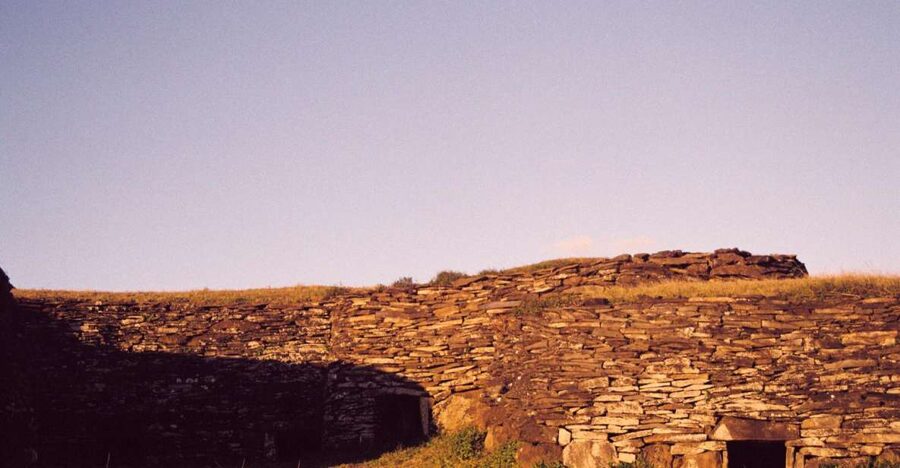
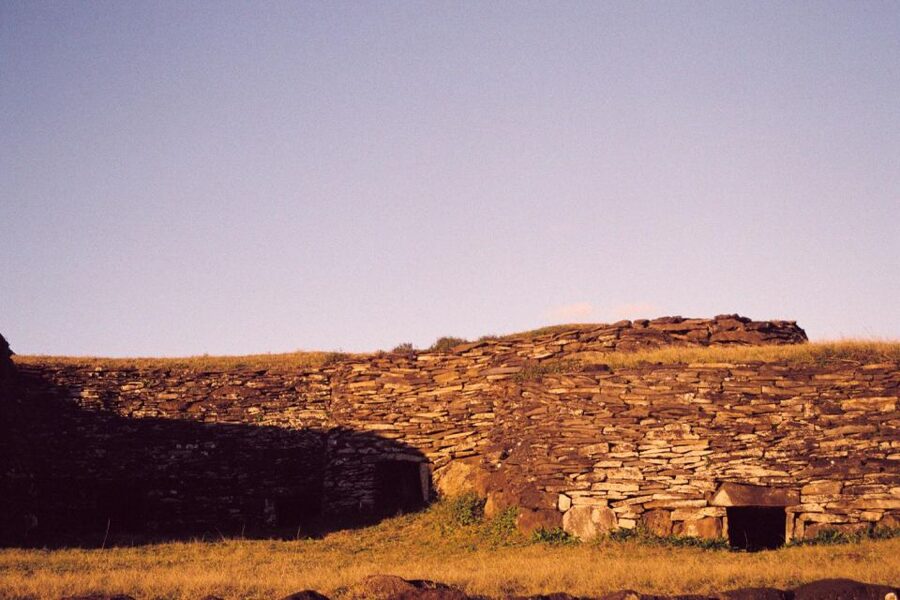
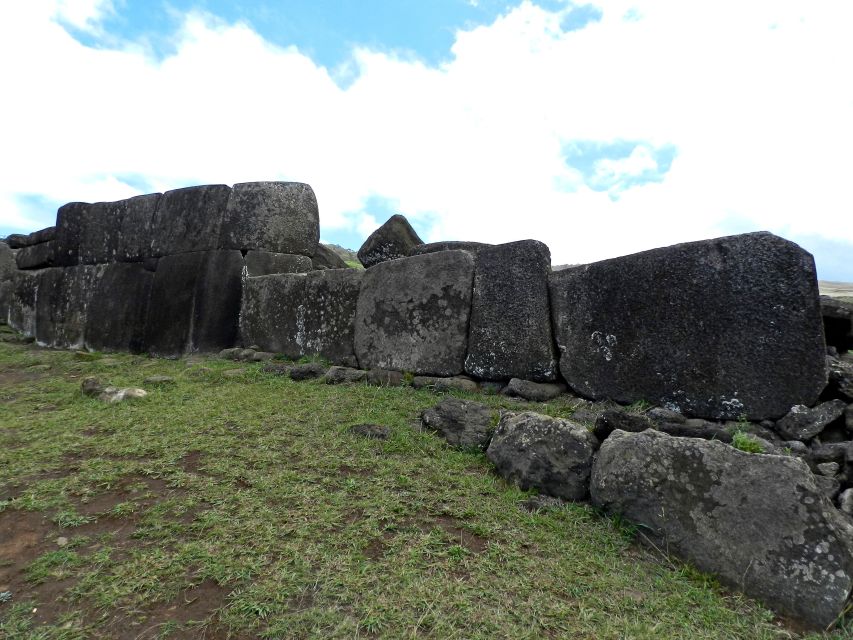
Vinapu offers some of the most thought-provoking architecture on the route. The site is known for its precise megalithic construction, with stonework that has been compared with structures in South America, including those around Cuzco.
The important point is not to treat the comparison as a simple answer to the island’s origins. It is better used as a question. You can examine the fitted stones, listen to the guide’s explanation, and consider how similar building techniques might arise in different places.
This stop adds variety because it shifts attention away from statues and toward masonry. The workmanship invites close observation. Look at the joints and the scale of the blocks, then compare the feeling of the site with the more familiar ahu platforms.
Vinapu is also a reminder that Rapa Nui culture cannot be reduced to the moai. The island’s builders worked with massive stone in more than one way, and the site raises questions about contact, influence, and independent development.
Because the interpretation can become complicated, this is another place where guide quality matters. You should leave with a careful explanation, not an overconfident claim that settles every historical question.
Rano Kau, a crater with a wide Pacific view
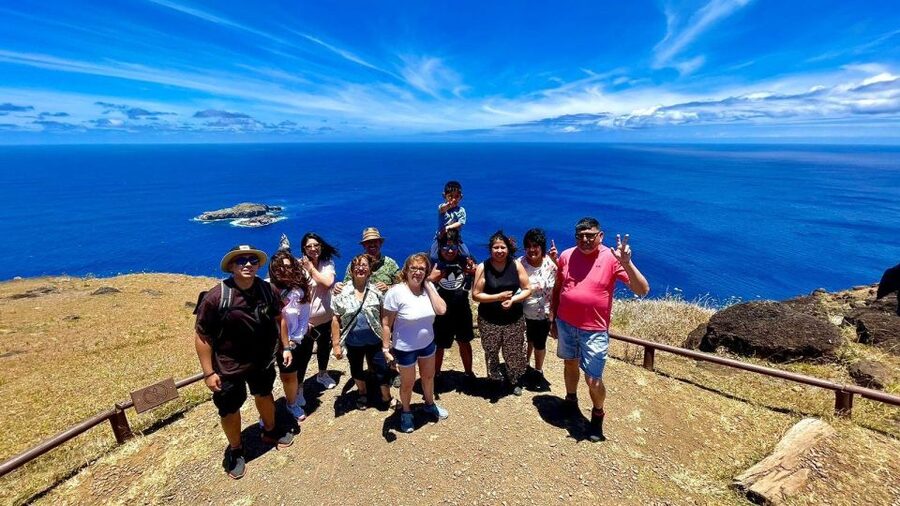
Rano Kau is one of the tour’s major natural stops. The volcanic crater offers broad views and a distinctive ecosystem, while also helping explain the geological forces that shaped Easter Island.
The crater gives the day a change of scale. At earlier sites, you focus on individual stones, carvings, and built structures. Here, you look across a huge volcanic formation and see how the island’s natural setting influenced where people lived and held ceremonies.
I like the way Rano Kau prepares you for Orongo. The two sites belong together physically and culturally. The crater is not merely a scenic pause before the final stop. It is part of the setting that made Orongo such a powerful ceremonial location.
The views toward the Pacific are likely to be one of the most memorable parts of the outing. Still, the experience depends on conditions and timing, so you should not assume the view will always have perfect visibility.
Take a moment to look beyond the crater itself. The point is to understand the relationship between volcano, coast, village, and ritual. That connection gives the final stop more force.
Orongo and the Birdman cult
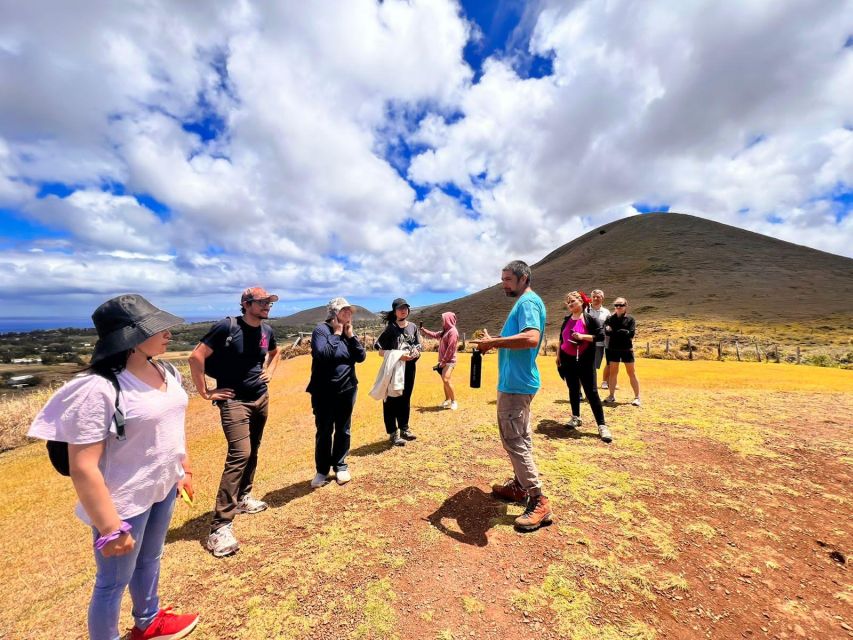
Orongo is the emotional high point of the route. The ceremonial village sits on the rim of Rano Kau, overlooking the Pacific, and is closely tied to the Birdman cult.
The site includes petroglyphs and ceremonial remains. Here, the tour turns from the earlier moai tradition toward a later set of beliefs and rituals. You get to see how religious life on Rapa Nui changed over time rather than remaining fixed around the statues.
The location makes a difference. Orongo is not simply a collection of carvings in an ordinary setting. Its position above the ocean and beside the crater gives the ceremony a strong connection to cliffs, water, birds, and volcanic rock.
Your guide should explain the Birdman tradition in a clear, measured way. The supplied information does not provide the name of a guide, so no individual guide can be recommended by name. Since one review rated the guide poorly, I would pay close attention to the operator’s current guide assignment and ask whether the tour will be led in English or Spanish.
Orongo is a place where you should allow time to look. The Pacific views are part of the experience, but so are the petroglyphs and the village layout. A rushed stop could leave you with photographs but little understanding of why the site mattered.
What the six-hour schedule means for you
Six hours is a useful middle ground. You get a full route without committing an entire day, and the included pickup and drop-off simplify the practical side of sightseeing.
At the same time, the schedule covers six major places. That means the pace may be active, especially when transport, explanations, and time at each site are all counted. The exact starting times are not fixed in the information provided, so you need to check availability for the date you want.
I would plan around the tour rather than treating it as a casual outing with no time pressure. Wear suitable clothing for outdoor stops and be ready for changing settings, from open viewpoints to a cave. The tour includes transportation, but no vehicle or group-size details are provided, so you should ask if space and seating are important to you.
The route is offered with live guidance in English or Spanish. That is helpful if you want more than a self-guided visit, but the experience will depend heavily on how clearly the guide connects the stops.
The guide question deserves attention
The strongest potential weakness is not the route itself. It is the uneven guide feedback.
The overall score is 4 out of 5 based on five reviews, which is a positive result but also a small sample. One review gave 3 out of 5 and specifically described the guide as bad. That single comment should not erase the value of the itinerary, but it does tell you where to focus your questions before booking.
Ask which language you want, confirm that a live guide is included, and ask whether the guide is local. The tour advertises native guides and lists English and Spanish, but it does not provide guide names.
A good guide can connect Ahu Akivi, Puna Pau, Vinapu, Rano Kau, and Orongo into one understandable story. A weak guide may leave you with a series of stops and scattered facts. Because culture is one of the tour’s main selling points, this is more important than a small difference in vehicle comfort or timing.
Is the $90 price good value?
At $90 per person, the tour is not the cheapest way to see individual sites, but value depends on what you need.
You are paying for six hours of transport, pickup, drop-off, and a live local guide. Since the sites are spread across Easter Island, that transport has real practical value. You avoid arranging separate rides and trying to build a workable route yourself.
The price does not include the National Park ticket. The operator does not sell that ticket, so add it to your total budget before deciding. This is an important cost distinction because the advertised price is not the complete cost of entry and touring.
I think the price is reasonable for you if convenience and coverage matter. It is less compelling if you already have transport, prefer to visit at your own pace, or want to spend a long time at only one or two sites.
The best value comes from treating this as an orientation to Rapa Nui. You see a wide range of places and learn how they connect. You may then choose to return independently to the site that interests you most.
Who should book this experience?
I would recommend this tour to a first-time visitor who wants a structured introduction to Easter Island. The route covers enough ground to help you understand the island’s major themes without requiring several separate bookings.
It also suits you if you value local interpretation, need pickup and drop-off, or prefer not to manage transport between archaeological sites. The English and Spanish options make it practical for a wider range of visitors.
History and archaeology fans should appreciate the range of subjects. You get moai culture, quarrying, megalithic construction, cave art, volcanic geology, and the Birdman cult in one outing.
You may want a different plan if you dislike a busy schedule or need confirmed access details for the cave. The activity is listed as wheelchair accessible, but the information does not explain how each stop, especially Ana Te Pahu, is handled.
Should you book Birdman Cult and Caves?
Book it if you want a broad, six-hour introduction to Rapa Nui with transport and a local guide included. The strongest reason to choose it is the route itself: Ahu Akivi and Puna Pau explain the moai tradition, Vinapu adds architectural questions, Rano Kau supplies the volcanic setting, and Orongo brings the Birdman cult story to a dramatic close.
Before paying, confirm the guide language, ask who will lead the outing, and budget for the separate National Park ticket. The mixed guide feedback means you should not book on scenery alone.
For a first visit, I think the coverage is worthwhile at $90 per person. For a repeat visit or a traveler who already has transport, a slower and more focused plan may offer better value.
FAQ
How long does the Birdman Cult and Caves tour last?
The tour lasts six hours. Starting times vary, so you need to check availability for your preferred date.
What locations are included?
The route includes Ahu Akivi, Ana Te Pahu, Puna Pau, Vinapu, Rano Kau, and Orongo.
Is transportation included?
Yes. Transportation, pickup, and drop-off are included in the activity.
Is the National Park ticket included?
No. The National Park ticket is not included, and the operator does not sell it.
What languages are available?
The tour offers live guides in English and Spanish.
Is the activity wheelchair accessible?
The activity is listed as wheelchair accessible. Specific access details for individual sites, including the cave, are not provided.
Can I cancel for a full refund?
Yes. You can cancel up to 24 hours in advance for a full refund. You can also reserve now and pay later.
Just added around Easter Island
- Volcanic Refuges: Excursion to Underground Civilization★ 4.7 · 8 reviews
- Ride to the highest point on the island for sunset★ 5.0 · 40 reviews
- Half Day Tour in Rapa Nui★ 5.0 · 48 reviews
- Tongariki Sunrise: Half Day Private Tour★ 3.8 · 9 reviews
- Easter Island: Private Full Day History Of The Moai★ 4.6 · 12 reviews
- Terevaka Horse Excursion: The highest point and 360° view.★ 4.7 · 38 reviews
- Sunrise Tongariki: Sunrise at Tongariki Park Private Tour★ 4.5 · 47 reviews
- Rapa Nui: Polynesian Massage★ 4.8 · 5 reviews
Easter Island Tours, compared.

Two days of Full Day Tour of Rapa Nui + Sunrise in Tongariki
Read our review →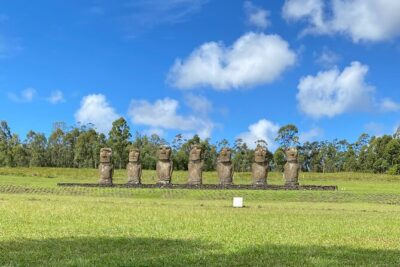
Browse the lists this tour appears in